

How to Make Tomato Powder (& Sun-dried Tomatoes)
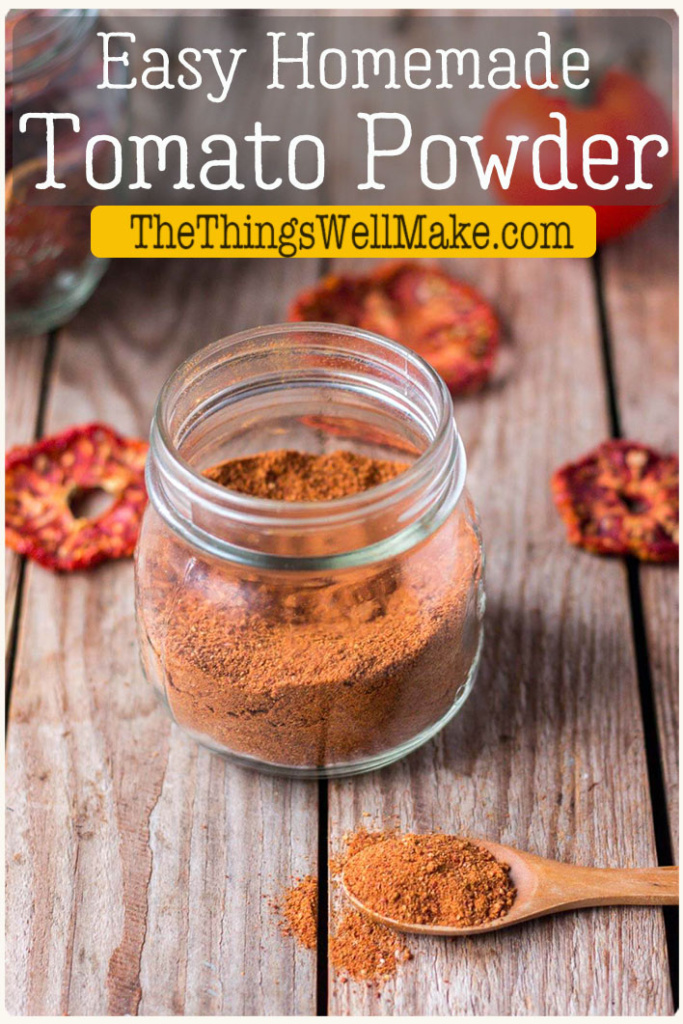
Discover how to make tomato powder and sun-dried tomatoes in the oven, dehydrator, or under the sun. These easy, space-saving tomato preserves add instant flavor to sauces, soups, and more.
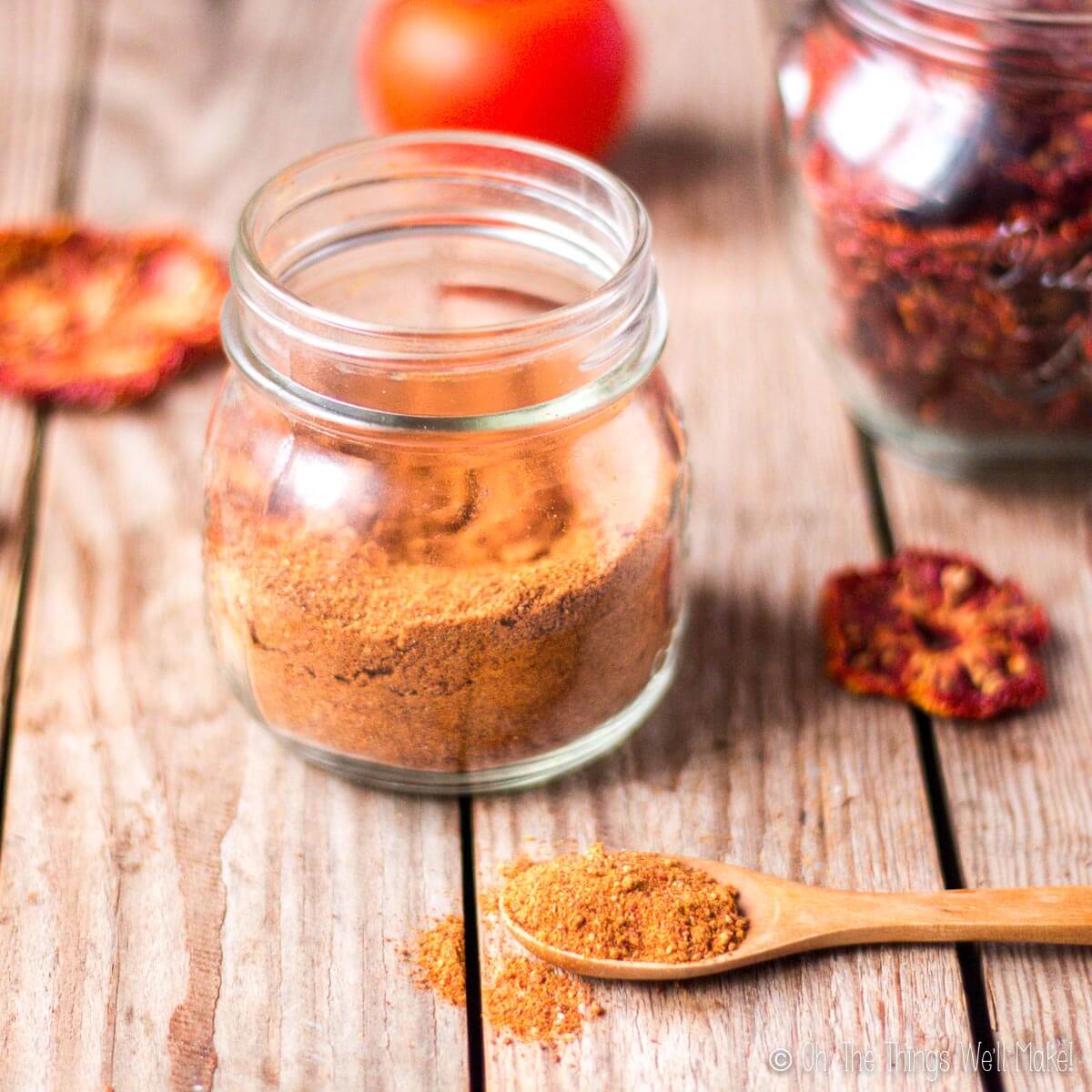
Every summer that we plant a vegetable garden, I end up with more ripe tomatoes than we can possibly eat before they spoil. After making sauces and soups, I love turning the rest into either tomato paste or sun-dried tomatoes, and tomato powder.
If you want to enjoy the flavor of your garden all year long, without the hassle of canning or freezing, this is the way to go! Both methods are easy, take up very little space, and let you preserve that rich tomato flavor for months. Once dried, you can use them to flavor just about anything, from soups and sauces to scrambled eggs and homemade chips.
Why you’ll love this
- It’s versatile: make sun-dried slices or grind them into tomato powder.
- No canning or freezing required.
- Saves pantry and freezer space.
- Easy to make in the oven, dehydrator, or even under the sun.
- Works with any tomato variety and keeps their flavor shelf-stable for months.
Ingredients
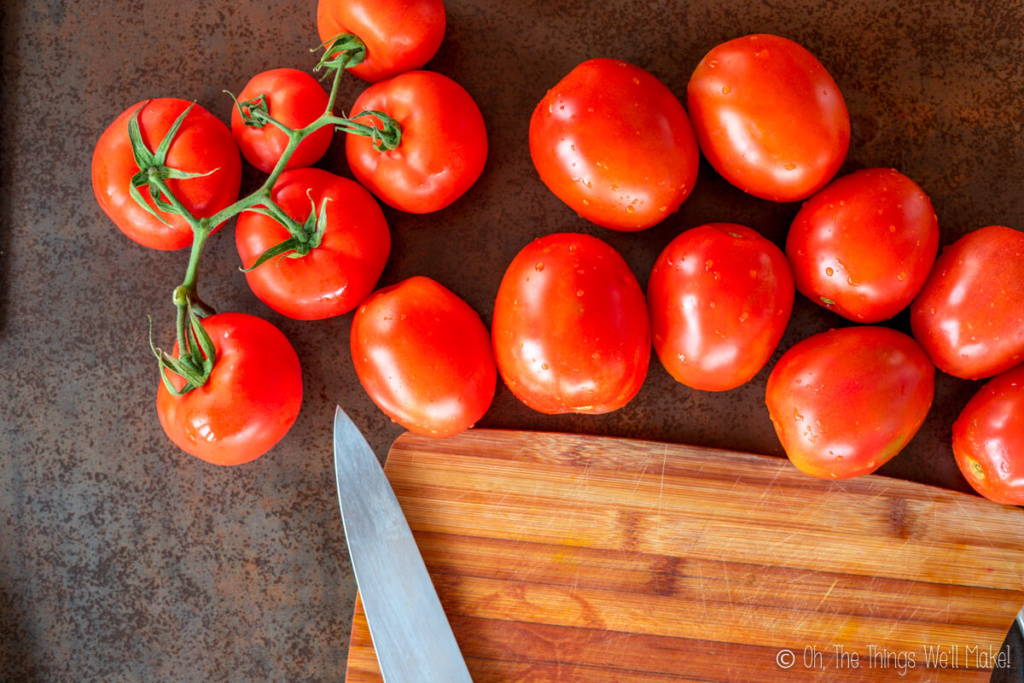
You only need one ingredient: tomatoes!
You can use any variety you have on hand, but keep in mind that some types dry faster than others:
- Roma or plum tomatoes work best because they’re meaty and have less water.
- Cherry tomatoes also work well. Just slice them in half before drying.
- Round or slicing tomatoes contain more juice, so they’ll take longer to dry.
Materials & equipment
You don’t need any fancy tools to make sun-dried tomatoes or tomato powder, but a few simple items make the process easier:
- Sharp knife or mandoline slicer – for thin, even slices.
- Baking sheets or dehydrator trays – depending on your drying method.
- Parchment paper or silicone mats – to prevent sticking.
- Blender, food processor, or coffee grinder – for grinding into powder.
- Fine mesh sieve – to sift the powder for a smooth, even texture.
- Airtight containers or jars – for long-term storage.
- (Optional) Cooling racks or mesh screens – if sun drying outdoors.
Step-by-step instructions
Prep the tomatoes
Rinse the tomatoes well and remove the stems. Pat them dry and slice them thinly and evenly (about ⅛ inch, or 3 mm, thick is ideal). Even slices help them dry more quickly and evenly.
(Tip: A mandoline slicer works great here!)
Arrange for Drying
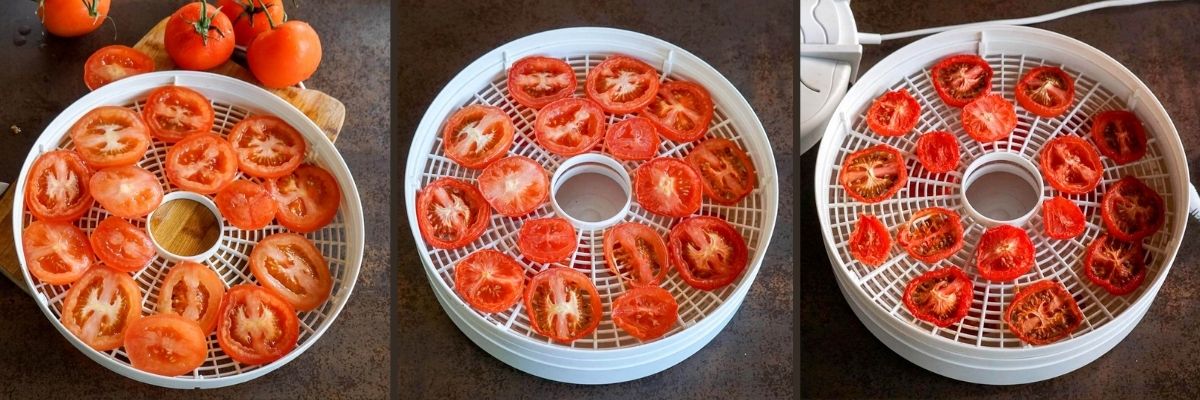
Spread the tomato slices in a single layer on baking sheets, dehydrator trays, or drying racks. Make sure they aren’t overlapping, as airflow is key for even drying!
If using baking sheets, you can line them with parchment paper or silicone mats to prevent sticking.
Oven method
- Set your oven to the lowest temperature (usually 140–170°F / 60–75°C).
- Turn on the fan or convection setting if available.
- Bake for 5–8 hours, flipping the slices halfway through.
- They’re ready when they’re dry and leathery (for sun-dried tomatoes) or brittle (for powder).
Some people open the oven door slightly to release moisture faster, but I don’t think it’s really necessary.
Dehydrator method
Follow the instructions that come with your particular dehydrator or…
- Arrange the slices on the trays and set your dehydrator to 125–135°F (50–60°C).
- Dry for 6–10 hours, depending on slice thickness and tomato type.
- Check periodically and remove any slices that finish early.
Sun drying
If you live in a hot, dry, sunny climate, you can make true sun-dried tomatoes. Depending on the weather, full sun-drying can take 2–4 days.
- If they aren’t completely dry, finish them in the oven or dehydrator.
- Place the slices on mesh screens or racks, leaving space between them.
- Cover with a fine mesh cloth or netting to keep insects away.
- Bring them indoors each night to avoid moisture from dew.
When are they ready?
The exact drying time depends on the tomato variety, slice thickness, and drying method.
- For Sun-Dried Tomato Slices: You can stop when the tomato slices are dry, leathery, and flexible, not sticky or spongy.
- For Tomato Powder: Continue drying them until they’re completely hard and brittle. (If there’s any flexibility left, there’s still moisture that can cause mold or clumping later.)
Making the powder
Once your tomato slices are completely dry and brittle, it’s time to grind them into powder.
- Break the slices into smaller pieces so they blend more evenly.
- Grind the dried tomatoes using a blender, food processor, or coffee grinder until a fine powder forms.
- A coffee grinder usually gives the smoothest texture. You may want to start with a blender or food processor, and finish it with the coffee grinder.
- Sift the powder through a fine-mesh sieve.
- Return any larger flakes to the grinder and repeat until all of the powder is fine and even.
You’ll be amazed by how concentrated the flavor becomes. A spoonful adds instant richness to soups, sauces, or even scrambled eggs!
Storage (dried tomato slices)
Store in an airtight container in a cool, dry place, away from humidity and sunlight. To extend their shelf life, you can refrigerate them or even freeze them.
In oil
If you prefer to keep them in olive oil, refrigerate the jar and use within a few weeks.
(Optional: Dip the slices in vinegar first to help preserve them and enhance the flavor.)
⚠️ Important: Avoid adding fresh garlic or herbs to the oil unless you’ll use them quickly — they can shorten storage time and increase the risk of spoilage.
Storage (tomato powder)
Keep your tomato powder in a sealed jar or airtight container in a cool, dark pantry or the refrigerator. If your tomatoes were fully dehydrated, it can last for a year or more without losing flavor.
To prevent clumping, add a small silica packet or a few grains of uncooked rice to the jar.
Expert tips
- If your tomato powder clumps together after storage, it likely absorbed a bit of moisture from the air. You can fix this by spreading it on a baking sheet and drying it again for 10–15 minutes at a low temperature (around 150°F / 65°C). Once cooled, store it again in a tightly sealed jar.
- For the best drying results, choose Roma or plum tomatoes. They’re meaty and dry faster.
- To save time, use a mandoline slicer for perfectly even slices.
- To make dried slices and powder, remove a batch when it’s leathery for storage. Then, continue drying the rest until it’s brittle enough for grinding.
How to use dried tomatoes
Once dried, they keep their tomato flavor beautifully and can be used in all kinds of dishes. Depending on how you plan to use them, you can leave them dry or rehydrate them by soaking in warm water for about 30 minutes.
Here are some of my favorite ways to enjoy them:
- Blend into sauces or soups for a deeper, more complex tomato flavor.
- Add to compound butter (great for steak or garlic bread).
- Slice and toss into salads, pasta, sandwiches, or wraps.
- Layer on pizzas, burgers, or focaccia for chewy, flavorful bites.
- Marinate in olive oil for topping bruschetta or antipasto platters.
If you’re feeling adventurous, chop a few sun-dried slices into your homemade bread dough or crackers for a pop of flavor.
On the blog, I used them in this recipe:

Citrus-Herb Basque Chicken
Tomato powder uses
Tomato powder makes it easy to add tomato flavor to soups, sauces, or snacks without opening a can or cooking down fresh tomatoes.
- Add it to homemade pasta or pizza dough for color and flavor.
- Add a rich tomato flavor to soups, stews, sauces, or marinades.
- Stir into ground beef or turkey for tacos, meatballs, or pasta sauce.
- Combine with cream cheese or sour cream for a simple dip or spread.
- Sprinkle it over popcorn, roasted nuts, or homemade chips.
Paleo Doritos Like Chips Recipe
How to make tomato sauce from tomato powder
To turn your tomato powder into a quick sauce, paste, or even soup, just mix it with water. Adjust the ratio depending on how thick you want it:
- For tomato paste or thick sauce: Mix 1 part tomato powder + 1 part water.
- For a thinner sauce or soup base: Add more water until it reaches the consistency you like.
Simmer the mixture for a few minutes over low heat to let it thicken and develop its flavor.
You can season it to taste with salt, garlic, or herbs, just as you would with fresh tomato sauce.
FAQs
Yes. They’re delicious when dried, but since they hold more water, they’ll take a little longer. Slice them in half before drying so the moisture can escape more easily.
Definitely. The oven works fine. Just use the lowest temperature setting and good airflow. It may take a bit longer, but the results are the same.
If the tomatoes are fully dried and stored in an airtight container in a cool, dry place, tomato powder can last for a year or more. Storing it in the fridge can help it stay even fresher.
Yes, as long as your air fryer allows low temperatures (around 140–150°F / 60–65°C). Work in small batches and keep the slices in a single layer so they dry evenly without burning.
Always keep them in the refrigerator and use within a few weeks. Avoid adding raw garlic or fresh herbs unless you plan to eat them quickly, since those can shorten the storage life.
Video
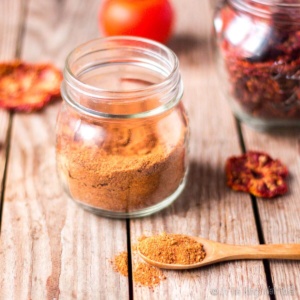
How to Make Tomato Powder & Dehydrated Tomatoes
Ingredients
- 8 lbs. tomatoes (any variety — Roma or plum tomatoes dry fastest)
Instructions
Prep the tomatoes
- Rinse the tomatoes well and remove the stems.
- Pat dry and slice thinly and evenly (about ⅛ inch / 3 mm thick).
Arrange for drying
- Spread the slices in a single layer on dehydrator trays, baking sheets, or drying racks. Avoid overlapping for even airflow.
Dry the tomatoes
In the oven
- Set to the lowest temperature (140–170°F / 60–75°C). Use the fan if available. Bake for 5–8 hours, flipping halfway through.
In a dehydrator
- Set to 125–135°F (50–60°C) and dry for 6–10 hours until leathery or brittle.
Sun drying
- Place on mesh screens in full sun. Cover with netting to keep insects away and bring indoors at night. Depending on the weather, this may take 2–4 days.
Check for doneness
- For sun-dried tomatoes, they should be dry and flexible but not sticky or soft.For tomato powder, continue drying until completely brittle.
- Once the tomatoes are completely dry, store them.
Make tomato powder (optional)
- Break the dried slices into smaller pieces. Grind them in a blender, food processor, or coffee grinder until fine.
- Sift through a mesh sieve and regrind any larger flakes until all the powder is smooth.
Store
- Dried Slices: Keep in an airtight container in a cool, dry place or refrigerate for longer storage.Tomato Powder: Store in a tightly sealed jar in a cool, dark pantry or the refrigerator. If well dried, it can last for a year or more.
Notes
Yields
About 8 ounces of dried tomatoes (or roughly 32 tablespoons of powder).Drying time
The exact drying time depends on:- The type of tomato (Roma or plum tomatoes dry faster)
- The thickness of the slices
- The drying method and appliance used
Storage – dried tomato slices
- Store in an airtight container in a cool, dry place.
- To extend their shelf life, refrigerate or freeze them.
- If using plastic bags, remove as much air as possible before sealing.
- Discard any slices that show signs of mold.
Storage – in oil
- Dried tomato slices can be kept in olive oil in the refrigerator.
- For best results, slice them into strips before adding them to the oil.
- Avoid adding fresh garlic or herbs unless you’ll use them quickly, since they shorten the shelf life.
- To enhance the flavor, dip the slices in vinegar before submerging them in oil.
Storage – tomato powder
- Store in a sealed jar or airtight container in a cool, dark place or in the refrigerator.
- If completely dehydrated, it can last for a year or longer.
- Add a small silica packet or a few grains of rice to prevent clumping.
Using dried tomatoes
- Blend into soups, sauces, or compound butter.
- Slice and add to salads, pasta, sandwiches, or pizza.
- Rehydrate by soaking in warm water for about 30 minutes before using.
- Try them in my Citrus-Herb Basque Chicken for a rich, savory touch.
Using tomato powder
- Add to soups, stews, sauces, or taco meat.
- Sprinkle over homemade chips or roasted vegetables.
- Mix with water (1:1 ratio) for instant tomato sauce or paste; add more water for a thinner sauce.
- Combine with cream cheese or sour cream for a savory spread or dip.
This post was originally published on Dec. 2, 2016. It was rewritten, adding new photos and clearer instructions in October 2025.


I dehydrated my tomatoes last year. I just sliced and dried. Unfortunately the powder has a very bitter taste and I can’t use it. Is there any way to take the bitterness out of it? I read somewhere to use baking soda with it when cooking? Any ideas? Did I do something wrong? I used a Presto dehydrator that only has 1 setting. You plug it in and it turns on. You unplug it and it turns off.
Hi Jen,
I’m sorry to hear that happened. I’ve never had it happen, but from what I’ve read, it could be from the skin and seeds of some tomatoes. Some people actually make the powder only using the skin that they save from other recipes and are very happy with the obtained powder. So, it may depend a lot on the type of tomatoes used. Another issue I read about is a reaction of aluminum with tomato. I’m not familiar with your dehydrator, but if it were to have aluminum trays, that may be causing the problem.
I’m not sure about the baking soda. You’d have to give it a try to see what happens. I’ve read that using a bit of sweetness (from sugar, honey, etc.) can also offset any bitterness in tomato sauces, so maybe it would work here too.
Good luck with it! I hope you can at least salvage it for some uses.
I first found powered tomatoes at a farmers market in Russia during a trip. I brought some home and used it wisely. It is the think to sprinkle on top of store bought tomatoes out of season to add home grown flavor.
My only problem was that they tend to absorb moisture and start to cake, even inside a spice jar. I am searching to find an ingredient I can add that will stop them from caking up. I’m hoping a manufacturer will let me know the safe ingredient to stop the caking. I can’t believe that the US has not found the wonderful powder which I add any time I want the taste of fresh home grown tomatoes.
Hi Jeffrey!
Have you ever tried adding one of those food safe moisture absorber packages to it? You can sometimes find them in foods like nori sheets (the algae sheets for sushi) and other foods and save them for that sort of thing.
I’m not sure if there is some other trick to keeping it from caking. I’ll have to look into it. I’ve seen people put rice in salt to prevent it from clumping. Maybe something like that would also work here?
I’ve read that using a piece of bread on top of the food that tends to cake up will solve the issue. The bread takes in the oxygen & the food below will be unaffected. When the bread gets really stiff, replace it with a new, soft slice. Hope this helps. I can’t wait to dry our tomatoes from our garden! Super idea. And yes, each different breed of tomato has a different flavor- low acid, more savory, high acid, a bit bitter, sweet, bright with slight acid.
Hi Joanie,
Thanks for the tip! Maybe I’ll give it a shot. ?
I used my Magic Mill dehydrator to dry and my Ninga Pro to grind. Started with 5 Lbs of tomatoes. Ended up with 1 cup of powder. Drying time took much longer than I thought it would and longer than I have seen for recipes on the net. Started drying a 135 for 12 hours, then 6 more, still pliable I raised the temp to 165 for 7 hours, then lowered it back to 135 for 6 more! Finally had dried tomatoes! I should state that I used a tomato slicer to slice them which gave me even 1/4 inch slices. Slicing thinner would probably reduce the time but I wanted all the slices to be the same. Turner them to powder in the Ninga and am storing in a mason jar. Can’t wait to start using. Cherry tomatoes and Roma’s are next!
Awesome, Don!
I’m so glad it worked out! 🙂
Yes, the drying can take a long time, especially if the slices are big, but I think it’s worth it!
I noticed that the calories are 20 is that for a tablespoon?
If you go to the top of the recipe, there should be a place for each recipe that shows the serving size. In this case, it’s 1 tablespoon. (And the recipe makes around 32 tablespoons overall.)
Do you have a tomato soup recipe using dehydrated tomato powder?
Hi Junnie,
I’m sorry I don’t. I was going to look for one for you, but since I haven’t tried it myself to let you know if the recipe is actually good, it’s probably better I don’t recommend one I haven’t tried. 😉
Hi Tracy,
You are amazing. I was searching fir tomato powder online, and I stumbled upon this place.
Wow, I am going to give it a try too. Thanks 🙂
Rashi
Thanks, Rashi!
I’m happy I was able to help! 🙂
Definitely gonna try the tomatoe basil sup sound delicious thank you Patsy Harris
Hi Tracy,
For your more frugal followers (like me) i save the skins from the tomatoes that most toss when canning. I dehydrate the skins only into tomato powder. No waste!
That’s a great idea, Tamara!
Thanks for the idea Tamara! I just got finished canning 75lbs of tomatoes. I fed all the peels to my chickens so luckily those didn’t go to waste. I’m going to dehydrate them now instead.
Your poor chickens will be sad. 🙂
Ha! But, yes, she had a great idea. I’ll have to add the tip when I update this post!
(I feed mine to my hens too, BTW!)
I do make sure that my tomatoes are totally dry–and I find a coffee mill works best to get a nice fine powder.
But another thing I do is use the silica packs from medication bottles (since they are food grade) and put it in the jars of tomato powder…it helps keep it from caking–even thoroughly dry, they have a lot of sugar that can make it clump.
Hi Donna,
That’s a great idea! Thanks!
Can you tell me roughly how much powder you get from 8 lbs of tomatoes?
It will really depend on the water content of the particular tomatoes used.
Looking at the final servings calculated on the recipe card, it appears that I ended up with around 2 cups in the end.
It’s been a while, so I’ll double-check this year when I make it again!
Use tomato powder with dried basel for tomato basel soup at work just add hot water.
Oooh- somehow missed this comment before. That sounds wonderful too! My son is a huge basil fan. He’s addicted to it.
I have tried to do this, but the powder quick sinks to the bottom of the container. Any ideas to help water snd powder stay mixed?