

Easy, Beginner DIY Liquid Castile Soap Recipe
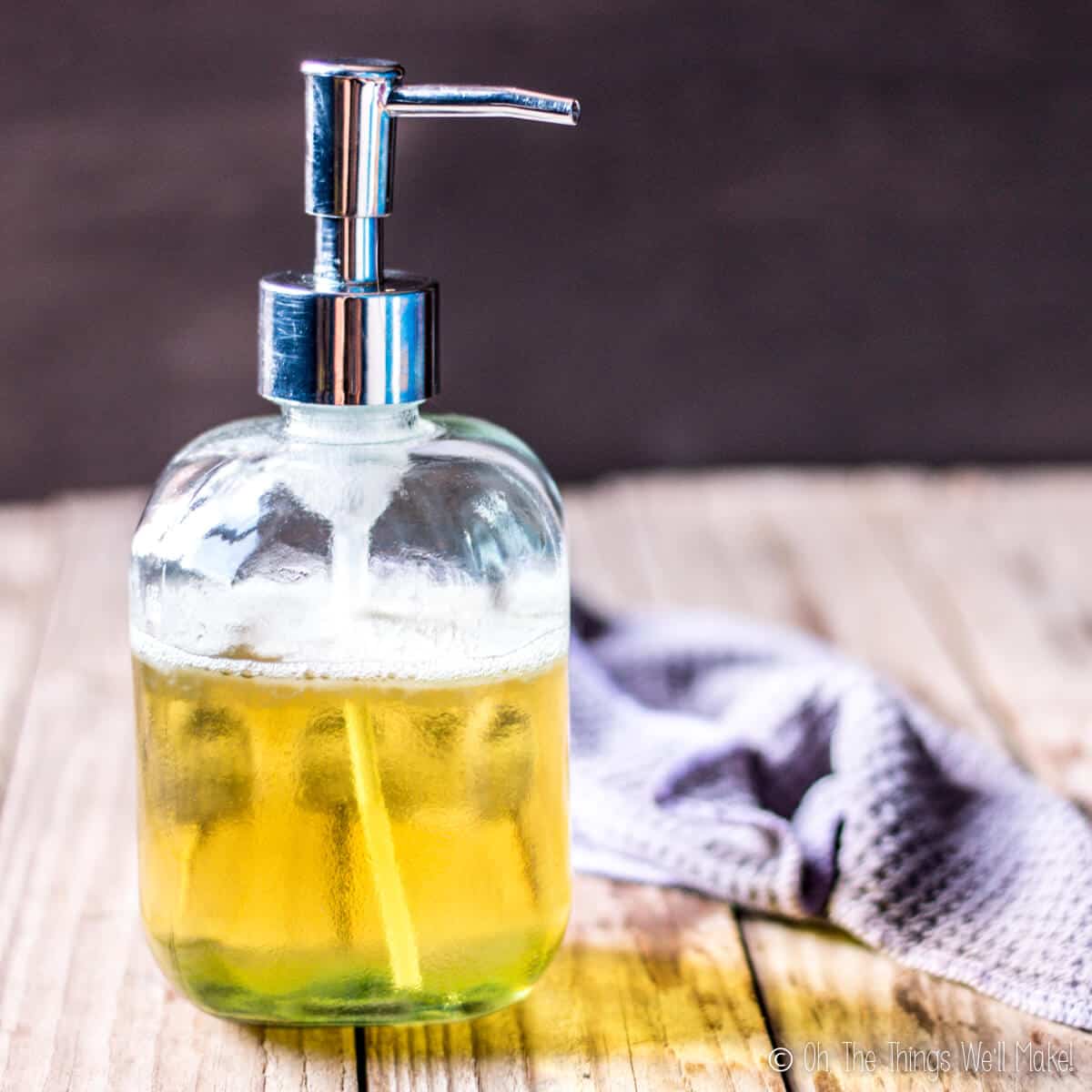
Made with only olive oil, this pure liquid Castile soap is easy to make and mild. It’s perfect for face and body, and for cleaning around the house.
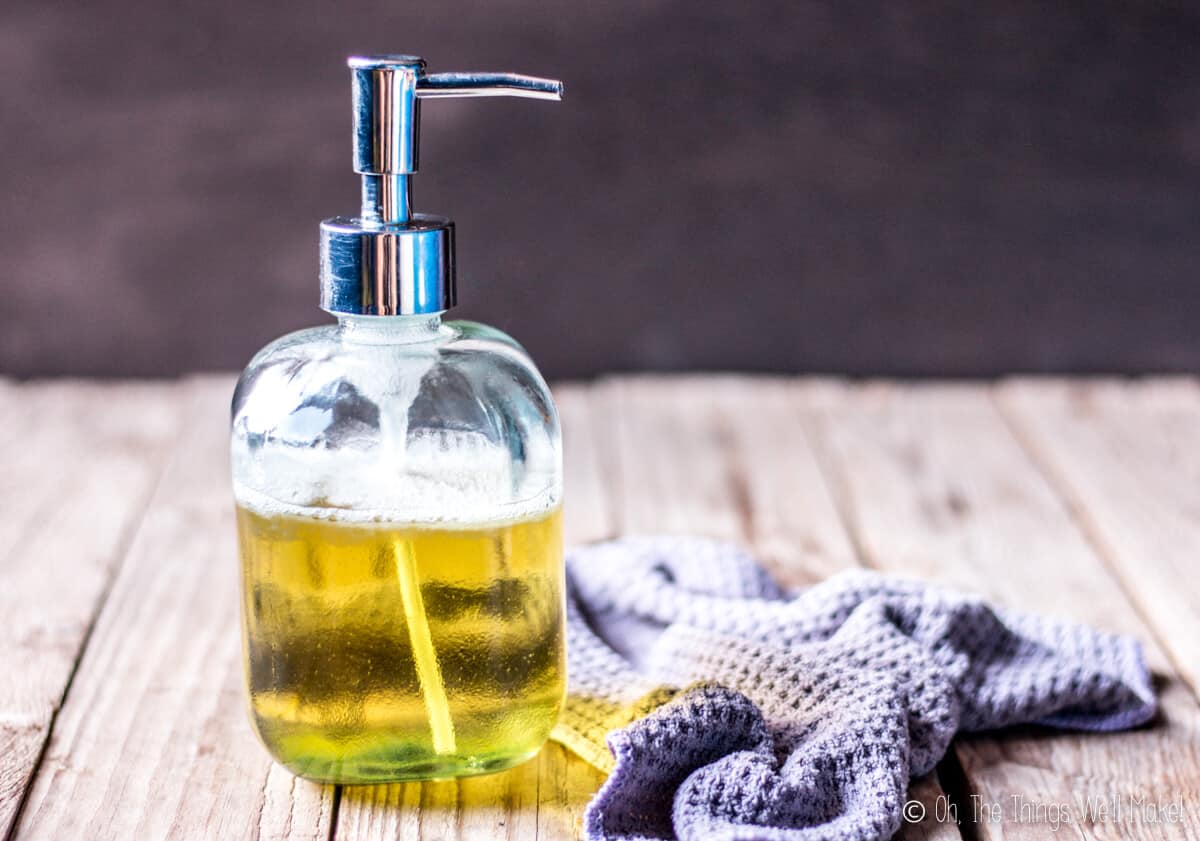
A couple of years ago, I showed you how easy it was to make a basic beginner soap, even if you’ve never done it before.
Making solid soaps can be a lot of fun, but not everybody likes using bar soap. Many people prefer using something in a dispenser like a shower gel or a liquid soap.
I made many different types of bar soaps before attempting to make a true liquid soap. There aren’t as many resources about making liquid soaps, so I had to do a lot of trial and error before posting this first liquid Castile soap recipe.
Once you find a good recipe, it’s pretty simple to make. While it does take a little more time and effort than whipping up some bars of cold process soap, I think you’ll find that it’s well worth it, especially when you take a look at the price of a store-bought liquid castile soap.
How does liquid soap differ from bar soap?
The main difference between bar soaps and liquid soaps is the type of lye used to make them. Liquid soaps are made with KOH, or potassium hydroxide, rather than NaOH, or sodium hydroxide.
You can read more about the different types of lye in my post about lye and why it is needed in soap.
While some people like to make a “liquid soap” of sorts by diluting bar soaps in water, you can’t really get a true, transparent liquid soap that way. Some people are happy with the result, but every time I’ve tried it, I’ve ended up with a gloopy mess. It doesn’t have the same cleaning power as either a bar soap or a true liquid soap, and the texture and appearance aren’t the same either.
What is pure Castile soap?
Technically, by definition, Castile soap is a type of soap made with only olive oil. The name “Castile” soap originates here in Spain. (You can read more about the origin of Castile soap and other soaps in my post with a recipe for pure Castile bar soap.)
Over the years, the definition of Castile soap has broadened to include other types of vegetable oils such as coconut oil. Dr. Bronner’s liquid Soap, which may be the most famous commercial liquid Castile soap, actually has a greater percentage of coconut oil than olive oil. (I made a Dr. Bronners liquid Castile soap copycat recipe for those who are interested!)
When it came to making a homemade liquid Castile soap, though, I was a bit of a purist and made the real deal: a soap made with only olive oil.
Olive oil in soap
Soaps made with different oils have different properties.
Soaps made with olive oil are more conditioning for your skin than soaps made with coconut oil. On the other hand, they don’t lather up as much as a coconut oil soap, nor do they leave you feeling squeaky clean in the same way (partly because they are more conditioning).
Some people find pure Castile bar soap to be “slimy” and not cleansing enough. On the other hand, pure coconut oil bar soap can be drying.
- Pure coconut oil soaps are great for general cleaning and for laundry. That’s why I made my homemade laundry soap only with coconut oil.
- Pure olive oil soaps tend to be gentle on the skin and great for gentle body cleansing.
Read my post about the properties of different oils in soaps.
Ideally, you’d combine different oils to get the qualities you want for your soap. That’s exactly what they did when they formulated Dr. Bronner’s soap, and what I did when I showed you how to make a basic beginner soap which uses a combination of olive oil and coconut oil.
Combining liquid soaps
When you make a bar of soap, you have to decide what combination of oils you want to use from the very beginning and your entire batch will have that very same combination.
With liquid soaps, though, you have the advantage of being able to combine your various soaps after the fact, making it easier to experiment with smaller combinations until you find the perfect soap for your need.
That’s why I made a pure liquid castile soap, using only olive oil, and then later made a pure liquid coconut oil soap. Once you’ve made both of them, you can combine them, as needed to get the type of soap you want.
Coconut oil liquid soap vs. liquid Castile soap
When I first started making liquid soap, I assumed that liquid soaps would be just like bar soaps. The difference between a pure Castile bar soap and a coconut oil-based bar soap is HUGE!
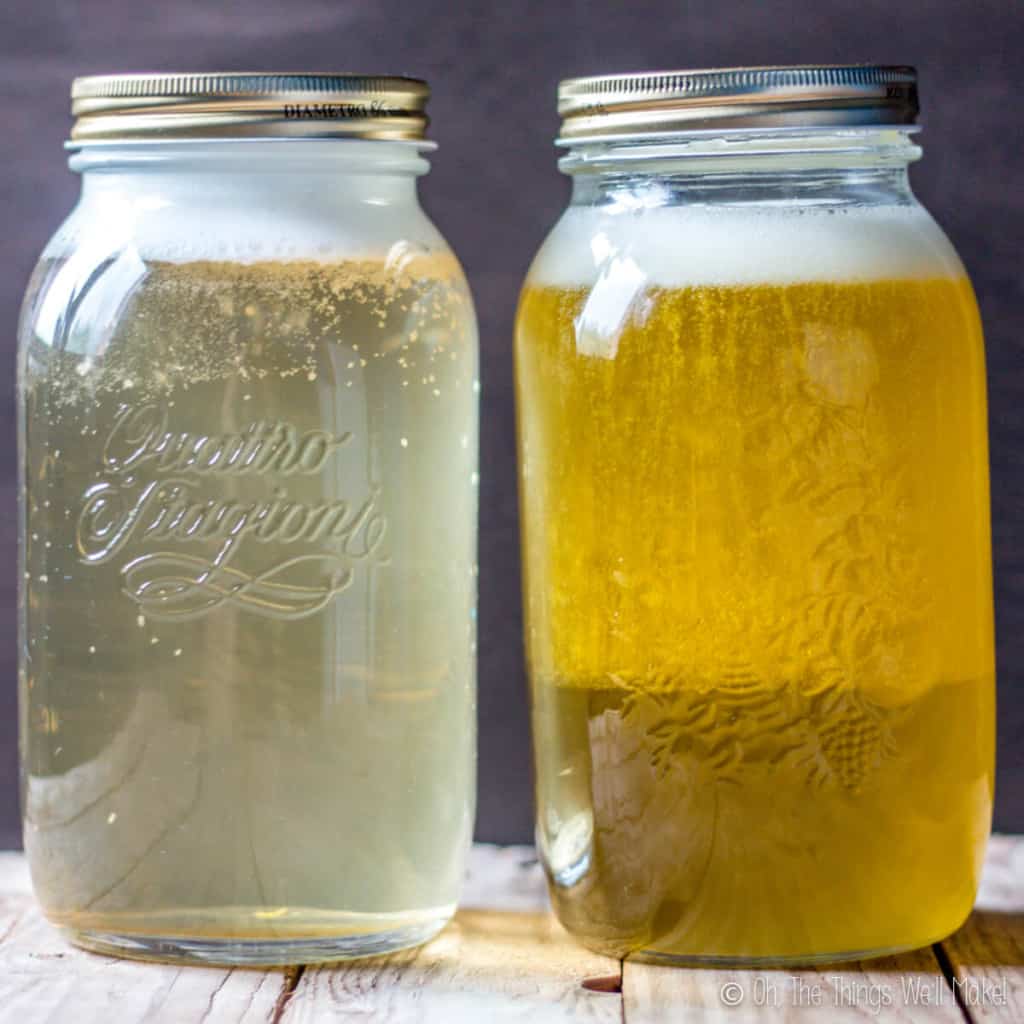
I was very surprised to find, though, that liquid soap made with coconut oil was actually quite similar to that made with olive oil. Sure, the olive oil-based liquid soap was darker in color than the coconut oil-based liquid soap. For me, that was probably the most notable difference.
Yes, the coconut oil soap does make a bubblier lather than this one and may be slightly more drying. It does give more of a “squeaky clean” feeling.
In the end, though, the difference isn’t as pronounced as I expected. In fact, I normally just make the coconut oil liquid soap recipe these days. I can buy refined coconut oil cheaper than olive oil, but also love the look of a lighter-colored soap. I also love the fresh, subtle scent of the coconut oil soap when left unscented.
Both soaps give a decent lather. They are also both relatively mild for skin. If you have sensitive skin, though, this soap is probably the better choice.
Those who have very sensitive skin may find that they have issues with the higher pH of any soap. In those cases, it may be best to use something like my DIY Baby Wash and Shampoo. (I made it pH balanced for a baby’s delicate skin.)
Ingredients
This soap uses 4 main ingredients: olive oil, potassium hydroxide, water, and glycerin.
You can use extra virgin olive oil or a lighter olive oil. What is important, though, is that you are using pure olive oil. (If it’s not pure olive oil, it may need a different amount of lye.)
For the water, it’s best to use distilled water. Tap water has minerals and may have other impurities that can affect the clarity of your soap.
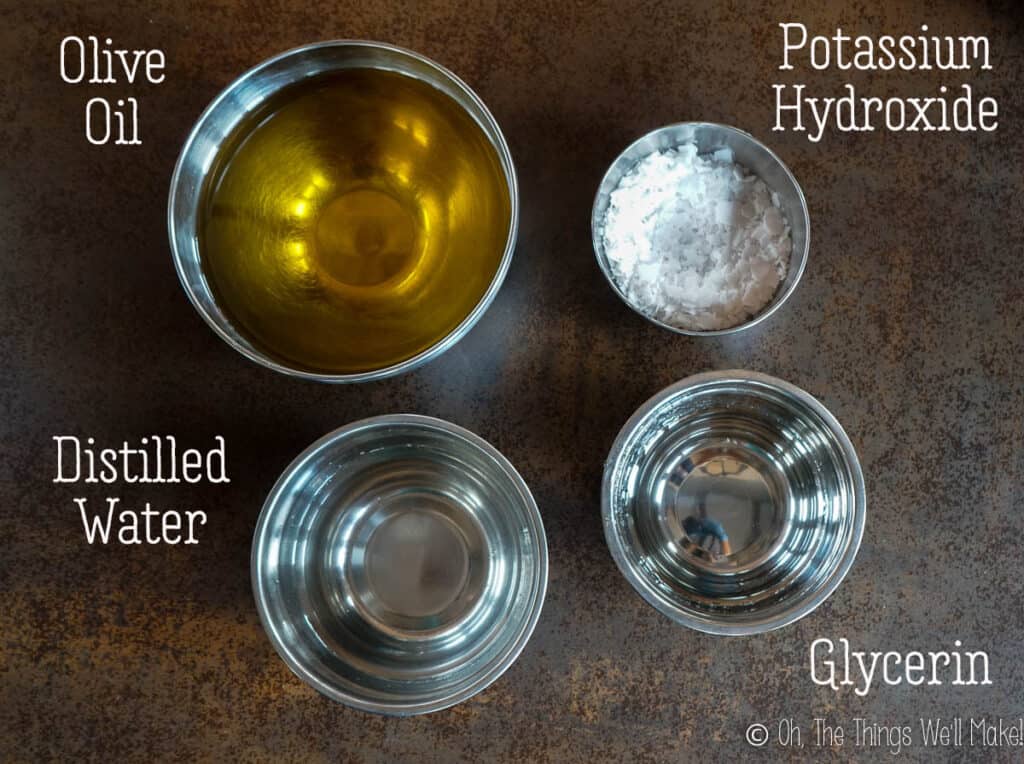
Why use glycerin when making liquid soap?
One of the methods of making liquid soaps is called the glycerin method. It replaces part of the water with glycerin.
Adding glycerin moves the soap-making process along more quickly. Because I wanted to share a beginner liquid soap recipe, I chose the glycerin method to have this soap be as quick and fool-proof as possible.
Using glycerin may have some other benefits:
- The resulting soap paste dissolves very easily in water. I don’t need to heat the water nor do I need to leave it for days at a time. I can cover my soap paste with distilled water and usually, in a couple of hours, I have a beautiful, clear liquid soap effortlessly.
- Glycerin is a humectant, meaning it draws moisture into the skin. I find that even my liquid coconut oil soap doesn’t feel drying, despite the fact that it hasn’t been superfatted at all. I think the extra glycerin helps to make a really great, hydrating soap that is clear and doesn’t need extra oils. (I think my homemade glycerin bar soap has the same benefits.)
Materials
To make liquid Castile soap, you only need a few basic tools. An immersion blender helps mix the oils and lye solution quickly so the soap reaches trace faster. A slow cooker works beautifully for keeping the soap at a steady, gentle heat while it cooks. A kitchen scale is also important here, since soap making relies on accuracy. Measuring by weight instead of volume helps ensure that your recipe turns out perfectly every time.
Procedure
Making a liquid Castile soap isn’t difficult and it can save you a lot of money.
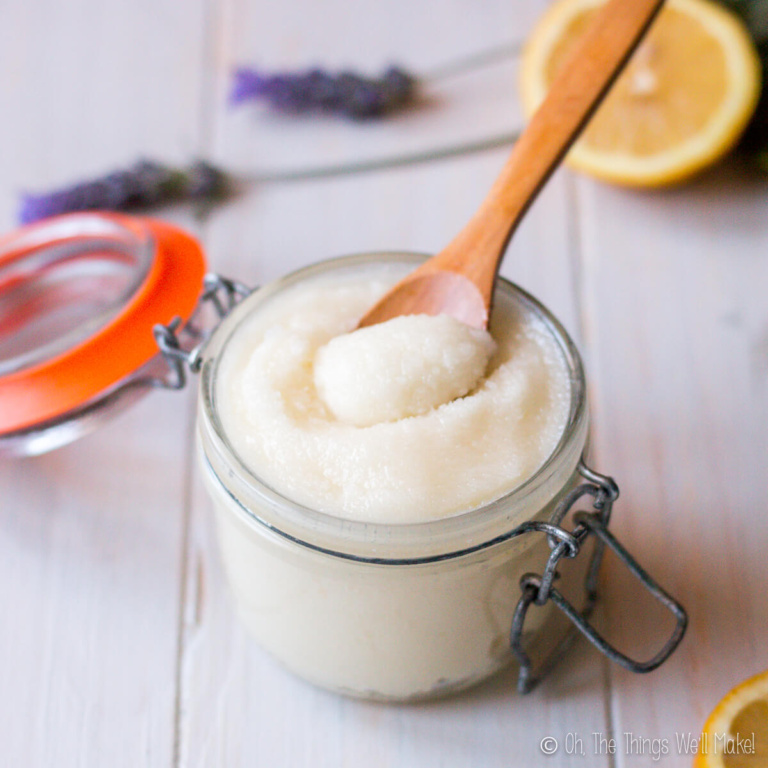
To get the clearest soap we can, we’ll use a hot-process method. That means that we will be cooking the soap. During the cooking process, the saponification process will complete and our soap will be ready to use immediately afterwards. (Liquid soap doesn’t need a curing time in the same way as bar soap does.)
The easiest way to make this and have it come out perfectly is to use a slow cooker. If you don’t have access to a slow cooker, though, you can also try baking it in the oven. (I showed how I used this method in the post and video for the coconut oil liquid soap.)
Making the lye solution
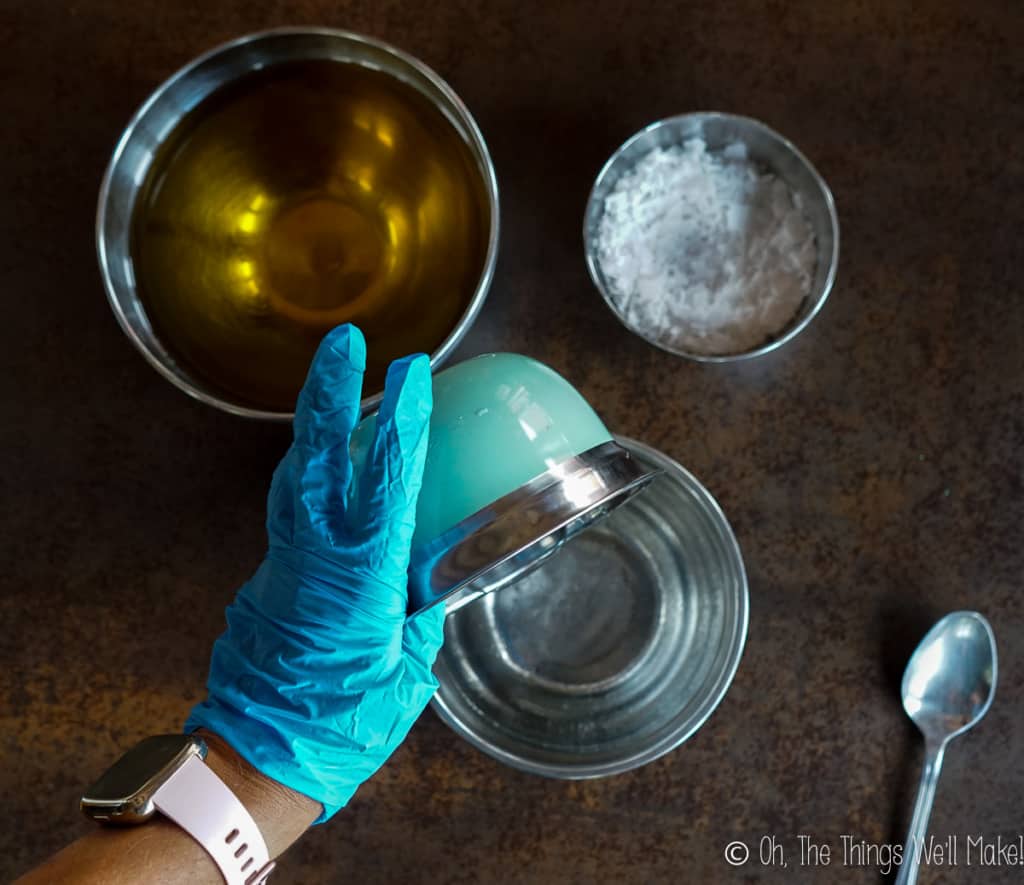
Weigh out the glycerine, water, and potassium hydroxide (KOH).
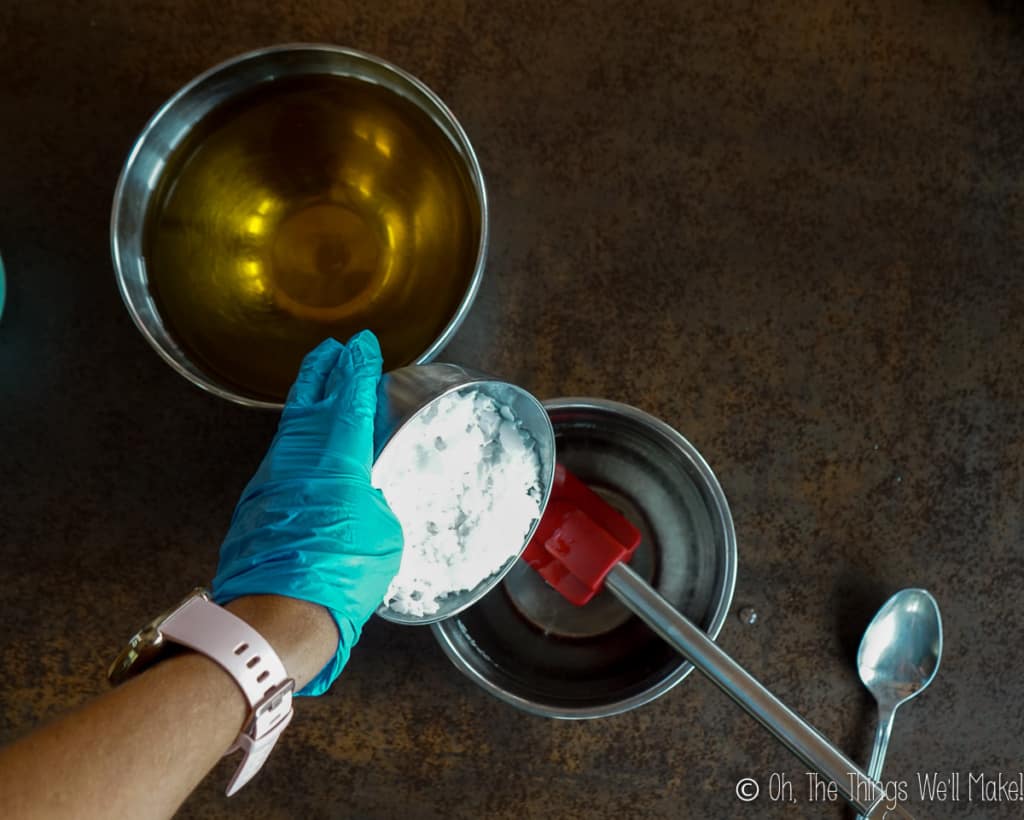
Add the glycerin to the water and then carefully add the KOH to the water and glycerin mixture. (Not the other way around!) Make the lye solution in a well-ventilated area.
Stir the KOH into the water until it dissolves. It will be cloudy at first, but then it will clear up.
Making the soap paste
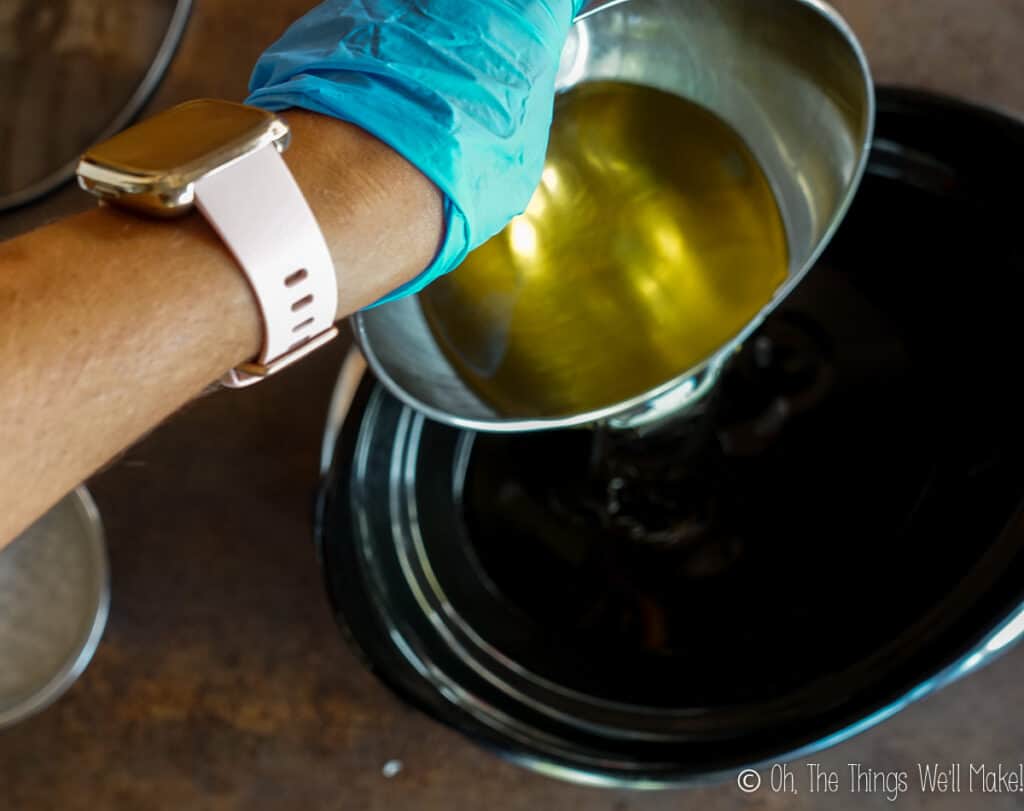
Measure out the olive oil and heat it over low heat directly in the slow cooker.
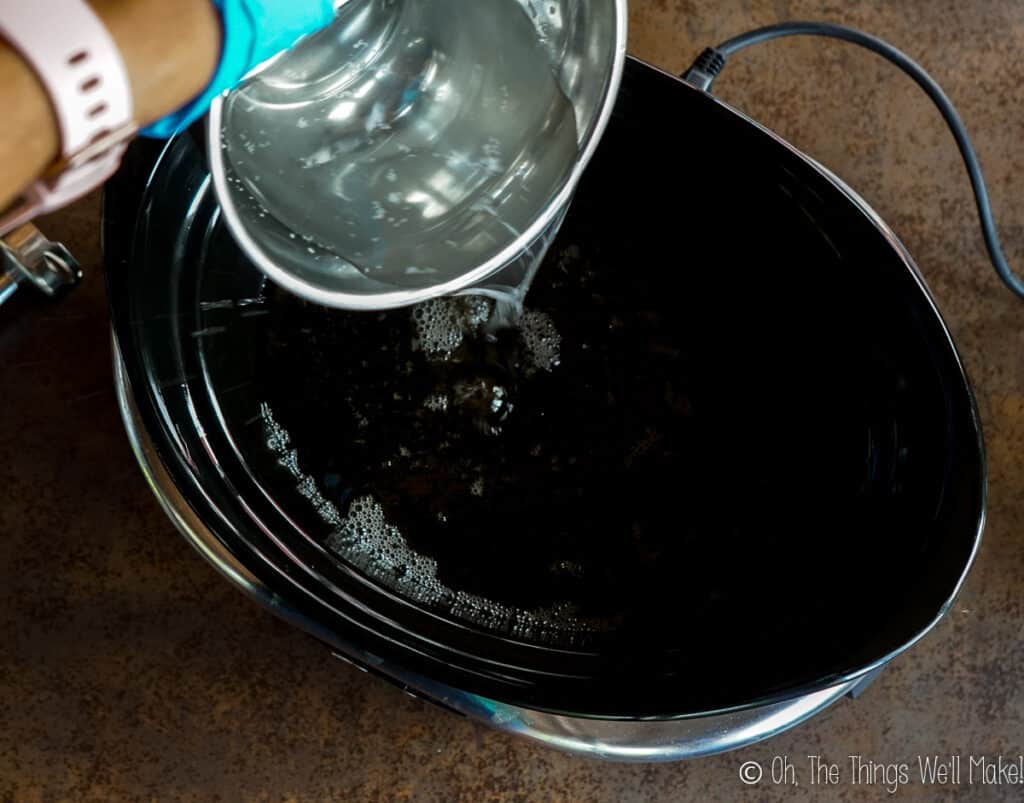
Slowly add in the the KOH mixture to the warm olive oil, and gently stir them together over low heat.
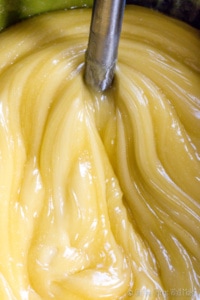
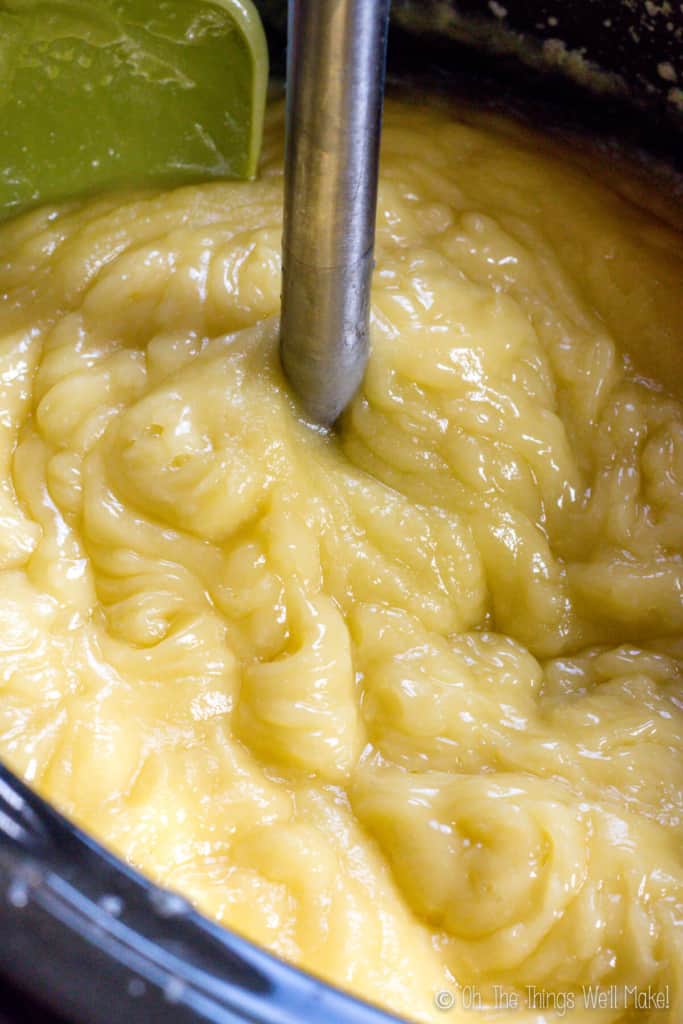
Once combined, use an immersion blender to blend the ingredients together in the slow cooker. In a few minutes the mixture will begin to thicken and look like mayonnaise. Soon after, it will look like a creamy pudding. (If you aren’t doing this over heat, it will take a bit longer.)
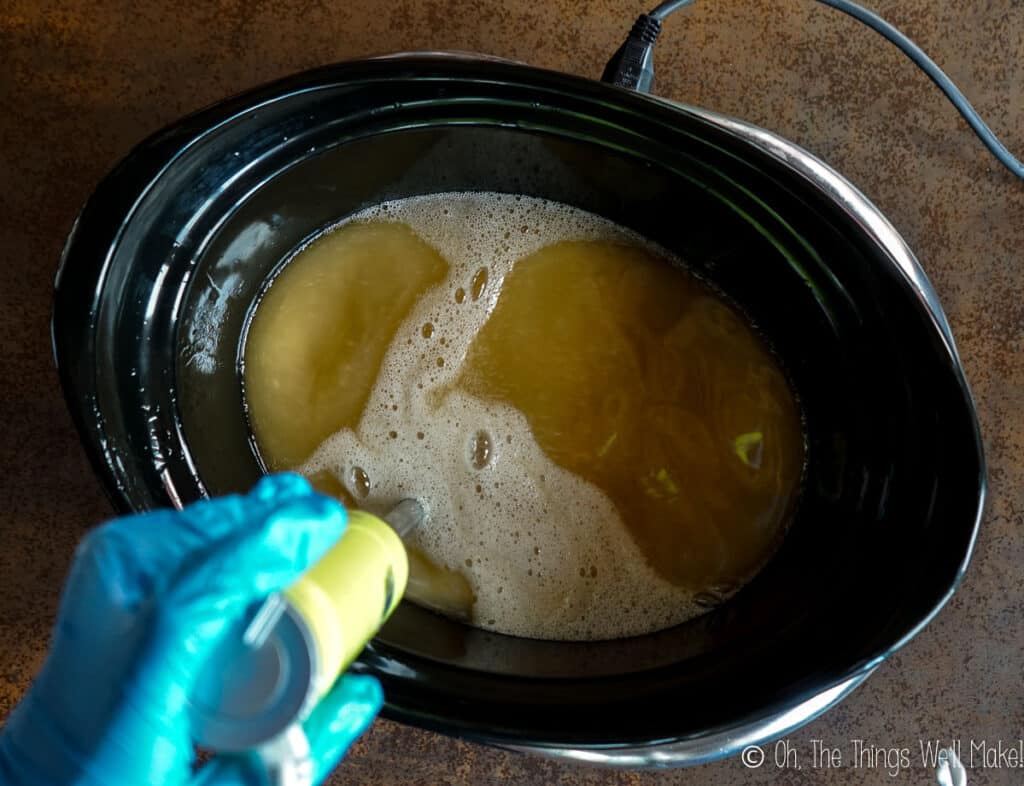
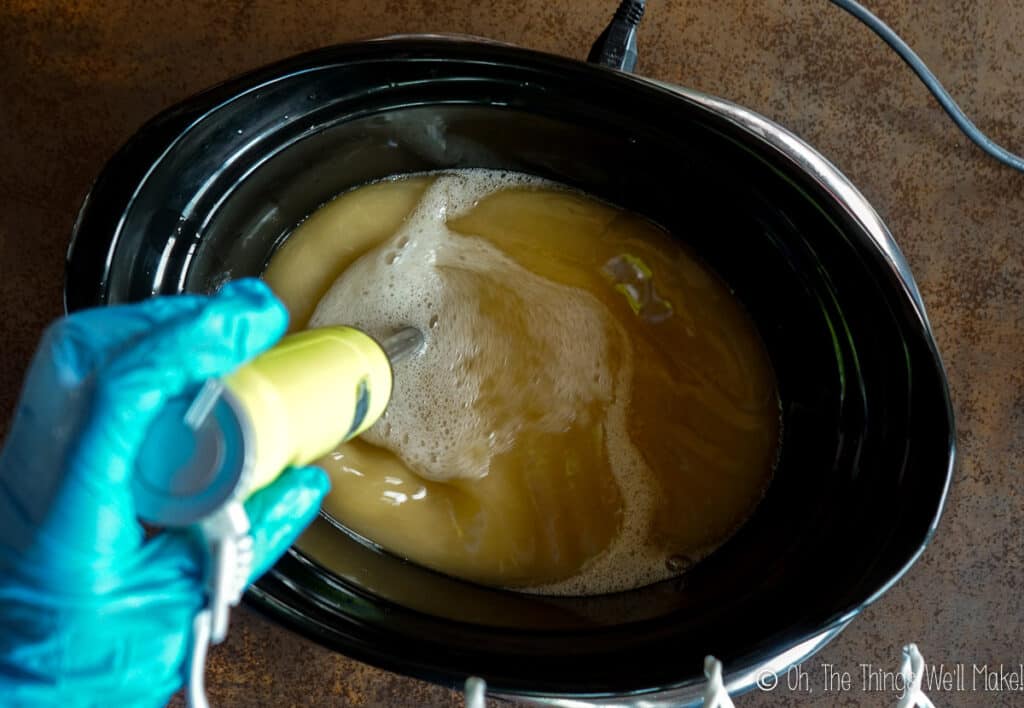
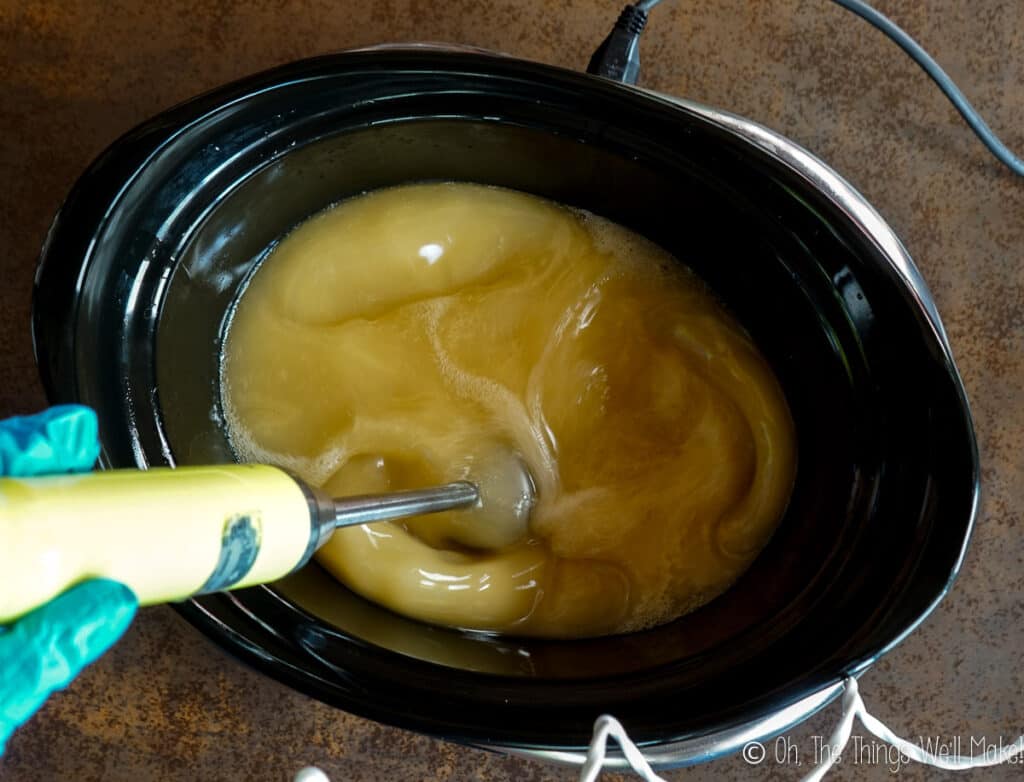
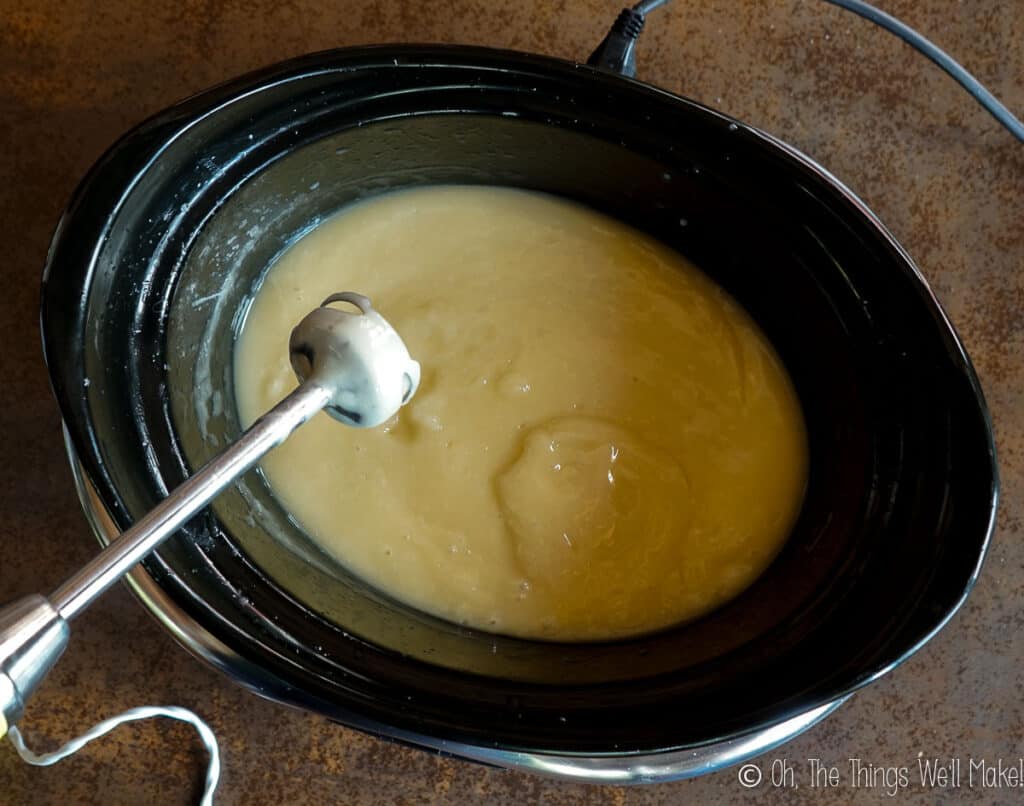
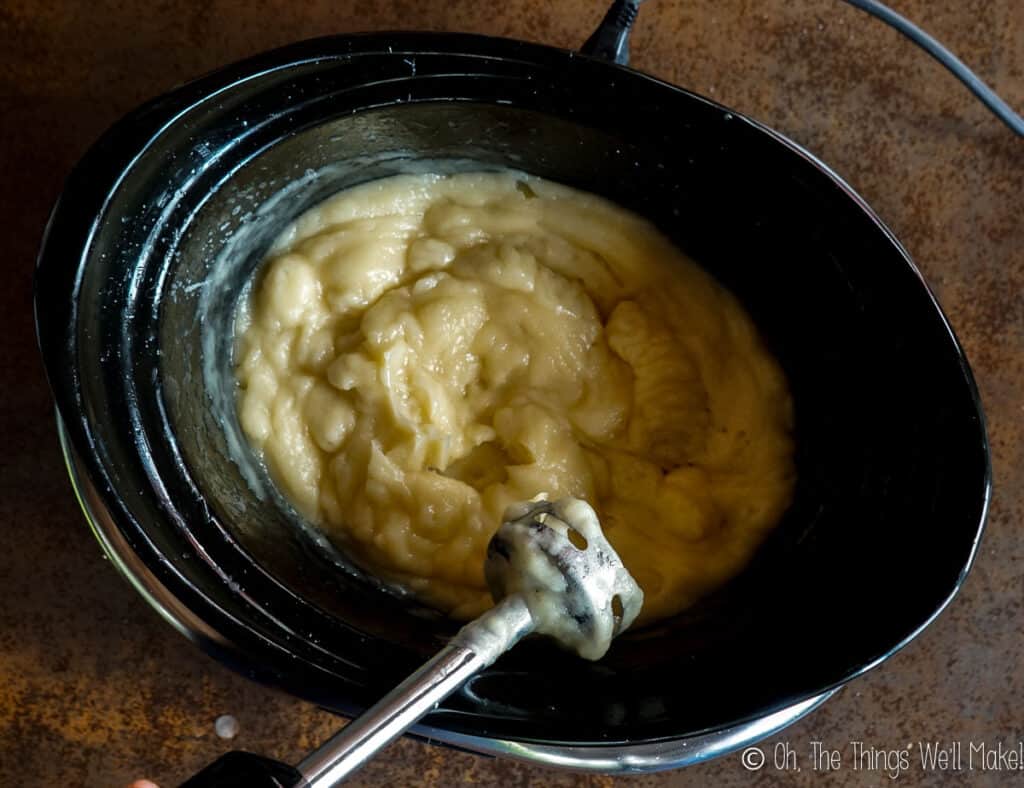
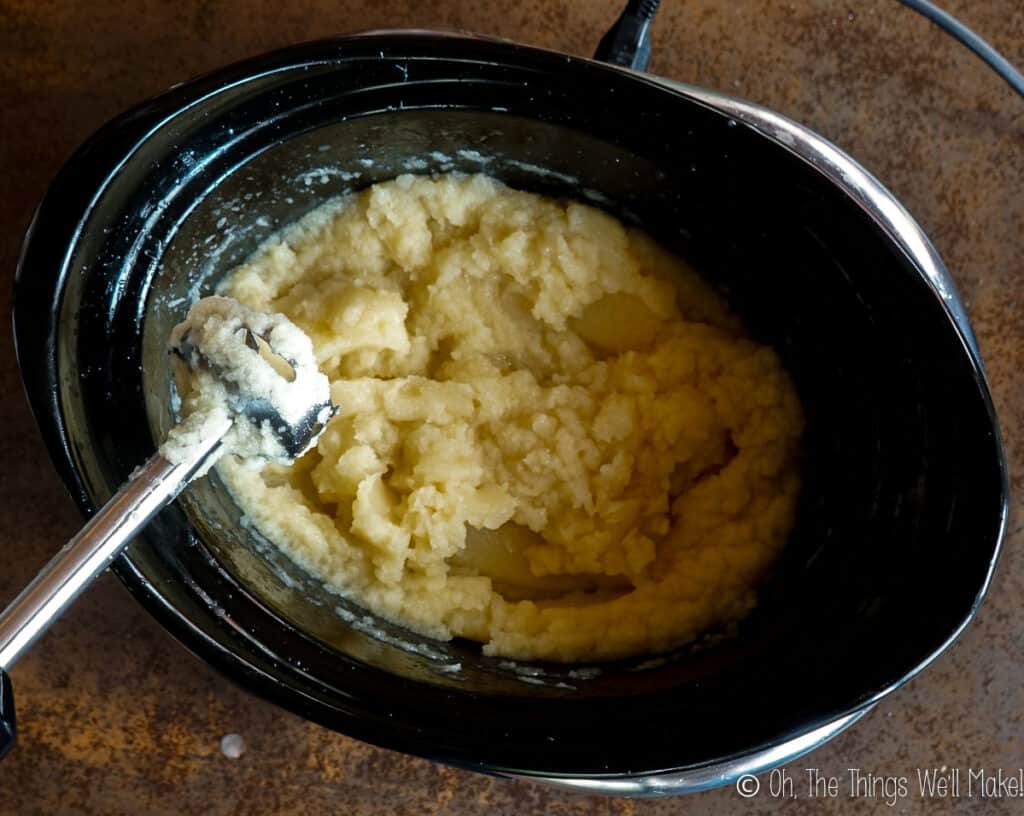
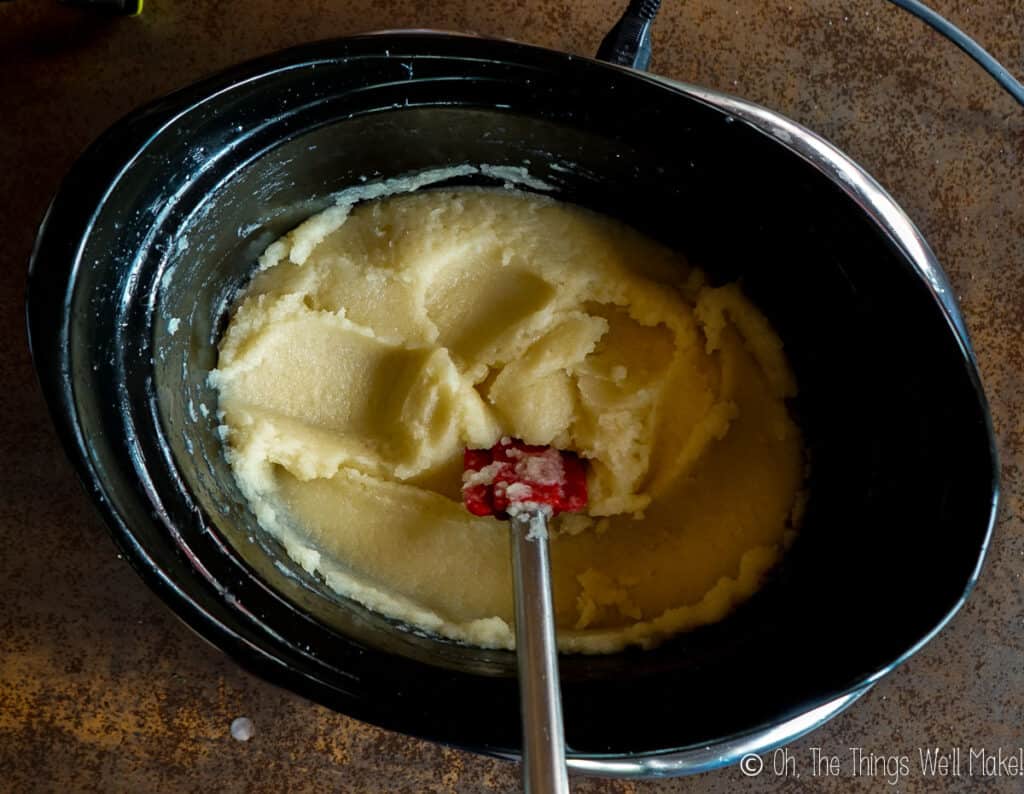
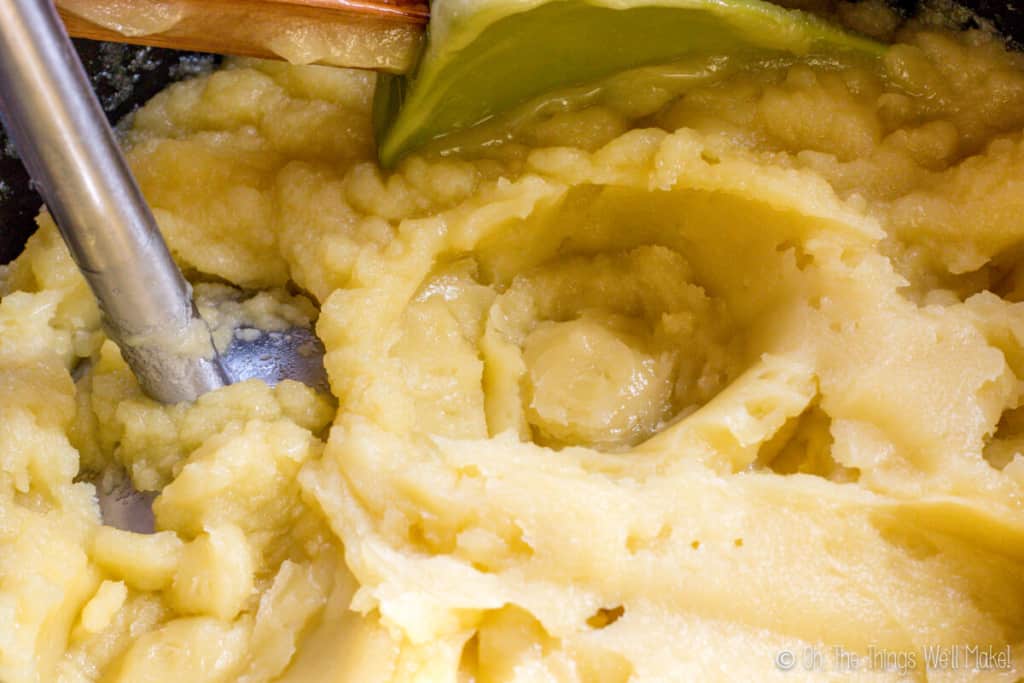
A few minutes later, the mixture will begin to look grainy and look like mashed potatoes or applesauce. Continue to blend.
If, at any point, the mixture becomes too thick to blend with the immersion blender, switch to mixing with a spatula or wooden spoon. It’s also a good idea to take breaks during the blending process so as not to burn out the blender.
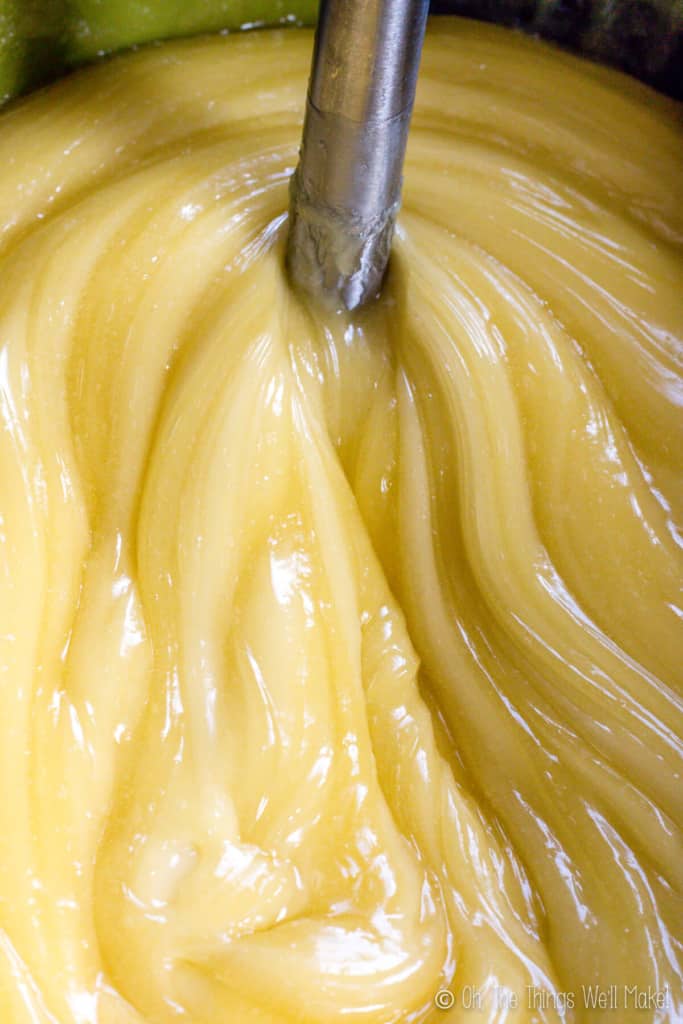
As you continue to blend, it will start to get creamy again. It is now time to cover it and cook it for a while.
Cooking the soap paste
Cooking the soap paste will allow the soap to finish the saponification process and will also help achieve a perfectly clear liquid soap immediately. The process will take 3-4 hours, and you will want to check on it and stir it up every half an hour or so.
As you cook the mixture, it will begin to thicken up and become more translucent.
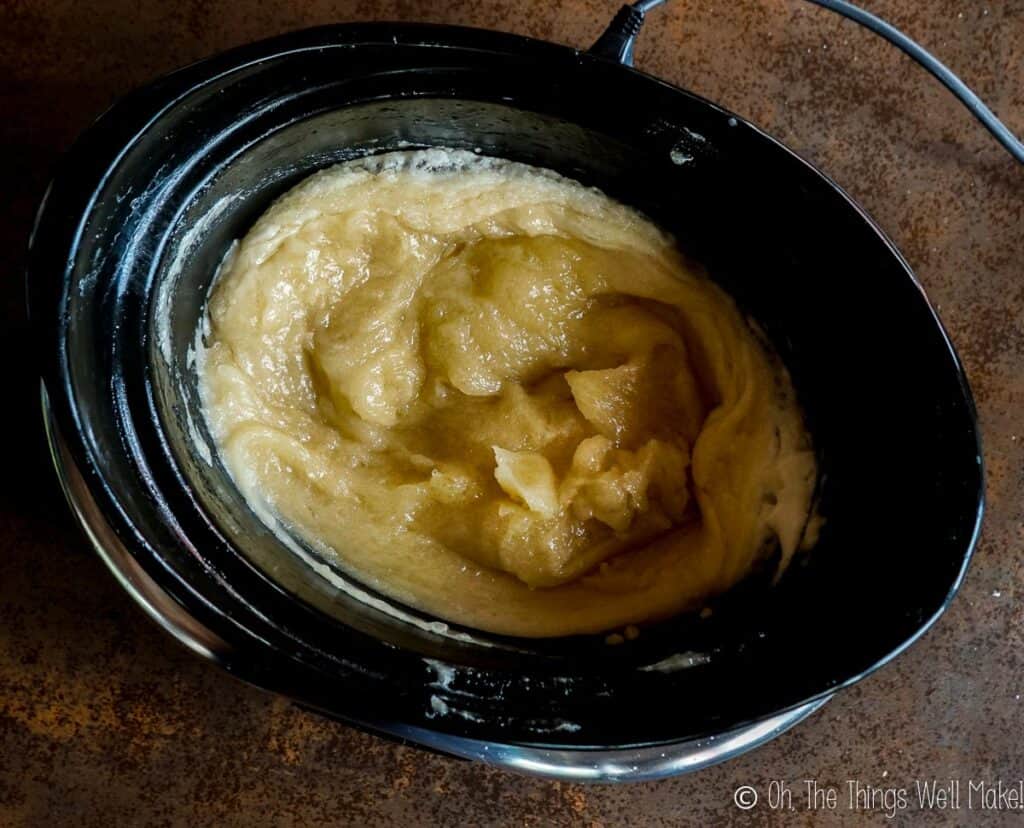
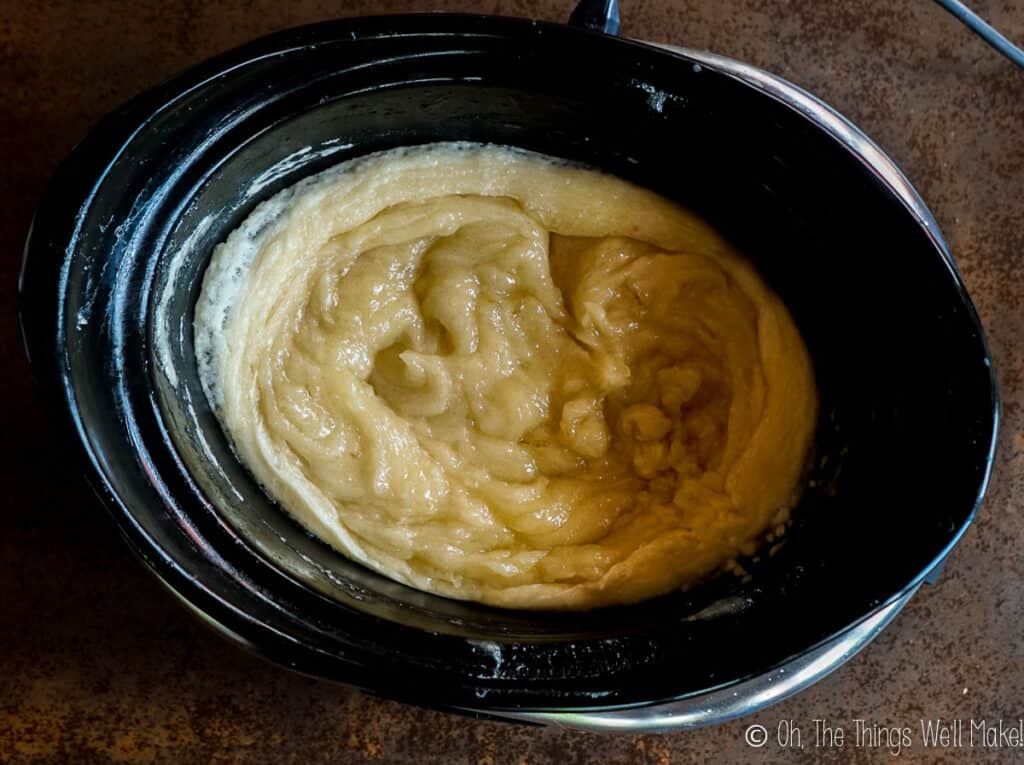
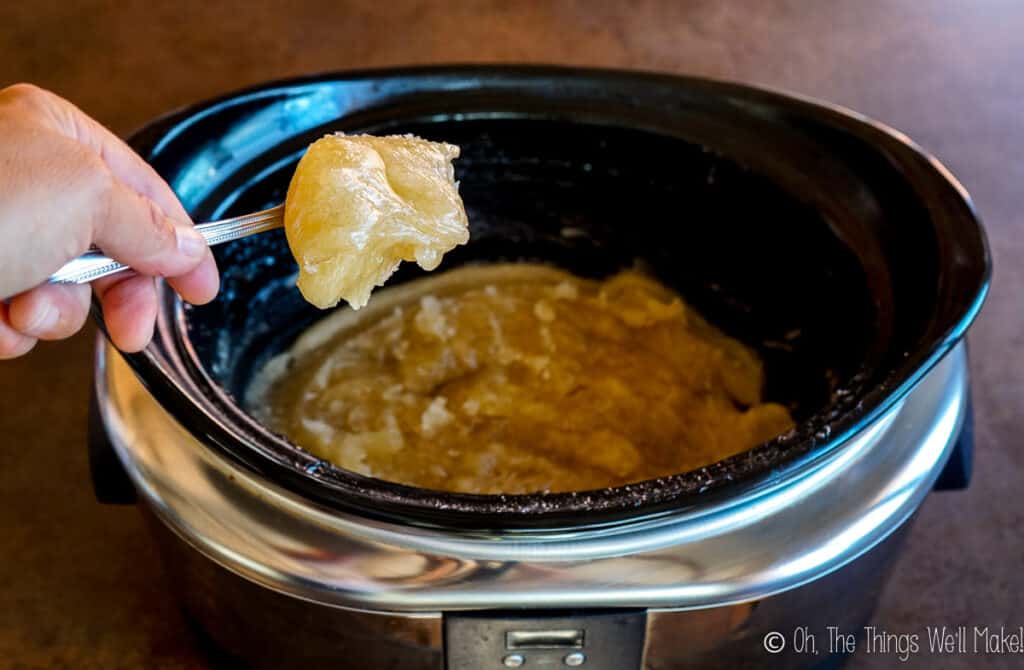
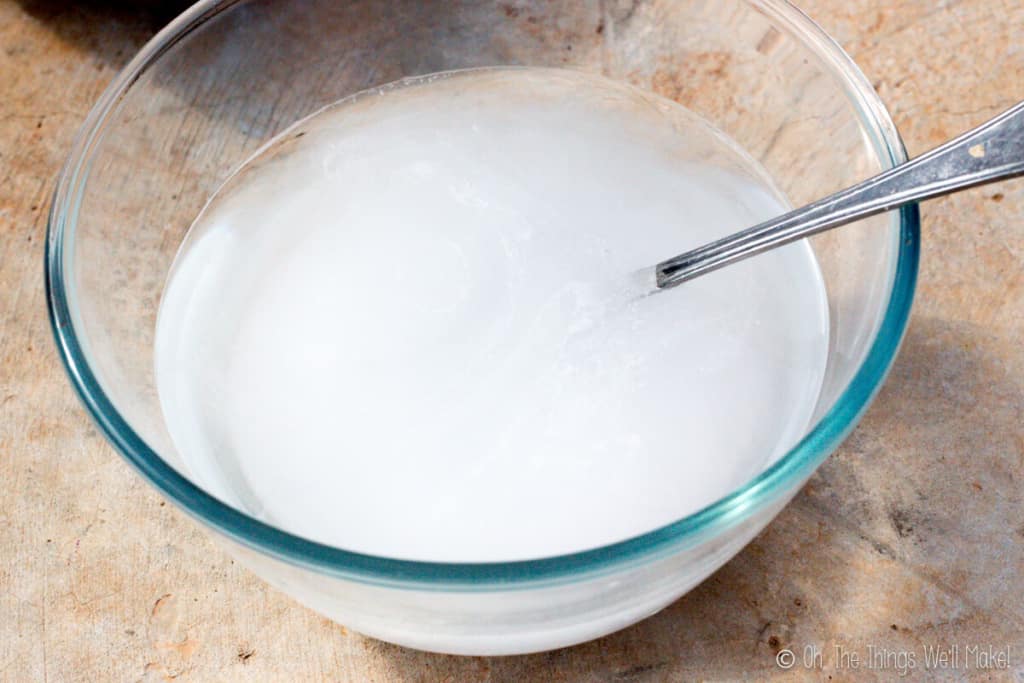
To check for “doneness,” we will look to see if our paste is dissolving into a completely clear liquid soap. To do this, take a small amount of the soap paste and dissolve it in water, and look to see if the water is clear once the soap paste is dissolved.
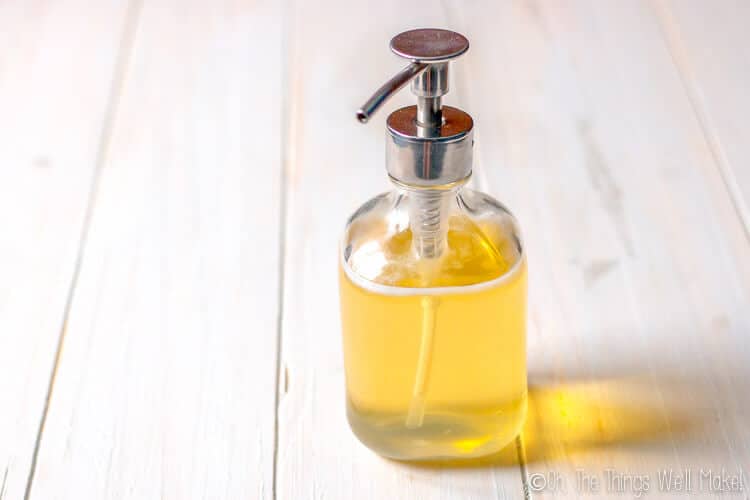
If the liquid is cloudy, you should continue to cook the soap in the slow cooker. Let it cook another half an hour before checking on it again. If it dissolves clear like the soap in my picture, you are finished making the soap paste.
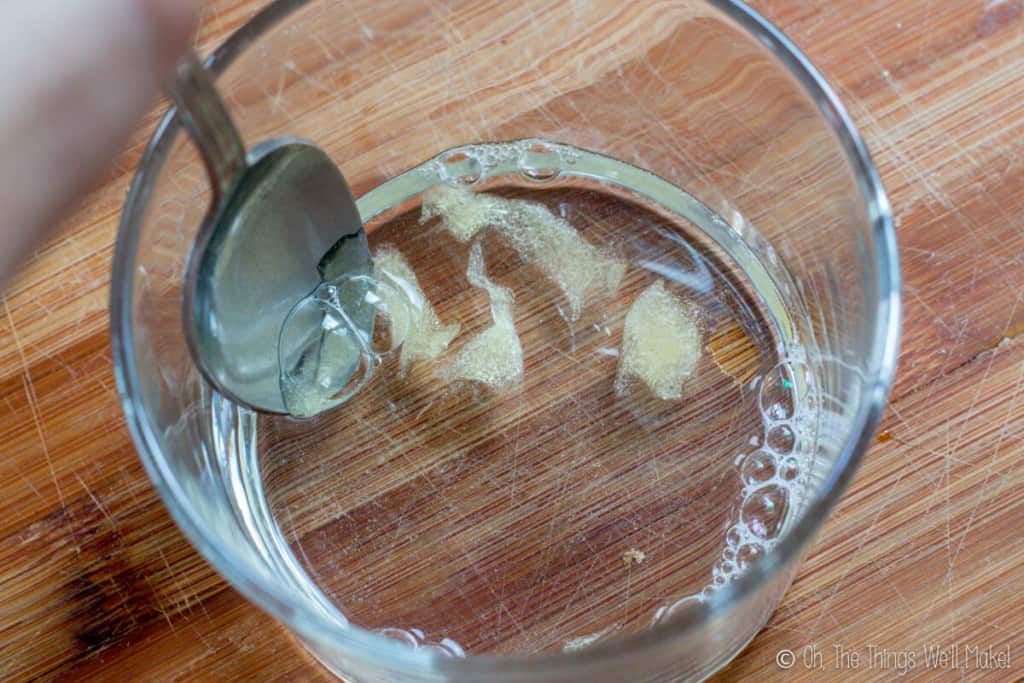
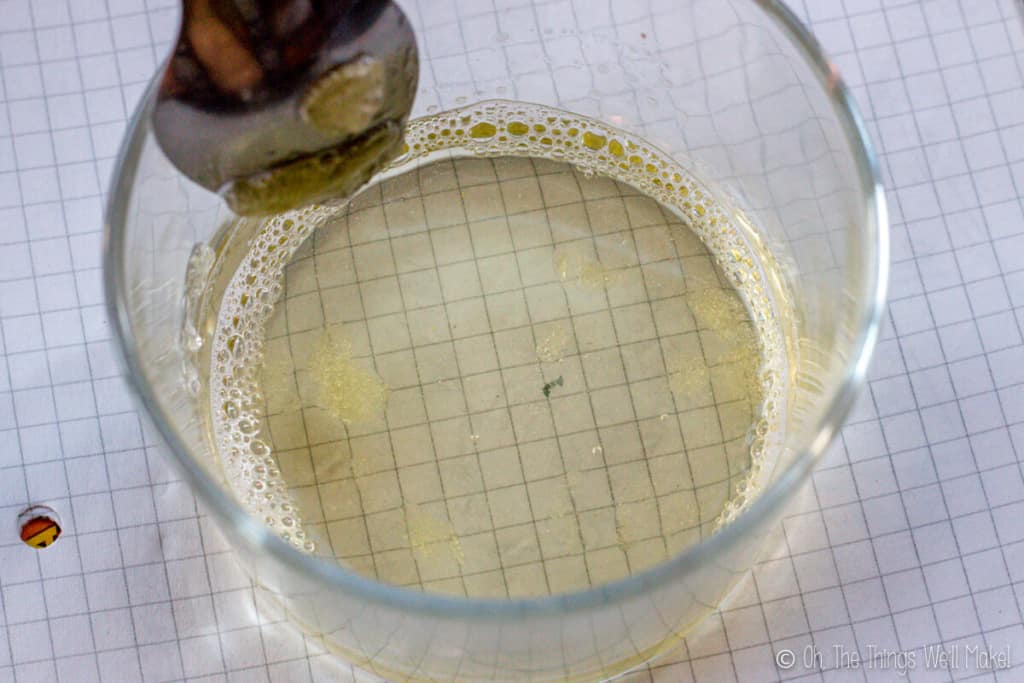
Note: If you aren’t using distilled water, the soap paste may stay cloudy no matter how long you cook it! (For more reasons your soap paste may be cloudy, read my post about troubleshooting liquid soap problems.
How to dilute the soap paste
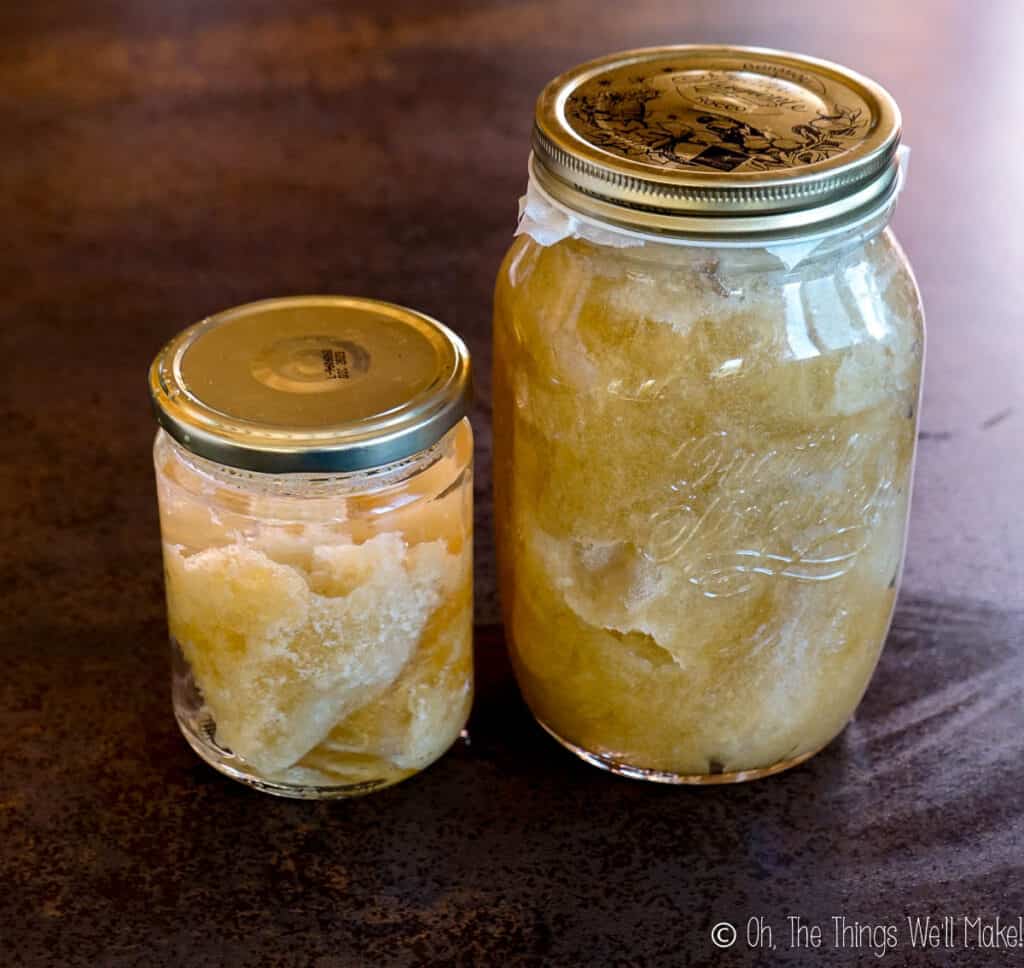
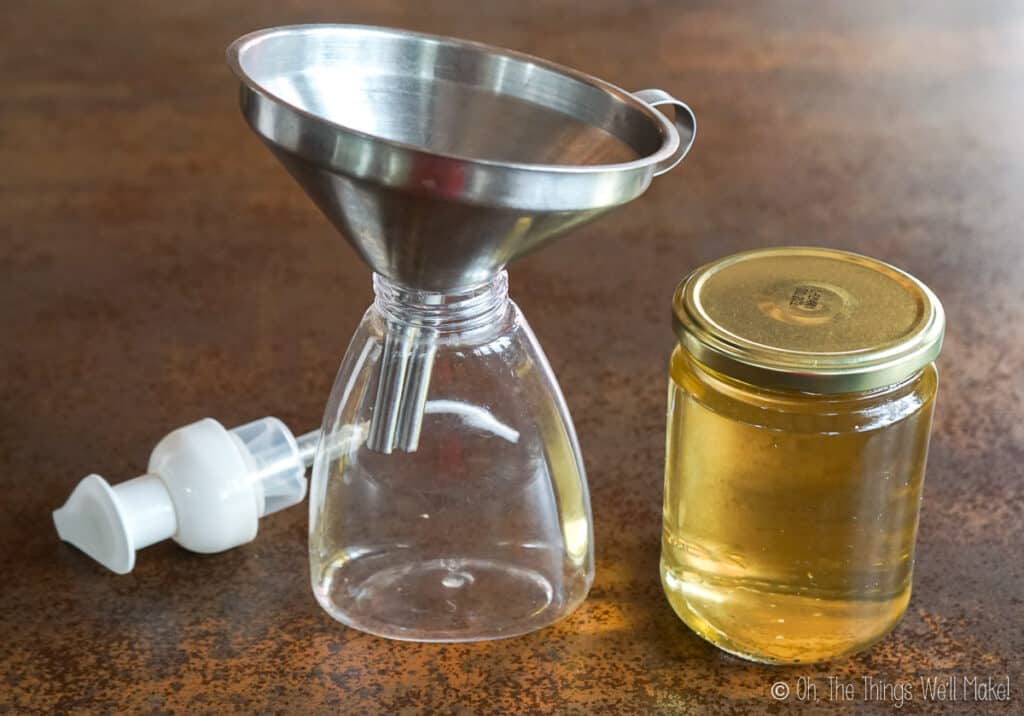
Once you have made your soap paste, you’ll need to dilute it to obtain a liquid Castile soap.
To dilute a soap paste you can:
- Let it dissolve by itself into water over the course of several hours (or overnight).
- Speed up the process by warming the water and soap paste over the stove or other heat source (like the slow cooker).
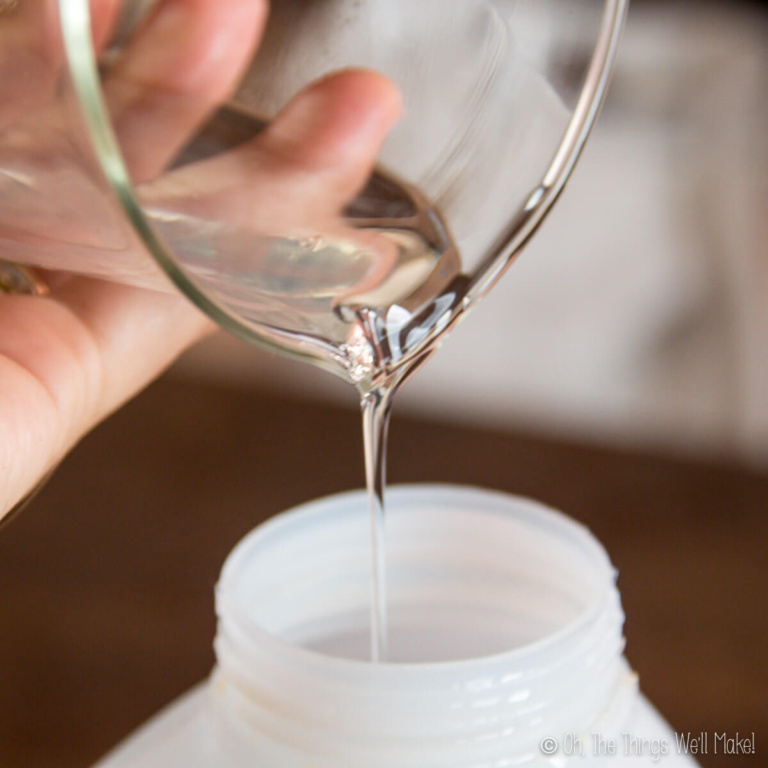
For clear soap, use distilled water. That will also help ensure the water is free of contaminants and the soap will keep as long as possible. By choosing distilled water, not only are you keeping the possibility of microbial contamination to a minimum, but you are also ensuring that minerals and other substances in your tap water won’t cloud your soap.
If you are making small batches that are going to be used relatively quickly (and aren’t concerned about clearness), you can probably get away with tap water without any issues. I still recommend using distilled water when possible.
Read more about how to dilute a soap paste here.
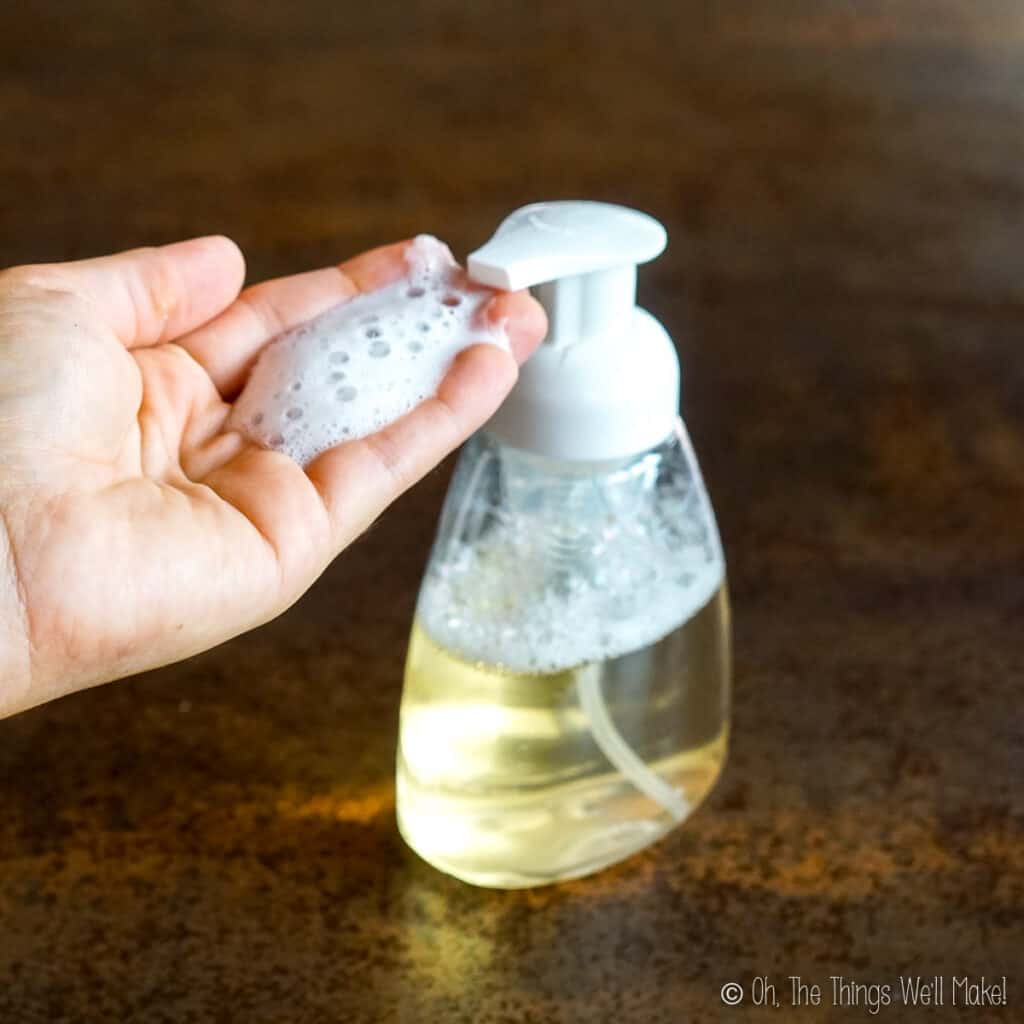
Customizing your liquid soap
How else can you personalize your soap?
Adding fragrances
Unlike with bar soap, you can add in additives like essential oils after the fact. So, you don’t have to divide your batch at trace and work quickly to make soaps with a variety of fragrances. Instead, you can make a large batch of concentrated liquid soap paste base. The soap paste can be stored away and keeps well for a very long time. (I’ve successfully stored soap pastes for several years without issues.)
You can then add in the essential oils or fragrance oils as you dilute the soap paste. This gives you the freedom, even months after making the soap, to play with fun combinations.
At the time of dilution, I mix the soap paste with distilled water and then I add essential oils to give my soap a personalized fragrance.
Does it need a preservative?
Whether or not liquid soap needs a preservative is a controversial subject. Personally, I don’t use one as the pH of soap is high enough that it’s not a favorable environment for the growth of most of the microbes that we’re trying to avoid.
If I were going to sell a liquid soap, though, I’d do proper microbial testing of the liquid soap to see if a preservative was needed or not. Most natural preservatives on the market aren’t effective at the high pH of soap anyway. (Euxyl® K 900 is an exception and would be a great preservative to consider for using in soap.)
For more liquid soap FAQ’s, read my post How to Make a Liquid Soap: Start Here.
Video
Easy liquid castile soap (made from scratch with olive oil)
Materials
Instructions
- Measure out the olive oil and add it to the slow cooker on low heat.
Make the lye solution
- Weigh out the glycerine, water, and potassium hydroxide (KOH).
- Mix the water and glycerin.
- Carefully add the KOH to the water and glycerin mixture. (Not the other way around!) Do this step in a well ventilated area.
- Stir the KOH into the water until it dissolves. It will be cloudy at first, but then it will clear up.
Make the soap paste
- Slowly add in the the KOH mixture to the warm olive oil, and gently stir them together in the slow cooker.
- Once they are mixed together well, use an immersion blender to blend the ingredients together. In a few minutes the mixture will begin to thicken and look like mayonnaise. It will later look like a creamy pudding.
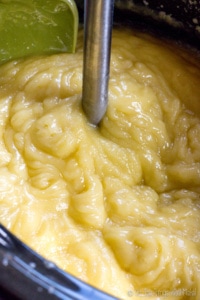
- The mixture will go through stages, from creamy to grainy and back to smooth.
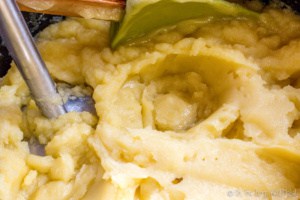
- As you continue to blend, it will start to get creamy again. Once you reach this point, you can stop blending with the hand held blender and can leave the soap paste cooking covered in the slow cooker.
Cook the soap paste
- As you cook the soap, it will continue to thicken and will become more translucent. To achieve a clear liquid soap we'll need to cook the soap paste for 3-4 hours. During that time, check on it and stir it up every half an hour or so.
Check for doneness
- To check for "doneness," we will look to see if the soap paste dissolves clear. To do this, take a small amount of the soap paste and dissolve it in distilled water. If the resulting soap is clear, the soap is finished cooking. If it's cloudy, continue to cook the soap paste for another half an hour before checking on it again.
Dilute the soap
- To make a liquid Castile soap, dissolve some of the paste in distilled water. I ususally use a ratio of one part soap paste to 2-3 parts distilled water. Let it sit until dissolved, or gently heat to speed it up.
Notes
- A slow cooker is perfect for this because it gently heats without burning and keeps everything at a steady temperature. If you don’t have a slow cooker, you can bake the paste in the oven or cook it in a double boiler.
- Take breaks while blending so you don’t burn out the motor of your immersion blender. If your blender gets too hot, you can pause and let it cook before continuing.
- If the mixture becomes too thick to blend at any point, switch to mixing with a wooden spoon.
- If you’ve cooked it for more than 3–4 hours and it still isn’t clear, there may be other issues. Tap water can cause cloudiness. For other possibilities, see my post on troubleshooting liquid soaps.
- This recipe makes about 4.5–5 pounds of soap paste, which can be diluted to 10–20 pounds of liquid soap or more, depending on how concentrated you want it. That’s roughly 1–2 gallons or more.
- Keep in mind that liquid soap is not as thick as commercial gels or surfactants. It has a thinner consistency and doesn’t need to be thick to be concentrated and work well.
- Undiluted soap paste can be stored in glass or plastic containers in a cool, dry place for more than a year. I’ve had some last for several years without any problems. It may eventually develop a slightly rancid smell, but can still be used for general cleaning.
DIY liquid body soap recipe:
If you would like to combine this soap with a liquid coconut oil soap to obtain a bit more lather and a squeaky clean feeling, try using this ratio:
60-70% liquid Castile soap (made with only olive oil)
30-40% liquid coconut oil soap (for bubbly lather, link goes to the recipe post)
Essential oils of choice.
Mix all of the ingredients together, and keep a bottle in the shower to use instead of shower gel.
Add essential oils for fragrance. Lavender essential oil gives a lovely herbal scent. I also like citrus blends using lemon and bergamot.
What are your favorites?
This post was originally published on June 29, 2016. It was rewritten and republished in June of 2021, adding new information, more photos, and video.
How much soap paste does this make? Also How much liquid castile soap did you end up with one batch of this recipe?
Hi Rebekah,
To be honest, I don’t remember exactly how much I ended up making. It would depend somewhat on how much water has evaporated out, etc. I plan on making it again soon to record video of the process, and I’ll weigh the final amount of soap paste.
The amount of soap made is even more dependent upon how you decide to dilute the soap paste. I find that I usually end up dissolving it with about 1 part soap to 3 parts water (or more). I usually mix it with the coconut oil liquid soap, though, so it’s hard to quantify it. I will say that I’m still using a batch from over a year ago.
HI Tracy, this is so informative! Thank you for sharing ! I REALLY wanna make this , like right now ! But I am a little unsure how to convert the measurement units in your recipe into metric measurement. Is it safe to just convert the weight of potassium hydroxide into grams straight and treat it like any other matter such as salt or sugar for example… As for the liquids (water , glycerine, olive oil), are those fluid ounces or just ounces (weight)?
Hi Abigail,
I’m sorry to have taken so long to get back to you, but you caught me on a holiday weekend here in Spain. We just celebrated 3 Kings Day and my son finally goes back to school tomorrow.
I can try to remember to convert to grams in the morning. I personally also prefer grams for the very reason you stated – Ounces tends to confuse people with liquid ounces and regular ounces. All of the ingredients for this soap were just “regular” weight ounces. I’m not really sure why I went ahead with using ounces this time as I usually formulate my soaps in grams. It may have had to do with the soap calculator I was using at the time because I ended up using different ones for formulating my liquid soaps.
I’m off to bed now, but I’ll try to convert the amounts in the morning! If you want to go ahead, any grams to ounces weight converter should work.
Hi Abigail,
Not sure if it shows up on your computer/tablet/etc the same as mine, but there is a drop down that allows you to convert it right on this page! I thought that was rather clever of Tracy to add that option but being a bit bias as I think Tracy is the absolute Bees’ Knees…here it is for your reference if it is not present on your device for one reason or another:
Ingredients
184.84 g KOH This is not lye (NaOH) that is used in bar soap!
907.18 g olive oil
327.44 g water
226.80 g glycerine
Good luck
Theresa
Thanks so much, Theresa!
Yes, I spent a bit more money on this specific recipe plugin because it did have the ability to convert to metric. I don’t like it as much for recipes which started with cups, but for this sort of recipe it is perfect! I sort of forgot about it when I answered the comment last night.
Thanks for helping out and saving me a bit of time on the conversions! 🙂
Have a great week!
Tracy
Glad you didn’t mind me posting a response to another reader.
I was just trolling/stalking/always on….I mean posting my question on your site when I saw Abigail’s question. I guess the secret’s out that I absolutely adore you and admire and so appreciate all the info and work you put into your recipes that you share with us!
I will definitely work my way up to using paint for the shirts soon!
Have a great week yourself!
Theresa
Hello! I am making this recipe as we speak (well, as I’m typing this ?) and am pleased to report that after a very slow start to my own concoction thickening up, I upped the heat setting to high on my 4 qt Crock Pot (I cut the recipe in half due to having such a small Crock Pot) and it almost immediately thickened to the desired 2nd “pudding” stage. I’m under the impression that the colder weather may have something to do with it; though I am actually letting it rest for a few minutes between blending sessions. It’s moving along nicely, as I stand with a sleeping baby girl wrapped up on my chest while I soap tonight, as always!
Thanks for the feedback, Jana!
I was wondering why more people seemed to be having more problems with it thickening up now that it’s winter. I was suspecting the same thing, but it actually surprises me since you are making it in the slow cooker either way. It could also have something to do with the fact that different slow cookers emit different amounts of heat. Who knows? It’s good to know that turning up the heat helps speed things up.
I need to make this recipe again soon. I want to get the process on video to help people better understand the stages. Soon luck with it, and enjoy your baby girl. I miss having my little guy strapped to me, but have to say no when he wants to be held too long as he weighs way too much now. Now I’ll stick with snuggling on the couch/bed. 🙂
Yes, thank you.
I will rebatch the soap with the coconut oil and go from there since it will be impossible to know how much lye is actually in any given small amount.
I also wanted to tell you how much I enjoy your posts and appreciate the thoroughness with which you outline your process. When I come across an idea I’d like to try on Pinterest, I find myself searching thru your site first to see if you have posted on the same thing since I would completely trust your calculations over the mass of other ‘bloggers’. I definitely then do purchase any supplies I may need thru your affiliate links as well!
Even my grandson (3) is going thru the same likes as your son at the same age…I am in the process of making the Wall-e & Eve shirts for him as he is obsessed with them now ?.
May the new year bring you and yours peace, joy & prosperity!
Theresa
Great! Yes, you’d have to do the whole batch at once to get things to be precise. Otherwise it would be more of a guess, which you probably don’t want to do if you want to use it for face and body.
Thanks again for your sweet comments. If there is ever anything specific you are looking for and would like to see on the blog, I’m all ears. I do like a challenge, as you may have noticed. 🙂
Have fun with the Wall-E shirts. I’ve actually made a few of each of them; as he outgrows them I need to remake them in a new size. My son still likes Wall-E and we just put together the cutest Wall-E Lego figure that he got for Christmas. I stopped posting a lot of the kids stuff on the blog as most of those posts aren’t as popular, but maybe I should start adding them again for fun. This last year we did a Paw Patrol Party.
I haven’t been making as many shirts for him lately as his school has uniforms, and it sort of takes the fun out of dressing him in cute things. He only gets to wear his other clothes on the weekends. I’m not a big fan of uniforms, as I tend to think that they crush kids creativity in a way. (Plus, I’m always fighting the ones at our school made out of polyester, which I really think should be illegal, and my son wears a modified cotton one due to his atopic dermatitis.) Anyway, I guess that was off topic, but sometimes you just gotta vent. 😉
Have a great week!
Hello Tracy,
Well, I finally got around to ‘rebatching’ my soap. The holidays are always filled with a lot of traveling and we just got back from Santa Barbara spending a January Christmas with the in-laws.
I decided to add the 14.5 ozs of coconut oil and it is currently in the crock pot now. It is pretty solid (a very thick mashed potato consistency) and I am going to let it cook for a bit more to allow more time for me to make sure that it is completely ‘stirred’ together and homogenized. I think that I will let it dry out a bit without molding it since it really looks too thick to mold and store is the way I did the ‘play doh crumbles’ that I made the first time when I used the lye instead of the potassium hydroxide.
Question: After reading your post on making the bar soap; do I now have to let it cure for the weeks you recommended for the bar soap before I use it? Remember that my plans are to grate up this batch and dissolve to use as a ‘liquid’ soap.
My grandson loves his Wall-E shirts (I too make him shirts in several sizes to allow for his growth spurts ;)) I actually took the easy way out and printed several Wall-E pictures onto Iron-On paper then heat transferred it onto his shirts! Not enough hours in a day, especially around the holidays! My grandson also loves Paw Patrol now…and robots. We’ll see what his interests are when his birthday rolls around in September.
Theresa
If you are going to use it as a liquid soap, there is absolutely no need for you to wait. You can use it right away.
The heating process will allow for the saponification process to finish right away. If you were making it into bars, the wait period would mainly be just to allow for the drying of the soap so that it holds its shape and you don’t use it all up as quickly.
As for Wall-E— if you don’t have a lot of time, you should try out the Wall-E galaxy t-shirt. It really is super quick and easy, and older kids love to help out with it. I was thinking of making a new one soon just to make video for it. This year I want to go through older posts, make videos and update anything outdated, and that was one of my very first posts. 🙂
That said, I can appreciate the iron on method as I’ve used it myself a few times. I have a hard time finding good iron on transfers that hold up well, though, which is what I don’t like about that method. The paints hold up better to washing/drying and feel softer.
Ah-yes, my son also loves robots. I guess we’ll be birthday planning at right about the same time as my son’s birthday is also in September.
Happy New Year Tracy!
Hope your holiday was a good one over there in Spain! Here in San Diego, we enjoyed some much needed rain and got to experience some crisp weather, which I do enjoy around the holidays (even though it was in the 70s for much of the Christmas week).
Just wanted to update you on the outcome of my goof-up when I added lye instead of KOH to this recipe thinking it was one and the same.
Per your suggestion, I went ahead and diluted some just to see how it would turn out (I didn’t measure, just added some of my play-doh crumbles (hehe…soap) into a large mason jar and filled with distilled water. Being impatient, I ended up heating the sealed jar in a pot on top of the stove top. Well it still took a while to dissolve but it turned into a beautiful shade of almost golden-hued (still clear) liquid soap. I have to admit, I found myself admiring my jar of liquid soap for quite awhile until my husband asked me why I was staring at the mason jar! 🙂
I then put the jar on a shelf in the garage and as the weather was getting colder, I saw that it turned considerably thicker and more opaque until today when it became solid and white just like your picture of the coconut oil soap even though I did not add any coconut oil!
I should have weighed out the soap I was diluting but didn’t really think about it since this was just an experiment. It was VERY thin liquid when it first dissolved. I wish I could send you a picture!
You mentioned something in one of your replies about ‘cooking off the excess lye’ as I was reheating the soap…how would one be able to tell? Do I just scoop some out, use and see if it irritates my skin (or worse burn?) Isn’t there a more scientific/exact way to do this?
I am still hesitant to actually use this since I am unsure about the excess lye. I will definitely be ‘cooking’ the soap more as I am rebatching it into a usable liquid soap and would like to know how I can calculate whether or not the lye is sufficiently neutralized. I am hoping to use the final liquid castile soap in household cleaning recipes as well as some face washes.
Thank you in advance for any help you can offer.
Theresa
Hi Theresa,
Thank you, and Happy New Year to you too!
So, in the end, you decided to not add either coconut oil or olive oil?
You will most definitely have a lye excess then based on the calculations I did. If you want to neutralize it into a useable soap (for your skin- I’m guessing that it should be useable for cleaning as is, but it should be a very harsh soap), you’d need to add the amount of oil I told you to add in the other comments. Just cooking it won’t neutralize the soap. Cooking it will make the saponification process complete more quickly if you have the right amount of ingredients being used, so it will help complete the chemical reaction between the oils and lye to make a soap. As of now, your oil will have all been used, but you will have leftover lye.
I would put all of the soap together, and cook it with the extra oil. I calculated it to use up all of the lye, so you would end up with a soap that you could use for your body (and even face) too. If you want to use it for your face, I’d probably add the higher amount of suggested oil I gave you (14.5 oz. vs. 14 oz. of coconut oil- or however much olive oil I calculated).
Does that make it clearer?
Good luck!
Happy new year! I would love to try this recipe but I’d be looking to make a gallon of it. Do you neoprene to have the quantities necessary for each ingredient to do so?
Hi Jennifer,
Thanks! Happy New Year to you, too! 🙂
Are you looking to make a gallon of the finished soap?
It really will depend on how you end up diluting the soap, but this recipe should make you over a gallon of finished soap.
I’m going to be making these recipes again soon so that I can record video of the process, and I’ll have a better idea of how to quantify it then, but I’ve been using a mixture of a batch of this soap and a batch of the coconut oil liquid soap for well over a year now.
Hey there!, so I’m about to try this recipe and was wondering about preservatives and antioxidants. If I were to add a soap similar to my product line to sell, would this be safe for the consumer so as to not go bad or grow any bacteria? I saw you mention Dr. Bronners soap which i’m a fan of and it looks like they use tocopherol and citric acid..any thoughts on those ingredients?– thanks!
Hi Brian,
I don’t really know anything about what is needed for commercial soap making. I haven’t really even considered it because here in Spain they make it basically impossible for an individual to legally make and sell soaps. You would need to make a huge investment to legalize it, one that is really out of the reach of individuals in general.
I will say that tocopherol is a good antioxidant that helps keep oils from going rancid, but isn’t really a good preservative per se. I think the citric acid in their soap was mostly used for neutralizing the pH of the soap and not so much for preservation. I sort of doubt that it would work as a preservative at all in soap because of the normal alkaline pH of soap (normally in the 9-10 range). It’s alkalinity in itself probably helps inhibit bacteria to a certain extent.
In any case, I’m still using batches of liquid soap that I made over a year ago, and I don’t really notice any change in them. I do keep the soap mixture pretty thick and only fully dilute small batches at a time, though. I’m not sure how long they should last, but it obviously depends upon how much water is in the final product, the final pH of the soap, what sort of water is used, etc.
The addition of certain essential oils may also help inhibit bacterial growth.
I wish I could have a more concrete answer for you.
Hi Tracy. I’m having the same problem as another poster in that my soap is not doing anything after 20 minutes of blending still very liquidy). I’m curious if I used the wrong measurement of KOH. You say ounces, and I assumed weight ounces since my KOH is flakes. Did I assume incorrectly? Should I have used a liquid measurement of ounces? If so, how would I do that since it is a “dry good”?
Hi Paige,
No, you assumed correctly. I’m wondering if the cold temperatures of winter is causing problems for some people, even when using a slow cooker to heat the soap? Or maybe it’s an issue with different olive oils or KOH (Maybe not all KOH is of the same concentration. I’ve heard about that being a problem with NaOH in bar soaps.)?
I think what I’m going to try to do is to make the recipe again after Christmas, filming myself throughout the process, to have a video that shows what the soap should look like through the various stages. That will serve the dual purpose of seeing what it’s like to try to make this recipe in the cold of winter to see if that affects the recipe for me.
I’m not sure what other suggestions I can give at this point. Did it end up solidifying? Does it seem like soap if you dissolve it after hours of stirring?
What is the ratio for dilution please?
Dalton
Hi Dalton,
I don’t use a specific dilution ratio, and I explain why and how I dilute my soaps in the post about how to dilute liquid soaps. (In the end, it’s probably roughly one part paste to 3 parts distilled water, more or less depending on the temperature of the house, etc.)
Hi, i don’t have a slow cooker or crock pot, could i make this on the stove?
Thank you
Hi Jessica,
I’m guessing that you could make this on the stove, but you would have to be very careful about it because the soap can burn. Keep in mind that it needs to be cooking several hours, and you would have to be around a lot more to make sure things aren’t burning. Perhaps you could try doing a double boiler setup in the later stages to help prevent that, but I’ve never tried it to know how well it would really work.
Thank you for replying to me.. I want to let you know how it worked out. I made a batch using a double boiler set up and i’ve been using the liquid soap for everything… Really everything i’m getting ready to make my second batch this month. At the time i didn’t have a stick blender so i used a hand whisk. My mixture didn’t get passed looking like mashed potato but after 4-5 hours at that stage i tested it and it looked like it was ready so i went ahead and diluted it anyway and as soon as it was diluted it looked exactly like yours. it’s stayed a clear liquid, i’ve used it for household cleaners, hand soap dishwashing liquid, face wash recipes, even my friends have been taking some to use. Looking forward to making batch 2!!
Hi Jessica,
Thanks so much for your comment!
I’m so glad it worked out for you.
I suspect that it just takes a little longer without the stick blender, but because it’s cooking for so long, it’s probably easier to get by without it than it would be for a bar soap.
I need to make a new batch soon, too. I use up the coconut oil soap a lot more quickly than this one because I use it a lot for cleaning, and I’m almost out. 🙂