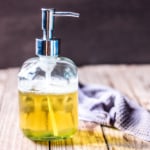
Easy liquid castile soap (made from scratch with olive oil)
Made with only olive oil, this liquid Castile soap is gentle, simple, and made from scratch using potassium hydroxide. It’s perfect for face and body and can also be used around the house.
Servings 5 lbs. soap paste
Ingredients
Instructions
- Measure out the olive oil and add it to the slow cooker on low heat.
Make the lye solution
- Weigh out the glycerine, water, and potassium hydroxide (KOH).
- Mix the water and glycerin.
- Carefully add the KOH to the water and glycerin mixture. (Not the other way around!) Do this step in a well ventilated area.
- Stir the KOH into the water until it dissolves. It will be cloudy at first, but then it will clear up.
Make the soap paste
- Slowly add in the the KOH mixture to the warm olive oil, and gently stir them together in the slow cooker.
- Once they are mixed together well, use an immersion blender to blend the ingredients together. In a few minutes the mixture will begin to thicken and look like mayonnaise. It will later look like a creamy pudding.
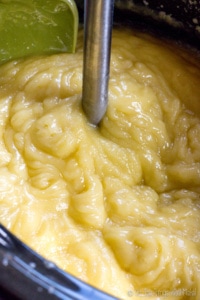
- The mixture will go through stages, from creamy to grainy and back to smooth.
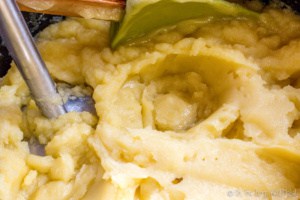
- As you continue to blend, it will start to get creamy again. Once you reach this point, you can stop blending with the hand held blender and can leave the soap paste cooking covered in the slow cooker.
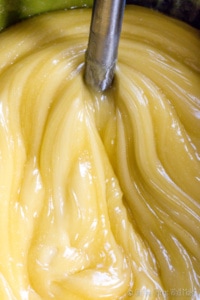
Cook the soap paste
- As you cook the soap, it will continue to thicken and will become more translucent. To achieve a clear liquid soap we'll need to cook the soap paste for 3-4 hours. During that time, check on it and stir it up every half an hour or so.
Check for doneness
- To check for "doneness," we will look to see if the soap paste dissolves clear. To do this, take a small amount of the soap paste and dissolve it in distilled water. If the resulting soap is clear, the soap is finished cooking. If it's cloudy, continue to cook the soap paste for another half an hour before checking on it again.
Dilute the soap
- To make a liquid Castile soap, dissolve some of the paste in distilled water. I ususally use a ratio of one part soap paste to 2-3 parts distilled water. Let it sit until dissolved, or gently heat to speed it up.
Video
Notes
- A slow cooker is perfect for this because it gently heats without burning and keeps everything at a steady temperature. If you don’t have a slow cooker, you can bake the paste in the oven or cook it in a double boiler.
- Take breaks while blending so you don’t burn out the motor of your immersion blender. If your blender gets too hot, you can pause and let it cook before continuing.
- If the mixture becomes too thick to blend at any point, switch to mixing with a wooden spoon.
- If you’ve cooked it for more than 3–4 hours and it still isn’t clear, there may be other issues. Tap water can cause cloudiness. For other possibilities, see my post on troubleshooting liquid soaps.
- This recipe makes about 4.5–5 pounds of soap paste, which can be diluted to 10–20 pounds of liquid soap or more, depending on how concentrated you want it. That’s roughly 1–2 gallons or more.
- Keep in mind that liquid soap is not as thick as commercial gels or surfactants. It has a thinner consistency and doesn’t need to be thick to be concentrated and work well.
- Undiluted soap paste can be stored in glass or plastic containers in a cool, dry place for more than a year. I’ve had some last for several years without any problems. It may eventually develop a slightly rancid smell, but can still be used for general cleaning.