

Why and How to Make Black Garlic
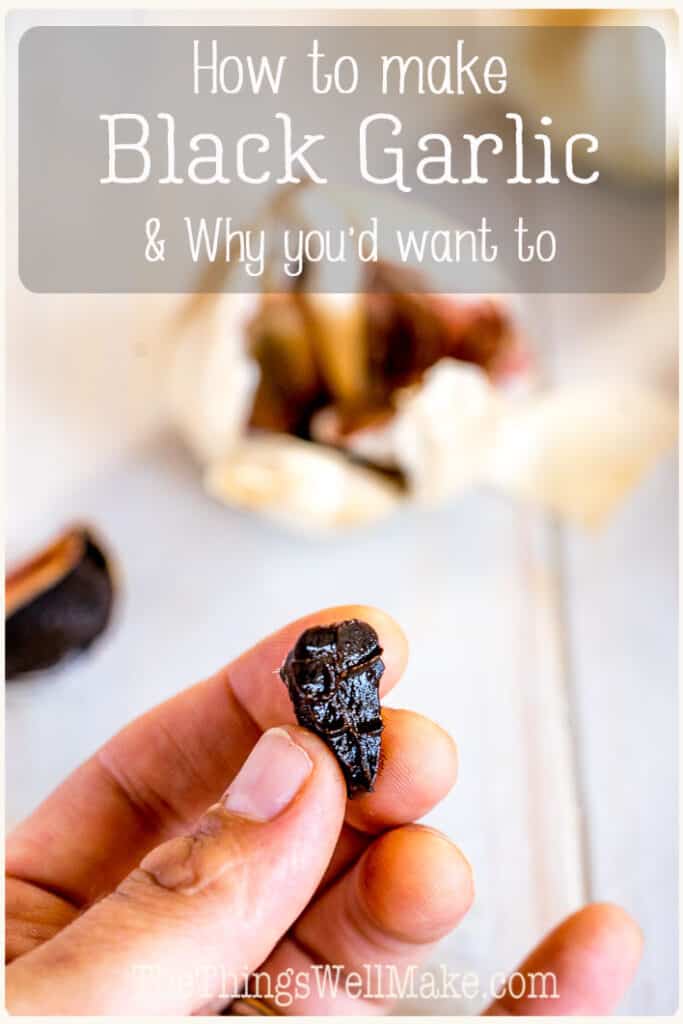

Sweet, tangy, and packed with antioxidants, black garlic is easy to make at home with just time and gentle heat—using a proofer, rice cooker, or black garlic fermenter.
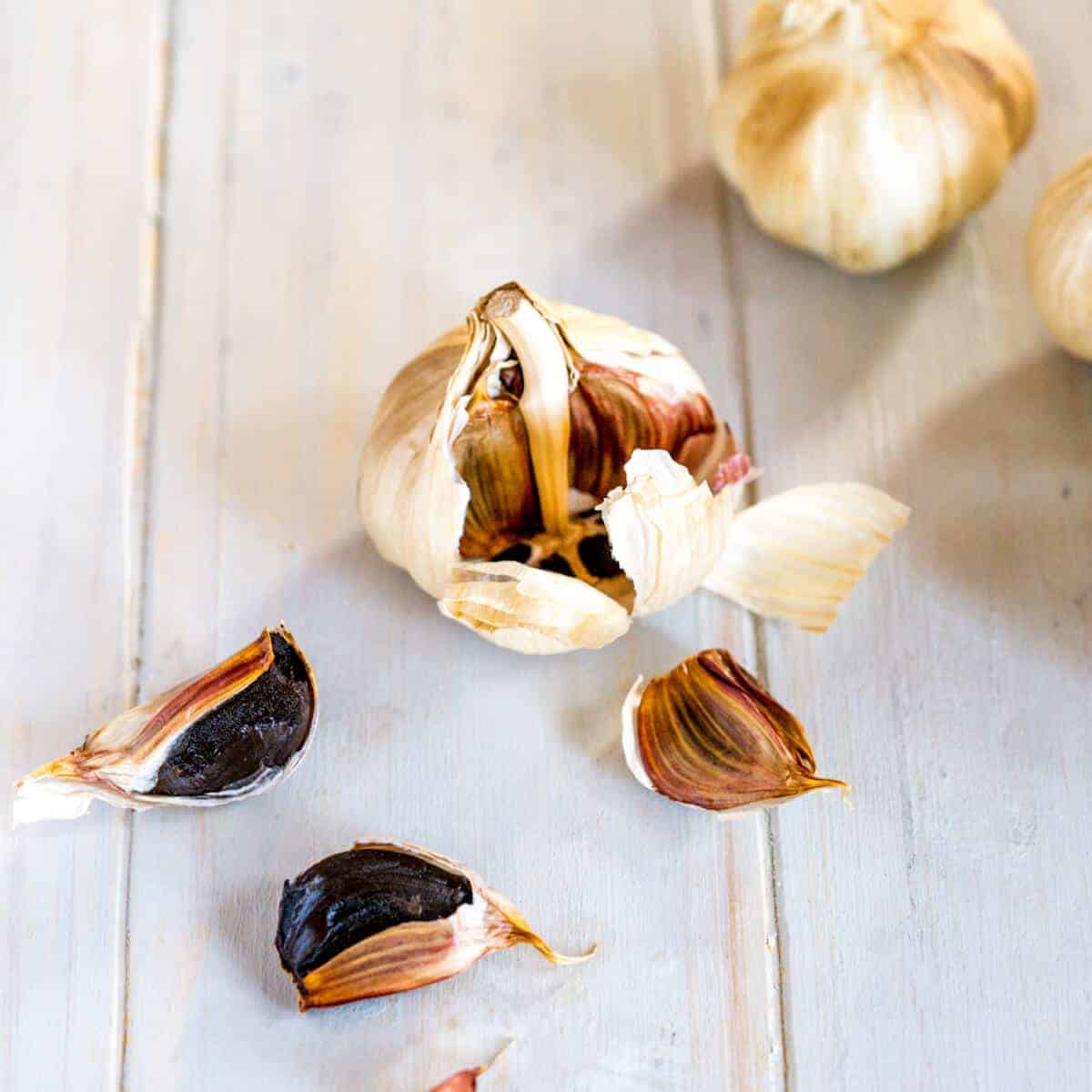
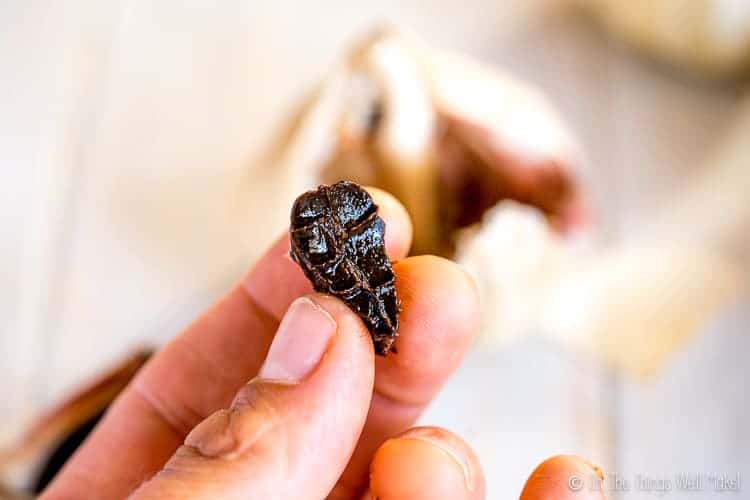
Black garlic is one of those ingredients that looks exotic but is surprisingly easy to make at home. Instead of the sharp bite of raw garlic, the cloves become soft, tangy, and almost candy-like. To me, it tastes a lot like a balsamic reduction. Some people liken it to tamarind. Although it’s not as tangy as the tropical fruit, it has a similar appearance, texture, and slight flavor.
The first time I tried black garlic, I was shocked by how much I loved it. The only downside? It’s expensive. Seeing the hefty price tag was what finally pushed me to try making it myself.
Luckily, you don’t need fancy equipment. With a proofer, a rice cooker, or, of course, with a black garlic fermenter, you can make your own black garlic almost effortlessly. All it takes is time and patience.
In this post, I’ll explain what black garlic is, why you should use it in your cooking, and how to make it yourself.
Why you’ll love this recipe
- Gourmet flavor: Black garlic tastes like a mix of balsamic, molasses, and tamarind.
- Surprisingly easy: No complicated steps or special skills required. Just wrap your garlic, set your appliance, and let time do the work.
- Variety of methods: You can use a proofer, rice cooker, or black garlic fermenter.
- Healthy and delicious: Black garlic is rich in antioxidants and easier to eat than raw garlic.
- Long storage life: A batch lasts for weeks in the fridge (or even longer in the freezer).
What is black garlic?
Black garlic begins as regular white garlic, but after being kept at a warm temperature for several weeks, it transforms into something amazing. The cloves slowly darken, turning soft and chewy with a rich, sweet flavor.
This process was first popular in Korea and is now used all over the world. You’ll often see black garlic described as “fermented garlic” or “aged garlic,” but technically, it isn’t really a true fermentation.
Is it fermented?
Fermentation usually involves bacteria or yeast breaking down food. In the case of black garlic, the temperature is kept too high for those microbes to survive. Instead, most of the transformation comes from what is called a Maillard reaction, a natural chemical reaction between amino acids and sugars when food is heated.
It’s the same process that creates the golden crust on bread, the sear on a steak, or the roasted flavor in coffee. Garlic enzymes break things down gradually, taking weeks instead of instantly, like browning a marshmallow.
Although it’s not true fermentation, it has some “aged” qualities similar to those found in fermented foods.
What does it taste like?
Black garlic is nothing like raw garlic. Its flavor is smooth, mellow, and sweet, reminding me of a balsamic reduction, with hints of molasses and dried fruit. Some people compare it to tamarind. While it isn’t as tangy as the tropical fruit, it does share a similar look, texture, and touch of flavor.
It’s not just its sweetness, the texture is part of the surprise. It goes from firm and crunchy to soft, chewy, and almost jelly-like. Sometimes, I feel like I’m munching on a fancy gummy candy instead of garlic! It’s flavor is unique and complex.
Ingredients
You only need one thing to make black garlic: garlic.
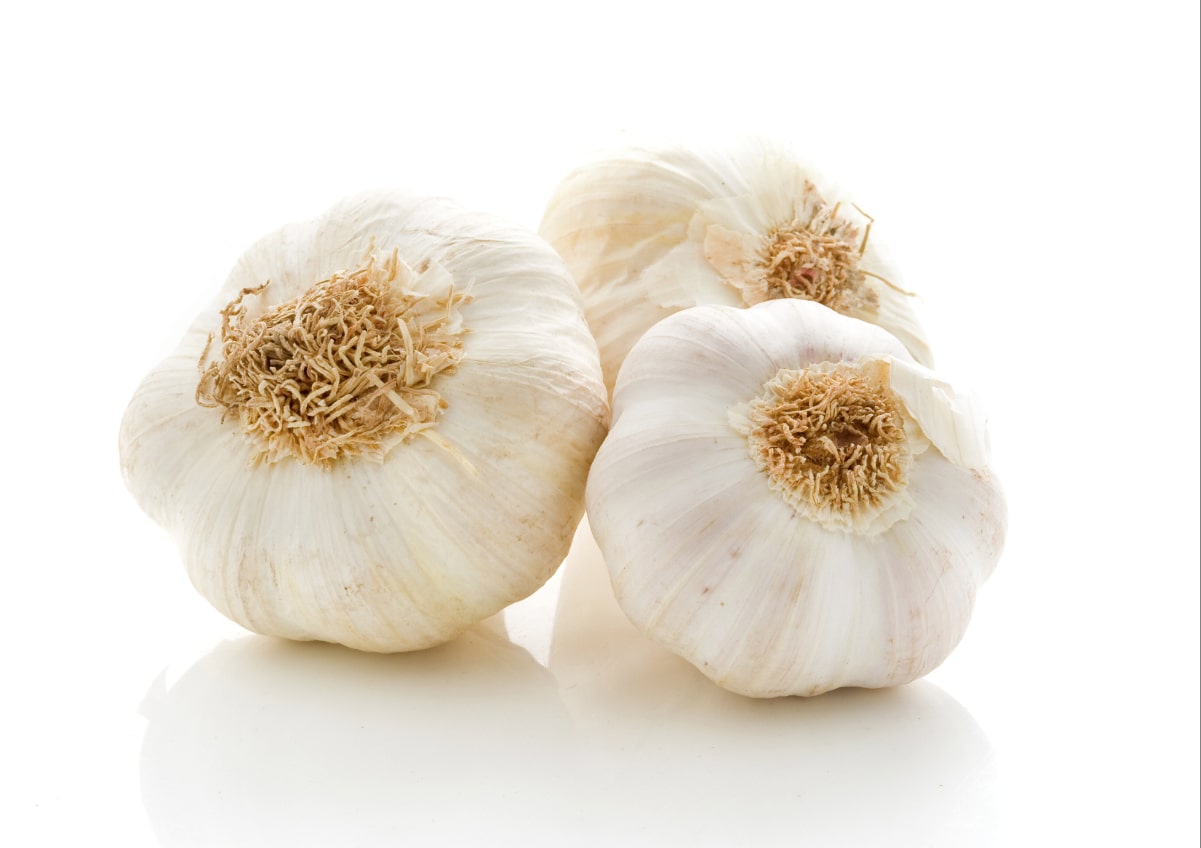
Choose firm, fresh garlic bulbs with tight papery skins. Larger cloves are easier to peel later and give a better texture once aged. While it’s totally optional, I like to use organic when possible.
Equipment
There are a few different ways to make black garlic at home. The method you pick really depends on the appliances you’ve got at home, what your budget looks like, and whether you think you’ll be making black garlic often or if it’s just something you want to try out once.
Using a proofer
My favorite method is with a proofer. It holds a steady, low temperature while using very little electricity, and it folds up for easy storage. A proofer is also versatile and can be used to make all sorts of things. It’s usually used to make bread, but it can also be used to make homemade yogurt or temper chocolate. I use mine for fermenting soybeans when making my own soy sauce. I also like that I can choose what container will hold the garlic inside. For making black garlic, I use stainless steel pans and avoid the hormone disruptors in non-stick coatings. The only downside is the initial cost, but if you enjoy baking or fermenting, you’ll probably end up using it a lot.

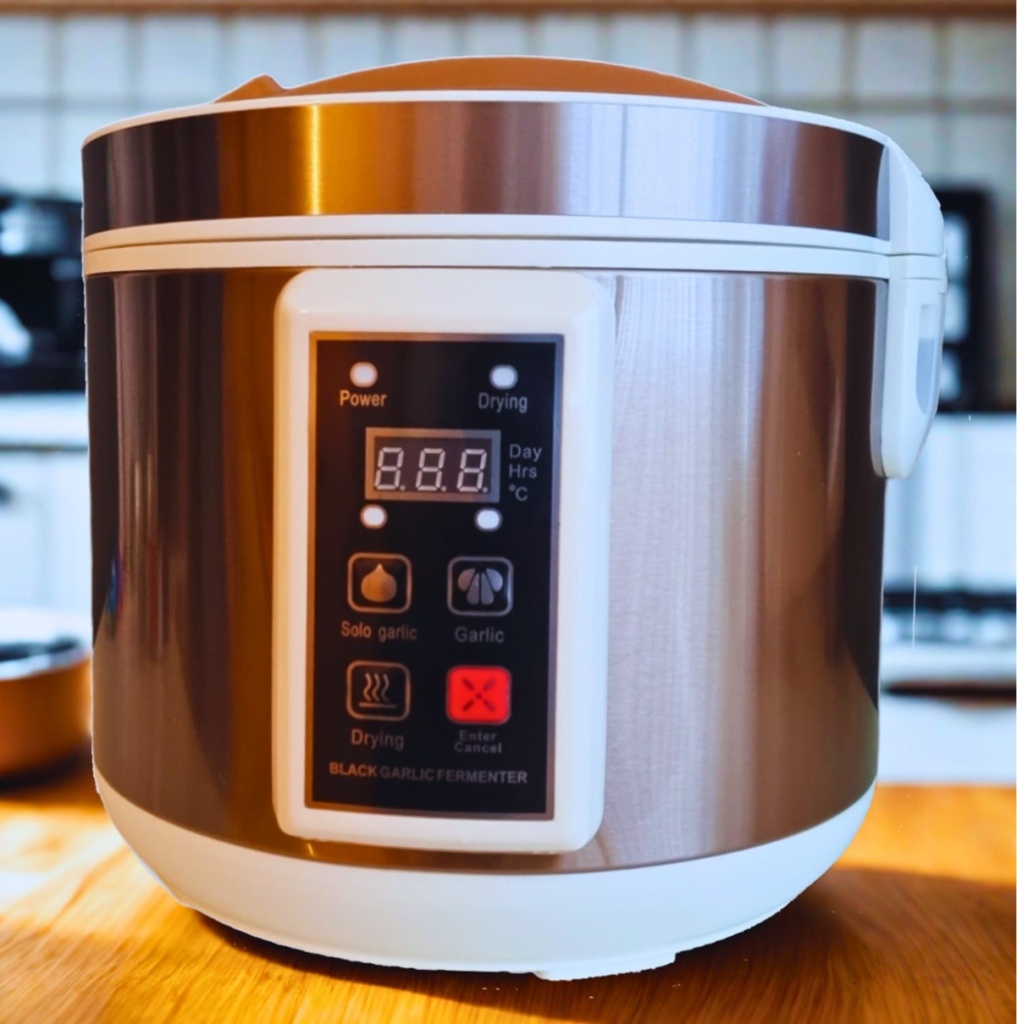
Using a black garlic fermenter
The most obvious option is a black garlic fermenter, a small appliance designed specifically for making black garlic. The results are usually reliable, and the process is generally faster, often finishing in about twelve to fourteen days. These machines aren’t normally expensive, and they use very little electricity.
Many black garlic fermenters are now sold for making other fermented foods, such as natto, sweet rice wine (amazake), or koji, which is used to make homemade soy sauce.
Their main purpose is making black garlic, though, and they do it well. They maintain a constant temperature and humidity for days, which lets the cloves become soft, sweet, and dark without much effort.
If you love black garlic and have room for another appliance, it may be worth investing in one, especially if you like making other ferments.
Using a rice cooker, pressure cooker, or slow cooker
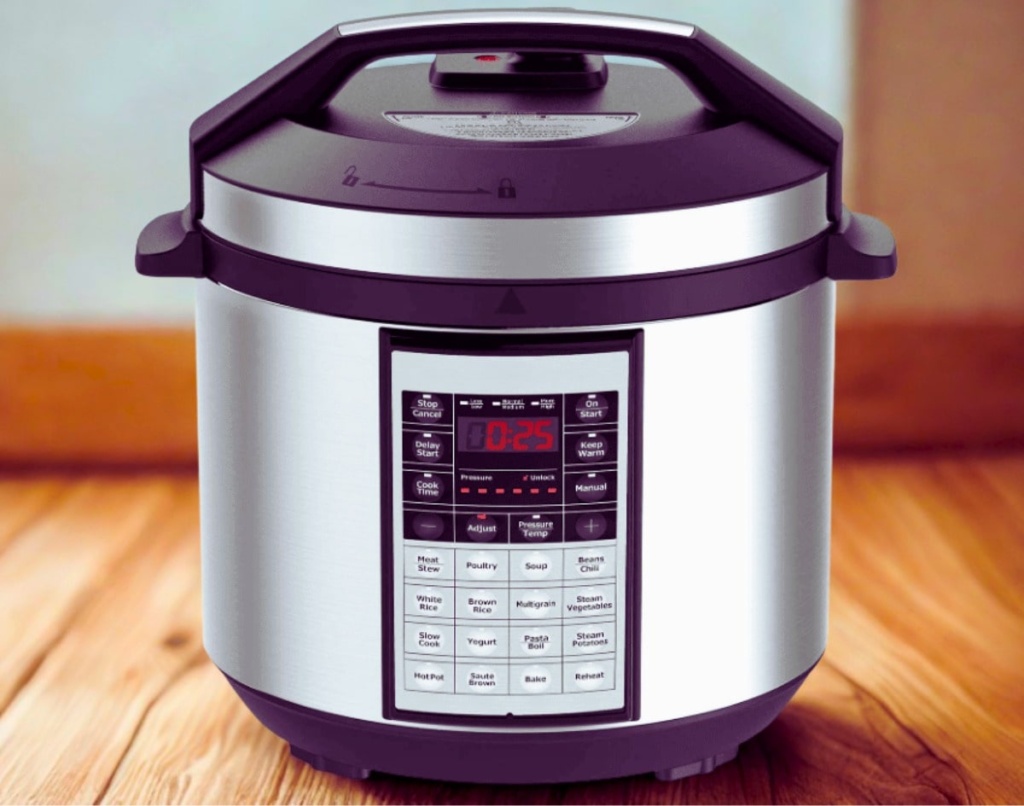
If you’ve got a rice cooker, pressure cooker, or slow cooker, you can try making some black garlic without needing to buy anything extra! It’s a great way to give it a shot before deciding to invest in another appliance! Keeping the garlic on the “keep warm” setting will slowly transform it over the course of several weeks. One big downside is that some cookers heat up more than others, and running one for weeks straight isn’t really the best or most practical option.
Other materials/equipment
Wrapping garlic in parchment or freezer paper and then loosely in aluminum foil helps maintain humidity and keep the cloves from drying out. If you’re using a proofer, you’ll need a stainless steel pot to hold the garlic. (You could also use a covered casserole dish or something similar.)
Procedure
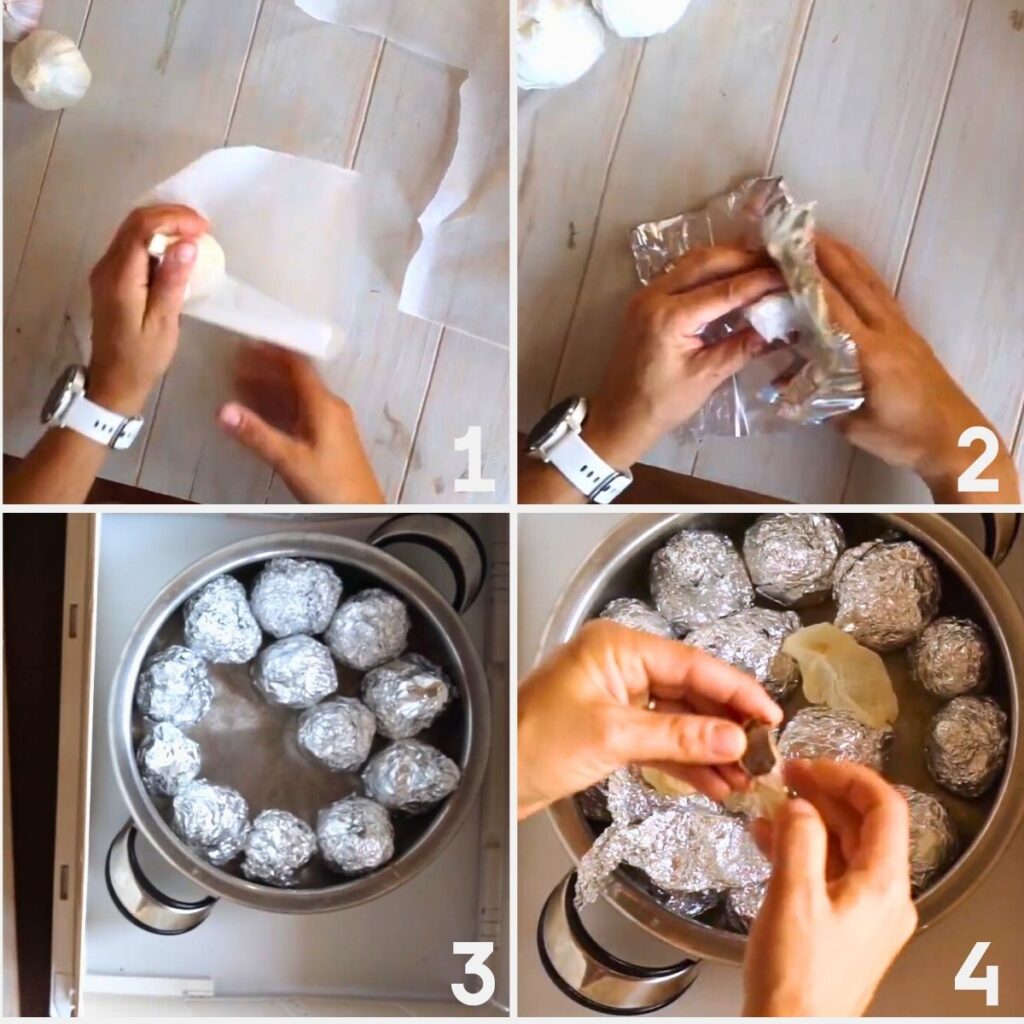
Once you’ve chosen your garlic and your appliance, it’s time to start! To help keep the cloves from drying out, wrap each head in parchment or freezer paper and then add a loose layer of foil. The goal is to hold the garlic at a gentle heat for several weeks until it turns soft, dark, and sweet.
In a proofer
If using a proofer, put the garlic in a stainless steel pot or a covered casserole dish, or cover it with plastic wrap. Place the pot in the proofer and set the temperature to 60 ºC (140 ºF). I like to wrap each head in parchment or freezer paper and then add a loose layer of foil to help keep in moisture. Close the lid and let the proofer do the work. This method usually takes about four to six weeks, depending on the size of your garlic and how dark you want the cloves.
In a rice cooker or slow cooker
For a rice cooker or slow cooker, use the “keep warm” setting. The garlic heads can go directly into the pot, or you can wrap them as you would in the proofer. Some models run hotter than others, so keep an eye on the progress. Check the garlic after about three weeks. If the cloves are still pale or firm, rewrap them and continue. This method generally takes three to five weeks.
In a black garlic fermenter
If you have a black garlic fermenter, the process is even simpler. Because they’re designed for this purpose, you only need to follow the instructions that come with your machine. Most fermenters finish a batch in around twelve to fourteen days, which is much faster than other methods.
Is it ready?
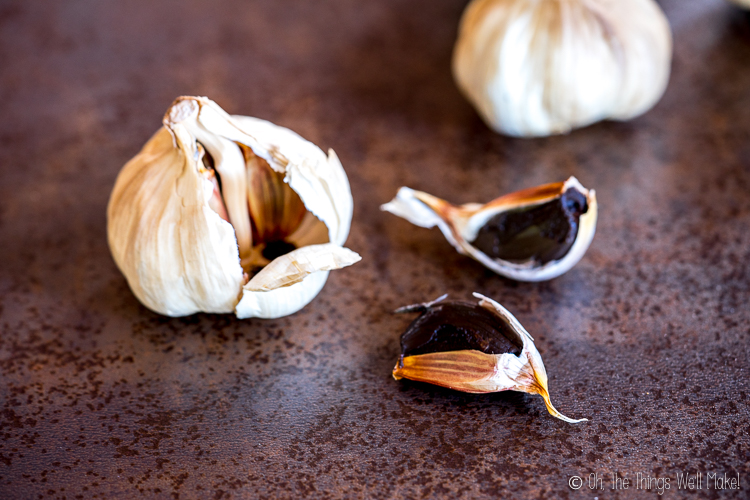
No matter which method you use, the best way to tell if black garlic is done is by tasting it. The cloves should be very dark, soft, and slightly chewy, with a sweet, tangy flavor. If they are still light brown or firm, they need more time.
Storage
Once your garlic has finished aging, you can either keep the bulbs whole or peel the black garlic cloves and store them in a sealed container. Whole bulbs hold up well wrapped in parchment paper and stored into a jar or bag. Storing peeled garlic cloves makes them easier to use, but they dry out faster when stored that way.
At room temperature, black garlic typically stays fresh for about a month, but it may start to dry out earlier. In the fridge, it keeps well for three to six months. To extend its shelf life, black garlic can be frozen. Either freeze whole heads wrapped in foil or parchment, or spread peeled cloves on a tray to freeze individually before transferring them to a container or bag. In the freezer, they’ll stay good for up to a year without losing much of their flavor or texture.
Frequently Asked Questions
Not at all. Instead of the sharp bite of raw garlic, the cloves are smooth, mellow, and sweet. The flavor is often compared to balsamic vinegar, molasses, or dried fruit. Some people even describe it as slightly tangy, like tamarind. The texture changes too, becoming soft, chewy, and almost jelly-like.
Both types of garlic have benefits. White garlic is rich in allicin, known for its antimicrobial and heart-protective effects. Black garlic has more S-Allyl-Cysteine, which is a compound that’s pretty easy for our bodies to absorb. It’s believed to provide a lot of the health benefits that garlic is known for. Black garlic contains more antioxidants than fresh garlic, but some studies suggest it may be slightly less anti-inflammatory.
A typical serving is one to two cloves a day. That works out to about two to ten grams, depending on the size of the cloves. It’s so nice to eat that you might end up wanting more, but even just a little bit each day can do you good.
Store-bought black garlic can be three times as expensive as regular garlic. When you make it yourself, you can save money. It’s a fun experiment, and by making it yourself, you can choose the size and quality of the garlic bulbs.
Expert Tips
Mark the date when you start your batch. It sounds obvious, but weeks can pass quickly, and it’s easy to lose track. I like to tape a little note on the appliance, so I can glance at it and know how long the garlic has been cooking.
Choose larger heads of garlic if you can. Not only do they give you more to enjoy, but the bigger cloves also peel more easily and have a better texture once aged.
Check the garlic after about three weeks, even if you don’t think it’s ready yet. Every appliance runs a little differently, and you may find your cloves are already dark and soft. If not, simply wrap them back up and give them more time.
If you want to keep the cloves from drying out, wrapping really helps. I use parchment or freezer paper and then a loose layer of foil. This holds in just enough moisture without making them soggy.
Finally, remember that patience is part of the process. The difference between “almost ready” and “perfect” black garlic is just a few extra days, so it’s worth waiting for the flavor to be as sweet and complex as you like.
How to use black garlic
Black garlic is mild enough to enjoy on its own, but it’s also delicious in recipes. Because the cloves are soft and chewy, it’s usually best to mash them up into a paste or chop them really finely before tossing them into your dishes. That way, the flavor spreads evenly.
Here are a few easy ways to use it:
- Sauces and dressings: Mash a clove into a paste and whisk it into salad dressings, marinades, or mayonnaise.
- Mashed potatoes: Blend a few mashed cloves into the potatoes along with butter and cream for a rich, umami twist.
- Soups and stews: Stir in mashed or minced cloves near the end of cooking, or blend them directly into pureed soups.
- Compound butter: Mix mashed cloves into softened butter for an easy spread that’s wonderful on bread, vegetables, or steak.
- Pan sauces: Add minced black garlic off the heat so the flavor stays sweet and distinct.
Video

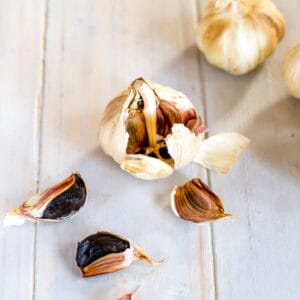
Black Garlic
Equipment
- proofer
- black garlic fermenter
- rice cooker
Ingredients
- 12 heads garlic
Instructions
Prepare the Garlic
- If the garlic is fresh from your garden, make sure to clean and trim all garlic heads. If bought from the supermarket, it is likely clean and ready to go.
- Wrap the garlic heads in parchment or freezer paper. Then, to help keep them sealed, you can wrap them again with aluminum foil over the paper.
Proofer Method
- Place the wrapped garlic heads inside a stainless steel pot (if using the proofer method), or into your slow cooker or rice cooker. If using a black garlic fermenter, follow the instructions that came with your particular fermenter.
- If using a proofer, place the stainless steel pot into the proofer and set it to 60ºC/140ºF. If using a rice cooker or slow cooker, cover with the lid and set to "keep warm" setting.
Rice cooker, Slow Cooker, or Pressure Cooker
- Place garlic directly inside the pot (wrapped or unwrapped) and cover with the lid. Use the “keep warm” setting. Since some models run hotter than others, check progress after 3 weeks. Total time is usually 3–5 weeks.
Black garlic fermenter
- Follow the instructions for your fermenter. Most machines complete a batch in 12–14 days.
Check for doneness.
- It's a good idea to mark your starting date somewhere on the outside of your cooking appliance.
- After a few weeks, you can begin checking on the garlic. Open a clove to check on the color and texture. You want to keep cooking until the cloves are dark brown to black.If yours are still lighter than that, re-wrap the garlic and cook for several more days/weeks. If you feel that it isn't cooking fast enough, you can slightly increase the temperature, keeping it within the range of 60-75ºC/140-170ºF
Store
- Once finished, you can remove the garlic and store wrapped, or you can peel the cloves and store them peeled in a sealed container.
Notes
- Storage: Black garlic keeps about 1 month at room temperature, 3–6 months in the fridge, and up to 1 year in the freezer. Wrap bulbs or peel cloves before storing.
- Yield: Twelve heads usually give about 140–150 cloves, depending on their size.
- Best garlic to use: Larger, firm bulbs with tight skins work best. Organic garlic is a good option since you’ll be eating the cloves whole.
- Wrapping tip: Wrapping each head in parchment (plus a loose layer of foil) helps prevent the cloves from drying out.
- Doneness: Don’t be afraid to taste a clove when you check. The garlic should be very dark, soft, chewy, and sweet. If it still seems firm or light brown, it needs more time.
- Patience pays off: The difference between “almost there” and “perfect” black garlic can be just a few days, so give it a little extra time if needed.
This post was originally published on December 17, 2018. It was rewritten in 2025 with new photos and other new information.


I wrapped my garlic heads in freezer paper then Tin foil I have had it on warm in slow cooker for 8 days now checked them today and they are already black they have been at a steady 140f 60c Are they ready or should I leave them longer? The peels should not be moist anymore when ready?
I’d taste test one to see…
If they are soft and sweet, they are ready. If they are hard or bitter, I’d leave them longer. They may need to be re-moistened if you see they are hard and dry.
Excellent article! Very informative, equipping me with the necessary tools and information to embark on this healthier option for a very delightful condiment. You have me inspired. Thank you! James
Thanks, James!
I have a question, if you’re using a slow cooker or rice cooker is it safe to leave it on for weeks at a time? Just curious I’ve never done anything like this before.
Hi Lauren,
Well, to be honest, I had a similar concern, and looked it up, but couldn’t find much information about it. Most articles discussing the hazards of leaving the appliances on too long were focusing on the safety of the food being cooked.
From what I could gather, the more likely worst-case scenarios are that you could burn out your appliance or even maybe blow a fuse if it short circuits or something. While most fires in homes start while cooking, the risk of starting a fire with a slow cooker and/or rice cooker is generally considered to be low.
All of that said, I definitely prefer the other methods- using something that is specifically meant to be used for longer periods.
If using a rice cooker or slow cooker, I’d definitely suggest checking on it as often as you conveniently can to make sure all is good.
(I’d also suggest making sure all cords look good, you aren’t using a super old appliance, etc.- to keep risks to a minimum.)
So, every article I find about Black Garlic shows cook temps from 140F to 170F… it seems like 140 is the low temp because rice cookers use this temp on the warmer setting. Do you know what is the safest lowest temp Black Garlic can be made at? 139F? 138F? 135F? I know there is a minimum temp at which will become dangerous… but if I can control the temp and can cook it at 135F as an example for a long period of time it seems like it could make a diference in the flavor profile. Any ideas?
Cheers,
Hi Jake,
I’m not really sure. I haven’t tried experimenting with lower temperatures. I doubt it would be a problem to lower it to 135. It would just take longer. I think most people are looking to make it as quickly as they can to avoid using an excess of time/energy.
I just read a scientific article about black garlic and it said 70ºC was the perfect temperature. Only 60ºC doesn’t really turn them black and some of the health beneficial processes are not completed.
Interesting! I was following the guidelines that came with our proofer. Most did turn black, but some were more on the dark brown side. Thanks for the information. I’ll do some further research and mention this when I update this post!
The article says “In the case of aging process at 70°C, the speed of aging is two-fold faster
than that at 60°C” so I guess that a higher temperature means checking the bulbs a little earlier.
In the article you can also read about the great health benefits with black garlic. The health effects increase manfold compared to ordinary garlic.
The part about temperatures is in section 3.1. Effects of aging temperature on the quality of BG
(https://www.sciencedirect.com/science/article/pii/S1021949816301727)
Thank you!
Dear Tracy,
Thank you for the nice info.
Brod&Taylor website says “Close the lid of the Proofer. Set the Proofer to 39 ºC and allow it to remain on for 3-4 weeks. At a setting of 38 ºC, the aluminum heating plate reaches 60 ºC.” (https://brodandtaylor.uk/black-garlic-how-to-make-it-at-home/)
So I’m confused. Should I set the proofer at 38ºC or 60ºC?
Thanks in advance,
Antonio
Hello,
That is confusing!
I guess the plate will be a higher temperature, but the inner temperature of the proofer will be lower. The plate will turn on and off as needed, I think.
Use the 38ºC setting.
What do you do to keep the smell under control? I tried making black garlic one time only (so far), and it was the only time I smelled a garlic smell that I didn’t like. I started out in the garage, and had to move it to the front porch to keep the smell out of the house. And I was surprised that the neighbors didn’t complain!
The smell toned down after a few days, and I moved my cook back to the garage, but it was rough for a few days.
Hi Dan,
I actually had to ask my husband about it because I don’t remember it having an unpleasant smell any of the times we’ve made it. He has a really strong sense of smell and tends to complain, and even he said he didn’t remember it having an unpleasant/strong scent at any point.
I wonder if it makes a big difference which method you use and how well you wrap and cover each garlic head?
Great background info and recipe. Thank you
Is it safe to leave the rice cooker on for three weeks? Really want to try this!
Hi Ravi,
It seems like some people do it. I haven’t personally tried it.
You definitely want to check on it often, to make sure nothing goes wrong.
“Ask to cooperate with you”
Good morning
I think this is not an usual way to write to you, but accept my apologies for my bad English!
First we would to send you our sincere congrualations for your blog. It is nice and realy well write!
We would like to write an ebook concerning “black garlic” to send for free to conquer new subcribers to try to sell whole black garlic !
we know people generaly do you not ask the permission , but I prefer to be honest , it is a better attitude way life !
we are asking for your permission to use a few paragraphs from your blog regarding black garlic. We also appreciate your little video on manufacturing, which we would also like to use on our next store ( only for french people).
Of course if you accept we will includ to our Ebook and to our next website a link to your blog .
But If you do not accept , do not worry , we will respect your decision.
Hoping you’ll accept !
Awaiting your good news ! Have a good day!
Sincerly yours !
Francois HERTWECK
For your privacy, I removed your contact information from the comment. For this type of consult, it’s best to contact me directly at [email protected]
this is a simple recipe I can follow. thank you
You’re welcome, Julia.
I wish you the best of luck with it!
Hi! I for a doubt about when you said in section “3” to put the garlic in a stainless steel pot. By that did you mean a regular kitchen pot (Non electric)? If so, could I just leave it around with the lid on and wait those weeks?
Hi Gabriella,
The stainless steel pot is for use within a proofer as explained in the article above.
I should go into that post and make the instructions clearer. Thank you for your question. It helps me know when I haven’t been clear!