

Homemade Fruit Gelatin (With Fresh Fruit or Juice)


Skip the artificial colors and flavors of packaged gelatin mixes! Making homemade fruit gelatin is surprisingly easy, and you can use fresh fruit or fruit juice to create all sorts of delicious flavors.

Here in Spain, packaged gelatin mixes aren’t as popular as Jell-O is in the United States. We don’t have the same variety of flavors and colors to choose from.
You can find ready-made gelatin desserts in the refrigerated section of the supermarket, though. After watching my son try a bright red one at his grandmother’s house, I decided to experiment with making a more natural version at home.
He’d discovered a new dessert and loved its unusual, jiggly texture. I just wasn’t particularly excited about all those artificial colors!
Why make your own fruit gelatin?
One of the best things about making your own gelatin is that you get to choose exactly what goes into it!
You can use naturally sweet fruit without adding any extra sugar. Or, if you want something a little sweeter, you can add honey, maple syrup, or your favorite sweetener.
Plus, you’re not limited to the flavors available in packaged mixes. You can experiment with all sorts of different fruits!
Ingredients
Making homemade fruit gelatin is surprisingly easy. You really only need two ingredients: fruit and gelatin!
You can use fresh fruit to make a purée or use fruit juice instead. Both work well!
For the gelatin, I normally use unflavored powdered gelatin, but you can also use gelatin sheets. If you’re using sheets, follow the manufacturer’s instructions for the amount of liquid in this recipe, since the amount needed can vary between brands.
Make sure you’re using gelatin that actually sets liquids, rather than hydrolyzed collagen (collagen peptides), which won’t work for this recipe.
Many fruits are sweet enough that you won’t need to add anything else. If you’re using something a little more tart, you can add sugar, honey, maple syrup, or your preferred sweetener.
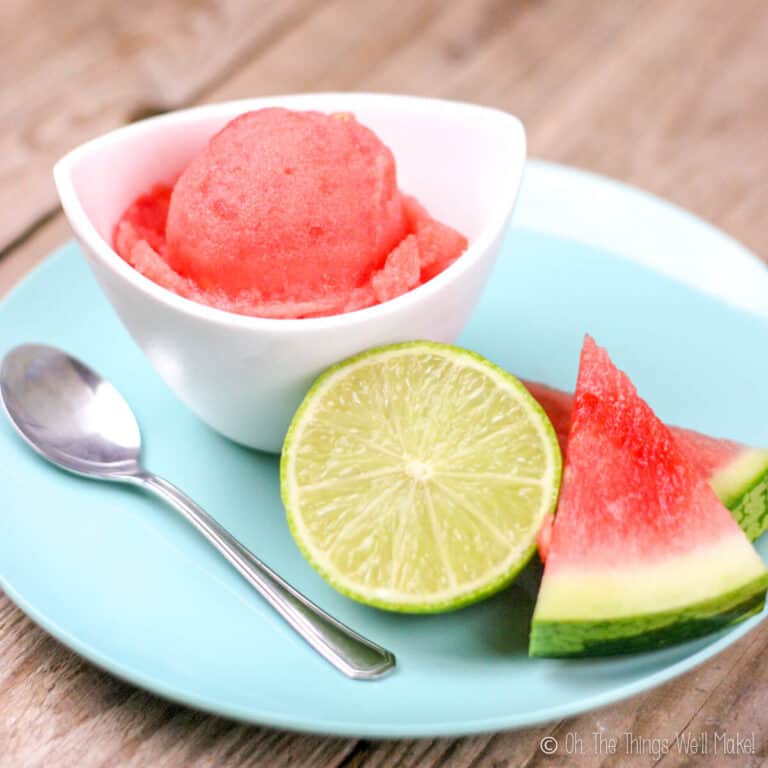
One of my favorite things about this recipe is experimenting with different fruits. So far, watermelon and pineapple are two of my favorites!
I normally use fresh watermelon, but for pineapple gelatin, I prefer using store-bought pineapple juice. I’ll explain why below.
When making watermelon gelatin, I usually use about a quarter of a small watermelon for each tablespoon of powdered gelatin. That usually gives me around 2 cups of watermelon juice.

Vegan alternative to gelatin
If you want to make a vegan version, you can use agar-agar instead of gelatin. Agar is made from red algae and works well for making fruit-based desserts.
The texture is a little different, though. Agar sets more firmly and doesn’t have quite the same jiggly texture as traditional gelatin.
The amount you’ll need depends on the type of agar you’re using and the texture you want. Follow the instructions on the package, keeping in mind that agar powder and flakes aren’t interchangeable.
Unlike gelatin, agar needs to be boiled to work properly. Mix it with your juice, bring it to a boil, and stir for the time indicated on the package.
Then pour the mixture into your serving containers and let it cool. Agar sets at room temperature, but you can refrigerate it if you prefer your gelatin cold.
Fresh fruit vs. fruit juice
Although I generally prefer using fresh fruit, sometimes store-bought juice is actually the better choice for making gelatin.
Certain fruits contain enzymes called proteases that break down proteins. When you use these fruits fresh, those enzymes break down the gelatin and keep it from setting. I learned this the hard way years ago when I tried making gelatin with fresh pineapple!
Interestingly, some of these fruits are also used as natural meat tenderizers for the very same reason. And if you’ve ever eaten a lot of fresh pineapple, you may have noticed that your mouth starts to feel a little raw. That’s partly because those same enzymes are breaking down proteins in your mouth!
Luckily, you don’t have to avoid these fruits altogether. You just need to prepare them differently.


Which fruits can prevent gelatin from setting?
Fresh pineapple, kiwi, papaya, figs, and guava all contain enzymes that can keep gelatin from setting properly. Fresh ginger can also cause problems, and mango may interfere with setting in some cases.
The good news is that heating these fruits destroys the enzymes that cause the problem. So, if you want to use fresh pineapple or one of the other fruits on this list, you can cook the fruit or juice first.
Freezing doesn’t have the same effect, though, so using previously frozen fruit won’t necessarily solve the problem.
Why does store-bought pineapple juice work?
Most store-bought pineapple juices are pasteurized, meaning they’ve been heated during processing. This deactivates the enzymes that would otherwise keep your gelatin from setting.
That’s why I usually use store-bought pineapple juice when making pineapple gelatin. It’s easier, and I don’t have to worry about cooking the pineapple myself! Just make sure you’re using pasteurized juice. Fresh, unpasteurized pineapple juice can still cause problems.
I also prefer choosing juice without added sugar so I can adjust the sweetness myself.
How to make gelatin with fresh fruit
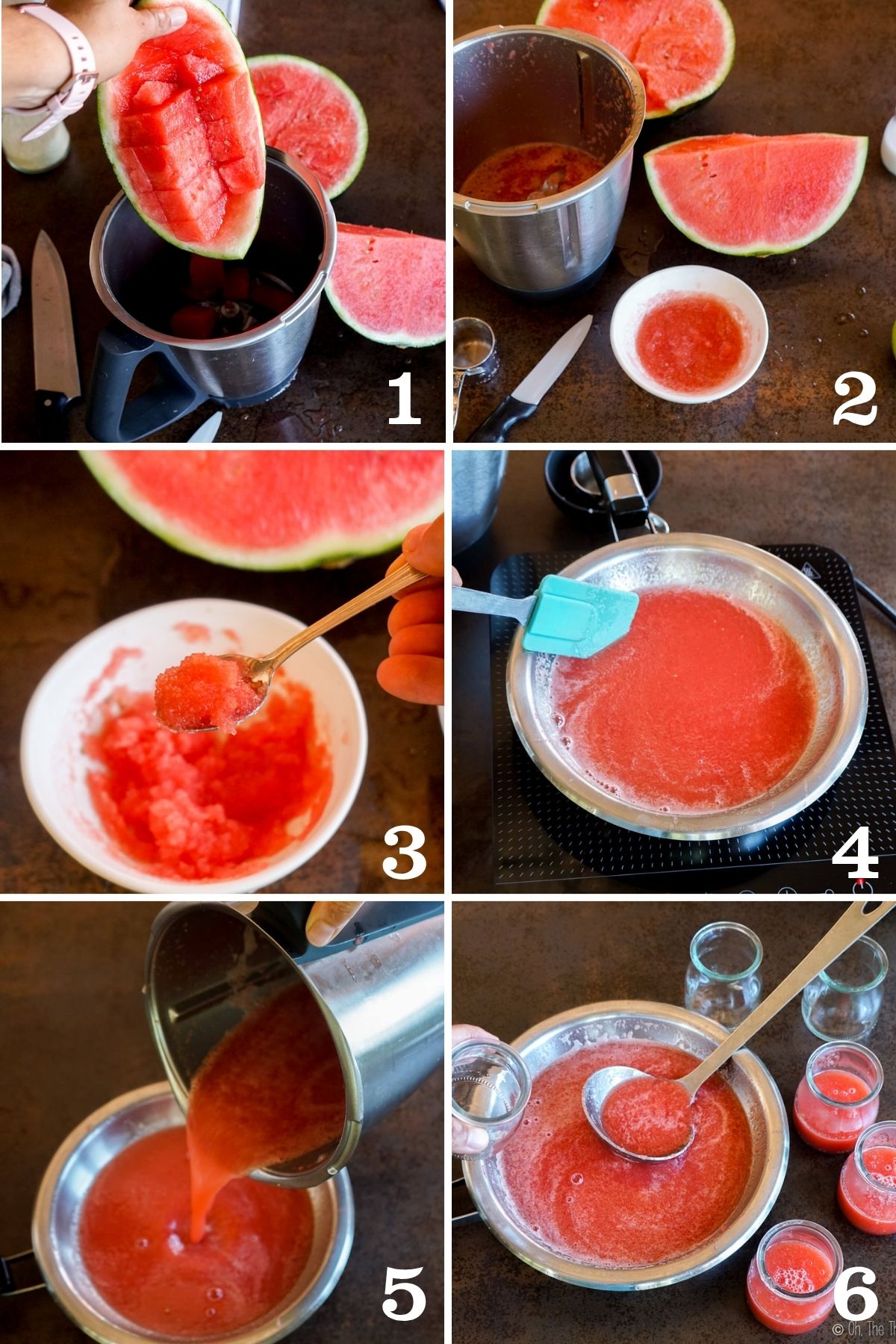
(1) Start by preparing your fruit juice or purée. Peel the fruit and remove any large seeds, if needed. You can use a juicer or blend the fruit until smooth.
I usually strain out the pulp and small seeds from fruits like strawberries and raspberries for a smoother texture, but you can leave them in if you prefer.
Depending on the fruit you’re using, you may need to add a little water, coconut water, or juice to thin out the purée. I don’t add anything to watermelon because it’s already so watery, but thicker fruits may need a little extra liquid. You’ll want a total of 2 cups of juice or purée, including anything you’ve added.
(2–3) Sprinkle the powdered gelatin over a small portion of the cold juice or purée and let it sit for about 5 minutes, until the gelatin has absorbed the liquid. Make sure there’s enough liquid to hydrate all of the gelatin. If your purée is too thick, you can use cold water instead. Just remember to include that water in your 2-cup total.
(4) Heat about half of the remaining juice or purée in a saucepan over low to medium heat. It doesn’t need to boil, just get hot enough to dissolve the gelatin. Add the hydrated gelatin and stir until completely dissolved. If you’re adding sugar, this is a good time to dissolve it, too.
(5) Remove the saucepan from the heat and stir in the remaining cold juice or purée. Taste the mixture and adjust the sweetness if needed.
Remember: If you’re using fresh pineapple or another fruit with enzymes that prevent gelatin from setting, you’ll need to cook all of the juice or purée first. Don’t add any raw fruit back into the mixture afterward.
(6) Pour the mixture into individual glasses or bowls and refrigerate until set.
How to make gelatin with fruit juice
Making gelatin with fruit juice is even easier because you can skip preparing the fruit.
Start by measuring out 2 cups of juice. Set aside a small portion while it’s still cold, and sprinkle the powdered gelatin over it. Make sure there’s enough juice to hydrate all of the gelatin, and let it sit for about 5 minutes, until the gelatin has absorbed the liquid.
Heat about half of the remaining juice in a saucepan over low to medium heat. Add the hydrated gelatin and stir until completely dissolved. There’s no need to bring it to a boil. If you’re adding sugar, stir it in while the juice is warm so it dissolves easily.
Remove the saucepan from the heat and stir in the remaining cold juice. Taste the mixture and adjust the sweetness if needed.
Pour the gelatin into individual glasses or bowls and refrigerate until set.
Adjusting the recipe
Besides adjusting the sweetness, you can also change the texture of your homemade gelatin.
I usually use 1 tablespoon of powdered gelatin for every 2 cups of juice or purée. This gives me a softer gelatin that’s easy to eat with a spoon, although the results can vary depending on the gelatin and fruit you’re using.
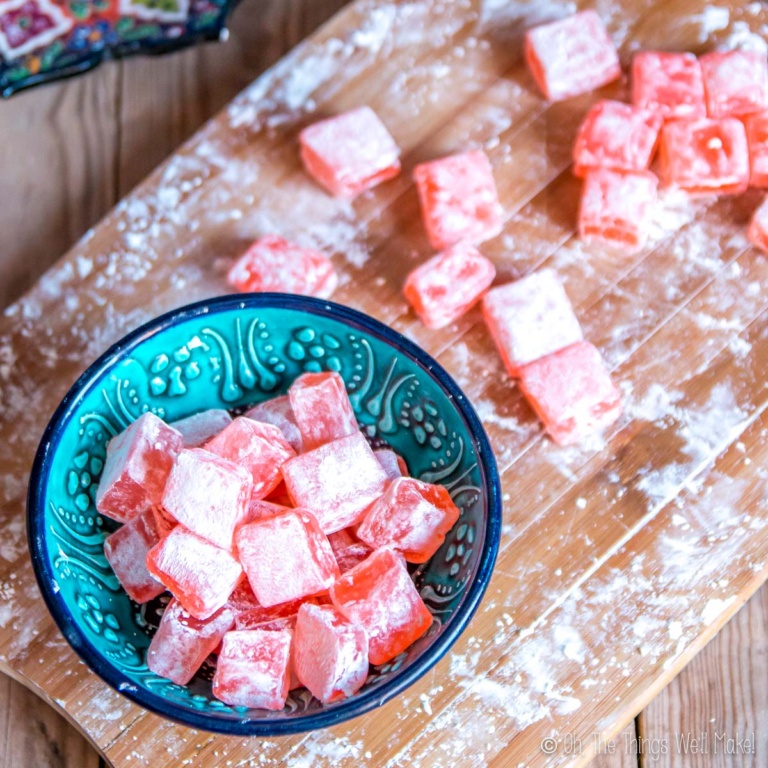
If you prefer a firmer gelatin that you can cut into squares, just add a little more gelatin. And if you want something chewier, try my homemade fruit gummies!
If your fruit mixture tastes too sweet or you’d like to give it a little more tartness, try adding a splash of lemon or lime juice.
Gelatin popsicles
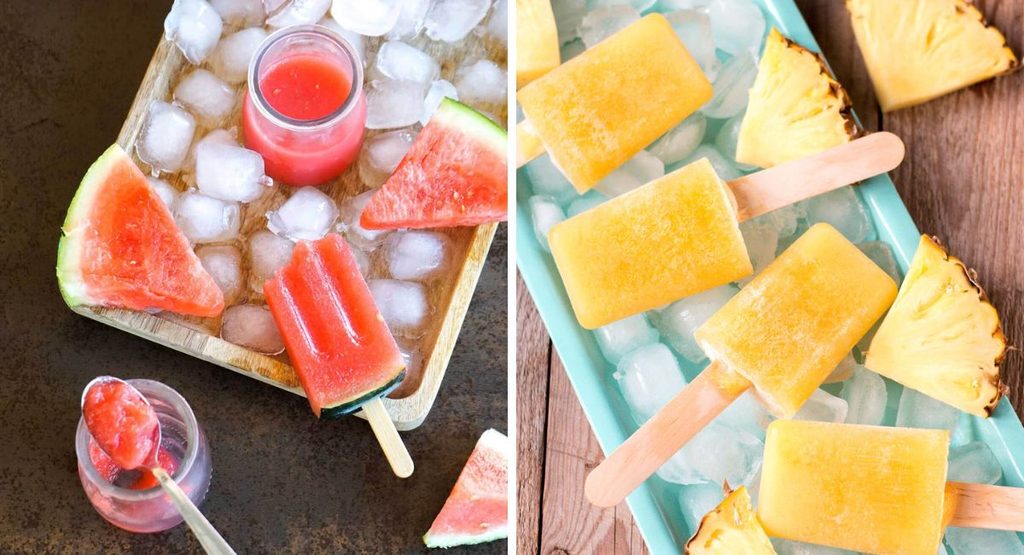
Another fun way to use homemade fruit gelatin is to freeze the mixture in popsicle molds!
They’re especially nice in the summer, and the texture is a little different from popsicles made with just fruit juice.
The gelatin also helps keep them from dripping as much when they start to melt, which is especially handy when making them for kids.
If you want to give them a try, check out my recipe for watermelon gelatin popsicles.
Frequently asked questions
You can heat all of it if you want! I usually only heat enough to dissolve the gelatin. Adding the remaining cold juice or purée afterward helps the mixture cool down faster.
The exception is when you’re using fresh pineapple or another fruit with enzymes that prevent gelatin from setting. In that case, you’ll need to heat all of the fruit or juice first.
It usually takes around 2 hours in the refrigerator, although it may take longer depending on the size of your containers and how much gelatin you’ve used.
Yes! I normally use powdered gelatin, but sheets work too. The amount you’ll need depends on the brand and strength of the gelatin, so check the package for the amount needed to set 2 cups of liquid.
The most likely reasons are that you didn’t use enough gelatin, it didn’t dissolve completely, or you used fresh fruit containing enzymes that break down gelatin.
Make sure you’re using regular gelatin rather than collagen peptides, and give it enough time in the refrigerator before deciding it hasn’t worked.
Absolutely! Many fruits are sweet enough on their own, especially watermelon. I usually taste the mixture before adding any sweetener.
I’d recommend keeping it covered in the refrigerator and eating it within 3–4 days. Since we’re using fresh fruit and aren’t adding preservatives, I wouldn’t leave it sitting out for long.
Video

Homemade Fruit Gelatin (With Fresh Fruit or Juice)
Ingredients
- 2 cups fruit purée or juice including any added liquid
- 1 tablespoon unflavored powdered gelatin
- sugar (or honey, maple syrup, or another sweetener; optional, to taste)
Instructions
Making gelatin with fresh fruit
- Peel the fruit and remove any large seeds, if needed. Blend until smooth. You can strain the mixture to remove small seeds or pulp if you prefer.
- If the purée is too thick, add a little water, coconut water, or juice. You’ll need a total of 2 cups, including any added liquid.
- Sprinkle the gelatin over a small portion of the cold juice or purée, making sure there’s enough liquid to hydrate it completely. Let it sit for about 5 minutes. If the purée is too thick, use a little cold water instead, counting it toward the 2-cup total.
- Heat about half of the remaining purée in a saucepan over low to medium heat.
- Add the hydrated gelatin and stir until completely dissolved. The mixture doesn’t need to boil. If you’re using sugar, add it now so it dissolves in the warm mixture.
- Remove from the heat and stir in the remaining cold purée. Taste and adjust the sweetness if needed.
- Pour into individual glasses or bowls and refrigerate for about 2 hours, or until set.
Making gelatin with fruit juice
- Measure out 2 cups of juice. Set aside a small portion while it’s still cold.
- Sprinkle the gelatin over the reserved juice, making sure there’s enough to hydrate it completely. Let it sit for about 5 minutes.
- Heat about half of the remaining juice in a saucepan over low to medium heat.
- Add the hydrated gelatin and stir until completely dissolved. There’s no need to boil the mixture. If you’re using sugar, add it while the juice is warm.
- Remove from the heat and stir in the remaining cold juice. Taste and adjust the sweetness if needed.
- Pour into individual glasses or bowls and refrigerate for about 2 hours, or until set.
Notes
Fruits that need to be cooked first
Fresh pineapple, kiwi, papaya, figs, guava, and ginger contain enzymes that can prevent gelatin from setting. Mango may also cause problems. If you’re using any of these, heat all of the juice or purée first to deactivate the enzymes. Let a small portion cool before using it to hydrate the gelatin. Don’t add any raw fruit or juice back into the mixture afterward. You can also use canned fruit or heat-treated juice instead. Freezing the fruit won’t deactivate the enzymes.Gelatin sheets
You can use gelatin sheets instead of powder. Check the package for the amount needed to set 2 cups of liquid, since the amount can vary depending on the brand and strength.Adjusting the texture
I use 1 tablespoon of powdered gelatin for every 2 cups of liquid to make a soft gelatin that’s easy to eat with a spoon. Add a little more gelatin if you prefer something firmer.Adjusting the flavor
Many fruits are sweet enough without adding anything else. Taste the mixture before adding sweetener. You can also add a splash of lemon or lime juice for a slightly tart flavor.Vegan alternative
You can use agar-agar instead of gelatin, but the preparation is different. Agar needs to be boiled to work properly, and the amount you’ll need depends on the type you’re using. Follow the instructions on the package.Nutrition information
Nutritional information is an estimate based on using 2 cups of watermelon juice without added sweetener. The actual values will depend on the fruit or juice you use.This post was originally published on September 1, 2016. It was rewritten with new photos and a video in July 2021, and updated again in October 2026.


A healthy gelatin dessert, like homemade Jell-O, offers a nostalgic treat with nourishing benefits.
I plan to make mango gelatin. How long do I have to cook the puree?
Hi Jose,
If you’re using fresh mango purée, I’d gently cook it for several minutes before adding the gelatin. You don’t need to cook it for a long time, just enough to heat it through and help deactivate the enzymes.
What are the advantages of making gelatin desserts at home compared to using packaged mixes, particularly in terms of controlling ingredients and flavors?
Hello-
Well, yes, the main advantage is controlling the ingredients- so you can use fruits you like. (Some flavors aren’t commonly found.)
My real problem with the packaged mixes is they generally are packed with artifical colors/flavors and other additives (like lots of sugar or artificial sweeteners) that I’d prefer to avoid. 😉
Can you alter this recipe to make “jigglers” or solid jello blocks?
Hi Maria,
Yes, you can make firmer “jigglers.” Just increase the amount of gelatin.
Instead of 1 tablespoon per 2 cups of liquid, try 1½ to 2 tablespoons. That will give you a firmer texture that you can cut into blocks or shapes.
Let it chill completely before cutting, and use a lightly oiled knife if needed to get clean edges.
Thank you! This is exactly what I was looking for.
You’re welcome, Nel!
Can you put the mixture in a plastic lined sheet pan. Can you add junks of fruit before it sets.
Thank you
Yes, both should be fine…
If you use the fruits with the enzymes, though (like fresh pineapple), it may affect the gelling around the fruit.
This is exactly what I was looking for. Thanks so much!
You’re very welcome, Monica!
I hope you enjoy it.
Can I use agar agar instead of gelatin in these recipes? Do you know the proportions? Would be grateful for your help. Thank you, T.
Hi Tina,
From what I understand, you can sub it with the same amount of agar powder. It’s also important to boil it so that it will set.
Agar will give a different consistency.
What a disappointing article! I was so interested to learn how to make gelatine from fruit… but after wasting my time reading the enrire page all I learned was to go BUY the gelatine, MELT it, and USE it in a dessert! Not one word about how to “MAKE the gelatine” to start with.
You wouldn’t say “buy a cake” and add some cream was “how to make” a cake, or “buy some chicken soup” and add a vegetable was “how to make” soup, so why say “buy some gelatine” and add fruit as “how to make” gelatine !!!
What a completely ridiculous, time-wasting, let-down. Your WORST atricle ever 🙁 Please don’t do a “how to make banana custard” article that says “buy a tin of custard” and add a banana … duh!
Gelatin is made from boiling bones and skin and then refining the resulting liquid. I doubt you could refine it enough at home so that you could use it similarly in a sweet dessert.
That said, this was not titled “How to make gelatin from scratch.” It was how to make a gelatin dessert (like Jell-o). I’m sorry it disappointed you that I didn’t go out and butcher a pig and then show the process of how to skin it and boil it to obtain gelatin in the process. I do like to make things from scratch, but sometimes it is a lot more practical to buy certain ingredients that would be nearly impossible to make at home.
You’re so rude- read the title. She never said “learn how to make gelatin from scratch. DUH
Rose,
I believe you are looking for something you will never find. Gelitan can’t be made at home. Shouldn’t be anyway. I am sure there are articles to find if you search”how is gelitan made” beware it is a very unpleasant process. Have you ever noticed that unflavored gelitan smells like a barn when warm water is added to it?
I admire all you have done and are doing 🙂
Thank you, Rebecca! ?