

Slow Cooker Apple Butter (Easy Homemade Recipe)
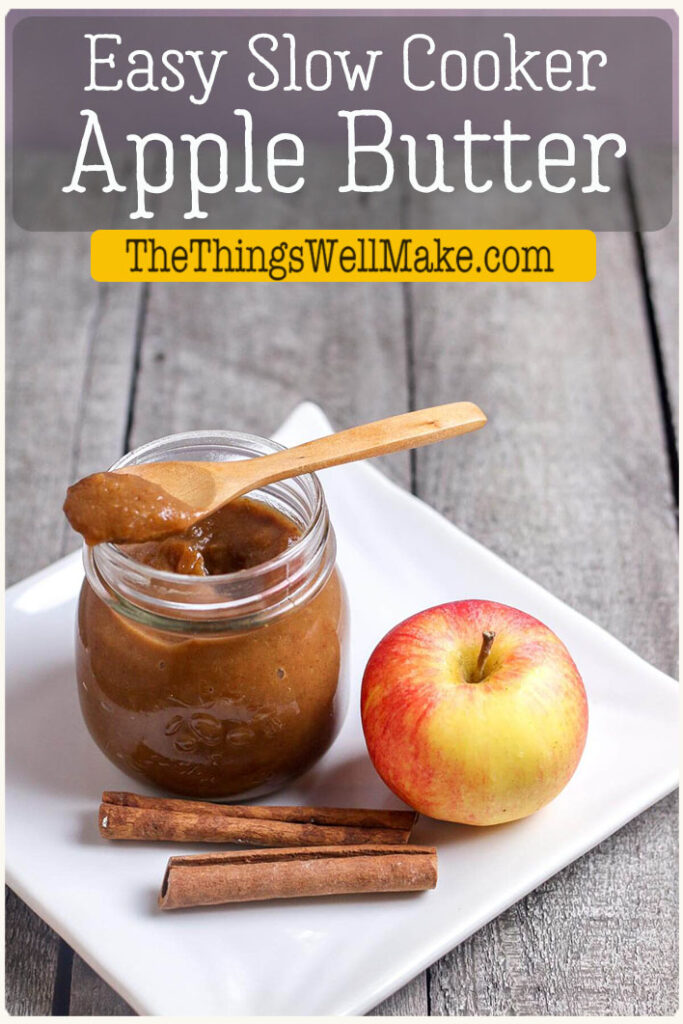
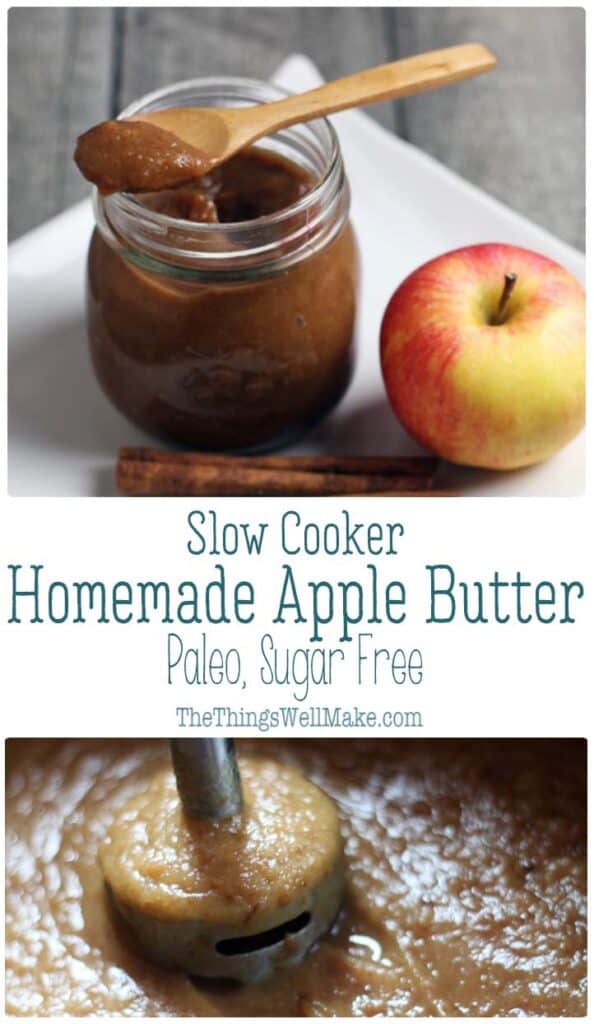
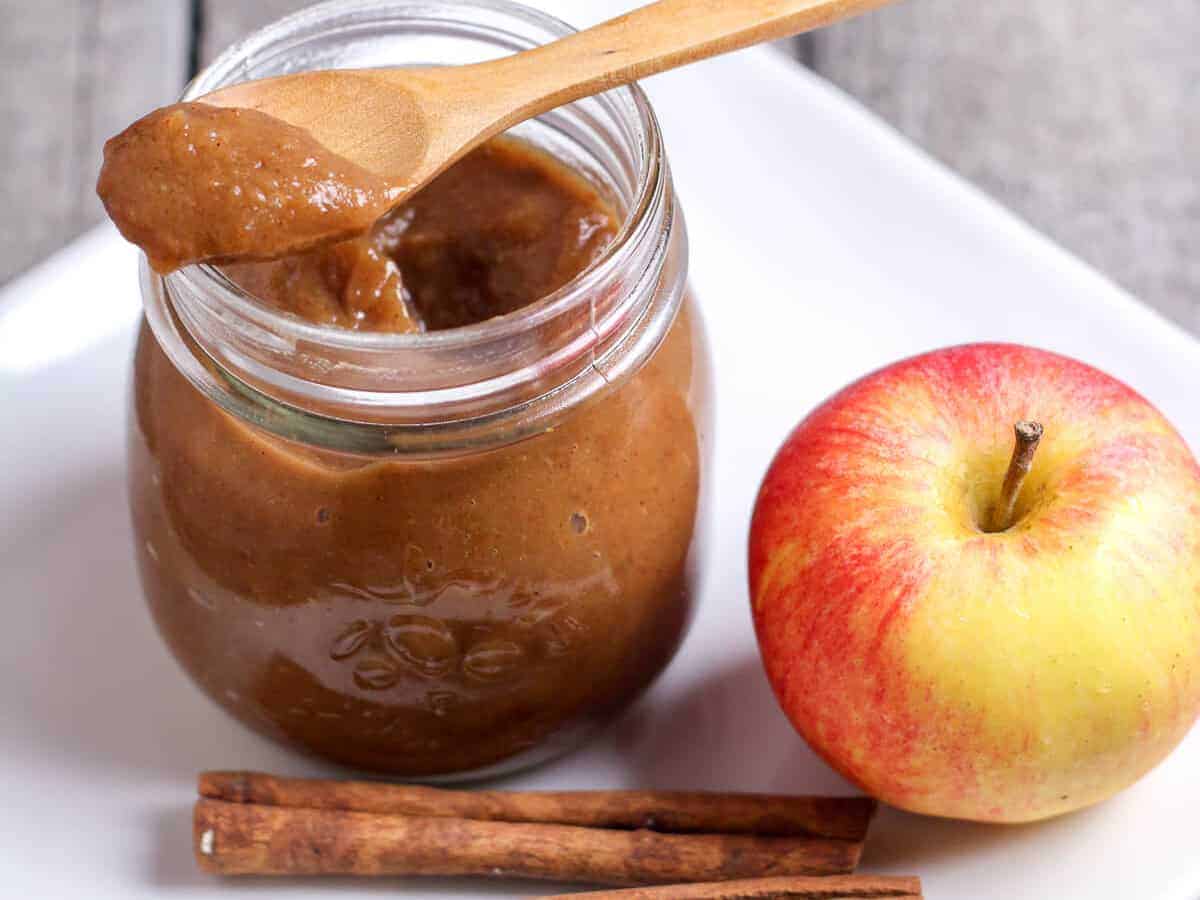
Sweet, tangy, and warmly spiced, this homemade slow cooker apple butter is easy to make with just a few simple ingredients. Enjoy it as a spread, a dip, or even a cake filling.
Growing up in Michigan, we lived near an apple orchard that had its own restaurant. To be honest, I wasn’t particularly impressed by the food (mostly sandwiches), but I still loved going there. The restaurant was decorated with old photographs, newspaper clippings, and fun antiques. They served apple everything! Meals came with apple cider (with unlimited free refills!), and desserts included treats like apple crisp, hot caramel apple sundaes, and apple dumplings.
After our meal, we’d usually stop by the orchard’s shop to bring something home. Sometimes we’d buy fresh apples or apple cider doughnuts, but my favorite treat was always the apple butter.
Apple butter is easy to find in Michigan, where apple orchards are plentiful. Here in Spain, though, most people have never even heard of it! Since I couldn’t easily buy my favorite childhood treat, I decided to start making my own.
What is apple butter?
Apple butter is a thick, smooth, and concentrated apple spread. It’s similar to applesauce, but it’s cooked much longer, allowing the moisture to evaporate and the natural sugars in the apples to develop a deeper, richer flavor. The result is a dark, velvety spread with a deliciously concentrated apple flavor.
Ingredients
Despite its name, apple butter doesn’t actually contain any butter! Unlike a compound butter, which combines butter with other ingredients for flavor, apple butter gets its name from its smooth, spreadable consistency.
The main ingredients are apples, sugar, and cinnamon. While you can make apple butter without added sugar, most traditional recipes include some to enhance the sweetness and flavor.
You can easily customize the flavor of your apple butter with different spices and extracts. I like adding a little ground cloves, a pinch of salt, and a splash of my homemade vanilla extract.
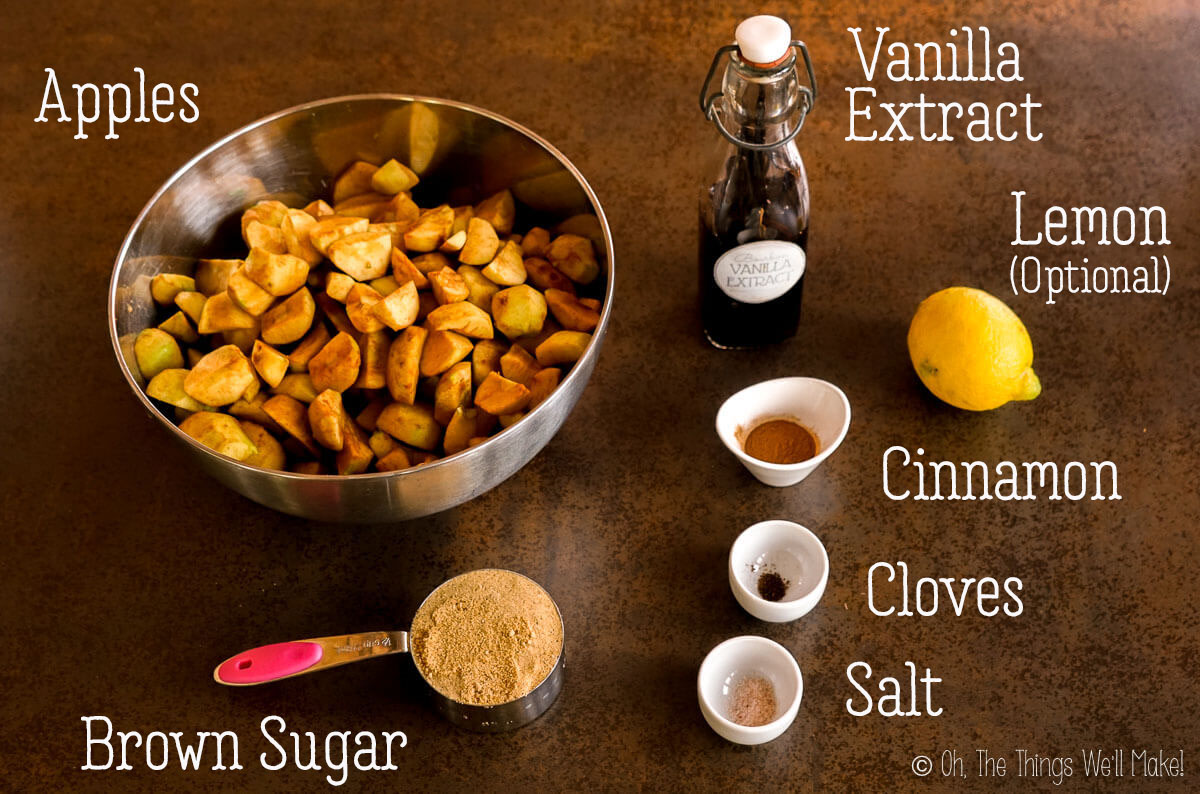
If I’m using particularly sweet apples, I sometimes add a little lemon juice to balance the sweetness. With tart apples, though, I usually leave it out.
You can also experiment with other warm spices like nutmeg or allspice to give your apple butter a slightly different flavor.
Which apples are best?
You can make apple butter with almost any variety of apple, but some work better than others. Softer varieties, like McIntosh, break down quickly during cooking, while sweeter apples, like Fuji or Gala, can help reduce the amount of added sugar needed.

For a more complex flavor, try combining sweet apples with tart varieties like Granny Smith. Mixing different types of apples is a great way to balance sweetness and acidity.
Don’t worry too much about choosing the perfect apples, though. One of the best things about homemade apple butter is that you can use whatever apples you have on hand!
One year, I made a batch of apple butter using the tart green apples from our own apple tree. (We’re still not sure what variety they are!) I added lemon juice as I normally would, but the finished apple butter turned out a little too tangy.
That experience taught me that it’s best to taste your apples before adding lemon juice. If they’re already quite tart, you probably won’t need any!
How to make slow cooker apple butter
Making homemade apple butter in a slow cooker is surprisingly easy! Most of the work is preparing the apples. Start by washing them thoroughly and removing the cores.
Peeling the apples is optional. Removing the skins will give you a smoother texture, but you can leave them on if you prefer. They’ll soften during cooking, and blending the finished apple butter will help incorporate them into the mixture. The skins also contain pectin, which can help thicken the apple butter.
Once you’ve washed and prepared the apples, cut them into large chunks. There’s no need to chop them finely since they’ll soften as they cook.
Don’t throw away those apple scraps! You can save the peels and cores to make your own homemade apple scrap vinegar.
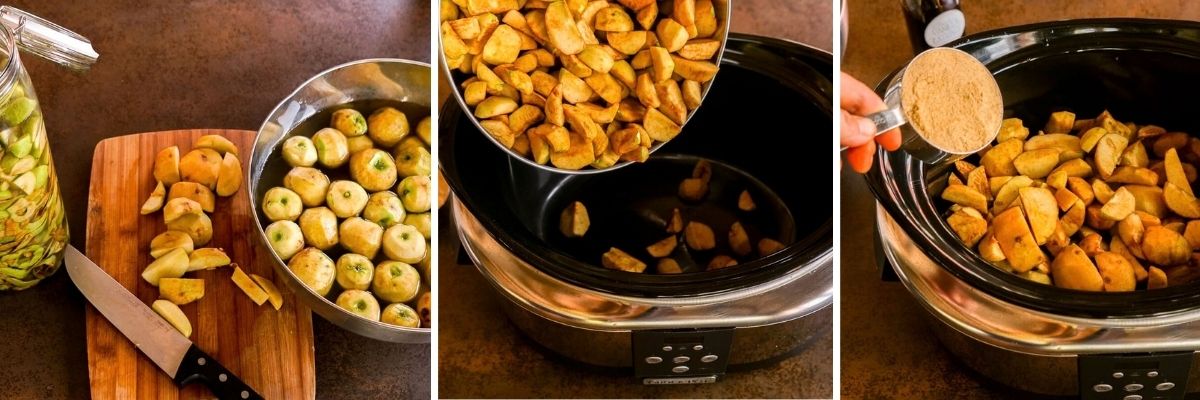
Add the chopped apples to your slow cooker, along with the sugar, vanilla extract, and spices. Give everything a quick stir to distribute the ingredients.
Cover and cook on high for about an hour, or until the apples begin to soften. Then, reduce the heat to low and continue cooking for several more hours, until the apples are very soft and have developed a rich, golden-brown color.
The apples should release their natural juices as they cook, so there’s usually no need to add water. However, slow cookers can vary. If the apples seem to be browning too quickly or sticking to the bottom before releasing enough liquid, reduce the heat or add a small splash of water to prevent burning.
Once the apples are very soft and have developed a rich, brown color, use an immersion blender to purée them until smooth and creamy. You can blend the apples directly in the slow cooker, taking care not to splash the hot mixture.
If you don’t have an immersion blender, you can carefully transfer the cooked apples to a regular blender and process them in batches. Be sure to follow your blender’s instructions for handling hot foods, as trapped steam can cause pressure to build up.
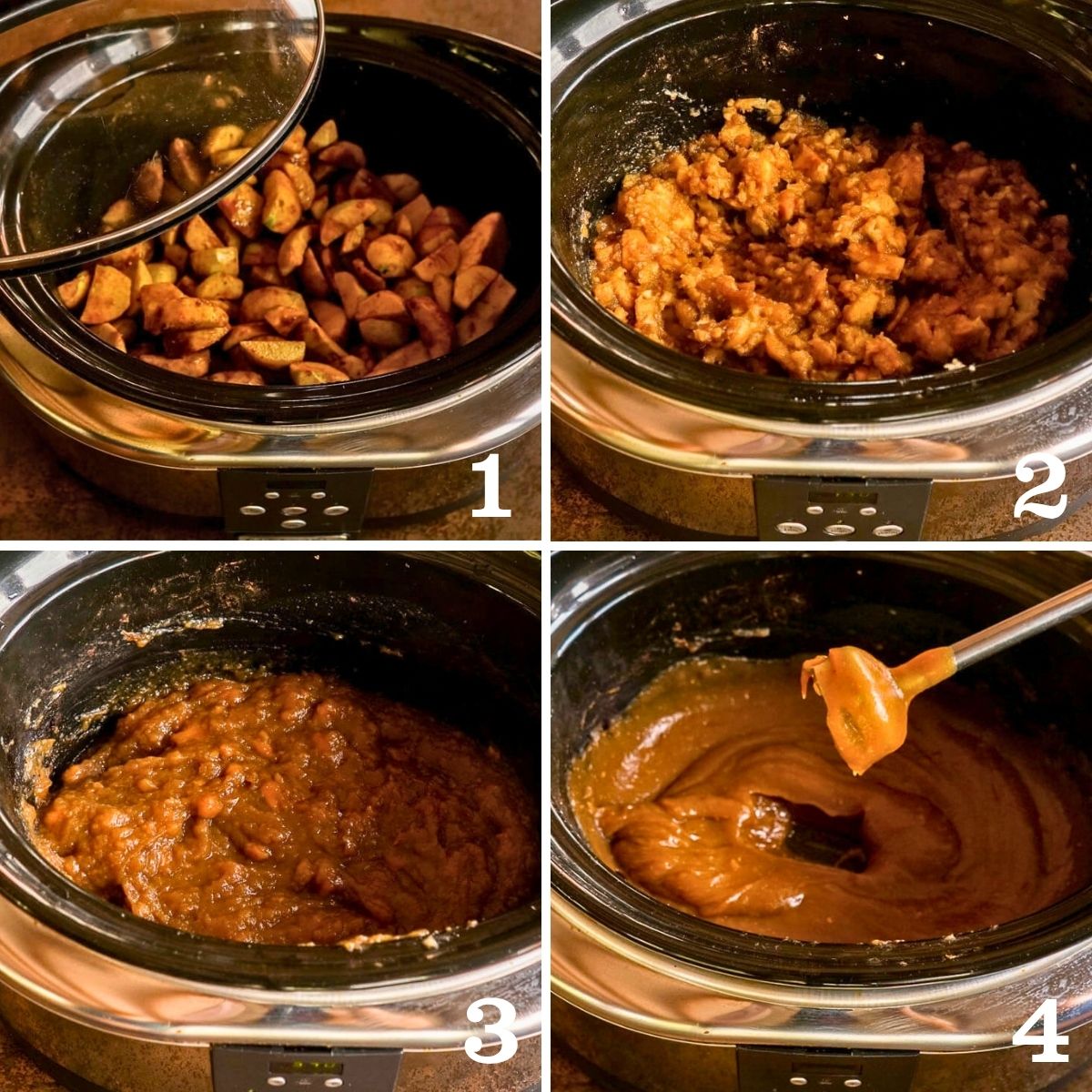
Apple butter should be thick and spreadable, rather than runny like applesauce. Depending on the variety of apples you use and how much moisture they release, you may find that your apple butter is already thick enough after blending.
If it’s still too thin, continue cooking it on low with the lid off to allow excess moisture to evaporate. Stir occasionally to prevent sticking or burning, especially as the mixture thickens.
Keep in mind that apple butter will also thicken slightly as it cools.
If you continue cooking apple butter until most of the moisture evaporates, you may end up with a much firmer paste, especially when using apples that are naturally high in pectin. It could even resemble dulce de membrillo (Spanish quince paste), which is thick enough to slice!
Once your apple butter is smooth and has reached your desired consistency, give it a taste. You can adjust the sweetness by adding a little more sugar or enhance the flavor with additional cinnamon, cloves, or other spices. If it tastes too sweet, a splash of lemon juice can help balance the flavor.
When you’re happy with the taste and texture, transfer the finished apple butter into clean jars or other suitable containers. Allow it to cool before refrigerating or freezing.
Customizing the recipe
One of the best things about homemade apple butter is that you can adjust the sweetness to suit your taste. I use less sugar than many traditional recipes and prefer unrefined brown sugar for its rich, slightly caramel-like flavor.
You can add more sugar if you prefer a sweeter apple butter or reduce the amount if you’re using naturally sweet apples. You can even make apple butter without added sugar, although the flavor and consistency may be slightly different.
White sugar also works well, or you can use a combination of white and brown sugar.
If you love warm fall spices, feel free to experiment with different combinations of cinnamon, nutmeg, allspice, and cloves. You can add a little extra of your favorites for a stronger spice flavor or use less if you prefer the natural apple flavor to shine through.
For a slightly tangier apple butter, add a splash of lemon juice. Just remember to taste it first, especially if you’re using tart apples, since you may not need any additional acidity.
Storage
Homemade apple butter should be stored in clean, airtight containers in the refrigerator unless it has been properly canned using a tested preservation method.
For the best quality and safety, I recommend using refrigerated apple butter within 1–2 weeks. Since homemade recipes vary in their sugar content, acidity, and moisture levels, the exact storage time can vary.
Always use a clean spoon when serving apple butter to avoid introducing bacteria or other contaminants. If you notice mold, an unusual smell, or other signs of spoilage, discard it. Keep in mind that harmful microorganisms don’t always cause noticeable changes in appearance or smell.
If you want to keep your homemade apple butter for longer, freezing is an easy and convenient option. It allows you to preserve extra batches without worrying about specialized canning equipment.
You can also preserve apple butter by canning it. Just make sure to follow a tested canning recipe with proper processing instructions, especially if you’ve changed the amount of sugar or other ingredients.
Freezing apple butter
Freeze apple butter in freezer-safe containers, leaving a little room at the top for expansion.
I also like to freeze apple butter in ice cube trays so I can take out smaller portions whenever I need them. Once frozen, I move the cubes to freezer bags to save space. You can see how I do this in my tutorial on freezing sauces and purées.
For the best flavor and quality, try to use frozen apple butter within 6 months.
To thaw, place the apple butter in the refrigerator overnight.
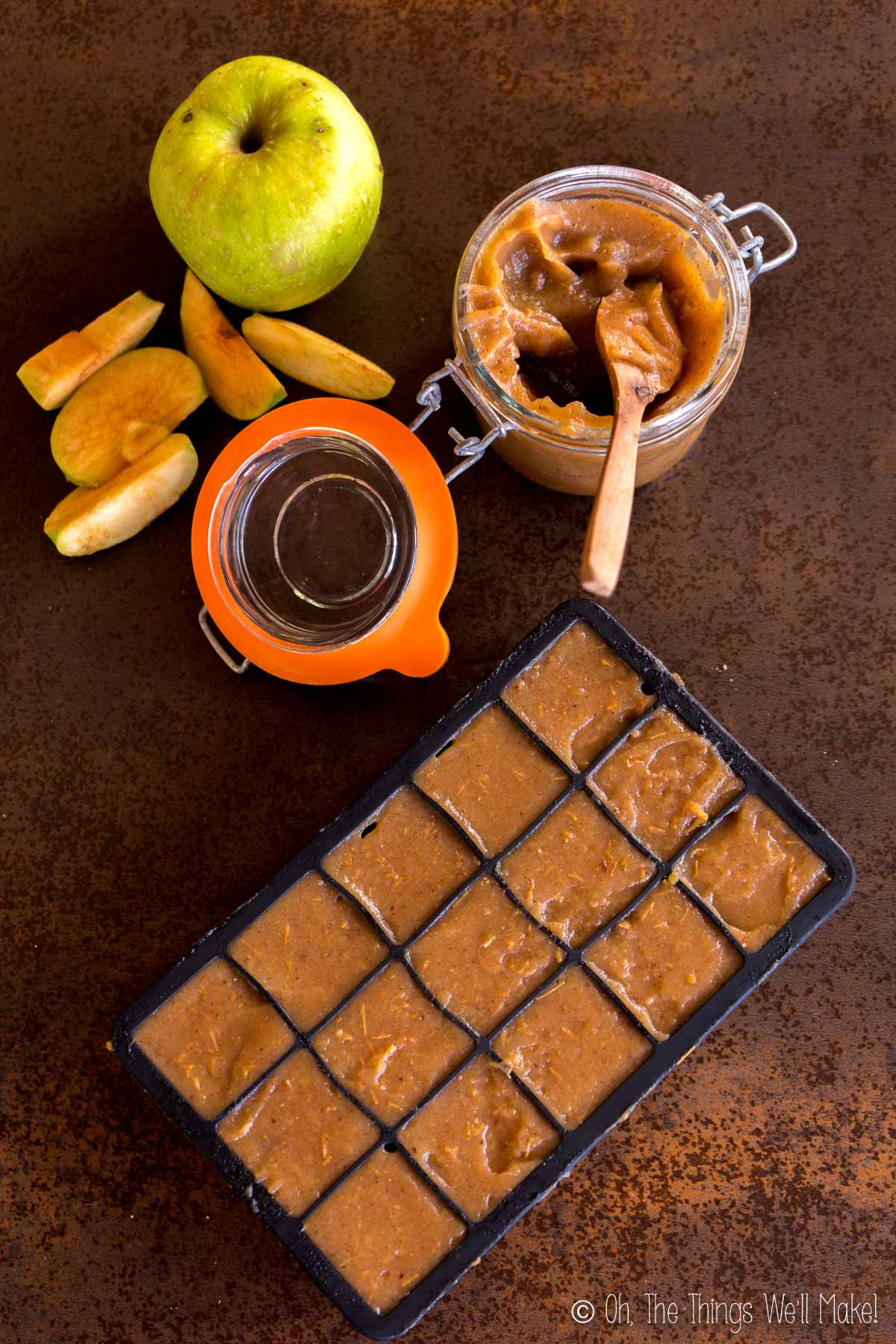
Canning apple butter
Apple butter can also be preserved by canning, allowing you to store unopened jars at room temperature.
If you’d like to can your apple butter, I recommend following the tested apple butter canning recipe from the National Center for Home Food Preservation. Their recipe includes specific ingredient amounts and processing instructions to ensure safe preservation.
Since my recipe allows you to adjust the sugar and other ingredients to taste, I recommend following their recipe rather than trying to adapt mine for canning.
Once opened, store canned apple butter in the refrigerator.
Serving ideas
Apple butter is delicious spread on bread, rolls, or bagels, either on its own or over a little butter. You can also serve it as a dip for crackers, cookies, or fresh fruit.
It’s especially good with sweet treats, but I also love the contrast when it’s served with something salty, like hard cheeses.
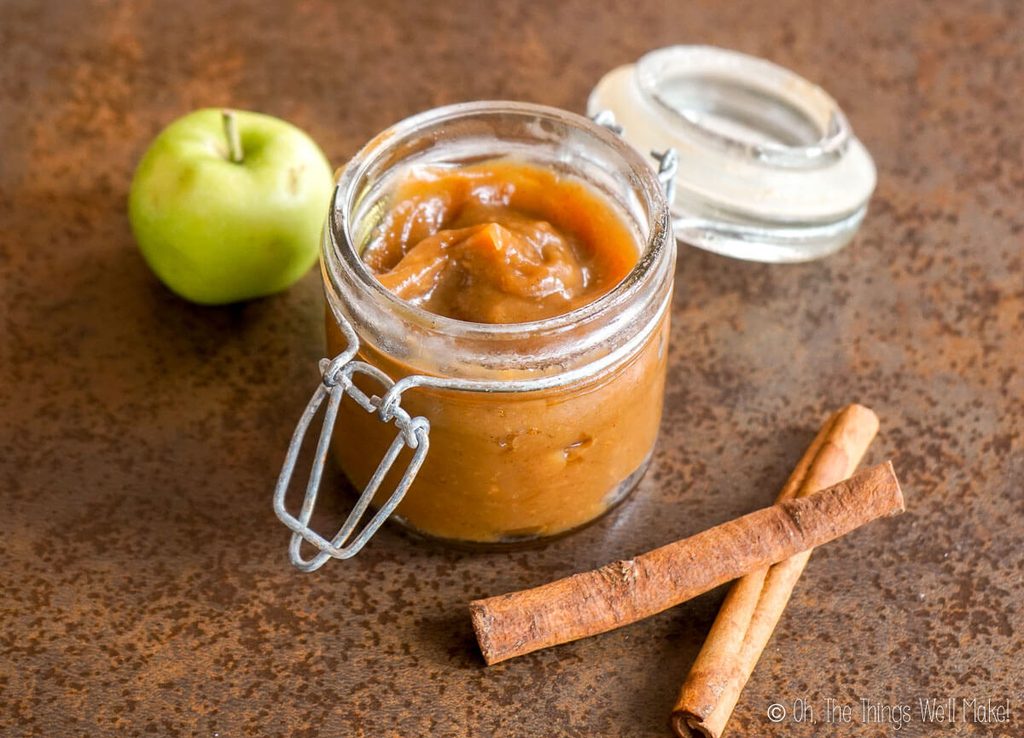
Some people use it as a cake filling, while others just eat it straight off the spoon. 🙂
I think it’s especially delicious paired with pumpkin spice biscotti, grain-free apple crumb cake, or paleo baked apple fries.
Video
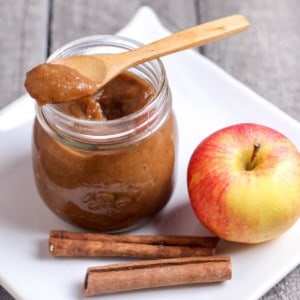
Slow Cooker Apple Butter
Ingredients
- 3 pounds apples
- ½ cup brown sugar coconut sugar also works
- 1 tablespoon vanilla extract I use homemade vanilla extract
- 1 teaspoon ground cinnamon
- ⅛ teaspoon salt
- ⅛ teaspoon ground cloves optional
- ½ lemon juiced (optional)
Instructions
- Wash the apples thoroughly. Peel them if you prefer, although leaving the skins on is fine.
- Remove the cores and cut the apples into large chunks.
- Place the apple pieces in your slow cooker along with the sugar, vanilla extract, cinnamon, salt, and cloves. Stir to distribute the ingredients.
- Cover and cook on high for about an hour, or until the apples begin to soften.
- Reduce the heat to low and continue cooking for several more hours, stirring occasionally, until the apples are very soft and have developed a rich, brown color.
- The apples should release their natural juices as they cook, so there’s usually no need to add water. If they seem to be browning too quickly or sticking to the bottom, reduce the heat or add a small splash of water to prevent burning.
- Once the apples are very soft, use an immersion blender to purée them until smooth. You can blend them directly in the slow cooker, taking care not to splash the hot mixture.
- If you don’t have an immersion blender, carefully transfer the cooked apples to a regular blender and process in batches, following your blender’s instructions for handling hot foods.
- If the apple butter is still too thin, continue cooking on low with the lid off, stirring occasionally, until it reaches your desired consistency. Keep in mind that it will thicken slightly as it cools.
- Taste the apple butter and adjust the sweetness or spices to your liking. If it’s too sweet, add a little lemon juice to balance the flavor.
- Transfer the finished apple butter to clean jars or other suitable containers. Allow it to cool before refrigerating or freezing.
Notes
Yield
Makes approximately 3–4 cups, depending on the apples used and how much the mixture is reduced. Nutritional information is estimated based on 4 cups (32 servings of 2 tablespoons each).Choosing apples
Almost any apple variety will work. Softer apples, like McIntosh, break down more quickly, while sweeter varieties, like Fuji or Gala, may need less added sugar. You can also combine sweet and tart apples.Variations
Adjust the sugar to taste, or leave it out entirely. Brown sugar, white sugar, and coconut sugar all work. You can also experiment with spices like nutmeg and allspice. Add a little lemon juice if the apple butter tastes too sweet.Storage
Store in an airtight container in the refrigerator for up to 1–2 weeks. For longer storage, freeze in freezer-safe containers or ice cube trays. For the best quality, use within 6 months. For shelf-stable canning, follow the tested apple butter recipe from the National Center for Home Food Preservation rather than adapting this recipe.This post was originally published on October 27, 2014. It was updated in August 2021 with new photos, video, and clearer instructions, and again in October 2026 with additional tips and updated storage information.

Thanks For Sharing this Amazing Recipe. My Family Loved It. I will be sharing this Recipe with my Friends. Hope They will like it.
Thanks, Helan!