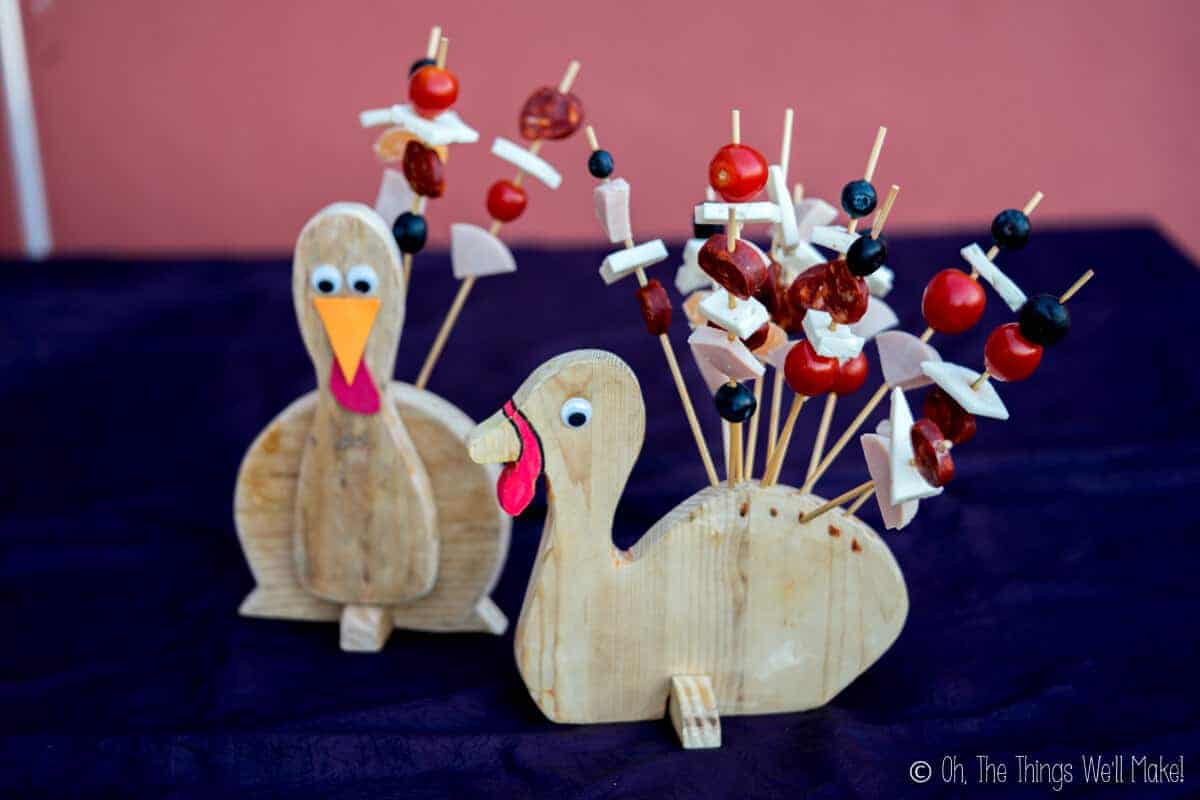

Thanksgiving Appetizer Skewers: DIY Turkey Holder
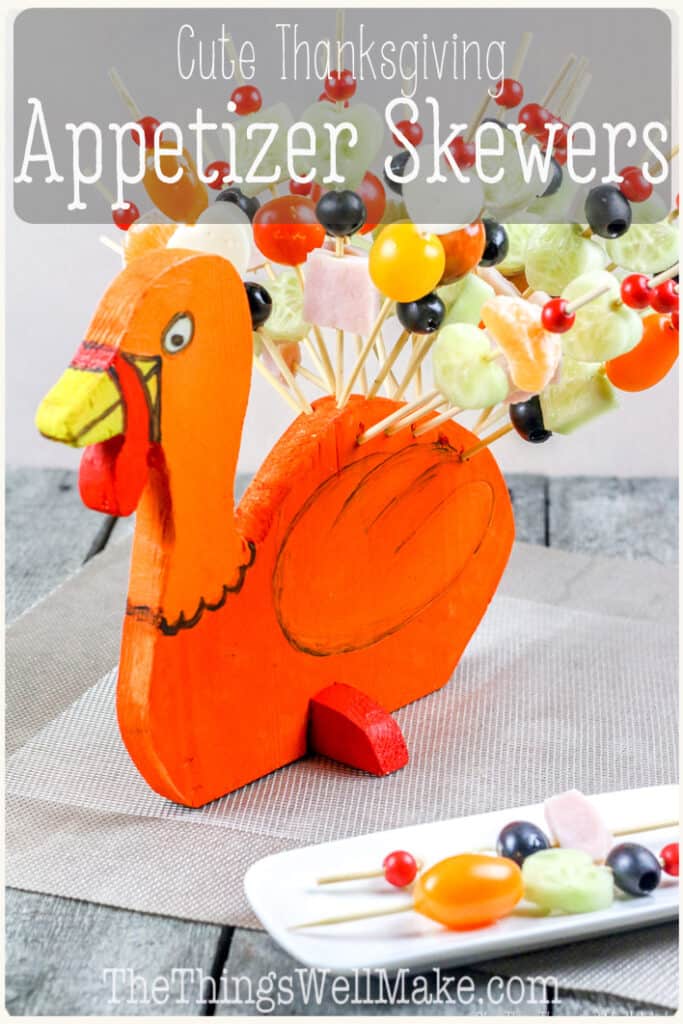
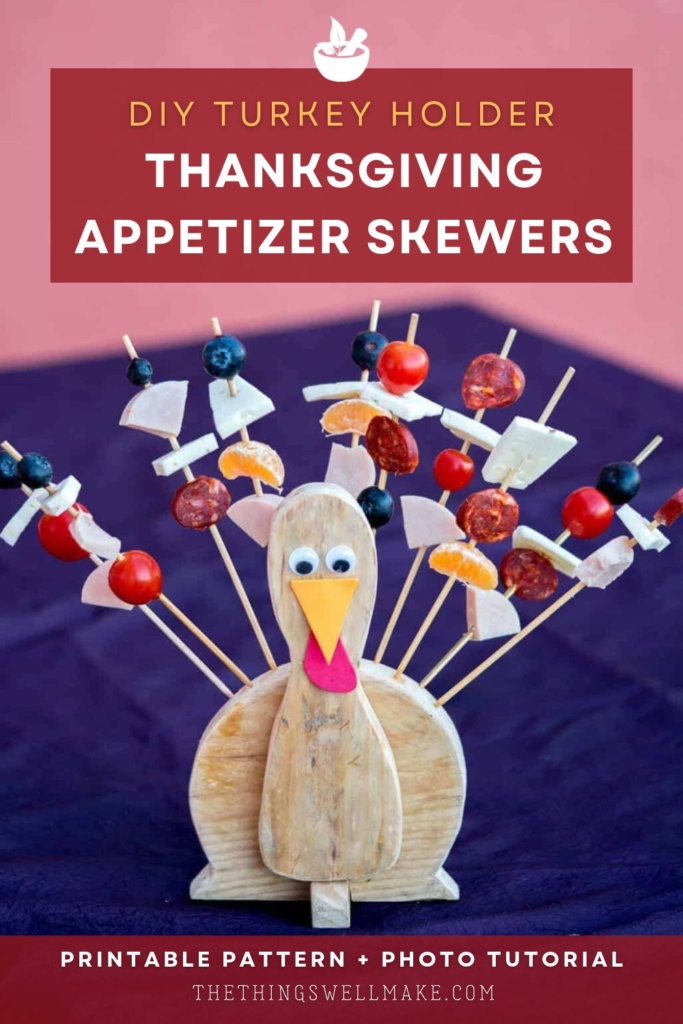
Turn colorful appetizer skewers into a turkey’s tail with this homemade wooden holder. Fill it with fruit, vegetables, cheese, and other bite-sized snacks for a fun Thanksgiving centerpiece you can use year after year.
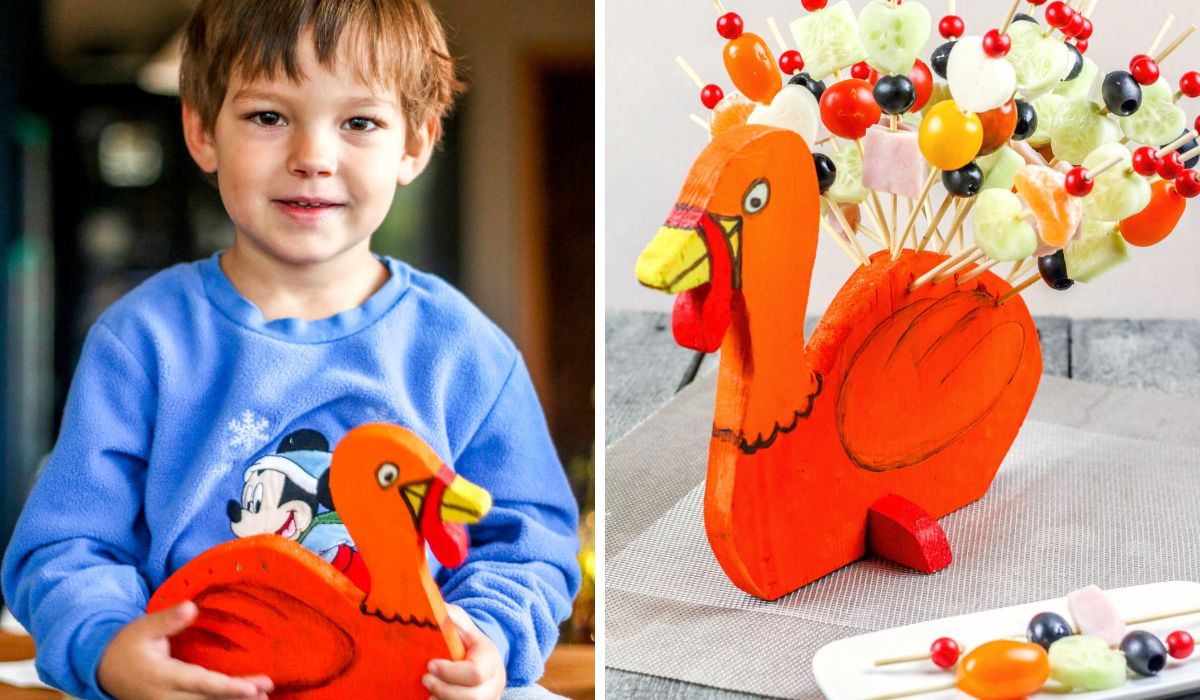
One day, my son and I spotted a wooden hedgehog appetizer display at the mall. Skewers stuck out of its back like spines, and we both thought it was cute.
With Thanksgiving coming up, I wondered if I could make something similar in the shape of a turkey, with colorful appetizer skewers forming its tail.
My son loved it. He was excited to eat the fruit and vegetables on the skewers, which gave me another reason to like our new Thanksgiving decoration.
Two ways to make the turkey holder
My first turkey holder showed the turkey from the side. My son loved it, but the design didn’t leave much room to spread out the skewers.
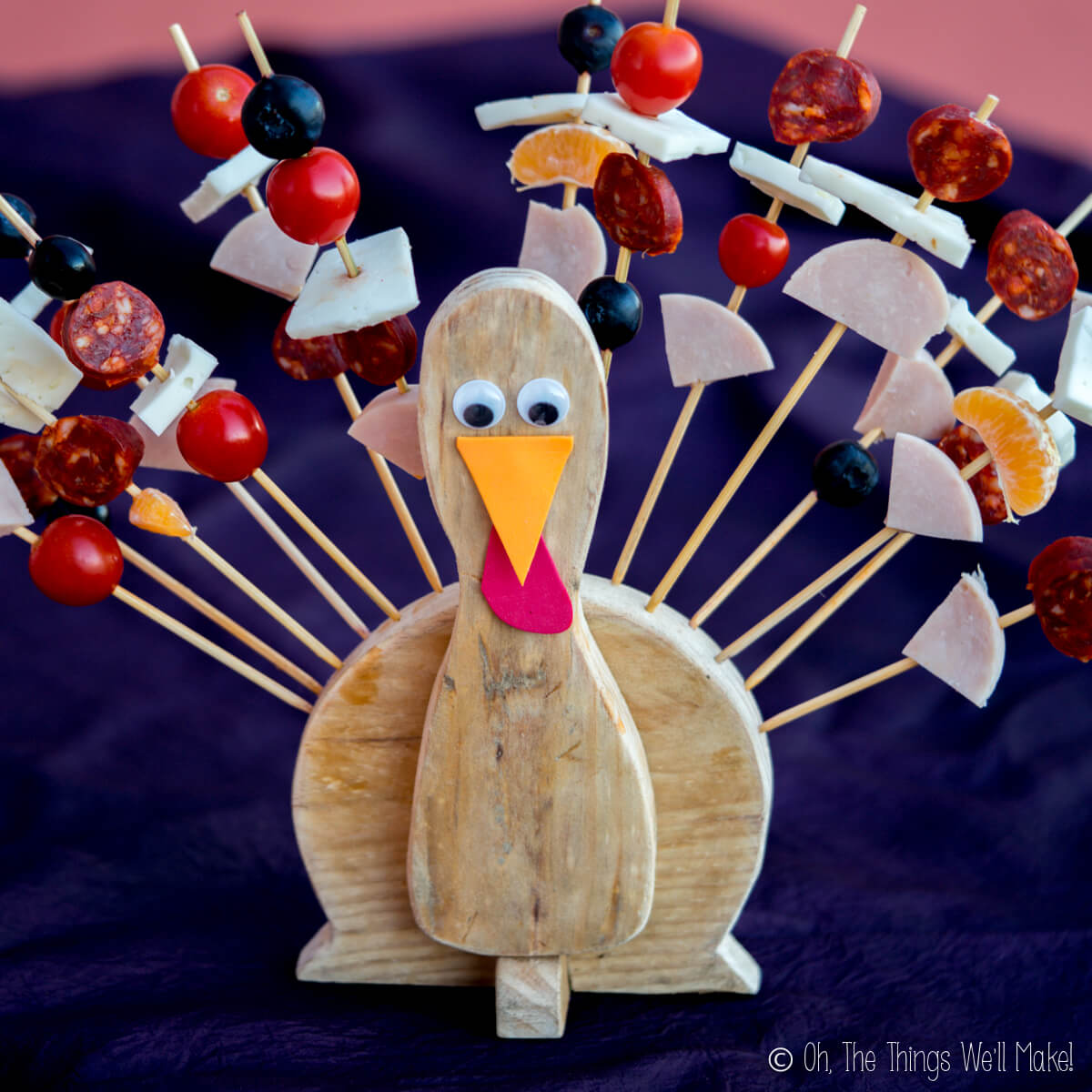
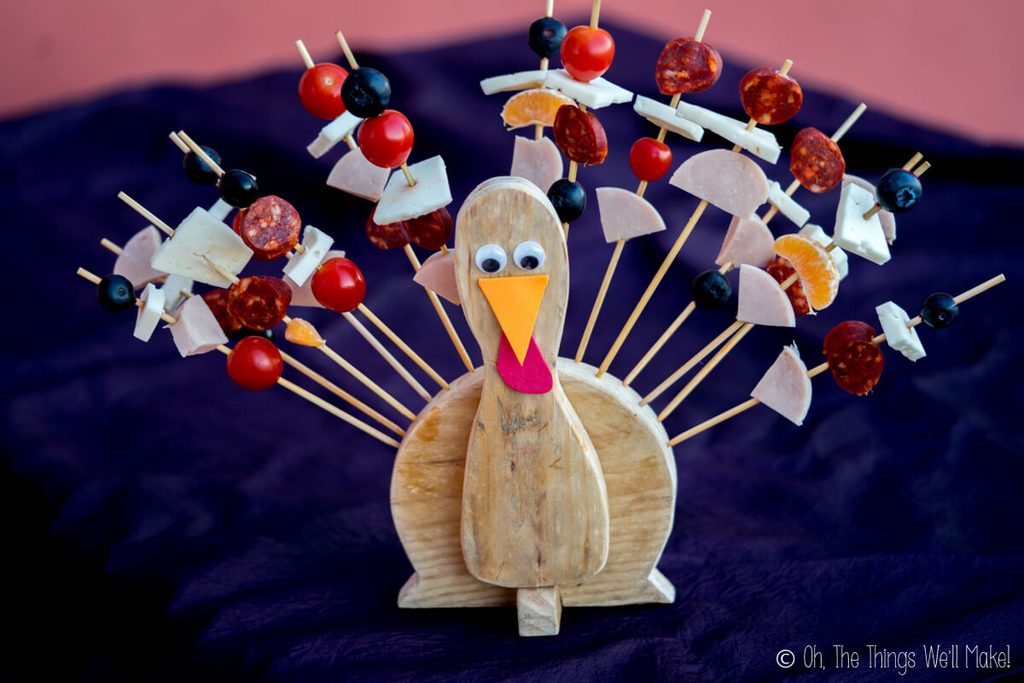
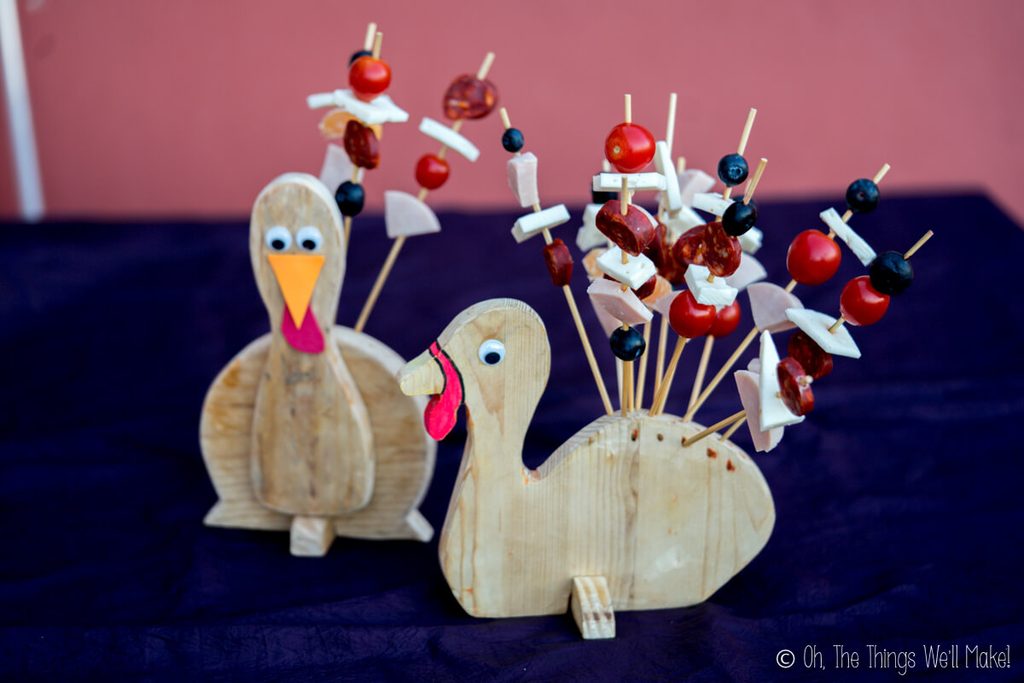
For the second version, I made the turkey face forward so the skewers could fan out into a wider tail. It also looks more like a turkey when only a few skewers are left.
Both versions work, so choose whichever you prefer. The basic process is the same, but the front-facing version has a separate head and neck piece that you glue onto the body.
Materials and tools
You’ll need a wooden board about 1.8 cm (¾ inch) thick. Scraps work well if they’re large enough for the turkey pieces and stand.
Materials
- Wooden board, about 1.8 cm (¾ inch) thick
- Bamboo skewers
- Wood glue for the front-facing turkey’s head and neck
- Optional decorations: paint, googly eyes, and craft foam for the beak and wattle
- Craft glue for the decorations, optional
Tools
- Pencil or marker
- Jigsaw
- Sandpaper or a sander
- Drill with a bit sized to fit your skewers snugly. I used a 3 mm bit.
Choose your skewers before drilling so you can test the fit in a scrap of wood.
How to make the turkey skewer holder
Draw and cut the pieces
For the front-facing turkey, you’ll need three wooden pieces: a rounded body with a flat bottom, a separate head and neck, and a small stand.
You can draw your own shapes or use my printable turkey skewer holder template. Print at 100% or Actual Size and measure the reference square to check the scale. Adjust the slots to match your wood’s thickness. The template is an approximate guide based on my original holder.
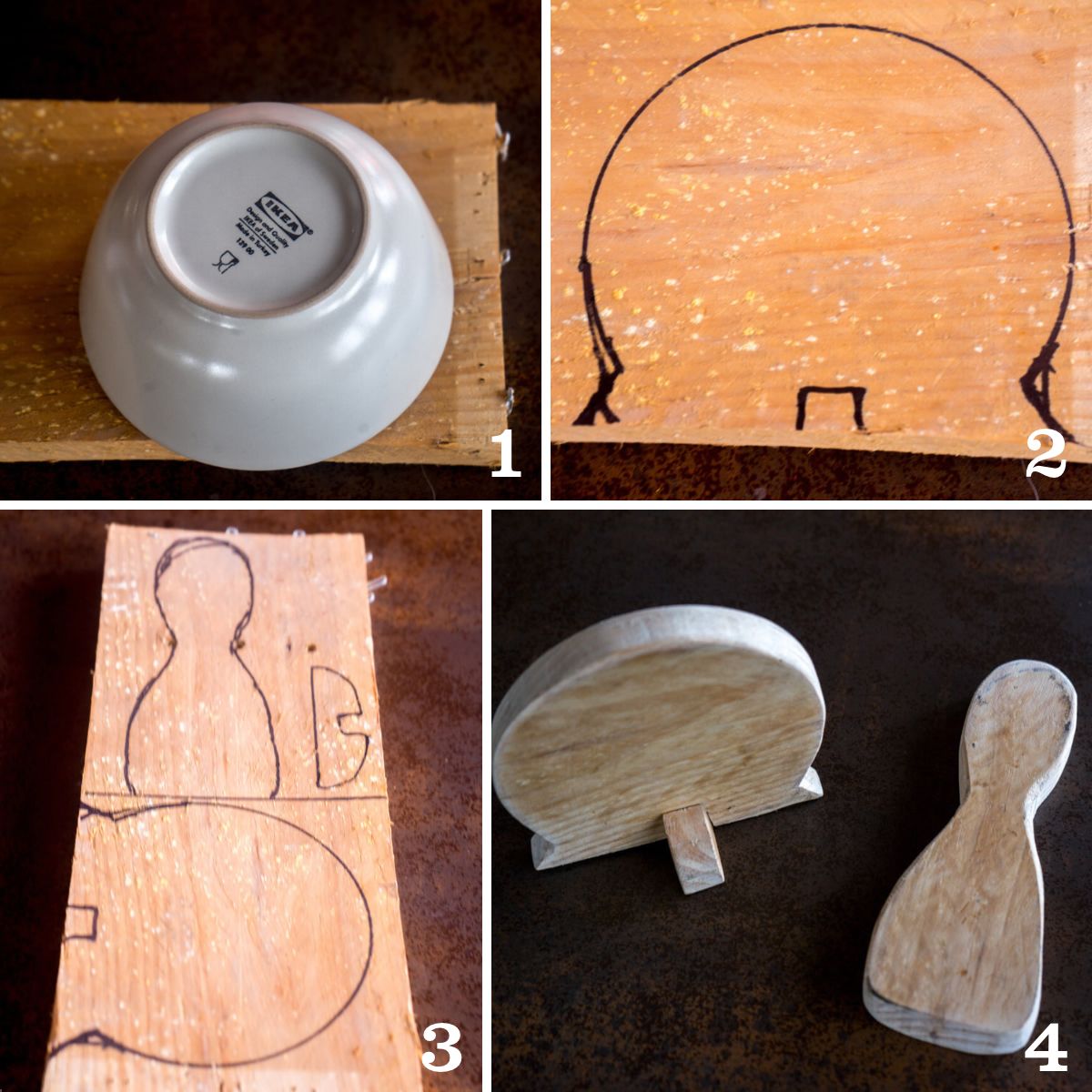
Trace around a bowl to draw the body, then add a flat bottom with slightly flared corners for the feet (photos 1–2). My bowl was about 14 cm (5½ inches) across. Draw the head and neck roughly like a bowling pin.
For the stand, draw a piece with a flat bottom and rounded top, about 3–4 inches wide and 1 inch tall. Photo 3 shows all three shapes before cutting.
Draw a slot in the bottom center of the body and another in the top center of the stand. Make each slot about 1 cm deep and as wide as your board is thick.
Cut out the pieces and slots with a jigsaw, then sand the edges smooth. Slide the stand into the body and check the fit (photo 4). Adjust the slots as needed so the turkey stands upright without wobbling.
Drill the skewer holes
Choose a drill bit that holds your skewers snugly. I used a 3 mm bit, but test yours in a scrap of wood first.
Drill holes about 1 cm deep into the curved top edge of the body. Angle the holes so the skewers spread out like a turkey’s tail. You can add holes near the edges of the front and back faces for a fuller display.
Work slowly when drilling at an angle so you don’t drill through the other side. Test the arrangement with empty skewers and adjust as needed.
Decorate and assemble the turkey
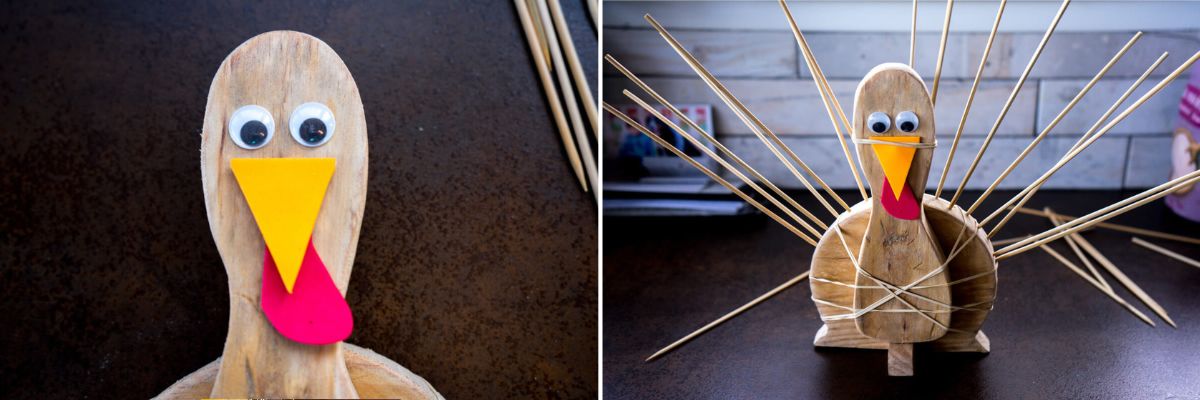
Leave the wood plain or paint it before assembling. For my front-facing turkey, I added googly eyes and cut a beak and wattle from craft foam.
With the stand in place, position the head and neck against the front of the body. Check that the head piece clears the stand, then glue it onto the body with wood glue.
I used rubber bands to hold the pieces together while the glue dried. Let the glue dry fully according to its instructions before loading the holder with food.
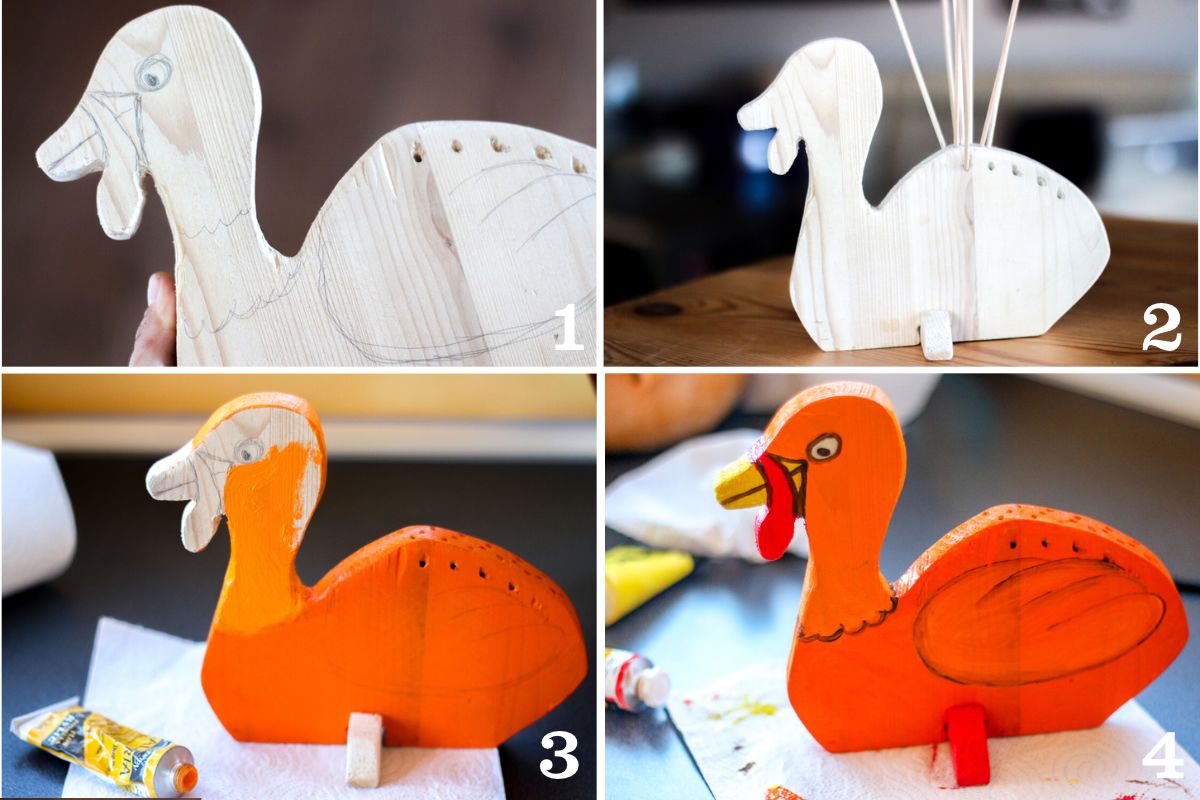
Making the side-facing version
For the original design, cut the head, neck, and body as one turkey silhouette. Make a separate slotted stand and fit it into the bottom of the body.
Drill holes along the curved back and near its edges (photo 1), then test them with empty skewers (photo 2). Angle the holes to spread out the tail.
Paint the turkey if you like (photo 3), then add the face and wing details (photo 4).
Making the appetizer skewers
Once your holder is ready, fill the skewers with a mix of colorful, bite-sized foods. You can make them all alike or offer different combinations so everyone can choose what they like.
Ingredient ideas
Round foods like grapes, blueberries, olives, and cherry tomatoes are easy to thread onto skewers. You can also use:
- Thick slices or cubes of cheese
- Thick pieces of ham or sliced cured sausage
- Cucumber slices and pieces of bell pepper
- Pieces of apple, pear, or firm persimmon
- Mandarin orange segments
Cut out decorative shapes
Small cookie cutters turn slices of cheese, ham, cucumber, and firm fruit into simple shapes. I used hearts and squares.
Cut the slices thick enough to hold together when pierced, but keep the pieces small so the loaded skewers don’t become too heavy.
Arrange the turkey’s tail
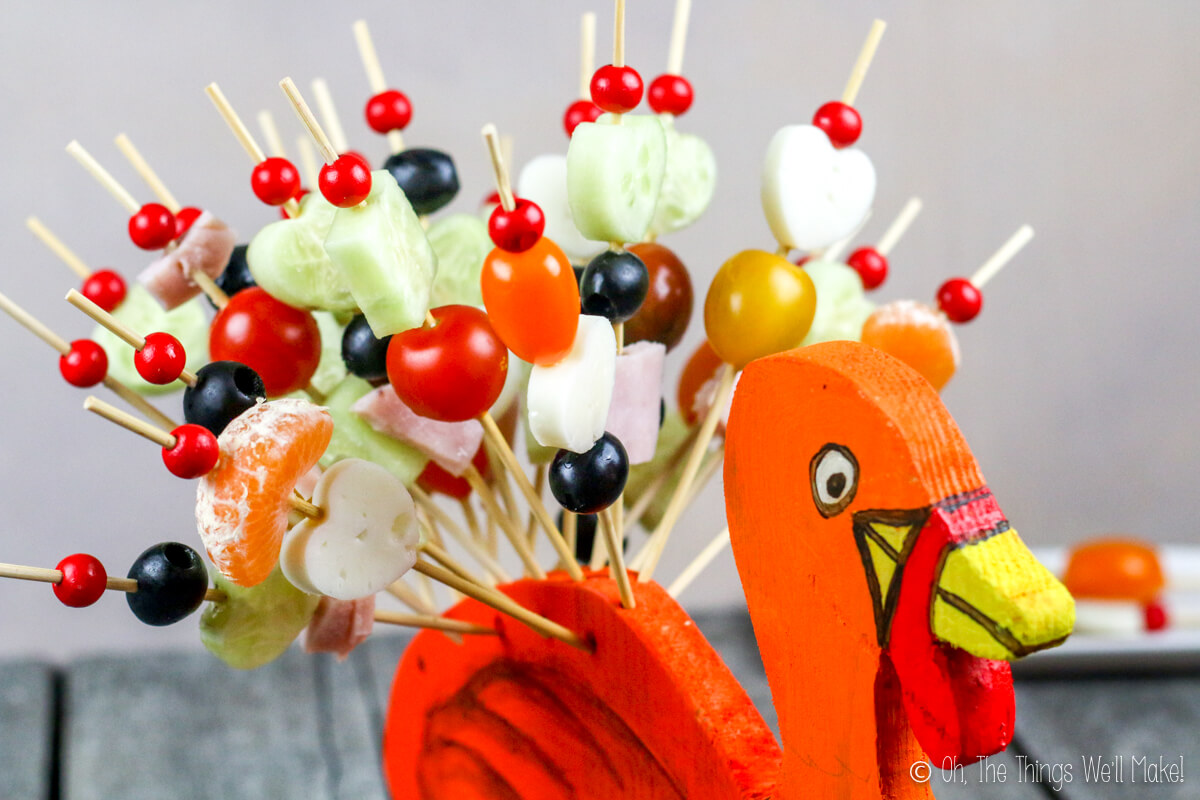
Place the holder on a flat, stable surface. Thread the food onto the skewers, leaving the pointed ends clear so they can slide into the holes.
Add the skewers evenly on both sides, spreading them into a fan. Mix the colors and leave enough space for guests to remove a skewer without knocking into the others.
DIY Turkey Skewer Holder
Equipment
- Pencil or marker
- Jigsaw
- Sandpaper or sander
- Drill
- Drill bit sized to fit your skewers snugly, approximately 3 mm
Materials
- Wooden board about 1.8 cm (¾ inch) thick
- Bamboo skewers
- Wood glue for the front-facing version
- Paint optional
- Googly eyes optional
- Craft foam for the beak and wattle, optional
- Craft glue for the decorations, optional
Instructions
- For the front-facing turkey, draw a rounded body with a flat bottom, a separate bowling-pin-shaped head and neck, and a stand with a flat bottom and rounded top. Make the stand about 3–4 inches wide and 1 inch tall.
- Draw a slot in the bottom center of the body and the top center of the stand. Each should be about 1 cm deep and as wide as your board is thick.
- Cut out the pieces and slots with a jigsaw. Sand the edges smooth.
- Slide the stand into the body. Adjust the slots until the holder stands upright without wobbling.
- Test your drill bit with a skewer in scrap wood. Drill holes about 1 cm deep along the body’s curved top edge, angling them to spread the skewers into a fan. Add holes near the edges of the front and back faces if desired, taking care not to drill through the wood.
- Insert empty skewers to check their fit and arrangement. Remove them before decorating.
- Paint the turkey if desired. Add googly eyes and a craft foam beak and wattle, or paint the face.
- With the stand in place, position the head against the front of the body, keeping the stand clear. Attach with wood glue. Rubber bands can help hold the pieces while the glue dries.
- Once the glue and any paint have fully dried, place the holder on a stable surface. Add food-filled skewers evenly on both sides to form the tail.
Notes
Originally published on November 20, 2019. Updated and republished on November 16, 2026, with clearer instructions, new photo collages, and a printable template.