

Easy DIY Hair Conditioner (That Actually Works)
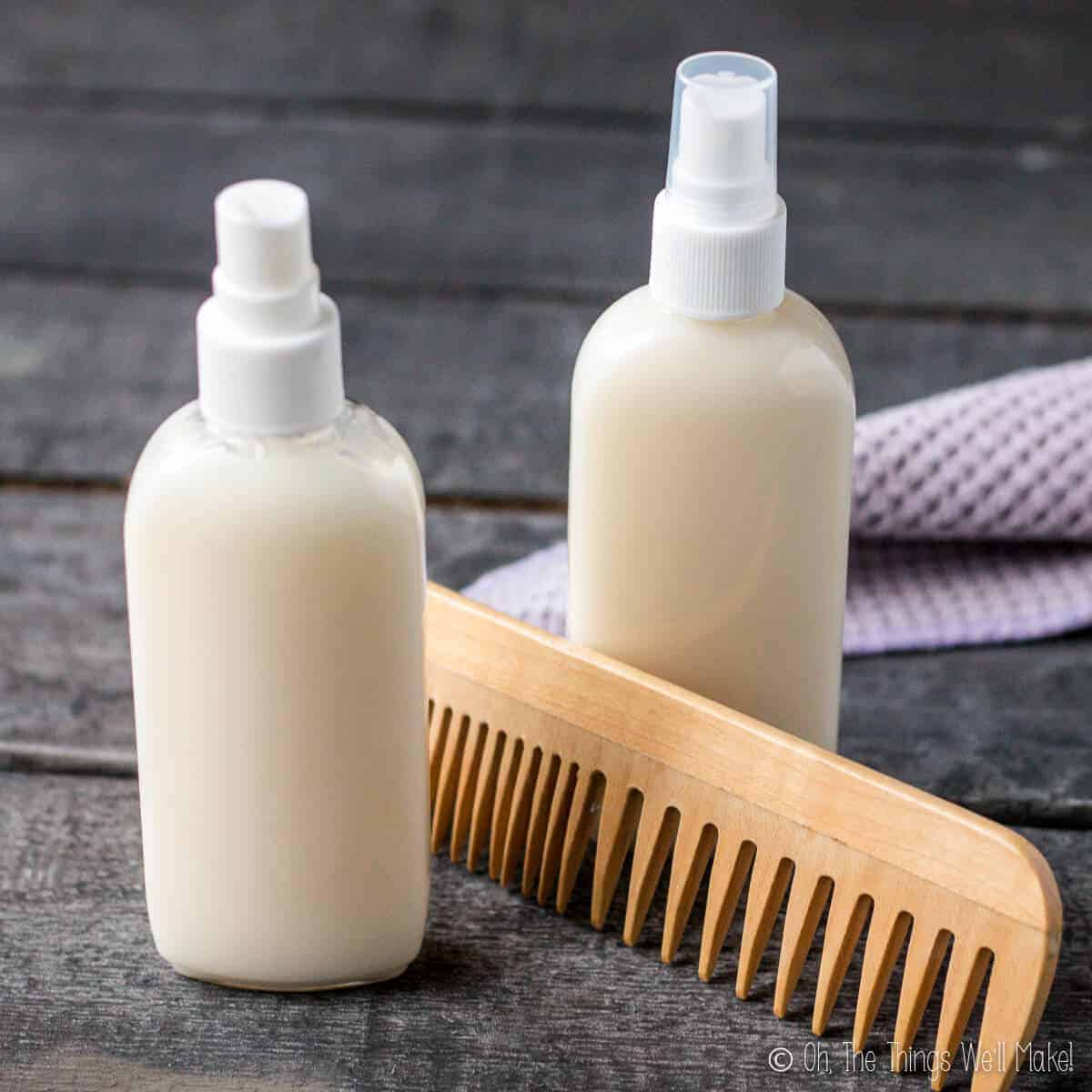
Make your own DIY hair conditioner with simple ingredients you can customize. This real conditioner leaves your hair soft, smooth, and easy to detangle and can even be used as a leave-in.
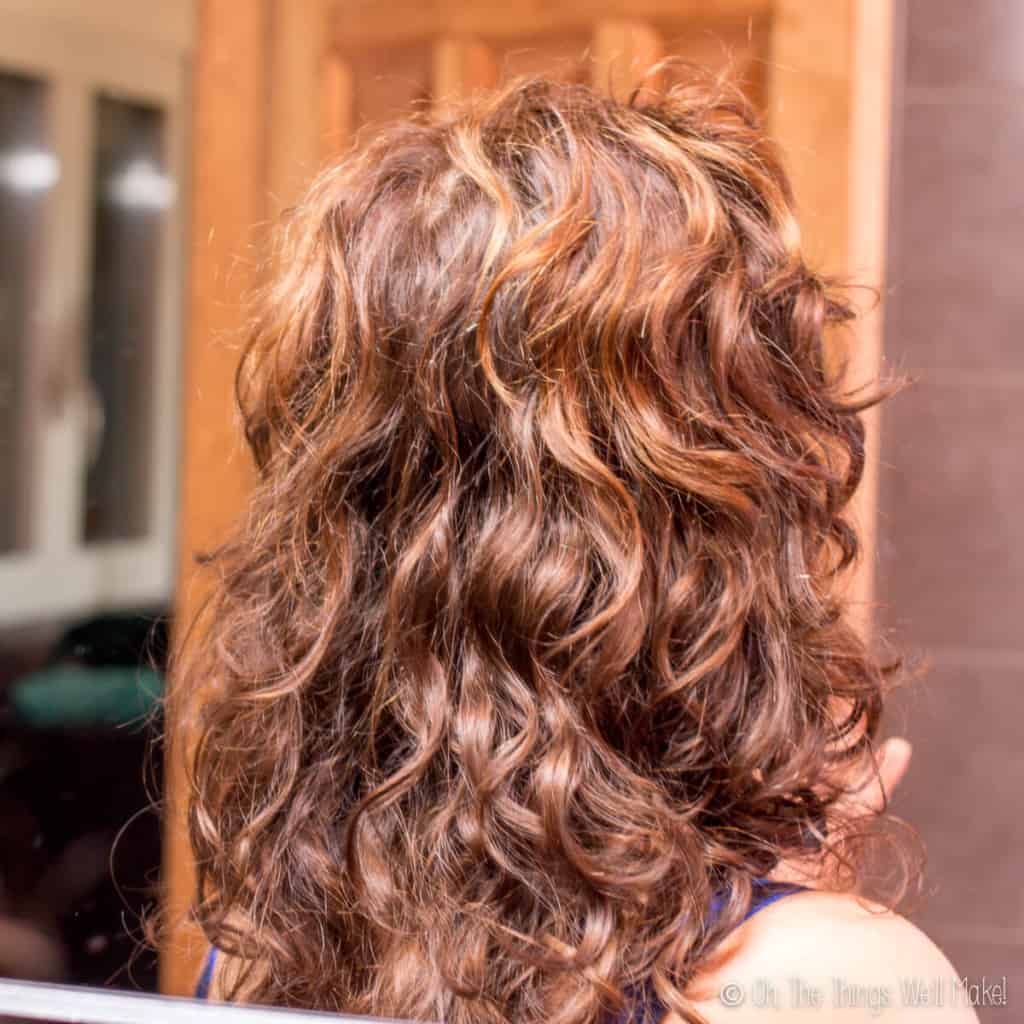
When I first wrote this post, I had just taken the Dressing Your Truth® course, and it changed how I was doing my hair.
Up until then, I had been straightening it all the time. It helped me realize I didn’t need to fight my natural texture, so for the first time in over 20 years, I started letting my hair do its natural curly and wavy thing.
To help support my waves, I started washing my hair less often and using a homemade flaxseed hair gel. I used this conditioner as a co-wash during the week and my homemade clarifying shampoo about once a week. The difference was immediate. I started seeing waves and curls I didn’t even know I had, and now I can just let it do its thing and I love how it looks.
This isn’t just a mix of oils or a quick DIY shortcut. It’s a real conditioner, similar to what you’d buy in a store, but you get to control what goes into it and adjust it to suit your hair.
Watch the full tutorial
Here’s exactly how I make it step by step, along with ingredient tips, troubleshooting, and customization ideas.

Why make a homemade conditioner?
There are a lot of reasons to make your own conditioner.
When you realize that most conditioners are mostly water, it starts to make sense. You can make something very similar at home for much less, even when using high-quality ingredients.
A lot of products highlight a specific oil or “miracle” ingredient, but in reality, those are often only used in small amounts. The rest of the formula may include ingredients you may not love or may prefer to avoid.
When you make your own, you get to decide exactly what goes into it and what to leave out. That’s always been my main reason for making things myself. I like knowing what I’m using and being able to adjust things depending on what my hair needs.
It’s also surprisingly affordable, and you can reuse your containers to cut down on waste. If you’d rather skip bottles altogether, you can also try my homemade conditioner bar.

The ingredients
A basic conditioner only uses a few simple types of ingredients: water, oil, an emulsifier, and a preservative. From there, you can keep it simple or customize it with things like vitamins or essential oils.
To make a conditioner, we’re making a simple emulsion. It’s just like making a simple lotion. The main difference is the type of emulsifier used. In this case, we’re using a cationic emulsifier, BTMS, which is what gives this conditioner its conditioning properties.
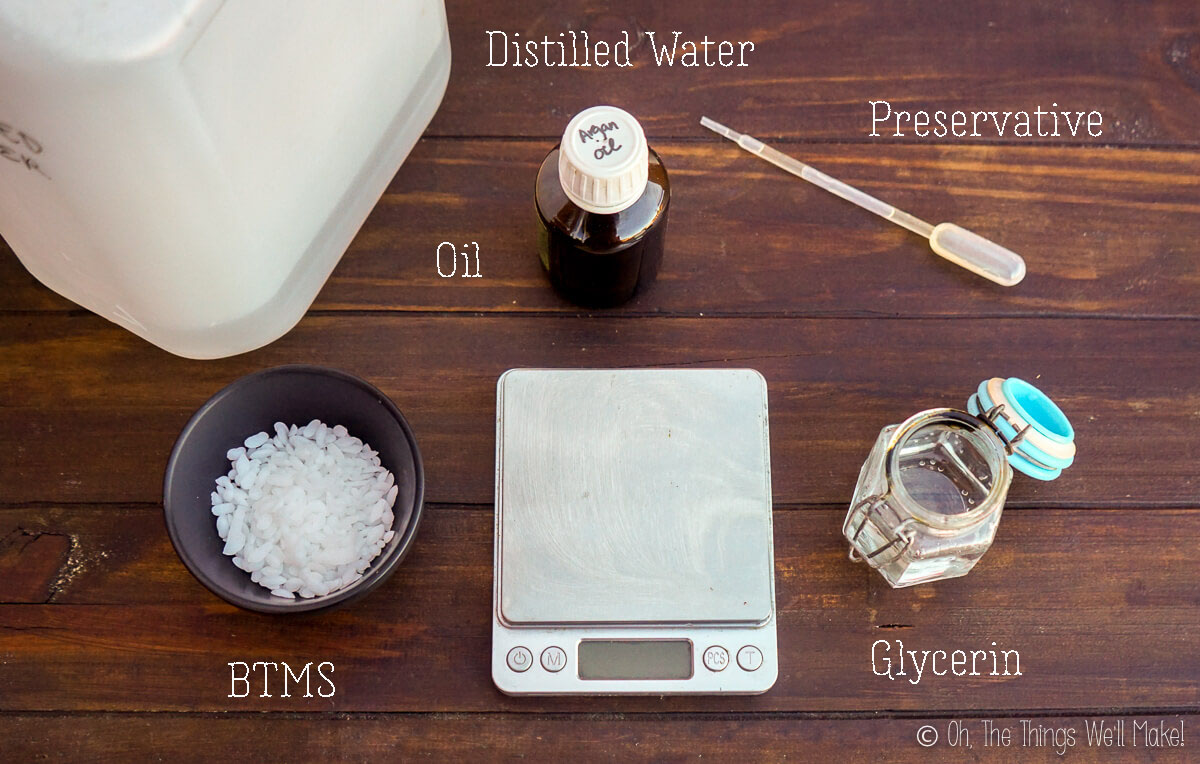
What is BTMS?
The main ingredient that makes this a true conditioner is BTMS (Behentrimonium Methosulfate).
This is what gives the conditioner its slip and makes it easier to detangle your hair. Without it, you’d end up with something more like a lotion, which won’t have the same feel or work nearly as well on hair.
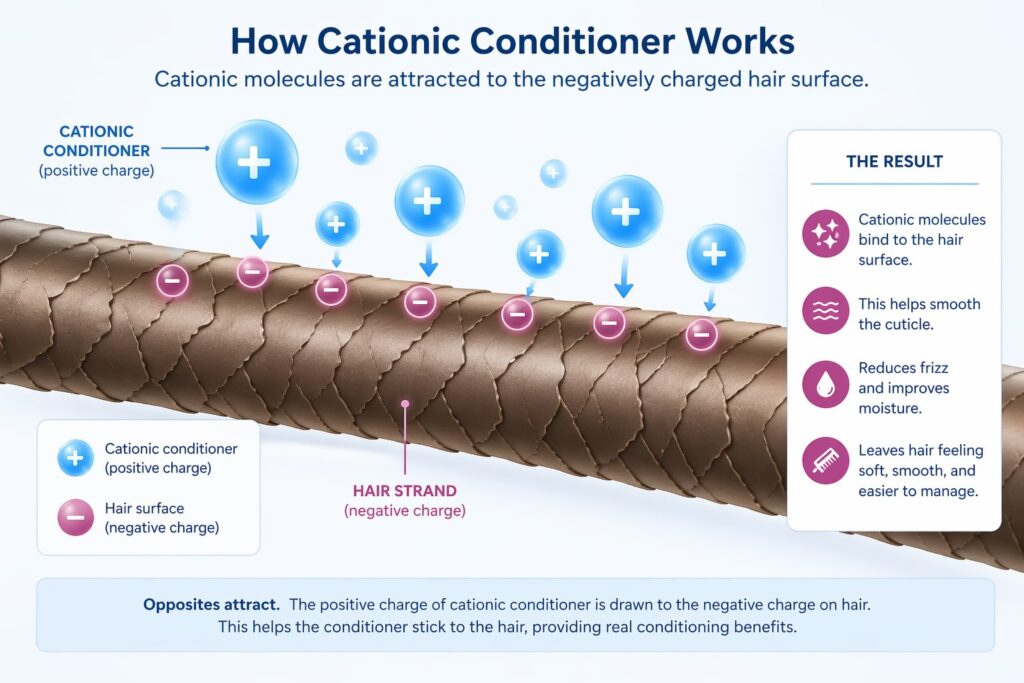
BTMS is what’s called a cationic emulsifier, which just means it has a positive charge. Hair has a slight negative charge, so the BTMS is attracted to it. It lightly coats the hair and helps smooth it so the strands don’t catch on each other as much. That’s what gives you that soft, slippery feel and makes it easier to comb through.
When I first shared this recipe, I described it as a “natural” conditioner because I had taken a course that used BTMS in their formulas. Since then, I’ve learned that not everyone considers BTMS to be natural, especially when it comes to stricter certifications.
That said, this is still the version I reach for most often because it simply works better for my hair. I’ve tried other options, but they just don’t give the same slip or leave my hair feeling as soft.
Substituting BTMS
If you’d rather not use BTMS, there are other cationic emulsifiers that can be used to make a conditioner.
That said, they don’t all give the same results. In my experience, BTMS gives the best slip and leaves the hair feeling the softest.
I’ve experimented with a few alternatives, and I’ll be sharing more details about those options in a separate post.
BTMS-25 vs. BTMS-50
When I first wrote this post, I didn’t even realize that BTMS was sold in different versions. My supplier just called it “BTMS,” but after looking into it more, I realized I had been using BTMS-25.
BTMS-25 is a combination of Behentrimonium Methosulfate and cetearyl alcohol, which acts as a co-emulsifier. The amount of the active conditioning ingredient is lower, but it tends to give a thicker, creamier conditioner.
BTMS-50 has a higher percentage of Behentrimonium Methosulfate, along with cetyl alcohol and butylene glycol. Because of that, it usually makes a slightly lighter conditioner.
Some people prefer BTMS-25 because it has fewer ingredients, while others choose to avoid BTMS-50 due to the butylene glycol. While it’s generally considered safe, some people prefer to avoid glycols or more processed ingredients.
You can use either one in this recipe, just keep in mind that the final texture may be a little different.
The oil phase
In this recipe, I use a small amount of oil to help soften the hair and add a bit of shine. I often use argan oil, but you don’t have to use it.
You can swap it out for another oil or even use a combination of oils, depending on your hair type and what you have on hand. Just try to keep the total amount about the same so the consistency stays similar.
Some oils are lighter, like jojoba or argan oil, while others like coconut, olive oil, or avocado oil can feel heavier. Shea butter can also be used, especially for thicker or curlier hair, but it may be too much for finer hair.
The water phase
The main ingredient in most conditioners is water, and this recipe is no exception.
I like to use distilled water because it doesn’t contain minerals or impurities that can affect the final product. If you don’t have distilled water, you can use filtered water that has been recently boiled and cooled.
You can also replace part of the water with something like a hydrosol or aloe juice if you want to customize it a bit.
If you start adding a lot of things like aloe, hydrosols, or other botanicals, just keep in mind that they can make the conditioner a bit harder to preserve, so it’s best to keep things fairly simple.
About glycerin
Glycerin is a humectant, which means it helps draw moisture into the hair.
That said, it doesn’t work well for everyone. In very dry or very humid climates, it can sometimes make hair feel dry or sticky instead.
If you’d rather not use it, you can simply leave it out and replace it with more water.
Adding a preservative
Because this conditioner contains water, it needs a preservative. There’s really no safe way around this if you plan to store it at room temperature.
Without one, it can grow bacteria or mold, even if you can’t see it right away. So this is one step you don’t want to skip.
The good news is that there are several preservatives available for home use that work well in recipes like this. I’ve used options like Cosgard (Geogard 221), Sharomix, and others over the years.
If you want to learn more about the different preservative options, I have a post about natural preservatives that goes into more detail.
Beginner’s Guide to Natural Preservatives
Just make sure to use a broad-spectrum preservative and follow the recommended usage rate for the one you choose. Most are used at around 1% of the recipe, but always check your specific product.
It’s also important that the pH of your product works with your preservative, since some only work within certain ranges. I go into more detail about that in my post about pH in cosmetics.
Optional ingredients
You can also customize this conditioner with a few optional ingredients.
For scent, I usually add essential oils. I like lavender and rosemary, but you can use whatever you prefer. Keep the total amount low, usually around 0.5–1% of the recipe.
You can also add things like d-panthenol or proteins like rice or wheat protein to help support the hair.
If you’d like to see a full example of how this recipe can be customized, I’ve shared an example of a customized conditioner using aloe juice, different oils, and added ingredients like panthenol and protein.
How to make it
Making this conditioner is very similar to making a simple lotion. You’ll heat the water phase and oil phase separately, combine them, and then blend everything together until it forms a smooth, creamy emulsion.
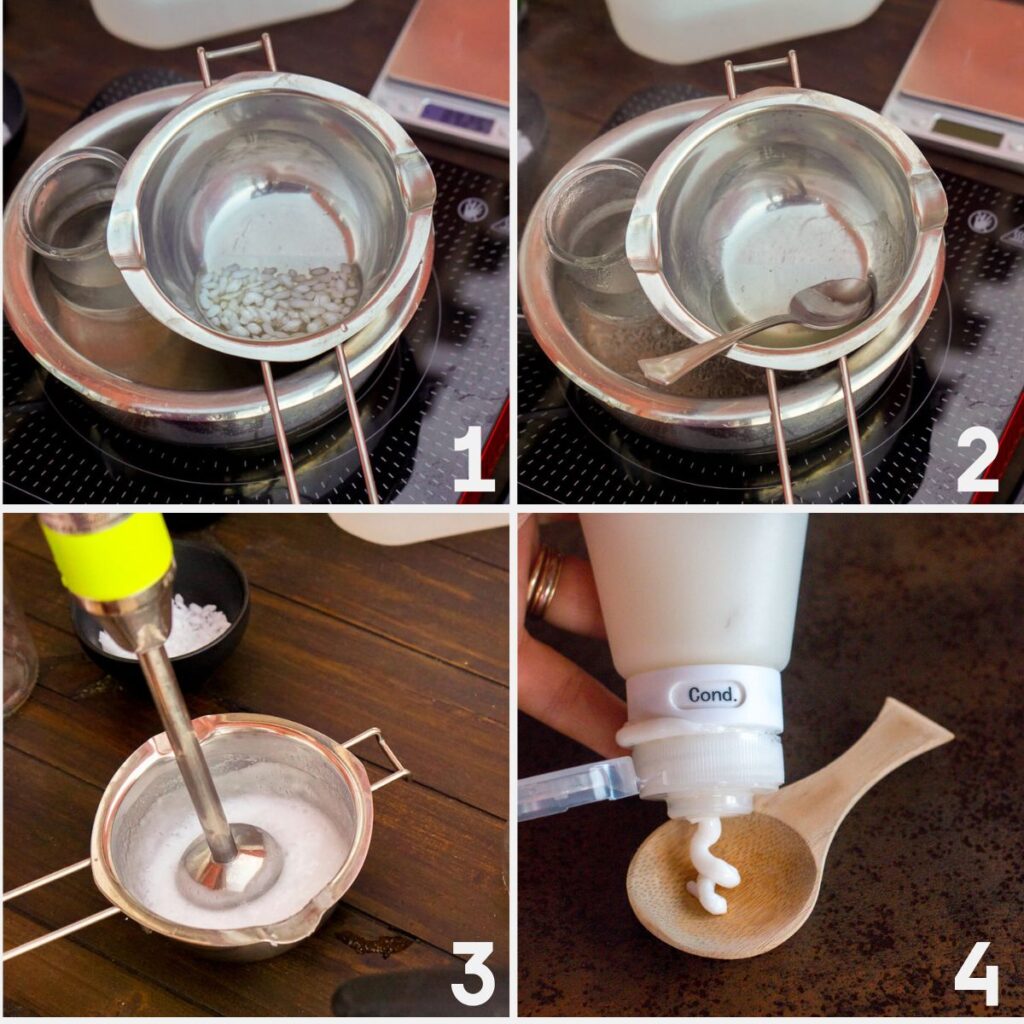
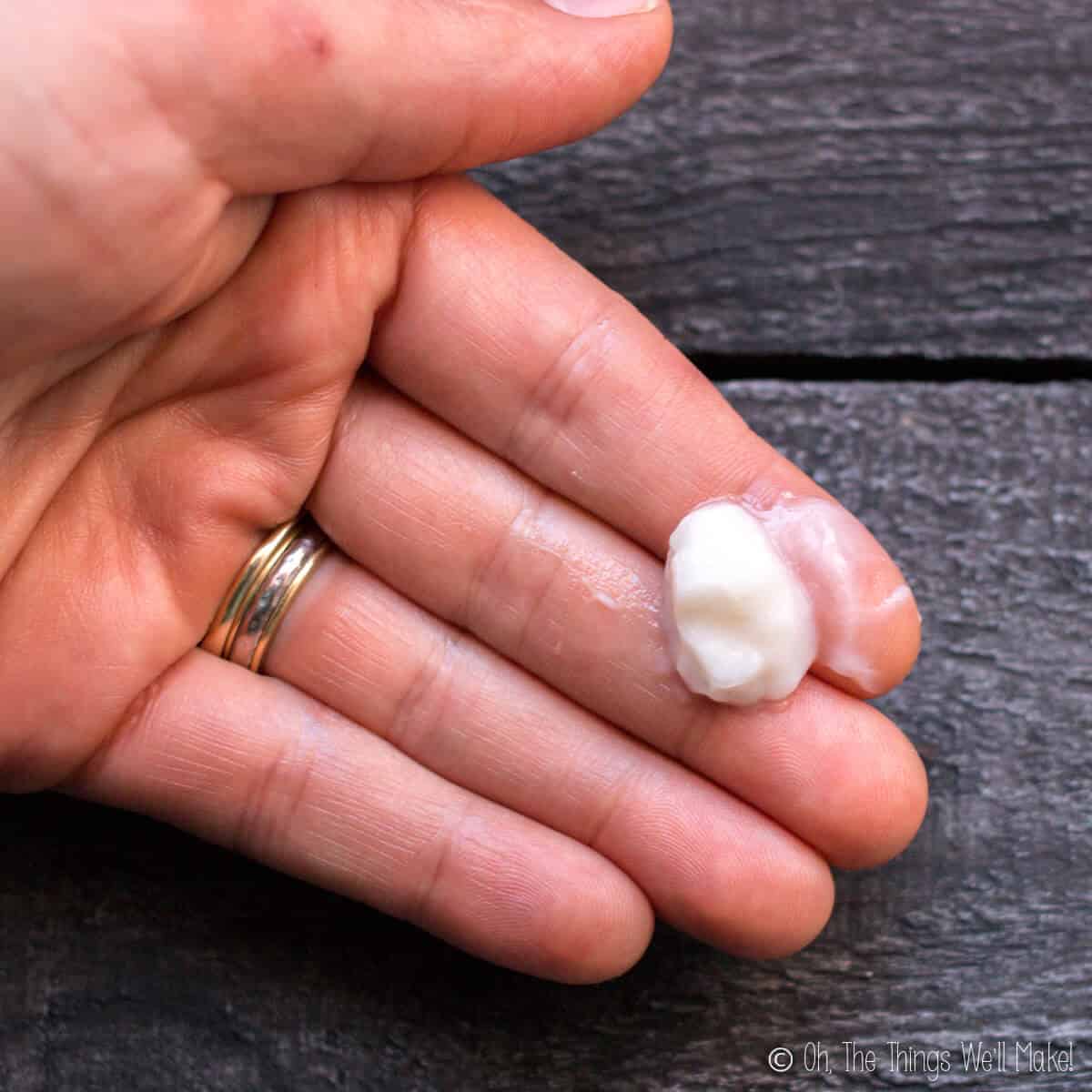
Start by heating the distilled water in a double boiler. (1) At the same time, in a separate heat-safe container, combine the oil and BTMS and heat them until the BTMS has fully melted. (2) Once both phases are hot and roughly the same temperature, slowly pour the water into the oil mixture while blending or stirring.
At first, the mixture will look thin, but as you continue blending, it will quickly turn creamy and opaque. It will continue to thicken as it cools. Once it has cooled down to around 30°C/90°F, you can add the preservative, essential oils, and any other heat-sensitive ingredients.
After that, check the pH and adjust if needed. Then transfer the finished conditioner to your container and let it cool completely before closing it.
How long does it keep?
With a preservative, this conditioner should last around 3 months when stored properly. It will probably keep longer than that, but since we’re not doing formal stability testing at home, I like to stay on the safe side.
I still prefer to make smaller batches so it’s always fresh, and I keep an eye on it and remake it if anything seems off.
If you choose not to use a preservative, you’ll need to treat it more like a food. Keep it in the refrigerator and use it within about a week.
How to use it
I usually use this as a rinse-out conditioner after washing my hair.
Apply a small amount to the ends of your hair, work it through, and comb it through to help detangle. Then rinse it out.
You can also use a small amount as a leave-in conditioner, especially on damp hair. Just be careful not to use too much, as a little goes a long way.
You can also use it as a co-wash if you’re trying to wash your hair less often. Just massage it into your scalp and rinse it out well.
I’ve also used it between washes to help refresh my curls. I lightly mist my hair with water, then mix a small amount of conditioner with a bit of homemade hair gel (or flaxseed hair gel) and scrunch it through to bring the curls back.
You can store this in a pump bottle or another reusable container. I also like using silicone travel tubes since they’re easy to squeeze and work well if you’re taking it with you.
If your hair is very fine, start with a very small amount and adjust as needed.
FAQs
You can, but it won’t really be the same. BTMS is what gives the conditioner its slip and detangling ability. Without it, you’ll end up with something more like a lotion, which doesn’t work nearly as well on hair.
Yes, but results will vary. Other cationic emulsifiers can work, but in my experience, they don’t give the same softness or slip. BTMS is still the one that consistently works best.
If you’re storing it at room temperature, no. Because this recipe contains water, it needs a preservative to prevent mold and bacteria growth.
If you really want to skip it, you’d need to keep it in the fridge and use it within about a week.
It’s best to use distilled water. Tap water can contain minerals or impurities that may affect the final product or reduce shelf life. If needed, you can use filtered water that’s been recently boiled and cooled.
This usually happens if:
The oil and water phases weren’t at a similar temperature
It wasn’t blended enough
The emulsifier wasn’t fully melted
Try blending a bit longer next time and make sure everything is fully heated before combining.
Small changes can affect the texture:
Too thick: reduce the BTMS slightly or increase the water
Too thin: increase the BTMS a bit
It will also thicken more as it cools, so don’t judge it too early.
Yes, but use a very small amount. A little goes a long way, especially for finer hair.
Absolutely. You can swap the oil for something else or use a blend. Just keep the total amount about the same so the consistency doesn’t change too much.
Yes, but keep it simple at first. Adding more ingredients can make the conditioner harder to preserve, so make sure your preservative can handle the final formula.
With a preservative, about 2–3 months is a safe estimate. Without one, about a week in the fridge.
Prefer a faster overview?
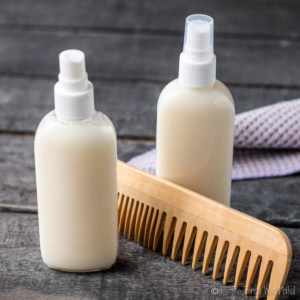
Easy DIY Hair Conditioner
Equipment
- pump bottle
Materials
- 83 g distilled water
- 5 g BTMS
- 5 g glycerin
- 5 g argan oil or other oil(s)
- 1 g preservative (or use your preservative at its recommended rate)
- 1 g lavender essential oil or other essential oils
- lactic acid (for pH adjustment, optional)
Instructions
- Clean your work surfaces, utensils, and packaging. (You can use alcohol to better sanitize surfaces.)
- Weigh out the distilled water.
- Heat the water over a double boiler while you measure out the oil(s) and emulsifier.
- Weigh out the oil (or oils) in a double boiler insert.
- Tare the scale and add the BTMS (or another cationic emulsifier) to the oil(s).
- Heat the oil and BTMS mixture over the double boiler until the BTMS has melted. Fully stir the ingredients together until well combined and remove from the heat.
- Slowly add the hot water to the hot oil mixture while stirring or blending, keeping both phases at a similar temperature (around 70–75°C / 160–170°F).Blend with an immersion blender (or stir vigorously) until the mixture comes together and begins to thicken.
- Allow the mixture to cool, stirring occasionally, until it reaches around 90ºF/30ºC. Then add the preservative, essential oils, and any other heat-sensitive ingredients. Mix well to fully incorporate.
- Test the pH of the conditioner. Ideally, you want the pH to be in a good range for both your hair (around 4.5–5) and for the effectiveness of your preservative. (It’s easiest to choose a preservative that works in that range rather than adjusting the whole recipe.) Adjust the pH down with a couple of drops of lactic acid (or, less likely, up with a solution of NaOH).
- Bottle your conditioner. Wait until fully cooled to cap the bottle to prevent condensation from forming above the conditioner. You can now use it as needed!
Notes
- Make small batches and use within about 3 months.
- You can substitute the argan oil with another oil or a blend of oils.
- Glycerin is optional and can be replaced with more water if preferred.
- If your conditioner feels too thick, you can reduce the BTMS slightly or increase the water a bit in your next batch.
- Use a broad-spectrum preservative suitable for water-based products and follow its recommended usage rate. Most are used at around 0.5–1%, but always check your specific product.
- Make sure your preservative works within the pH range of this recipe (around 4.5–5).
- For a full example of how to customize this recipe, see my example of a customized conditioner.
This post was originally published on March 9, 2017. It has been updated with new photos, clearer instructions, and a step-by-step video.
This is hands-down the best lotion recipe skeleton I’ve ever used. I bought some btms for a shampoo bar recipe, but had plenty left over, so I whipped this up to see if I liked it better than my old polawax-emulsified one (and hoping it might be a good conditioner, despite the fact that I don’t use conditioner). I added in 2.5 grams of silk peptides and my oil was a blend of rosehip, hemp, emu, tamanu, argan, and jojoba. It is head and shoulders above my old recipe and I will never be without it. My skin looks and feels noticeably softer, and oddly enough, the few blemishes and blackheads I had have appeared to vanish. Good stuff. Thank you very much for posting this.
Hi Danielle!
Wow- that’s interesting.
Thanks!
I used the BTMS in my roll-on deodorant too- as it was said to do well for making lighter lotions. Some of the other emulsifiers failed when trying to make something thin enough to smoothly be dispensed from a roll-on dispenser.
It’s normally used mostly for hair because it’s one of the few cationic emulsifiers- which gives conditioning properties. That’s especially important for hair, but it’s interesting to hear that it also may benefit skin!
Hello Tracy!
Yesterday, I made the hair conditioner with all the ingredients but the d-panthenol. I tried it this morning and it worked pretty well. However, I am a little worried about the Leucidal, that I used recently in a body lotion. For the body lotion, I followed your basic recipe and customized it using lavender tea as water and almond oil infused with chamomile flowers, then some lavender essence oil. That was on Saturday, July 25th, so 10 ago. This morning I noticed that the lotion smelled to “something”, can’t say exactly what. Not “funky” but I felt like it was a stronger smell to the Leucidal over the lavender. I put it on my body and my skin is fine so far 😉 but I would like your advise in this. This is my first time and I understand that probably it won’t be perfect at the first try. Not big deal or should I put it in the trash immediately?
Thank you so much!
Hello Valle,
I’m just now seeing this. Have you had any other changes with it?
I want to update this recipe post. While I have used Leucidal many times in the past without issues, I have started having my doubts about that particular preservative. I wrote a bit about my thoughts in my beginner’s guide to natural preservatives.
Normally, the issue with Leucidal is that some say it’s not great against mold growth. Luckily, mold is something that can normally be seen. On the other hand, bacterial growth can be invisible.
In all honestly, because you can get an infection or rash from products that have been overrun with bacteria or mold, I would think it safest to toss the batch and start over if you have concerns. You may want to ask the person you have received your Leucidal from. (It seems that it can vary quite a bit depending on the supplier.) If you have concerns with the Leucidal, I’d suggest trying with a different preservative.
Thank you again, Tracy!
I think I will try Neodefend (Geogard Ultra) even when I just bought a 4 oz bottle of Leucidal. To be honest, it is very confusing… I’ve read very good reviews about Leucidal and only a few not so good. And I think you are right: it also depends on the supplier. Because I got this second bottle of Leucidal from a different supplier I think that I am going to give it a second chance with a little batch of basic lotion and see what happens.
I really appreciate your help.
Good luck with it!
And, yes, trying out a different preservative, just in case, isn’t a bad idea either. ?
I found this morning my lotion full of mold. Full. I just read your beginner’s guide to natural preservatives and, honestly, I decided not to give Leucidal Complete a second chance. I have also read the article you mentioned about the others components… I think that, for the moment, I prefer to make only balms and salves until I get a little more experience. My hair conditioner still looks good and smell delicious but I haven’t used it anymore (I used it twice). I am a little scared about not being able to notice bacteria in it.
Hi Valle,
The concern I’ve heard with Leucidal is more mold-related. The good thing about that is that mold, as you’ve seen, is quite visible. Bacteria, of course, aren’t.
I understand wanting to start with the simpler products, but I want to encourage you to give another preservative a try. I think it’s very likely that the preservative was your issue.
I think the real issue is that Leucidal varies quite a bit from supplier to supplier. I got mine here in Spain and it had really high ratings. I never had any issues with mine.
That said, I’ve seen it listed in other places with people complaining about having problems similar to yours.
Don’t be discouraged. It’s most likely nothing you did wrong.
I am new to your blog and really appreciate all the information and recipes. I would like to know where you get your products for your diy shampoo and conditioner?
Hi Bonnie,
I live in Spain and buy locally online from a place called Cremas Caseras.
Hello Tracy
Quick question… could I use a different emulsifier like emulsifying wax (cetostearyl alcohol and polysorbate 60) instead of the BTMS? I hope this is not a silly question…
Hi Valle,
No, it’s not a silly question at all. I have plans to update this post soon with more information about the why and which emulsifiers to use.
The thing is that BTMS is one of the few cationic emulsifiers available for home use. Cationic is important because it gives the conditioner its “conditioning” feel. Otherwise, it’s really just a simple lotion.
So, while you “could” use a different emulsifier, if you don’t use a cationic one, you won’t get that same slip and conditioning feel in your hair. Right now, I know of 2 more natural cationic emulsifiers available for home use. They are trickier to find than BTMS, though. One is Varisoft EQ 65 and the other is Emulsense HC.
Thank you so much for your answer! That answers my question 🙂
I just realized… You are an American living in Spain. I am a Spaniard living in the USA. Funny! 🙂
Ha! Small world. 😉
Hi Tracy,
I have been “tweeking” store bought conditioners by adding my own healthy hair ingredients for years always with the thought of “man, I wish I could just make my own.” Well after reading this article and your recipe I am ready to give it a shot. I just ordered the basic ingredients you listed from Amazon. The oils I already have. But like someone else posted I want to make a larger batch. I am African American and have very thick tight curly hair. I would say my curl pattern is 3b – 4a. And it’s mid-shoulder length. So I have a lot of hair and that one small batch from your recipe would only be enough for 1/4 of my hair! I would like to make at least a 16 oz. batch at once which would last me maybe 2 months. So in terms of ratios of BTMS and preservatives, water, oils etc. what would you recomend? I can follow a recipe to a tee, it’s the mad scientist, precise formulation part of it that gets confusing. I do have a digital scale and weigh things out in grams or ounces. So if I have 8 ozs of water, what is the mathematical equation for adding BTMS, Leucidal and Glycerin? Or am I over-thinking it? I know a certain aspect of this will be trial and error especially with the addition of the oils and essential oils but when it comes to the main “slippery conditioning” aspect of it, I’d like to nail it. Oh and I do require a lot of slip for detangling purposes. I’ve used store bought conditioners with very little slip and detangling is a nightmare. Well, I know this was a lot. I am very excited to try this because if I can make my own personalized conditioner to address my very own hair care needs….WOW! So happy I found your site!
Hi Cordelia,
I’m happy to help…
Let me see- to make a larger batch, just make sure to increase all of the ingredients by the same multiple. So, if you want to double the batch, multiply the weight of each ingredient by 2. (In the recipe card in my post, you can click on the 100g and a slider should come up. It allows you to slide it up to double the recipe. So, it calculates that for you. If you want to make even larger batches, though, you’ll have to calculate it yourself.
The BTMS is a cationic emulsifier, and it’s what is giving that “slip” or conditioning feeling. You could increase the amount used, if you like. It will make a heavier conditioner, though. How much you want to add will depend on the porosity of your hair. (In some cases, it can become too much for your hair and just weigh it down.)
I don’t want to make an assumption based on what African hair types would be like. Yes, generally tight curls, but I think porosity can vary quite a bit. You’d need to do some more experimentation (which, doesn’t appear to bother you. You seem to like to experiment and do things your way, just like me! 😉 )
If you increase oils and BTMS, just reduce the water to compensate for that. You’ll want to keep the preservative at the same percentage. (Most preservatives are used around 1% of the recipe by weight. So, keep that ratio, and you’ll be fine!)
I wrote the recipe as 100g to make the percentages easier to see. (1g of the recipe is 1% by weight.)
So, you can see, I used around 5g to make a light conditioner. You could try using 6g or even 7g and see what you think. You could do the same with the oils, and or, exchange for a butter like shea butter. Then reduce the water- adding water to 100% of the recipe. Does that make sense?
Hello Tracy,
I’ve made this conditioner quite successfully, but I’m looking to make a conditioner for hair that is EXTREMELY dry and curly and while the recipe works, it’s not quite as moisturizing as I need. I took the basic recipe and added equal amounts of coconut and olive oil and then in place of some of the water I used coconut vinegar and coconut water. I was wondering if you had any advice as to how I could make it a bit more potent for dryness? I’m new to making my own and it’s soo much to learn, so I’m not sure which way to go, I’m not fond of conditioner bars, so I do want to keep working with the lotion type because I would really like it to double over as a body lotion if possible.
Thanks for any advice. I appreciate it ?
Hi Tiffany,
Well, there are a few things you can try. You can increase the amount of BTMS used. That’s what’s giving this the majority of the “conditioning” properties. As you did, you can also increase the amount of oil used. You can play with different oils to see what works best for your hair. (Just decrease the amount of water used with each addition of other ingredients, to keep the amount of preservative the same.)
I’d e careful about adding something that will change the pH a lot- like the vinegar. And while you can use something like coconut water, know that adding food-type ingredients to a recipe make it much more prone to microbial growth. (You could end up with bacteria/mold growth even with a preservative.)
You can also play with changing the glycerin for an extract- or removing it- as it can work wonders for some people, but doesn’t work well for others. (It can depend on your climate and your hair type.)
Finally, you could also consider adding other vitamins or extracts to your conditioner. I love panthenol, and can find it inexpensively, so I tend to use it in most of my hair/skin products. That said, for hair there are a lot of proteins and vitamins that can work well with hair.
Is this recipe biodegradable (to the level that I could use it as a camping/hiking conditioner near water sources?) BTMS chemical profile says “biodegradable” but also “be careful near water sources” , but that was just from a quick search and I figured you might know more =)
Thanks for the recipe!
Hi Melinda,
In that case, I’d probably use something else. You could try emulsense HC which is more natural than BTMS. I don’t like the feel of it as much, and it’s harder to find, but in that situation, would be a better choice.
this is a great article for using aloe in cosmetics for specific skin issues. It also has the percentage of aloe used in the studies, For example, studies on acne, dandruff and scalp issues, psoriasis, eczema, etc.
.
Hey, I’m trying out the curly girl hair thing. Are there any silicones in this? I also have some issues with aloe, what can I use as a replacement?
Hi Jenn,
No- there are no silicones to worry about! 🙂
It’s very easy to customize- you can just use more water instead of the aloe. Or, you can play with other water-based extracts to use instead. It’s really up to you.
I’d try making this on the simple side and see how it works for you. You can always add more ingredients later.
You can even play with making it with or without glycerin (just sub it for water if you want to leave it out). Some curly girls love glycerin and others hate it. (And yet others like it in winter, but hate it in the summer, or vice versa.)
That’s what is great about making things yourself. You can experiment and customize it to suit you!
Thank you for this! The link for panthenol doesn’t work – can you provide a new one? Thanks so much!
Hi Malia,
That’s too bad. I liked that supplier because I have used them before. You could maybe try this d-panthenol. It appears to be a gel vs. a liquid, but overall the reviews seem to be OK.