

DIY Liquid Laundry Detergent Recipe (No Soap)
Learn how to make a DIY liquid laundry detergent without soap. This easy recipe works well in hard water, cleans effectively, and avoids heavy fragrances.
I used to make soap-based laundry “detergents,” and they can work… especially if you have soft water.
But over time, I realized they aren’t the best option for most people.
If you have hard water, soap can react with minerals like calcium and magnesium, leaving a residue on your clothes. That buildup can trap dirt, make fabrics feel stiff, and leave everything looking a bit dull over time.
That’s why I switched to making a simple surfactant-based detergent instead.
It cleans more effectively, works well in any water type, and is still inexpensive and easy to make at home.
If working with surfactants sounds intimidating, don’t worry. This is one of those recipes that’s actually very simple once you try it, and it gives you much more control over what goes into your laundry.
If you prefer to see the process, here’s the video:

The problem with soap-based laundry detergents
Soap doesn’t just clean. It also reacts with minerals in hard water.
When it comes into contact with calcium and magnesium, it forms a residue known as soap scum. Over time, that residue can build up on fabrics, trapping dirt and making clothes look dull or feel less clean.
This isn’t always noticeable right away, especially in soft water. But in areas with hard water, like where we live in Spain, the difference becomes much more obvious over time.
That’s one of the main reasons I moved away from soap-based laundry detergents and started using surfactant-based formulas instead.
Some people try “stripping” their clothes to remove buildup, but it’s usually easier to avoid the problem in the first place.
Why soap can be a problem in laundry
Soap reacts with minerals in hard water, forming a residue (soap scum). Over time, that buildup can trap dirt, make fabrics feel stiff, and leave clothes looking dull instead of clean.
But that doesn’t mean soap is completely off the table. There are still times when it can be useful.
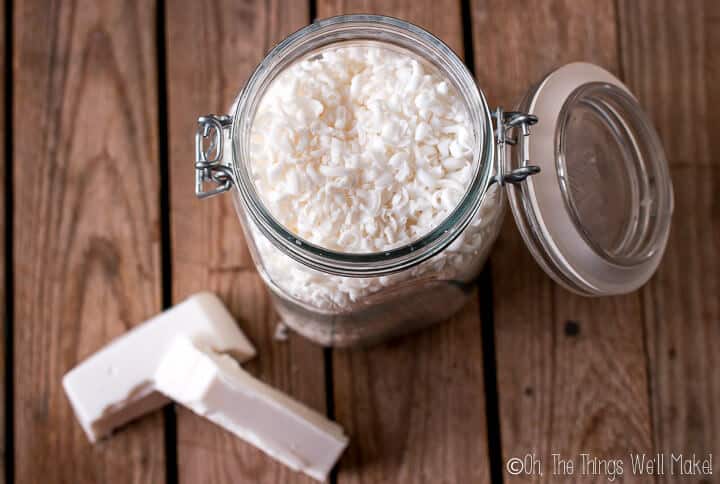
What I use now (and when I still use soap)
I used to make and use soap-based laundry detergents, and they can work… especially if you have soft water.
Over time, though, I started noticing the downsides, especially in hard water. That’s why I switched to surfactant-based detergents for regular washing.
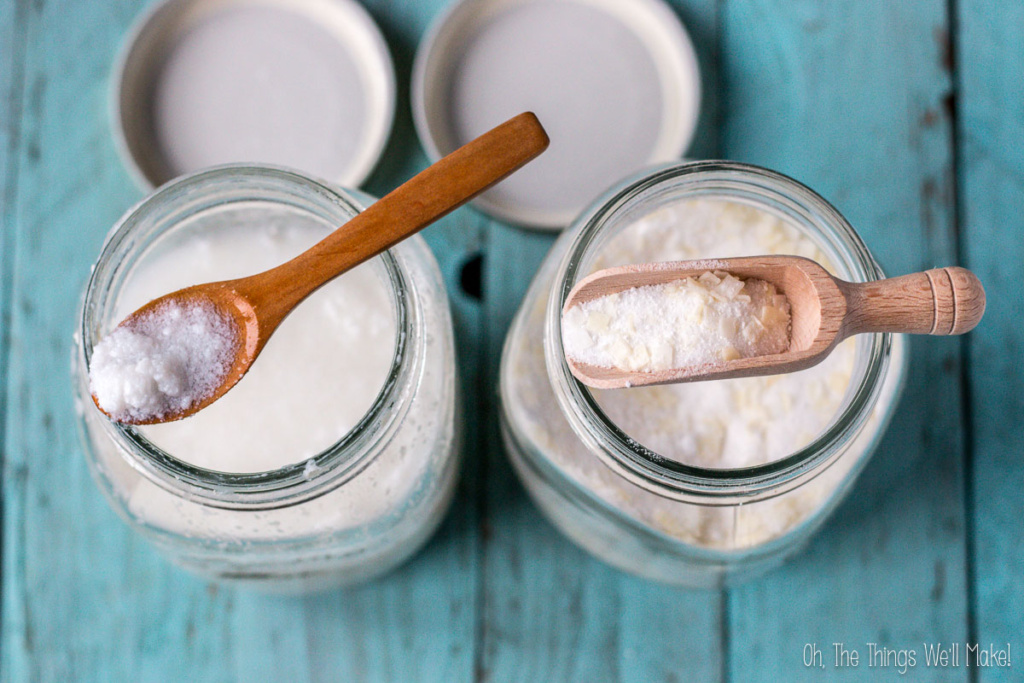
That said, I still make laundry soap and use it for specific things like stain removal or pre-treating heavily soiled areas.
Why make your own Laundry detergent?
One of the biggest advantages of making your own detergent is the cost. Most store-bought detergents, especially “natural” ones, are surprisingly expensive for what they are. They’re mostly water with a small amount of surfactants, which are relatively inexpensive when you buy them yourself.
Making your own also gives you full control over the ingredients. Many commercial detergents use strong synthetic fragrances that can be overwhelming or irritating. I’m quite sensitive to those scents, so I usually keep my detergent unscented.
If I do want to add fragrance, I prefer to scent my laundry separately using wool dryer balls or sachets. It gives a lighter, more natural scent without being overpowering.
Another benefit is that you can tailor the recipe to your needs, avoiding any ingredients that don’t work well for you or your family.
Ingredients
This detergent is made with a simple blend of surfactants, along with water, salt, and a preservative.
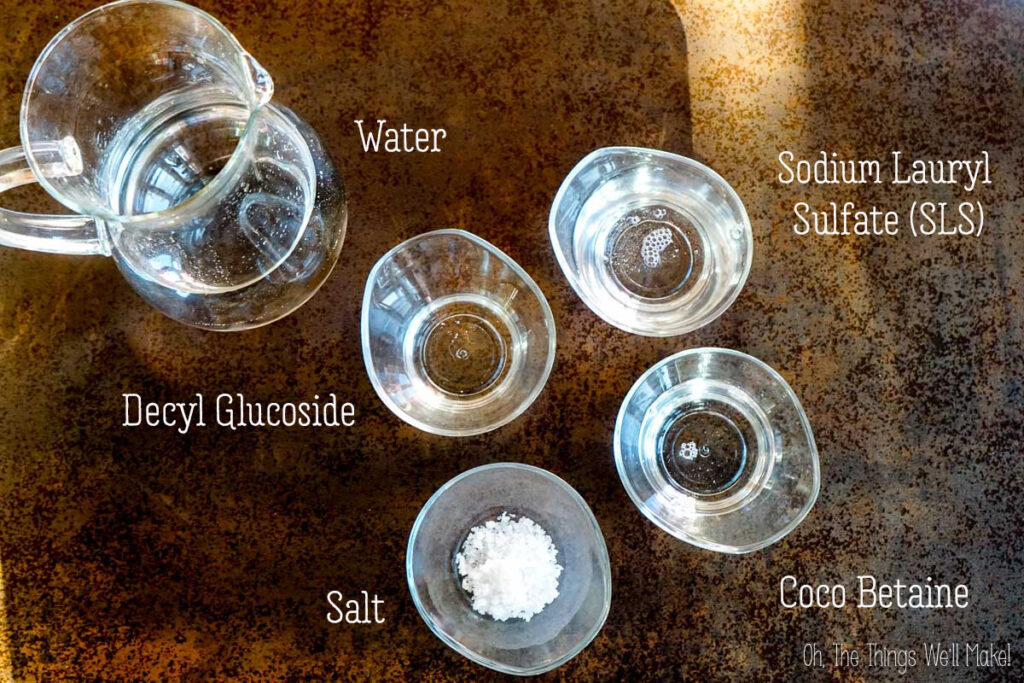
The main surfactants I use are sodium lauryl sulfate (SLS), coco betaine, and decyl glucoside. Together, they give a good balance of cleaning power and mildness.
Salt is used to thicken the mixture.
To keep the detergent stable over time, you can either add a preservative or adjust the pH. I’ll explain both options below so you can choose what works best for you.
About sodium lauryl sulfate (SLS)
Sodium lauryl sulfate (SLS) is a surfactant that’s very effective at removing grease and dirt, which is exactly what we want in a laundry detergent.
It does have a bit of a negative reputation, especially in personal care products. It can be irritating on the skin for some people, which is why I don’t usually use it in things like shampoos or toothpaste.
You may have also seen claims that SLS is linked to cancer. From what I’ve found, there isn’t solid evidence supporting that. Reviews of the available research have not shown SLS to be carcinogenic, and much of the concern online seems to come from misunderstandings or misinterpretations of how it behaves. If you’re interested in looking into it further, you can read a published review on SLS safety and toxicity and also see how Lisa Bronner from Dr. Bronner’s addresses common concerns about SLS.
That said, laundry detergent is different from personal care products. It isn’t a leave-on product and gets rinsed out completely, so using a stronger surfactant here makes sense. In this context, SLS works very well and helps get clothes thoroughly clean.
While it isn’t the most “natural” ingredient, it is biodegradable and widely used in cleaning products. I tend to prioritize safety and effectiveness over whether something is completely natural.
If you prefer to avoid SLS, you can experiment with other surfactants. Just keep in mind that gentler surfactants usually need to be used in higher amounts or combined carefully to get similar cleaning power. If you’re new to working with surfactants, you can learn more about how they work and how to combine them in my guide to natural surfactants.
This recipe uses a blend of surfactants to balance cleaning power with mildness, making it effective without being overly harsh.
About “harsh” ingredients like SLS
SLS is often criticized in personal care products because it can be irritating on the skin for some people. In laundry detergent, though, it’s used differently. It helps remove grease and dirt effectively and gets rinsed out completely, so it doesn’t stay on fabrics.
How to make a DIY liquid laundry detergent
Making this detergent is actually very simple once you have your ingredients ready.
Add the surfactants to your container. The easiest way to do this is to place the container on your scale, tare it, and add each ingredient one at a time, resetting the scale between additions.
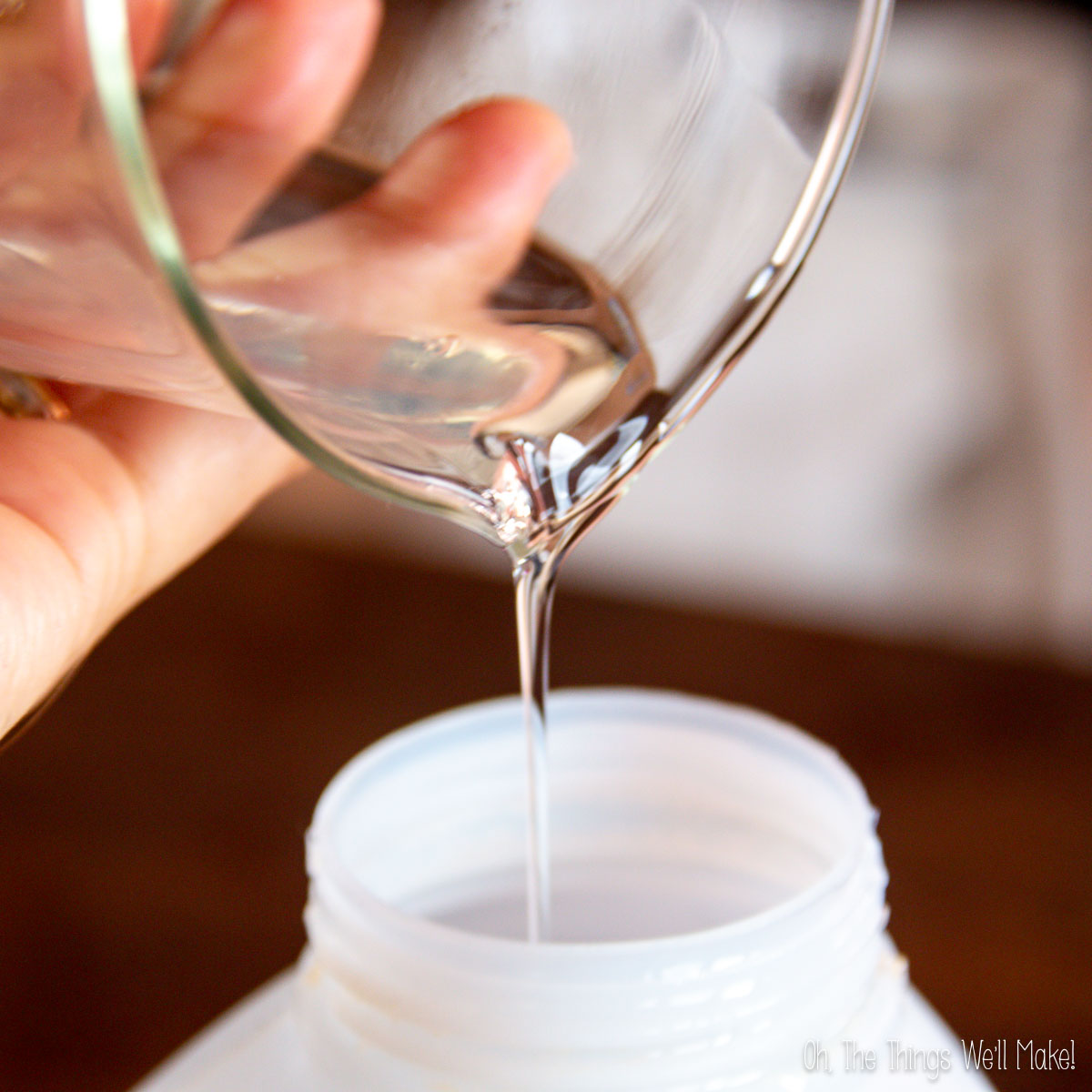
Once the surfactants are in, add most of the distilled water and gently stir or swirl to combine everything, trying not to create too much foam.
In a separate small container, dissolve the salt in a portion of the remaining water. Once fully dissolved, add it to the detergent mixture and stir gently. As it incorporates, the mixture will begin to thicken.
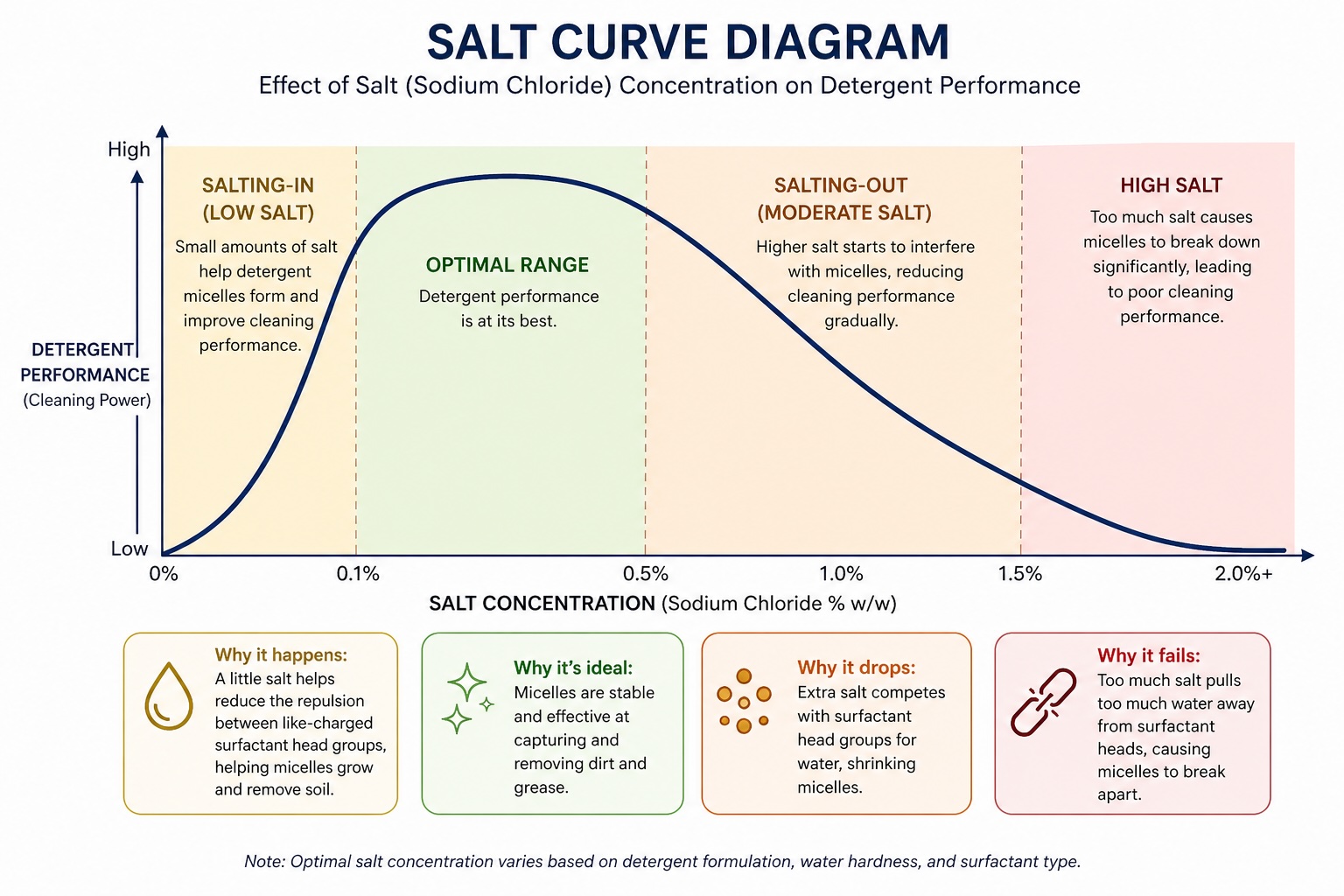
Salt is often used to thicken liquid detergents, but it doesn’t just affect the texture. It also changes how the surfactants behave.
A small amount can help improve structure and cleaning, but adding too much can actually reduce both thickness and effectiveness. That’s why it’s best to add salt slowly, mixing well between additions, and stop once you reach the consistency you like.
If you’ve ever had a detergent suddenly thin out again after adding more salt, this is why.
At this point, you can choose how you want to preserve your detergent. You can either add a broad-spectrum preservative or raise the pH of the mixture using a small amount of lye solution. See the notes below for more details on both options.
Do you need a preservative?
Because this recipe contains water, you do need a way to keep it from growing bacteria or mold over time. There are two main ways to do that, and I’ve used both.
Option 1: Use a preservative
You can add a broad-spectrum preservative that works within the pH range of your detergent. This is the simplest option, especially if you prefer not to work with lye. When I first started making my own laundry detergent, this was the method I used!
That said, laundry detergent is usually made in fairly large batches, so using a preservative can get expensive depending on what you choose and where you buy it.
When I first started making this detergent, I used Sharomix 705 because I was able to buy it in large quantities fairly inexpensively here in Europe. It worked well for this type of formula.
One important thing to keep in mind is pH. Before adjusting the pH, this detergent usually falls around a slightly acidic range (mine was around pH 5, but that can vary depending on your ingredients and suppliers). You’ll want to make sure that whatever preservative you choose is effective within the pH range of your final product.
Option 2: Raise the pH
Another option is to raise the pH of the detergent to make it less hospitable to microbial growth.
I actually started doing this after looking at an older bottle of Dr. Bronner’s Sal Suds. At the time, the ingredient list included potassium hydroxide. It made me wonder if they were using it to help preserve their detergent, and since I already had it at home from making soap, I decided to give it a try in my recipe.
By raising the pH (generally above around 9), you create an environment where many microbes can’t grow. This is why traditional liquid soaps don’t usually need a preservative.
This is the method I’ve been using for years now. It’s simple, cost-effective, and works well, especially if you already make soap and have lye on hand.
If you choose this method, be sure to handle lye carefully and follow basic safety precautions.
Here’s what that process looks like:
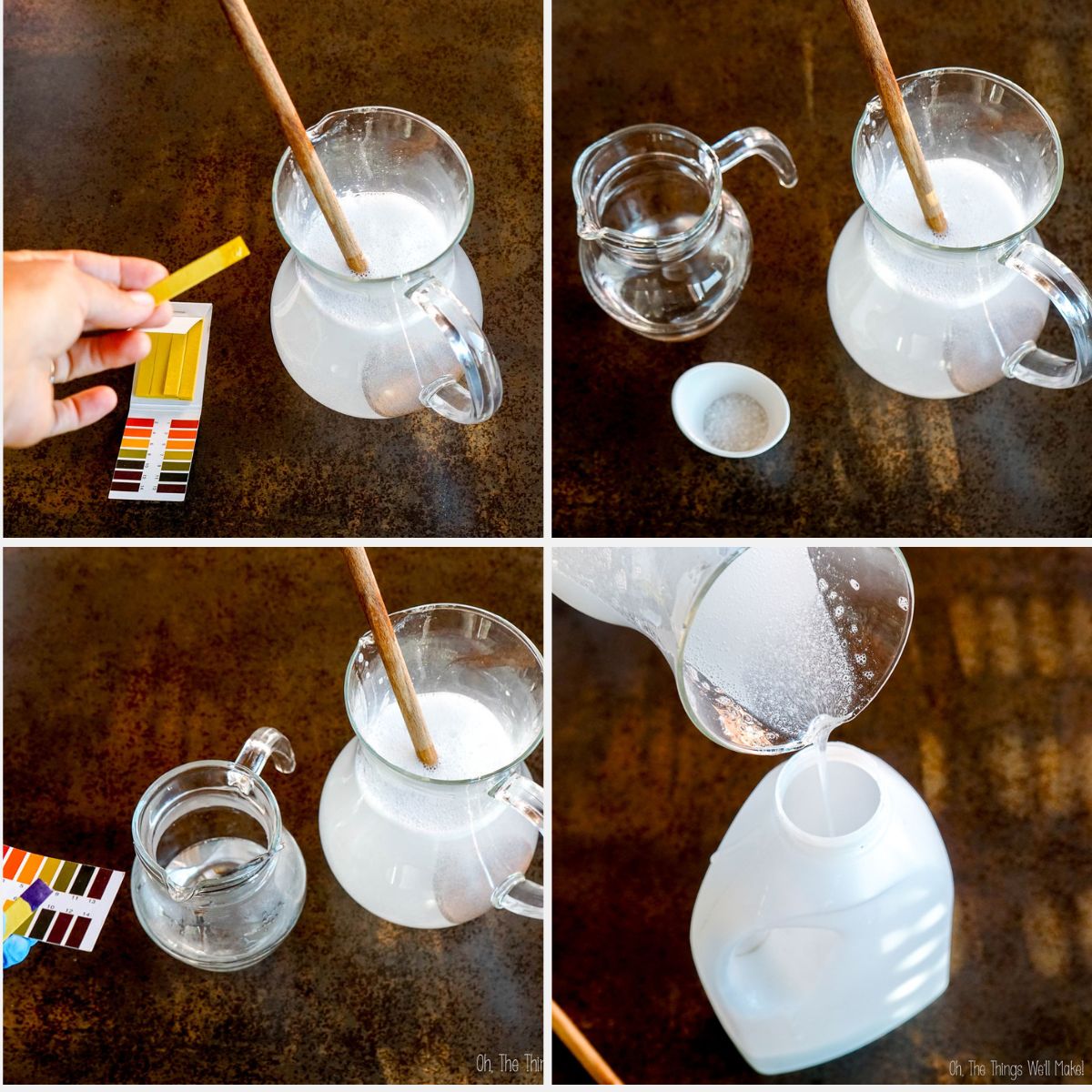
Which option should you choose?
- If you’re not comfortable working with lye, using a preservative is the easier and more straightforward option.
- If you are familiar with working with lye, raising the pH can be a very practical and inexpensive alternative.
Customizing your homemade laundry detergent
This recipe is pretty flexible, but changing the ingredients can affect how it turns out.
The blend of surfactants I use gives a good balance of cleaning power and mildness. You can experiment with other combinations, but keep in mind that not all surfactants behave the same way. Some clean more gently, while others are stronger and more effective at removing oils and dirt.
If you want to avoid SLS, you’ll probably need to use more surfactants or combine a few different ones to get similar results.
Thickening
You can also adjust the thickness of the detergent. I use salt to thicken it, which works well with this blend of surfactants.
As you add salt, the mixture will usually get thicker at first, but only up to a point. After that, adding more can actually start to thin it out again, so it’s best to add it gradually and stop once you reach the consistency you like.
While small amounts of salt can affect how the surfactants behave, in this recipe it’s mainly being used to adjust thickness rather than improve cleaning.
It also doesn’t need to be very thick to work well. A more liquid version will clean just as effectively, so thickness is mostly about how it feels and dispenses.
If you change the surfactants, keep in mind that not all combinations will thicken with salt, so you may need a different thickener or simply leave it more liquid.
Fragrance
You can leave the detergent unscented or add a small amount of fragrance if you prefer. I usually leave mine unscented and add scent separately, like a couple of drops of essential oil on wool dryer balls or using sachets in the closet. It gives a lighter, more natural scent without being overpowering.
If you do add essential oils or fragrance oils to the detergent, it’s best to use small amounts.
FAQs
Yes. This detergent is low-sudsing compared to traditional soap-based recipes, so it works well in HE machines. Just avoid using too much.
I usually use about 2–3 tablespoons per load, depending on how dirty the clothes are.
If your detergent is more liquid, you may need a little more, but try not to overdo it. More isn’t necessarily better.
Yes, you can, but the final result may be a bit different.
SLES is generally milder and may not clean quite as strongly, so you may need to adjust the amounts or combine it with other surfactants to get similar results.
You can, but you’ll need to dissolve it well before using it. Powdered versions can be a bit trickier to work with and may take more time to fully incorporate.
Technically, yes, but I wouldn’t recommend it.
Using a blend of surfactants helps balance cleaning and makes the detergent easier to work with. On its own, SLS can be a bit harsh and less well-rounded.
You do need some way to keep the detergent from growing bacteria or mold over time.
You can either:
use a preservative
or raise the pH (what I usually do now)
If you don’t want to work with lye, a preservative is the easier option.
Possibly, but you’ll need to make sure it works within the pH range of your detergent.
Some common options like sodium benzoate or natural extracts (like rosemary extract) aren’t always effective on their own in this type of formula, so you’ll want to research carefully before substituting.
Not all surfactant combinations thicken with salt.
If you’ve changed the surfactants, the salt may not work the same way. In that case, you can either leave it more liquid or try a different thickener.
Yes, but you’ll need to experiment.
You’ll likely need to use more surfactants or combine different ones to get it to clean as well. Gentler surfactants usually need a bit more help to be effective.
Yes, that’s one of the main advantages of this type of detergent.
Unlike soap-based detergents, it won’t form buildup with minerals in hard water.
You can, but you may want to reduce the amount slightly or experiment with a milder surfactant blend if you’re washing very delicate fabrics.
It depends on where you live, but many of these can be found from cosmetic ingredient suppliers or online shops that sell soapmaking or DIY cosmetic ingredients.
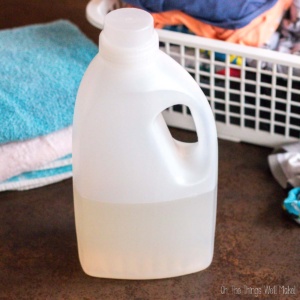
DIY Liquid Laundry Detergent (Non-Soap Recipe)
Materials
- 740 g distilled water
- 150 g sodium lauryl sulfate
- 50 g coco betaine
- 30 g decyl glucoside
- 20 g salt
- preservative or lye solution
Instructions
- Add the surfactants to your container, weighing each one directly into it and taring the scale between additions.
- Add most of the distilled water and gently stir or swirl to combine, trying not to create too much foam.
- In a separate container, dissolve the salt in a portion of the remaining water. Once fully dissolved, add it to the detergent and stir gently. The mixture will begin to thicken as it incorporates.
- At this point, choose how you want to preserve your detergent. You can either add a broad-spectrum preservative or raise the pH using a small amount of lye solution. (See notes below for more details.)
Option 1: Use a preservative
- Add a broad-spectrum preservative that works within the pH range of your detergent. This recipe is usually around pH 5 before any adjustments (though that can vary), so choose a preservative that works in that range and use it at the recommended rate, typically around 0.5–1% (about 5–10 g for this batch). Mix well, and your detergent is ready to use.
Option 2: Raise the pH (no preservative)
- Instead of using a preservative, you can raise the pH of the detergent to help prevent microbial growth. Add a small amount of lye solution (sodium hydroxide or potassium hydroxide), mixing well and checking the pH as you go, until you reach a pH above around 9. You don’t need much, so it’s best to add it slowly and adjust as needed. Once you’ve reached the desired pH, your detergent is ready to use.
- Once everything is fully combined, your detergent is ready to use.
- Use around 2–3 tablespoons per load, adjusting as needed.
Notes
Now that you’ve made your own laundry detergent, why not make your own natural fabric softener and wool dryer balls too?
Originally published November 29, 2018. Updated April 2026 with clearer explanations, additional details, and a full video tutorial.
Hi, Tracy…Gunjan this side from India. Your recipes are amazing. I make Bio-enzymes a.k.a. Eco-enzymes or Garbage Enzymes to substitute the chemical cleaners. I also tried it as a laundry liquid by soaking soapnuts in it but it didn’t foam in my washing machine and also left some stains on my whites, could you please tell what could be the reason behind this ?
And can we substitute coco betaine with coco glucoside ?
Coco betaine and coco glucoside are a bit different. Coco betaine can be thickened with salt, but the glucosides don’t have that property. So, while you could try it and it would probably still be effective in a similar capacity, you’d probably end up with a much thinner product.
As for the soap nuts. They clean without lathering. So, you won’t really see foam. They are a natural product with a color of their own, so I guess it makes sense that they could stain some clothing. I’ve tried them, but I haven’t used them in years. I never was really that impressed by them.
Thank you for such detailed information! I’ve been using a DIY laundry detergent powder.
110 oz OxiClean verastile Stain Remover (I’ve been using Tide Multi-Purpoe Oxi Stain Remover)
76 oz borax
55 oz washing soda
2 c baking soda
4 c Epsom salt (I don’t have hard water so I haven’t been adding it)
My question is…is this non-toxic? Is it effective? Will it wear out my clothes faster?
Do you have a laundry detergent powder recipe?
In case my Tide Oxi clean is a different formula than sold in Spain, “the ingredients include sodium carbonate, sodium percarbonate, and nonionic surfactant”
Hi Tara,
Interesting with the Tide Oxi- I’ve been using a similar formulation (homemade) to clean my dishes in the dishwasher lately and it has been working really well.
I think you’re fine there.
So, let’s look at the rest…
Borax is a bit controversial. I have a very difficult time finding it, or anything related like boric acid, here. I have to admit that I don’t know what I think about it. So many people say it’s safe, others say it isn’t.
Then, yes, some people say that if you use too many highly alkaline products together in the wash, it could start to wear away at the clothes. Again, I’m not sure how alkaline we are talking.
Your formulation has the sodium carbonate twice… (Washing soda is sodium carbonate, and you also have it in the Oxi clean.)
What is the OxiClean marketed as? Only a stain remover? Or also a “detergent”?
It seems to me that you could easily wash with just that (and make a homemade version with a powdered surfactant, washing soda, and sodium polycarbonate). I feel like most of the other ingredients are for either hard water or just there to “bulk up” the recipe. I see no need for baking soda when you already have washing soda which is probably more effective. I don’t know.
I do have an older post for a soap-based “detergent” that uses some of these ingredients- it may or may not need to be updated as it’s an older post. (I think I have updated at least once, but I’m constantly learning new things and forming new opinions, so I’m constantly updating these posts.)
Anyway, this is the post, for what it’s worth: soap based laundry detergent. I think there was a comment there from someone who was against that sort of recipe with some interesting information if I recall accurately. (I think he also mentioned the possible wear and tear on clothing.)
I now use this no-soap recipe all of the time, so… 😉
I love your recipe. I bought the sls and I already have the other two. Quick question. I wanted to add SLES too so I can use it up. Can that be added with no issues. Thank you and I appreciate the details and explanation of the surfactants.
Hi Charon,
I’d probably use the SLeS instead of the SLS- or use a combination of the two in the amount specified for the SLS.
Adding more would make it a lot more concentrated. You could add it, but I’d save it for future batches as I think this concentration already works well. 😉
I made this exactly as directed and ended up with a huge bottle of foam. :o(
Let me try to help you. How did you mix it together? Did the foam settle?
It’s normal for foam to form if you mix it quickly. You have to be gentle as you combine the ingredients.
This is a great idea, but I’m afraid the salt will corrode the aluminum spider arm on the back of the drum on high efficiency washers.
Hi Lila,
The amount of salt in each batch is negligible.
Most store-bought detergents have also been thickened with salt.
Thank you, Tracy. I just made my first batch. It turned out a bit lumpy and it seems to foam quite a bit. I mixed it with a staph mixer to get the lumps out, and hope it doesn’t suds too much in our new washing machine. I also used Cocoglucoside, rather than decyl glucoside, and read that these two ingredients are interchangeable. As a preservative I used HexaCon 91. They didn’t have the preservative you used, but the percentage is the same. I ordered from a site for people to make their own cosmetics, shampoo, etc. The prices in NL are quite significantly higher than in Spain, but I think I will still end up saving money. We’ll see how it cleans our clothes! I was using the soap-based recipe, and it wasn’t working out. Thank you for posting this recipe. It took me a few hours to finally find your website, after searching the ingredients in Sal Suds, Sonett, Seventh Generation, and other brands.
Hi! I was a bit overwhelmed by all of your explanations about preservatives and sulfates and ph levels. Amazon is currently out of the items on the list but I guess I can look for them somewhere else. I wish you could have the info on the scientific stuff separate from the recipe so it is an “option “ to read or bypass. I am usually in a hurry and also not very good at chemistry or science.
Currently I make my own “powder” laundry soap and like it very much. I received a new He washer for Xmas. Because of the low water level my soap sometimes leaves marks on the clothes. I use cold water to wash clothes and when the spots show up I re wash the items in warm/hot water. I am going to read your blog. You are so knowledgeable! I like to save money and being eco conscious is a plus. Thank you for sharing your knowledge and hard work!
Hi Tracy, I love your blog and your recipes, thank you very much …
I would like to ask you, in my country I only find coconut betaine, can I put the 80 grams of coco betaine only?
G’day from Australia.
I’ve been working my way through your blog and love it!
I do have a question with this laundry detergent though. What is the pH before you start increasing alkalinity with the NaOH?
Hi Mara,
Thank you!
I have to admit that I don’t remember what the original pH was. I need to make more relatively soon, so I can make a point to check. (I wanted to calculate out the amount of NaOH needed anyway!)
Dear Tracy,
I was hoping for some guidance. Your recipe is fabulous. However, recently I have been given access to a laundry detergent with the below ingredients. Is there anything in this that i soap based? Or is this a Surfactant based laundry detergent that could be acceptable for ease of use if unable to locate the chemicals to make my own at this time. Would this be comparable in any way to the homemade version? Thank you so much for your time and consideration.
Ingredient List:
Water
Laureth-6 (plant-derived cleaning agent)
Sodium Lauryl Sulfate (plant-derived cleaning agent)
Sodium Citrate (plant-derived water softener)
Glycerin (plant-derived enzyme stabilizer)
Sodium Chloride (mineral-based viscosity modifier)
Sodium Oleate (plant-derived anti-foaming agent)
Protease enzyme blend (plant-derived enzyme blend soil remover)
Calcium Chloride (mineral-based enzyme stabilizer)
Amylase (enzyme blend plant-derived enzyme blend soil remover)
Mannanase (enzyme blend plant-derived enzyme blend soil remover)
Citric Acid (plant-derived pH adjuster)
Methylisothiazolinone (synthetic preservative)
Octylisothiazolinone (synthetic preservative)
Sincerely,
Courtney
Hi Courtney,
Thank you!
Yes, this is surfactant-based, and I don’t see why you can’t use it. It appears to have 2 main surfactants, and it also uses salt to thicken it. Then they added some enzymes which probably are used to help remove stains. I don’t have anything like that to add to my homemade detergents, so I usually do a separate stain remover.
There is absolutely no reason to have to make everything yourself! I enjoy making detergent because it saves me a lot of money and allows me to make something without added fragrances. I hate synthetic perfumes in store-bought. Everybody has their reasons to make or not to make- and we all have different tolerances to different ingredients.
All that to say…
Find what works for you! 🙂
Always!
Dear Tracy,
first of all, thank you very much for your elaborate explanations and the recipe – I live in Germany, have tried out home made soap-derergent and am facing the problem of soap scum in my machine now. So as I was reading up on using surfactants, I had been looking for a recipe that uses them instead of soap for a while. Now, what I am wondering: If – as you say – the added water in the recipe is the thing that requires a preservative to be used, coudn‘t I then make the recipe WITHOUT any water – as a kind of super-concentrate, so to speak – and then only add a small amount directly in the washing machine OR add some water when filling the detergent into the machine..? I thought that would maybe work without a preservative then. What do you think?! Cheers, Ruth
Hi Ruth,
Well, yes, theoretically you could do that, I guess. The surfactants already have water, but they have been preserved for the amount of water they already have.
You would need to use a VERY small amount because they are very concentrated. I think it would be difficult to get used to using such a small amount (as we are used to assuming that larger amounts are needed.)
I made my last batch without a preservative by using NaOH (lye) to bring the pH up above 9. So, if it’s only because you don’t want to use a preservative, that’s another option. (More about ways to preserve something in my post on preservatives.)
I tried to calculate how much to use to share it on the blog as an option, but I used a bit too much and ended up having to make a larger batch to bring the pH down slightly. Maybe I’ll try to calculate it on my next batch.