

DIY Hand Sanitizer (That Actually Works!)
Finally, a DIY hand sanitizer that is actually effective and easy to make! Learn how to make a spray or gel sanitizer.
With the current health scare, now is the perfect time to share a recipe that I’ve been meaning to show you for a while: how to make a homemade hand sanitizer.
Over the years, I’ve seen numerous recipes on the internet. Most of them bother me because they give a false sense of security. Just because a person has been using a homemade hand sanitizer without getting sick, doesn’t mean that it actually works.
If you’re going to go through the hassle of making a hand sanitizer (albeit very easily), why not make sure that it’s actually effective?
Possible Sanitizer Ingredients
There are many substances that can work to help sanitize. Some are practical to use, others not so much. Also, some are safer and/or easier to find than others.
Alcohol
Most commercial hand sanitizers are alcohol-based. That makes a lot of sense because alcohol kills bacteria. It’s effective against both gram-positive and gram-negative bacteria, including multidrug-resistant pathogens.
It’s not just effective against bacteria, though. Alcohol also kills yeasts and, in percentages above 60%, has been shown to reduce rotavirus, adenovirus and rhinovirus titers. For more resistant viruses like enteroviruses and Hepatitis A, a slightly higher percentage of alcohol (70-80%) may be needed.
While some recipes online do use alcohol, most use concentrations way too low to actually be effective as a hand sanitizer.
Use a concentration of at least 60% for your homemade sanitizer to be effective. 70% is even better to ensure effectiveness against more types of viruses.
Chlorhexidine
Chlorhexidine is a disinfectant and antiseptic often used in clinical settings. In dental school, we occasionally prescribed chlorhexidine rinses to people with infections of teeth and gums.
While it’s often red in color, I’ve seen it sold in colorless versions which could theoretically be used to make a hand sanitizer.
Unfortunately, studies have determined that chlorhexidine alone isn’t especially effective as a hand sanitizer (by European standards, at least). a 4% solution wasn’t any more effective than soap. (Hans-P. Harke (2007), “Disinfectants”, Ullman’s Encyclopedia of Industrial Chemistry (7th ed.), Wiley, pp. 10–11)
Higher percentages may be carcinogenic, and long term use of it as a rinse isn’t recommended. That doesn’t mean that you can’t use it, of course, but alcohol is probably a more practical, effective, and safer(?) choice.
Iodine
Iodine is similar to chlorhexidine. It’s often used to disinfect in a clinical setting. While it may be used in surgical hand scrubs, it isn’t an ideal ingredient to use in a daily hand sanitizer.
Not only are iodine products normally a red color that stains, but when used at effective percentages, iodine often causes skin irritation. Not only that, but it shouldn’t be used by pregnant women (under 32 weeks) or those with thyroid problems.
There are just too many toxicity concerns to use it safely and effectively.
Triclosan
One ingredient that has been commonly used in non-alcohol hand sanitizers is triclosan. (Yes, the same triclosan I talked about in my recipe for homemade toothpaste.)
Triclosan causes several concerns, though. When combined with chlorine from water, it can form dioxins that are thought to be a carcinogen. It also poses environmental concerns as it accumulates in sewage sludge.
Even if you did want to use it (Why would you?), it’s not an ingredient that is readily available for home formulation.
Benzalkonium chloride
Another ingredient commonly found in alcohol-free hand sanitizers (perhaps the most common one), benzalkonium chloride has been associated with MRSA antibiotic resistance. It can also be irritating to the skin at concentrations greater than 0.1%.
Not only that, but, again, it isn’t an ingredient that is readily available for home use.
Essential oils
Many DIY formulations use essential oils. Some claim that they, alone, are effective at killing microbes.
While it’s true that many essential oils have antimicrobial properties, in my opinion, they aren’t potent enough to actually work their magic in a hand sanitizer.
Consider this-
Essential oils aren’t potent enough antimicrobials to be used even as preservatives in homemade cosmetics. You would need to use such high percentages to try to conserve your homemade lotions, that you’d be using concentrations that would be irritating to the skin (at best).
Compare them with alcohol. Having alcohol at 20-25% of a recipe is generally enough to preserve that product. On the other hand, 20-25% isn’t a high enough concentration for a hand sanitizer. By that, I mean that it isn’t enough to actually be effective at killing pathogens in a quick-use topical application.
So, if small amounts of antimicrobial essential oils aren’t even potent enough to use as a preservative, how are they going to be strong enough to even further and kill microbes in a hand sanitizer?
Add to that the fact that many essential oils are irritating to the skin, even at very low percentages. Some cause allergic reactions. Others cause light sensitivity. Most have to be used with caution in products made for young kids.
I’m not saying you shouldn’t use essential oils in your homemade hand sanitizer. You definitely can add them to help boost antimicrobial properties (and/or add a lovely scent).
Don’t expect to use them as the main active ingredient in your hand sanitizer, though!
Aloe gel
Aloe gel is one of the most common ingredients in homemade hand sanitizers, likely because it already has a pleasant gel-like consistency. It’s also an ingredient that is naturally soothing to the skin.
People like to use aloe gel because it’s generally considered an “all-natural” product. What most people don’t know, though, is that aloe is notoriously difficult to preserve. If you check the ingredients, many aloe gels aren’t quite as natural as you would hope.
In the interest of avoiding alcohol, people have formulated hand sanitizers with aloe gels (that often have PEG’s, parabens, and/or propylene glycol). They then mix that gel with essential oils and consider it finished. Just because it sounds “safer,” “more natural,” and “healthier” doesn’t mean that it is.
Without alcohol (or another effective active ingredient), it isn’t effective as a hand sanitizer.
Again, I’m not saying you shouldn’t use aloe gel in your formulation. What I am saying is that if “all-natural” is important to you, take a good look at the aloe gel you choose. Also, keep in mind that an effective hand sanitizer probably won’t have aloe gel as the main ingredient. It will need a high percentage of a true antimicrobial or disinfectant of some source.
You could formulate a hand sanitizer using aloe gel, but it may not be as easy as it sounds. (More about that in a minute…)
Effective ingredients for a homemade sanitizer
If you’ve read to this point, you can probably guess that the main active ingredient of my hand sanitizer is alcohol.
Non-alcohol sanitizers generally use ingredients that I prefer to avoid. They aren’t as effective as alcohol-based sanitizers. Plus, they have the added problem of being susceptible to contamination themselves.
Sure, they may be effective at killing some pathogens when used on your hands, but if they become contaminated with bacteria, they can become more harmful than helpful.
Ethyl alcohol or isopropyl alcohol
In pharmacies and the first aid section of many supermarkets, you can generally find cosmetic grade alcohol in varying percentages. For this recipe, it’s easiest to use higher-grade alcohol (like 96%), but you could use anything above the 70% range.
Here in Spain, the alcohol sold in the pharmacy section is generally ethyl alcohol. In other countries, isopropyl alcohol is more common. Either will work for this purpose, so use whichever you can find or feel more comfortable using.
This study found all types of alcohol to be effective antibacterial agents. While isopropyl alcohol was slightly more effective, it also has the drawback of having a stronger scent.
Is denatured alcohol safe to use?
When writing my posts on how to make a glycerin soap (and the vegan glycerin soap), I’ve had people comment about how methanol is added to denature some alcohol to keep people from drinking it. From what I’ve read, methanol is only added to industrial-grade denatured alcohol and not added to pharmaceutical grade alcohol.
Warning
Only use pharmaceutical grade alcohol on your skin or in your cosmetic products. Do not use industrial-grade alcohol that has been denatured with methanol.
Glycerin
Glycerin is a humectant. That means that when used in skincare products, it helps draw moisture into the skin.
Because alcohol can be drying to the skin, adding a humectant can combat that dryness and keep your skin feeling soft. Glycerin definitely improves the feel of my homemade hand sanitizer.
It may also help keep the alcohol from evaporating as quickly. While it probably only adds about a second to the drying time, every little bit may help. Prolonging the time that the alcohol is in contact with your skin is one of the main ways to boost the effectiveness of your hand sanitizer.
Essential oils
Going back to essential oils…
Yes, I like adding a couple of drops of certain essential oils to my hand sanitizer. I do it mostly to add a nice scent. If they do help boost the antimicrobial activity, though, so be it!
I sometimes use lavender, sometimes use tea tree, and sometimes use lemon oil. (If you’re worried about the phototoxicity of lemon essential oil, choose a steam distilled oil vs. an expressed oil. Or don’t use it when you’ll be out in the sun!)
If you don’t want to use essential oils, that’s perfectly fine too.
Remember: the main active ingredient is the alcohol, NOT the essential oils!
Spray vs. gel vs. foam format
Hand sanitizers are sold in several different forms. after much experimentation, I decided that a simple spray was best.
It wasn’t just to keep things easy, though…
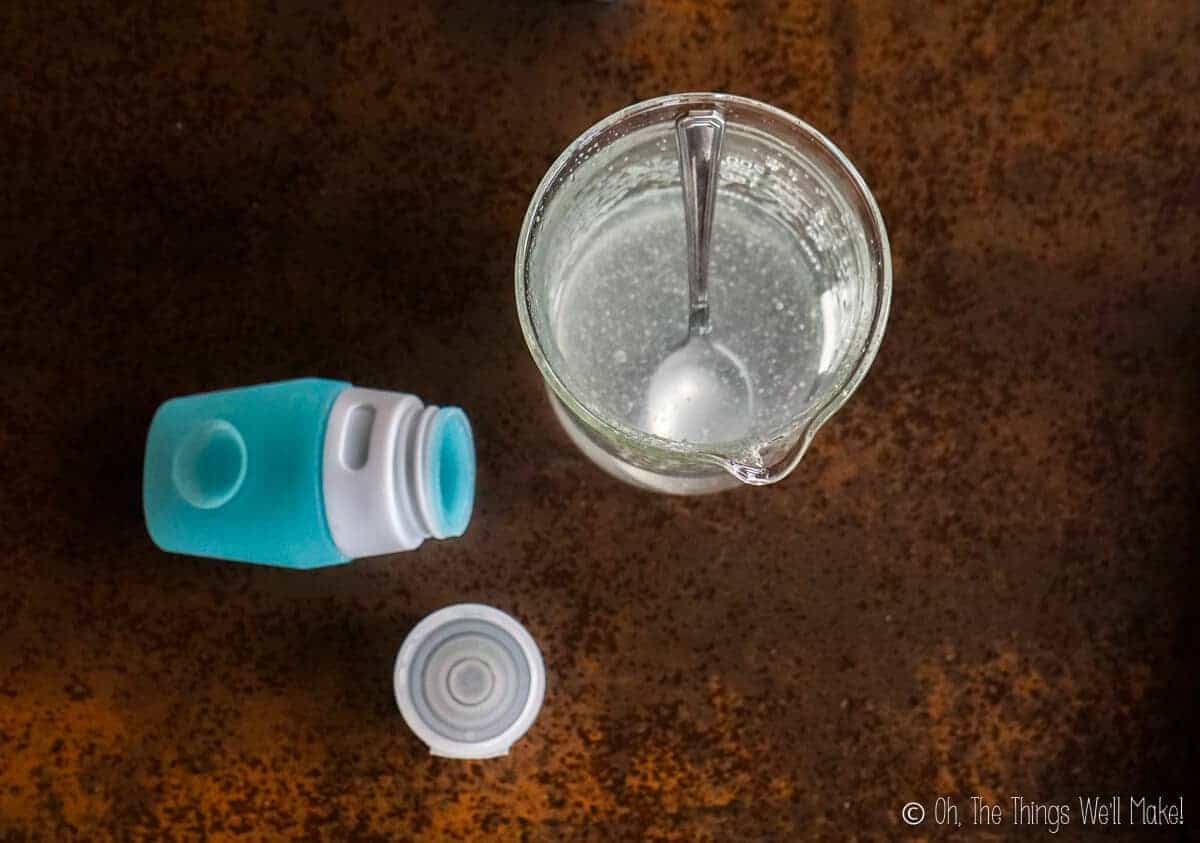
Making a gel
Because most hand sanitizers are sold in gel form, I tried to make a gel sanitizer recipe.
It seemed easy enough: Add a thickener to an alcohol mixture (of over 60% alcohol) and call it a done deal. Right?
Wrong!
Guar gum
I first tried thickening up my alcohol mixture with guar gum. To help prevent lumps in my sanitizer, I mixed the gum powder with glycerin. I added the glycerin and guar mixture to a mixture of alcohol and water.
Nothing happened.
Not only didn’t it thicken, but the gum powder settled to the bottom.
Something in the alcohol prevented the guar powder from thickening.
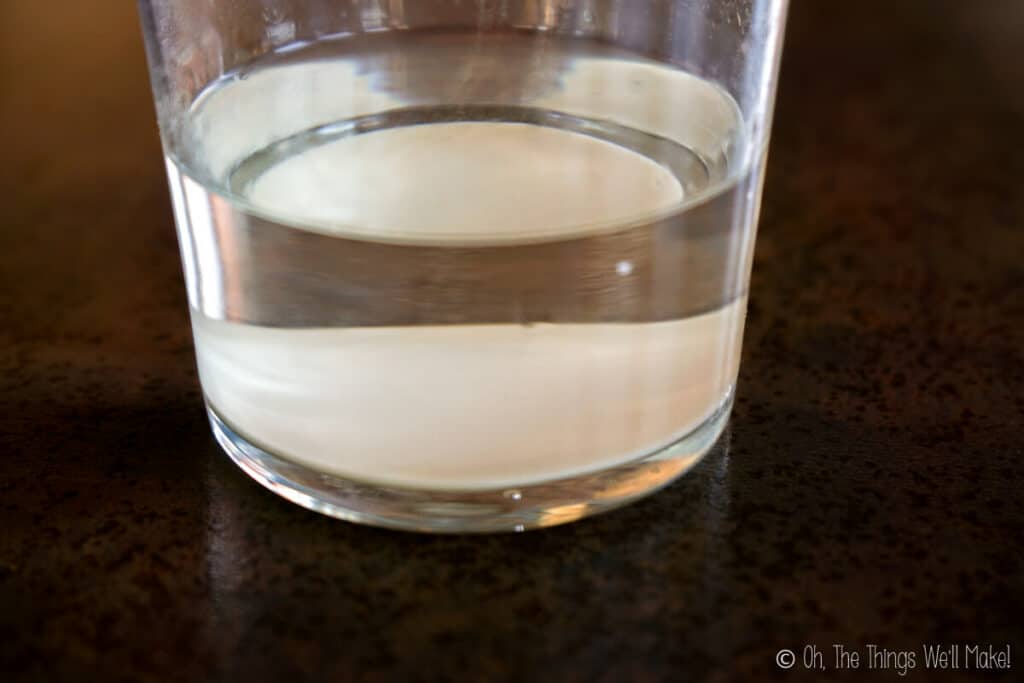
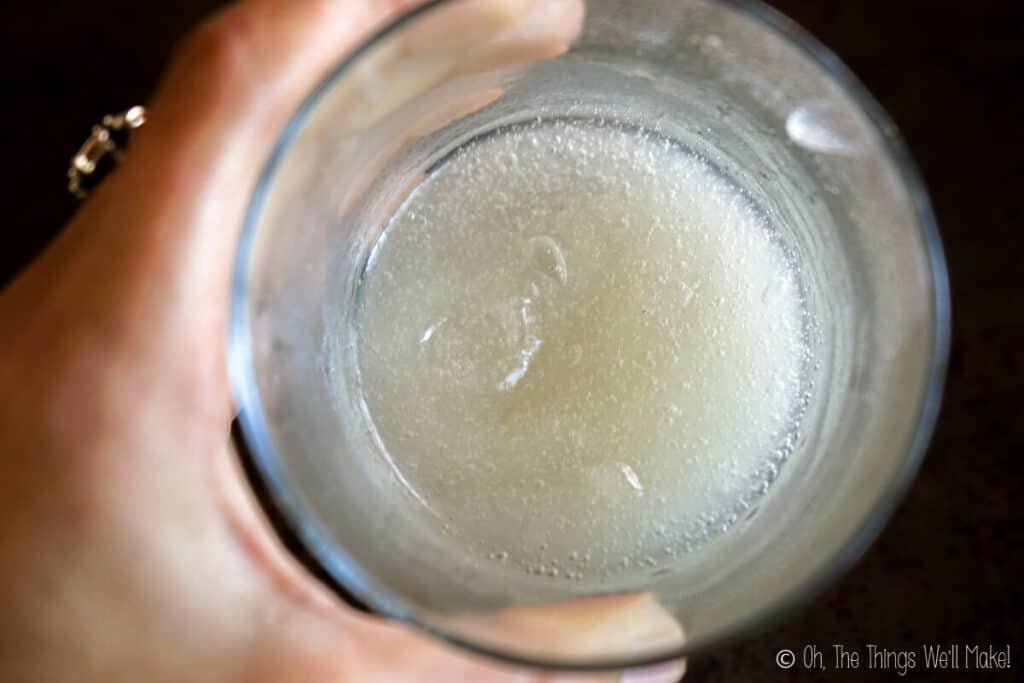
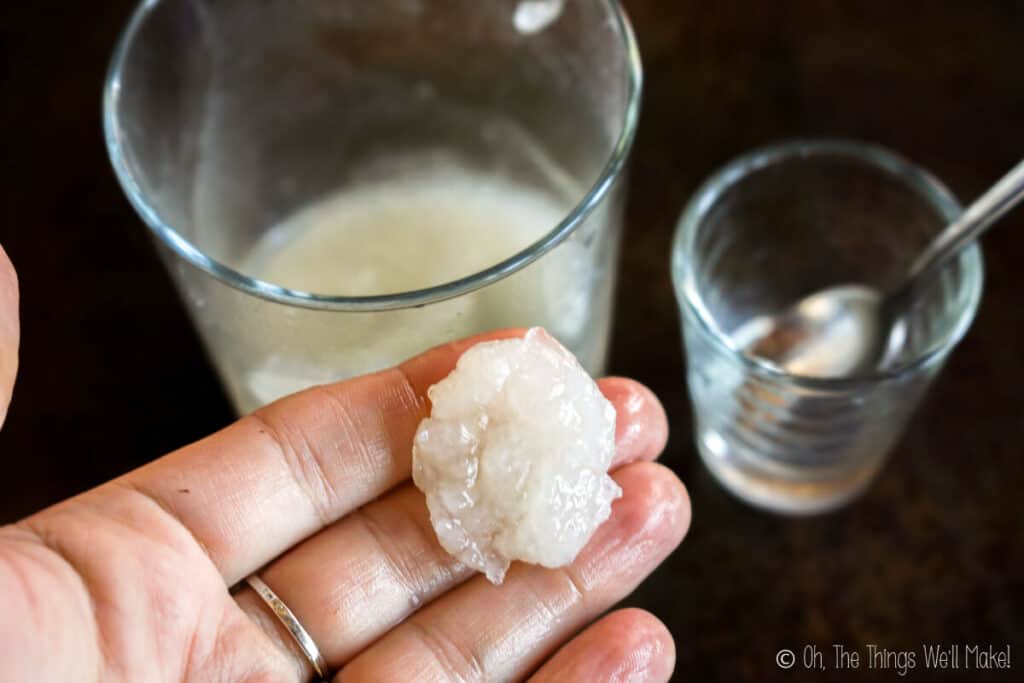
Just in case, I decided to change my technique. This time, I made a gel with water and guar gum. Once the gel was stable, I slowly added alcohol to that.
At first, it seemed to work. As I added more alcohol, though, the mixture separated. The guar gum became a gummy solid mess while the alcohol remained separate in a liquid form below it.
Xanthan gum
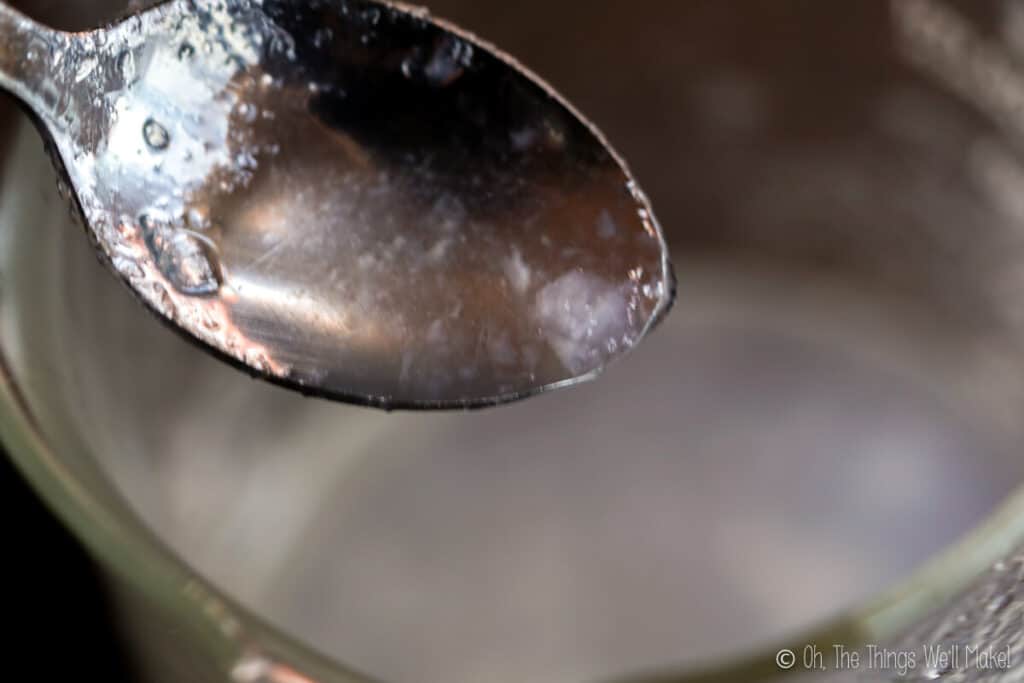
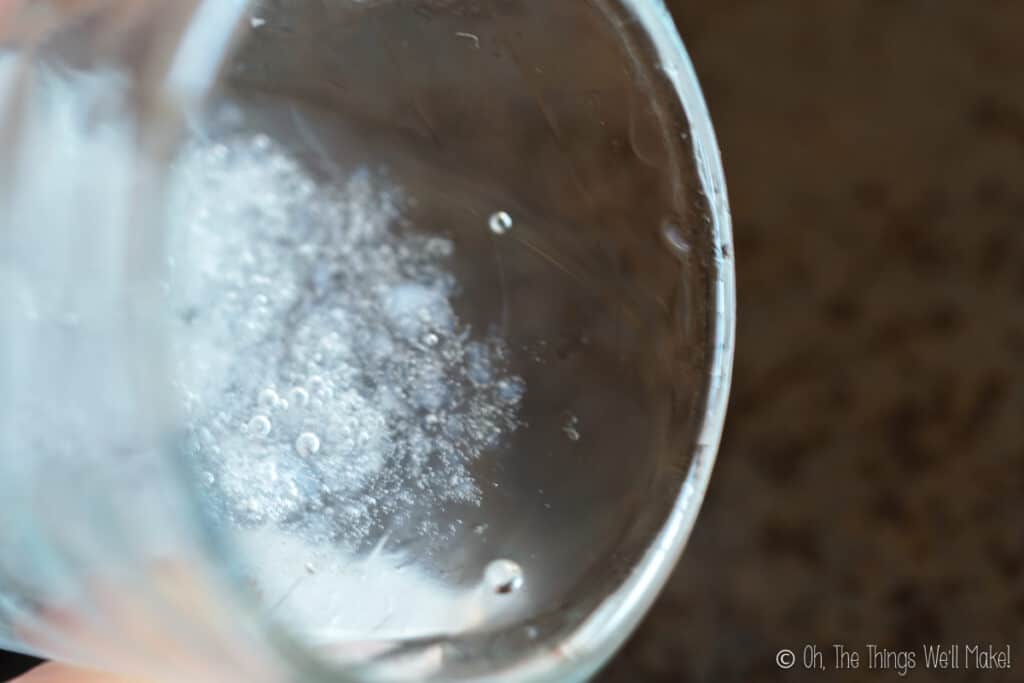
Working with xanthan gum was slightly more promising. I followed both of the above techniques for making a gel with xanthan gum instead of guar gum.
Xanthan gum seemed to incorporate the alcohol better. That was until I increased the alcohol concentration too much. Once I neared concentrations that would make an effective hand sanitizer, everything separated and fell apart.
Gelatin
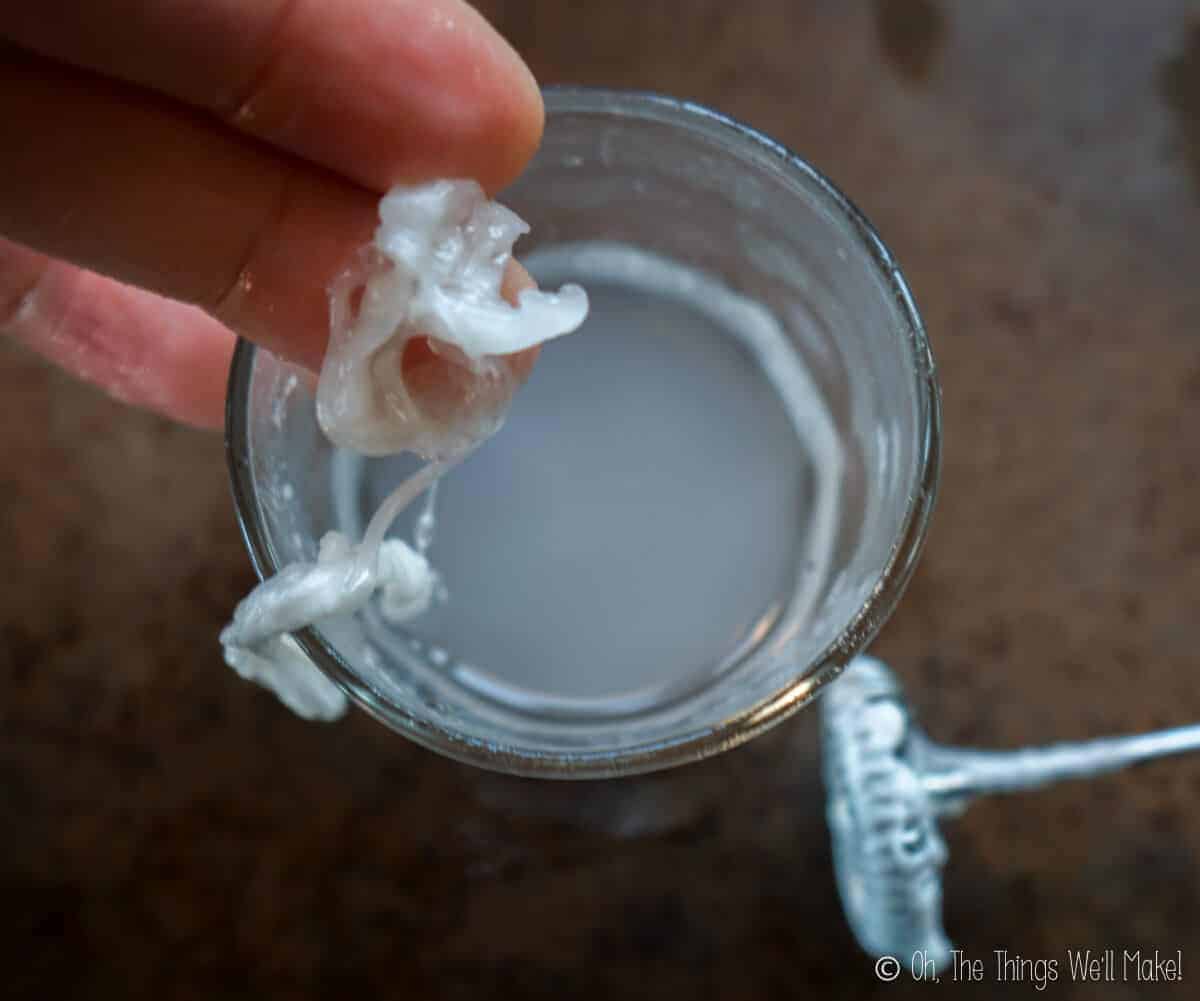
Because one can successfully make Jell-o shots with gelatin and alcohol, I figured gelatin might be a more effective thickener for my gel.
Unfortunately, with the high concentration of alcohol needed for a hand sanitizer, the gelatin became a stringy, solid, rubbery mess.
Agar agar
Often used as a “vegan gelatin,” agar powder can be used to make certain types of natural gels. I even found a blogger with a recipe for an agar thickened hand sanitizer. (Interestingly enough, there was no photo or video to accompany the recipe.)
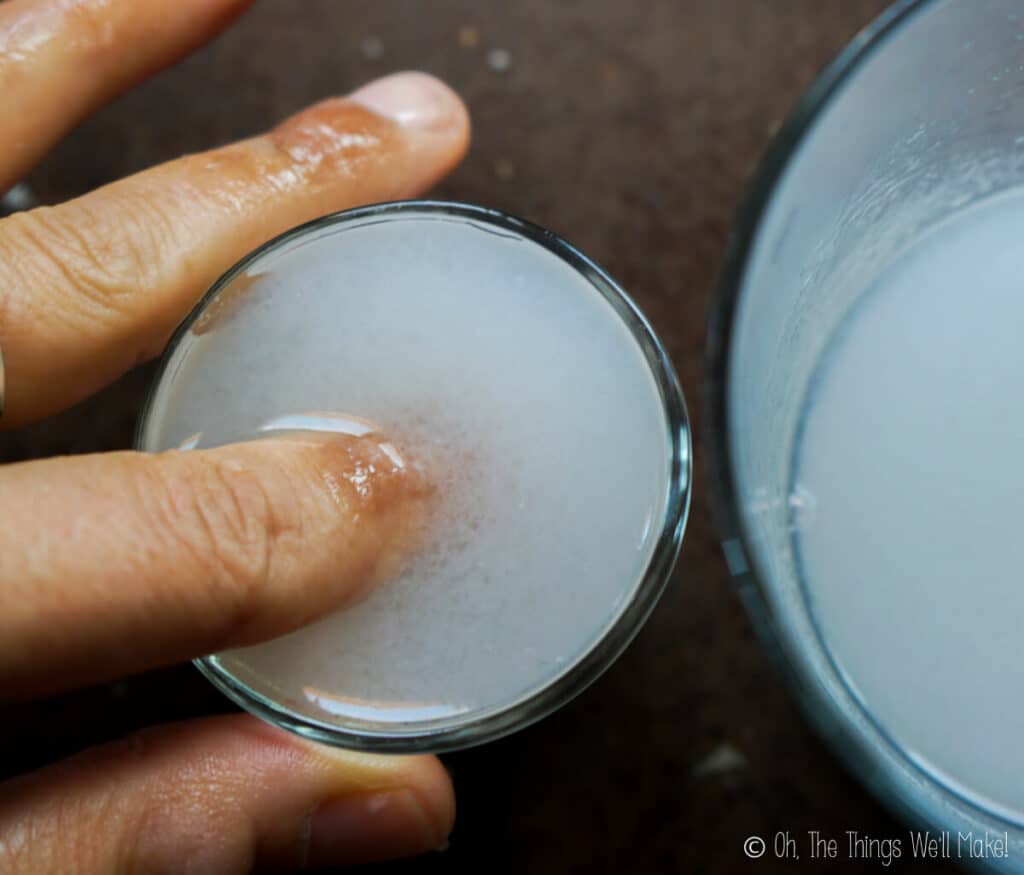
So, I felt more confident that the agar powder would work its magic and I’d finally have a natural gel sanitizer. Just to be safe, I started with the “established recipe” I found online. I boiled some water and dissolved some agar powder into the boiling water. After boiling for several minutes, I removed the mixture from the heat. As it cooled, I started to incorporate my alcohol.
While it stayed stable much longer than the gelatin, eventually the agar gel separated from the alcohol too. At lower concentrations, this may have worked. It didn’t work at the high concentrations needed for a hand sanitizer, though.
Calcium acetate
In the search for a way to make an alcohol gel, I found that some people made a DIY fuel gel using alcohol and calcium acetate.
While calcium acetate sounds exotic and hard to find, most of the tutorials began with making the calcium acetate itself.
To make calcium acetate, 1 part calcium carbonate (either the store-bought powder or from a piece of chalk) was reacted with 4 parts white vinegar (Acetic acid). Carbon dioxide is given off and the remaining liquid is supposedly a calcium acetate solution.
To make a more concentrated solution, I heated the liquid over a stove until most of it had evaporated.
I then added 1 part of the reduced liquid to 9 parts of the alcohol.
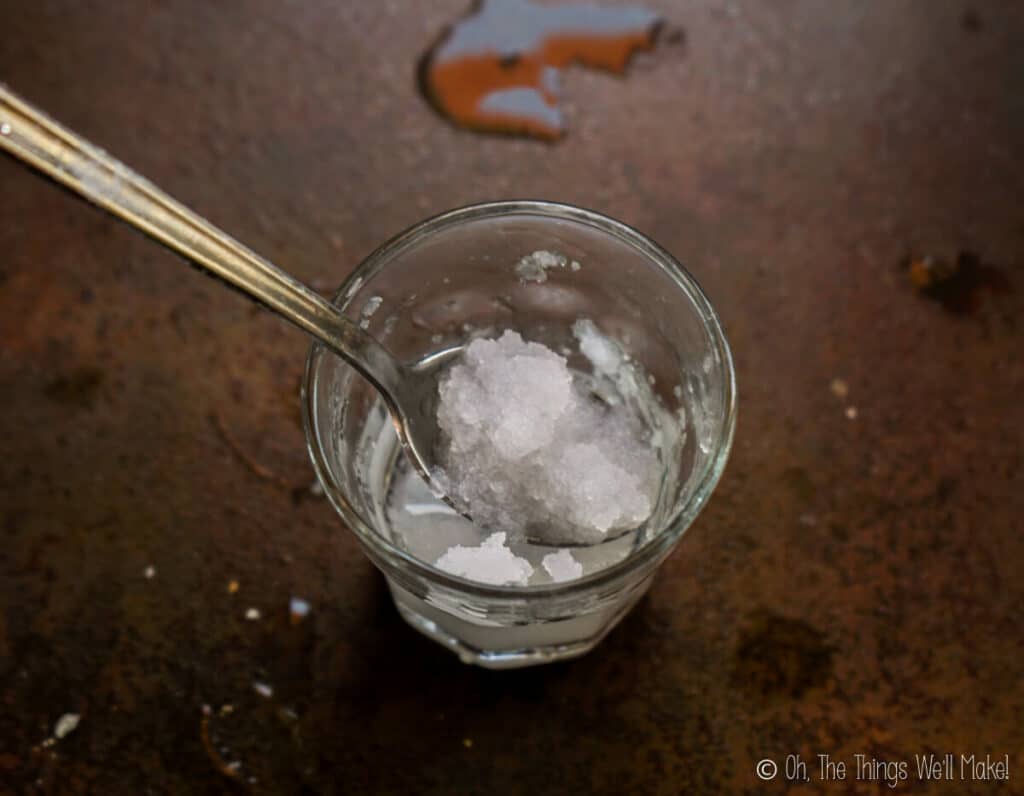
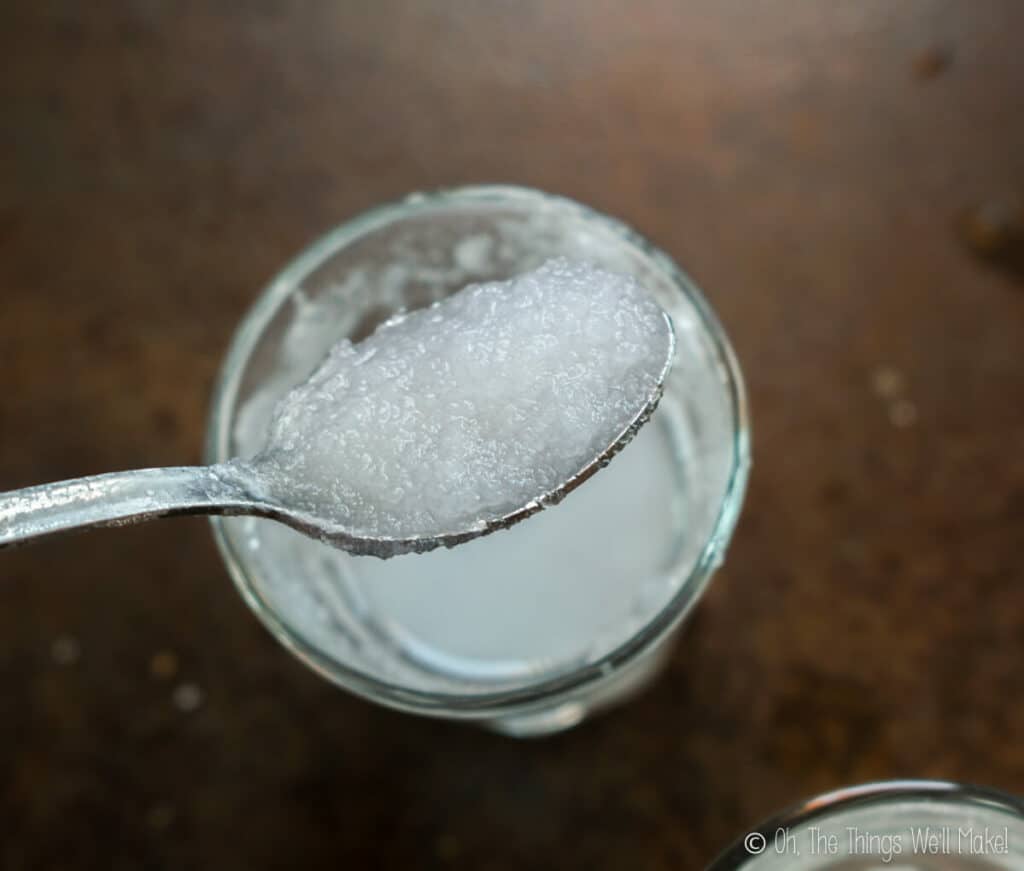
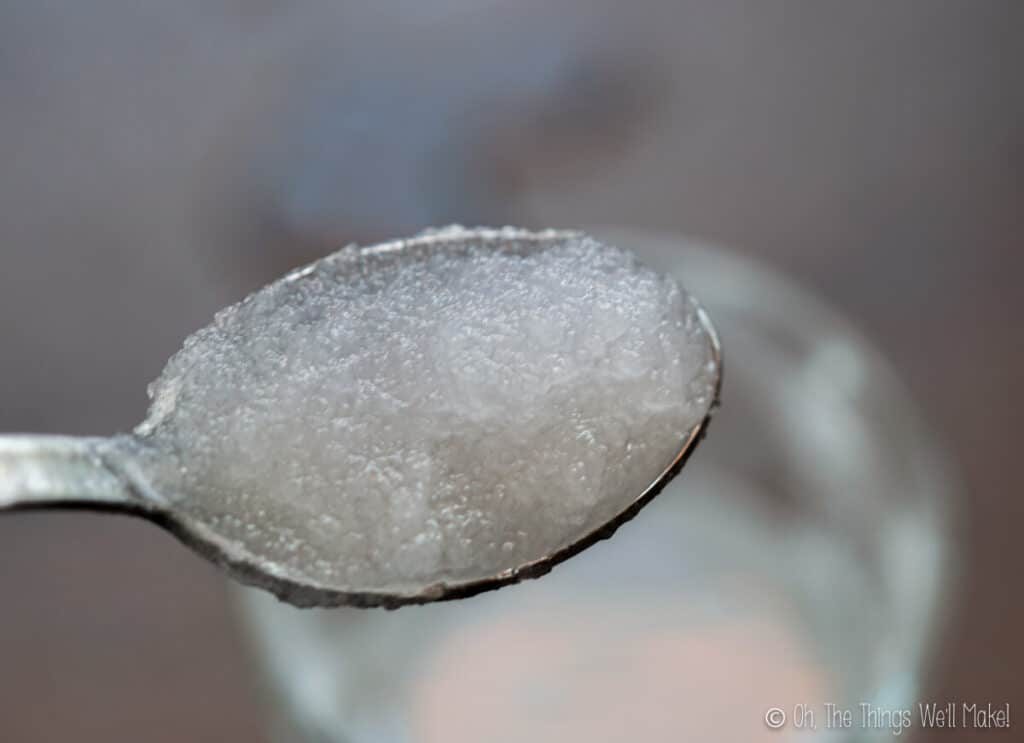
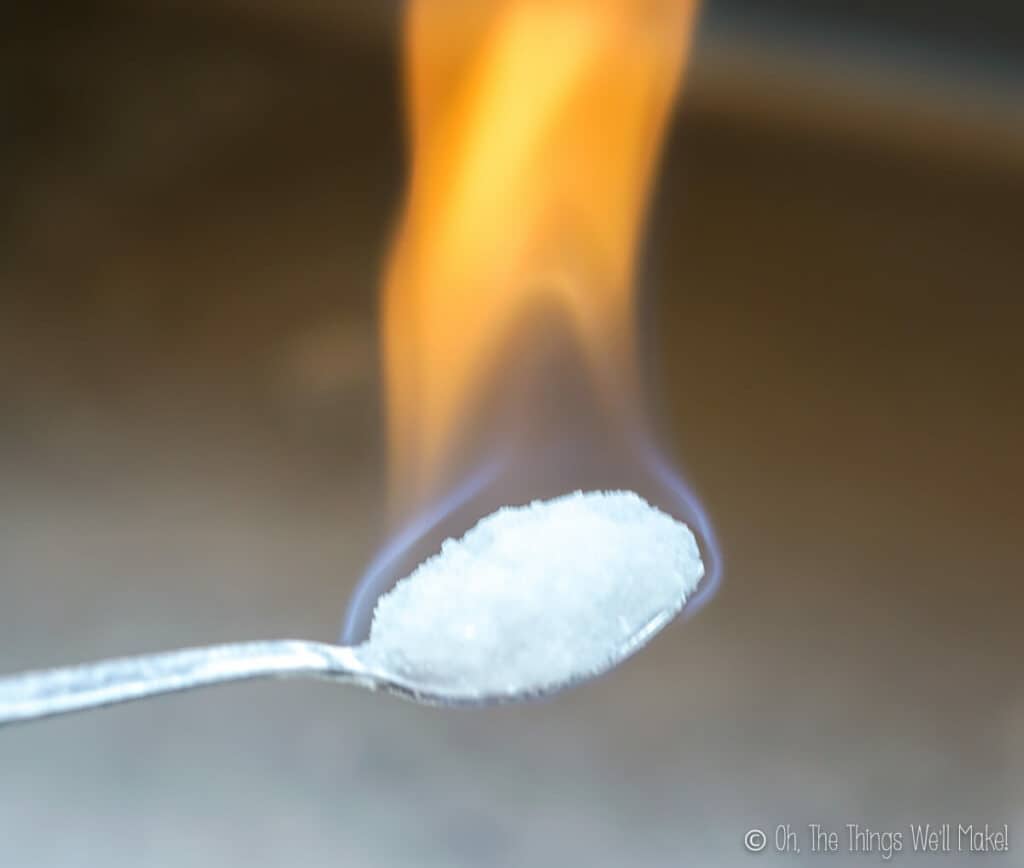
Finally, I made an alcohol gel!
The problem?
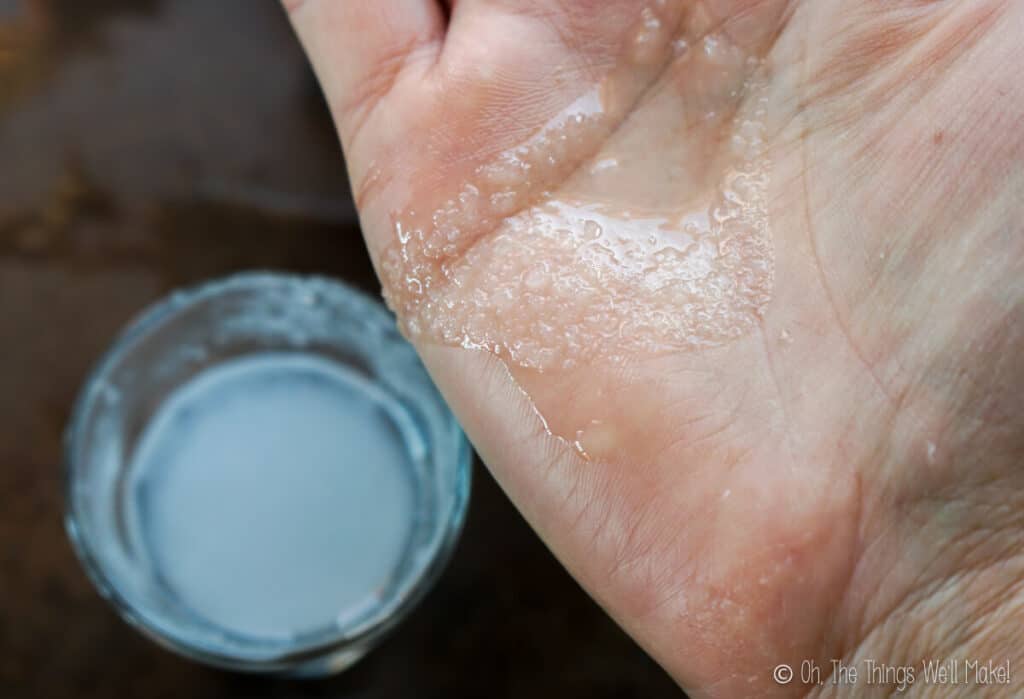
While it was a fun experiment, I didn’t end up making the type of gel I’d want for rubbing on my hands. The gel was quite solid, and some of the alcohol separated from the gel. (It was a bit like cottage cheese.)
I did play with setting some of it on fire before trying something different…
Aloe gel
After all of my unsuccessful experimentation, I decided to go back to using aloe gel. When there are so many recipes online combining aloe gel with alcohol, that must work well, right?
I figured that instead of using 2 parts aloe gel to one part alcohol (which isn’t strong enough to be effective), I’d do it the other way around. By adding 2 parts alcohol and one part aloe, I’d end up with over 60% alcohol. Yes, the consistency would be less thick and more liquidy. But, at least it would be an effective product.
Long story short- it didn’t work! As I added more alcohol, the mixture, once again, fell apart!
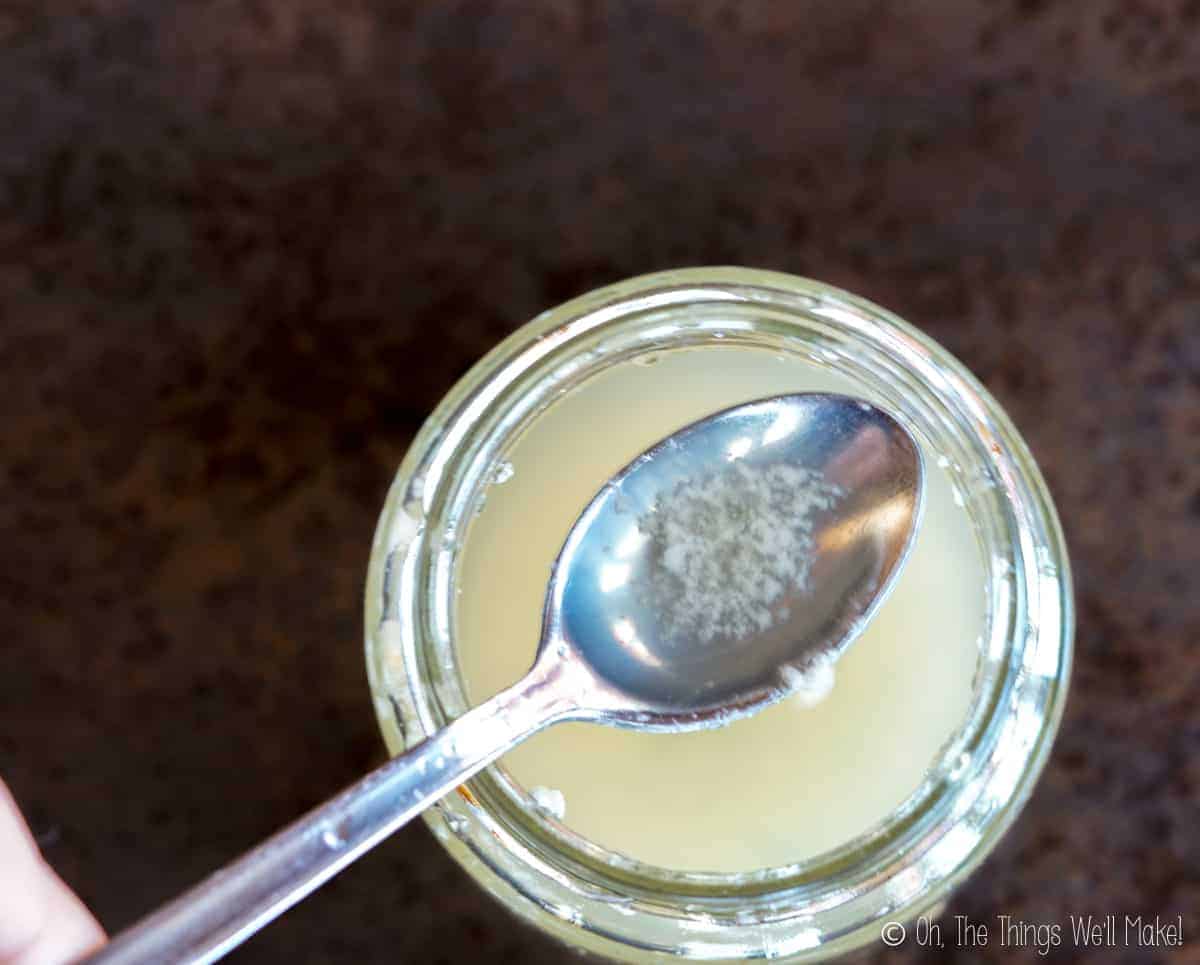
I ended up with a gummy, stringy mess floating in a bunch of alcohol.
In my mind, I knew that it was going to depend a lot on the thickener of the particular aloe gel used. Perhaps, this would work with an aloe gel that uses a more synthetic type thickener. It definitely isn’t going to work for all aloe gels, though. If you’re looking to make a “natural hand sanitizer,” it’s very unlikely that you’ll be able to form a gel this way.
If you plan on making a gel hand sanitizer using aloe gel, know that not all aloe gels will work. This may be possible with some but definitely won’t always work. (It’s less likely to work with the more natural brands.)
What finally worked: carbopol
While it’s not a completely natural solution, if you are set on making a sanitizer in gel format, there is one option that works.
I was just about to give up when I saw that alcohol gels could be made with carbopol. Carbopol is a water soluble polymer that works as a gelling agent. It is often used to make gels with alcohol.
That said, the place I ordered from warned about trying to make a solution with alcohol at higher than 40% of the mix. I almost didn’t order it, because I knew I needed the alcohol content to be above 60% for the gel to be effective. Because I had read elsewhere that it would work, though, I decided to buy it and give it a shot.
I figured after all I had gone through to try to make a gel for you, I’d be mad at myself if I hadn’t at least exhausted EVERY effort to get you a successful solution.
After some experimentation, I was able to make a gel. It wasn’t a thick gel, but it definitely is more viscous than the spray and it clings to your hand better and for longer. That, of course, means that the alcohol has more time to do its job of killing microbes. Perhaps adding a bit more carbopol would thicken it further. (I followed the recommended percentage dosing.)
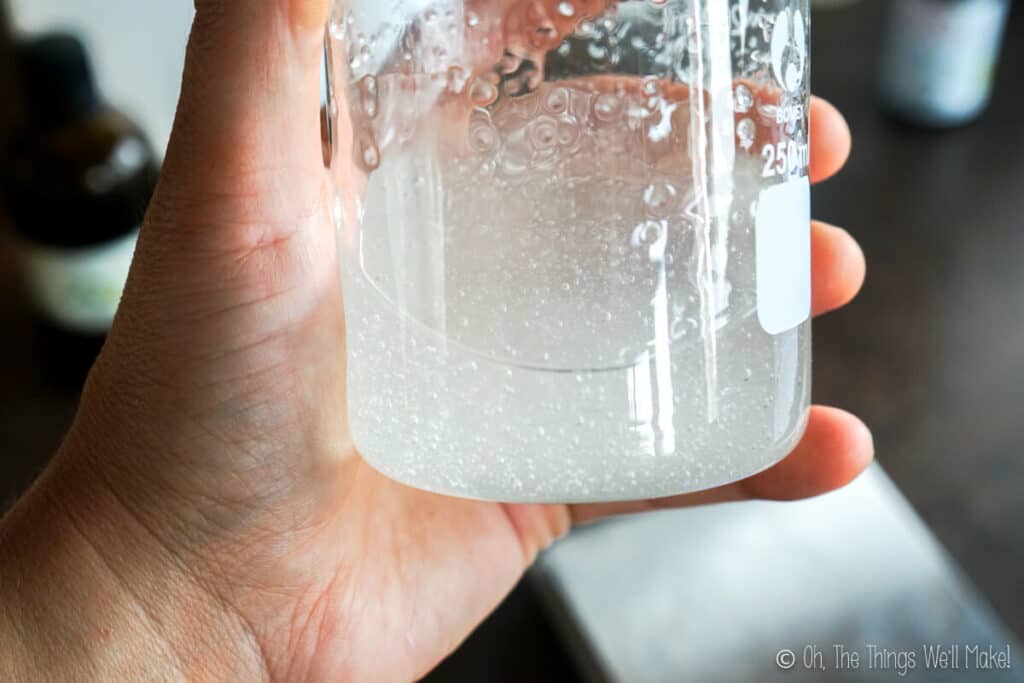
Making a carbopol gel
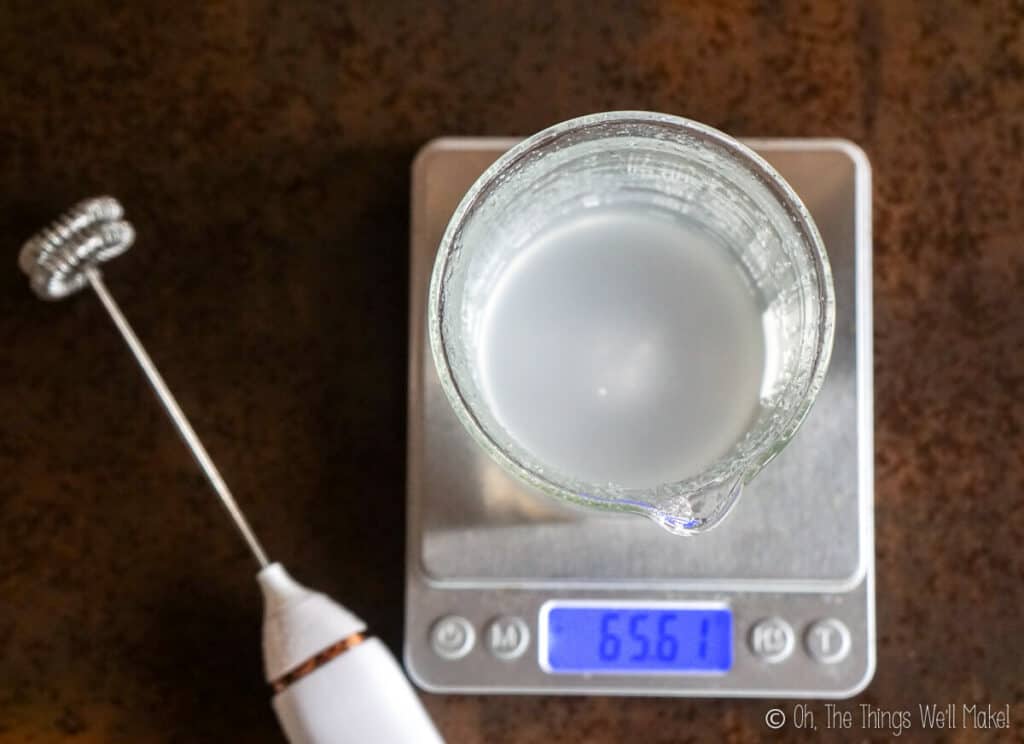
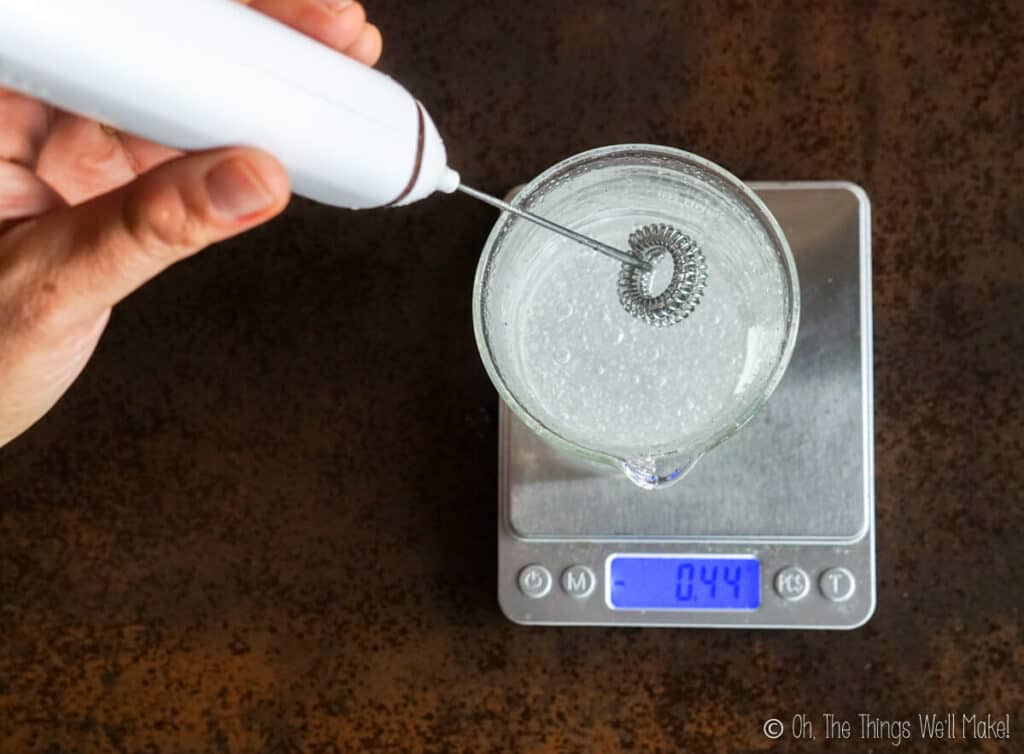
To make an alcohol gel with carbopol, you first dissolve the carbopol in the water. It takes a while to get the particles to dissolve. (Ideally, you’d want to use a magnetic stirrer and keep it stirring until the carbopol is fully dissolved and while adding the alcohol.)
Be careful not to breathe in the carbopol powder when mixing.
Once the carbopol is dissolved in the water, add the alcohol. The mixture will be very thin. That’s because we need to adjust the pH for the carbopol to work!
Add some triethanolamine to bring the pH up. You should notice that it thickens up immediately. If the carbopol wasn’t completely dissolved, it may take longer for the mixture to gel. It should thicken up further as the carbopol completely dissolves over the next hours.
Now you can add the glycerin and any chosen essential oils.
Store your gel in a silicone tube, pump dispenser, or small bottle with a flip cap top for the most convenient dispensing!
Foaming hand sanitizer
If making a gel was going to be nearly impossible, I thought I’d be clever and make an easy, foaming hand sanitizer instead.
In the past, I’ve used foaming dispensers for my homemade liquid Castile soap. I’ve also used them with my homemade micellar water to make a foaming facial cleanser.
The idea was to add a small amount of surfactant (either liquid soap or a detergent-based surfactant like the ones I talk about in my guide to natural surfactants) and dispense it with a foaming dispenser.
Normally, this works really well.
In the end, none of the surfactants I tested worked well at making foam from an alcohol mixture. The alcohol prevents the surfactants from foaming as usual.
So, while you can definitely dispense either of the hand sanitizer recipes from a foaming dispenser, it won’t really give you a foamy texture.
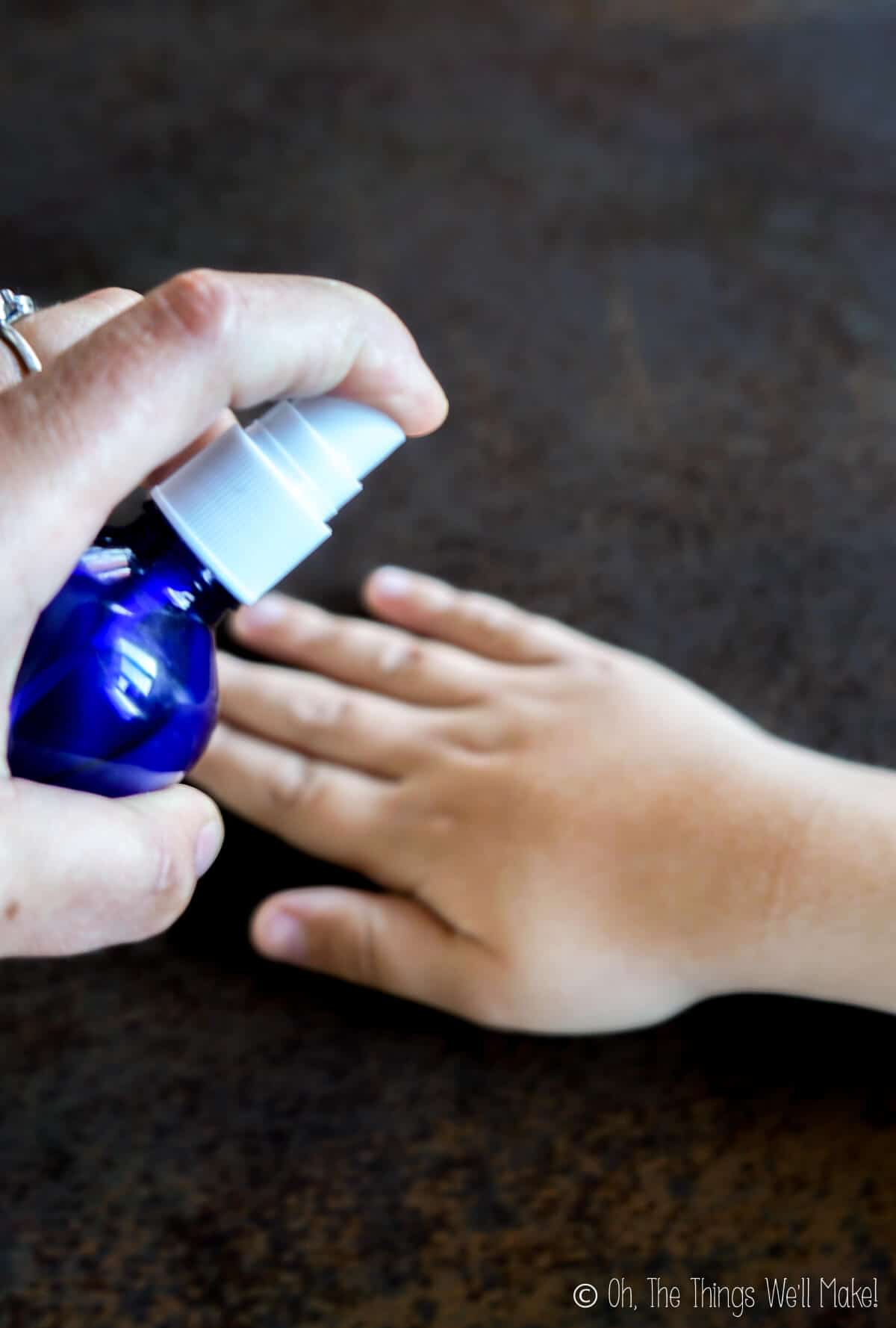
Make a spray
After all of my experimentation, I understood why most of the “natural companies” have chosen to make hand sanitizer sprays rather than bothering with gels or foam.
I can’t think of any natural thickener that would work effectively to make a high-concentration alcohol gel. (If you can, I’d love to hear about it!)
Dr. Bronner’s makes a hand sanitizer spray that only includes alcohol, water, glycerin, and essential oils.
Those were the main ingredients I was going to use anyway!
Why make your own?
Because all of the natural and effective hand sanitizers I’ve found are sprays and use simple ingredients, it’s really quite easy to make a similar product at home. Not only can you save yourself a lot of money, but you can choose which essential oils to use (if any).
Plus, with the mass hysteria that has hit some areas, I’ve heard that it’s actually difficult to find and buy hand sanitizers some places.
Video
Recipe
Hand Sanitizer Spray
Materials
For sanitizer spray
- 70 g 96% alcohol Use pharmaceutical grade alcohol
- 5 g glycerin
- 25 g distilled water (or a hydrosol or floral water)
- .25 g essential oils optional, a few drops, for scent
For hand sanitizer gel
- 28 g distilled water
- .3 g carbopol
- 66 g 96% alcohol
- .1 g triethylamine
- 4 g glycerin
- .25 g essential oils optional
Instructions
For sanitizer spray
- Mix together all ingredients.
- Pour into a spray bottle.
- Use, when needed, to sanitize hands by spraying over all surfaces of hands and rubbing together to completely cover them.
For hand sanitizer gel
- Weigh out the water and the carbopol. Mix them together until the carbopol is fully dissolved in the water.
- Add the alcohol and mix.
- Add the triethanolamine to raise the pH. This allows the carbopol mixture to gel.
- Add glycerin and essential oils.
- Pour the gel into a bottle with a flip-top cap, silicone travel tube, or pump bottle for easy dispensing.
Notes
How to use these hand sanitizers
To keep viruses and bacteria from making you sick, wash your hands frequently, especially after touching surfaces that have likely been contaminated by others. (That’s just about any public surface.) Frequent hand washing is still probably the best way to keep from catching a viral or bacterial infection. (Learn to make your own soap!)
That said, hand sanitizers can be used when you don’t have access to soap and water or when it’s inconvenient to wash your hands. You could consider wiping your hands with some homemade reusable wipes first when you can’t wash off visible dirt.
Hand sanitizers work best when:
- Your hands are already clean (aren’t visibly dirty).
- The sanitizer is in contact with your hands for at least 15 seconds.
- They have at least 60% alcohol.
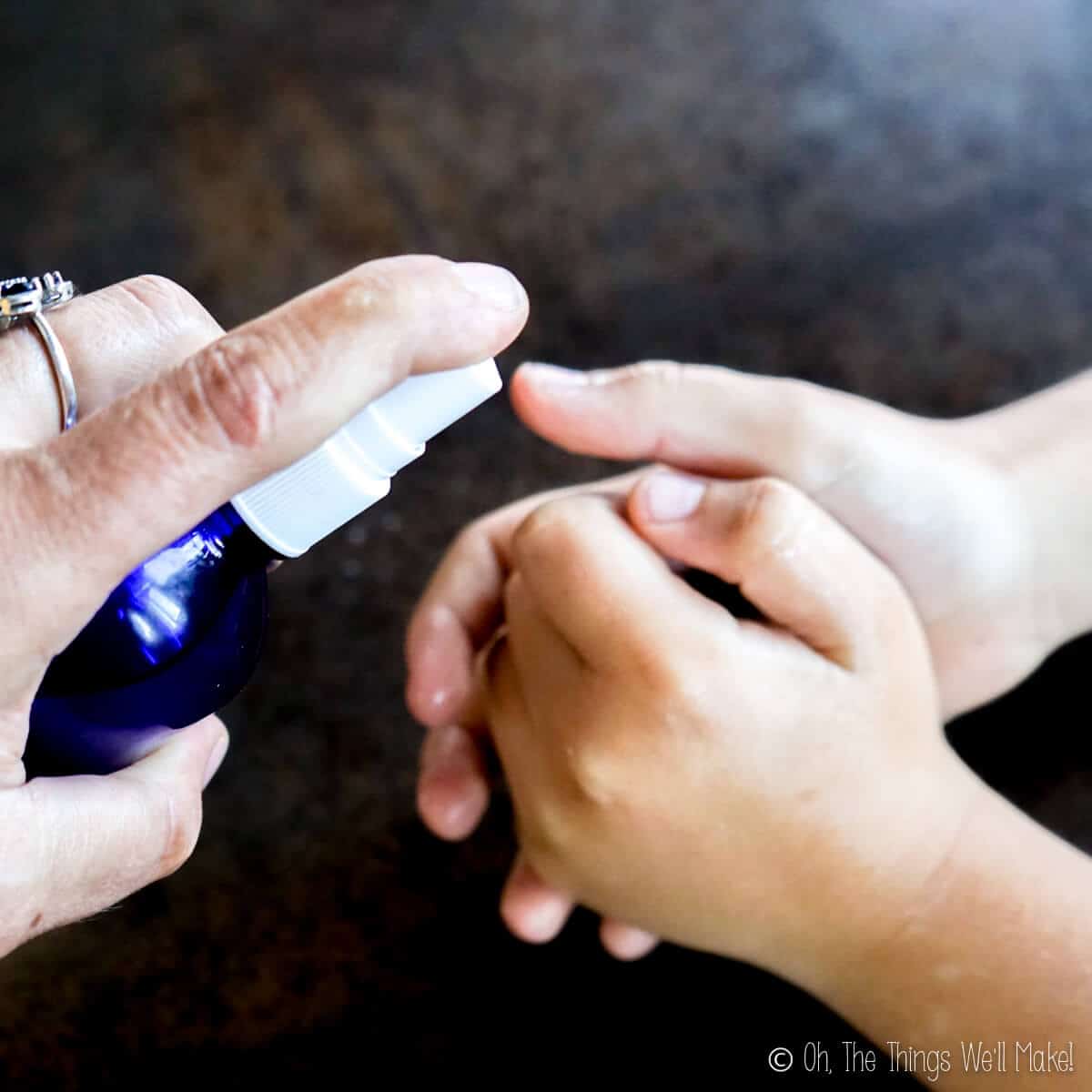
To use, spray the sanitizer on your (clean) hands. Rub your hands together to completely cover them with the solution. If it immediately evaporates, spray again. Ideally, the solution should be in contact with your hands for at least 15 seconds.
Related posts
Natural Homemade Disinfectant Spray
Breathable 3d Face Mask
DIY Fun and Cute Face Masks
Hello Tracy,
I tried HPMC with up 70 % Isopropanol content and it works not bad.
If you like, test it also. My hydroxypropyl methylcellulose (hypromellose) was Methocel® A4M.
HPMC is also sold as E464.
Add 2 % (m/m) to the alcohol. After some mixing (a spoon was fine) add the water.
Before adding the water some glycerol can added. H2O2 may be added last.
Using HPMC with the WHO formulation seems to work also not too bad, but viscosity is not that high.
Hi Simon,
I found out about the hydroxypropyl methyl cellulose soon after having published this post and found it for sale from a supplier in Italy. (I live in Spain, so that’s not bad. I’ve ordered other gums and thickeners from them in the past.)
Anyway, they were sold out, so I’ve been on a waitlist to hear when they get it in again. They’ve resupplied 3 times since then, and every time I saw the notice in my email within an hour of having received it, but by the time I got to the site to buy it, it was sold out already!
They have a few other thickeners that they recommend.
I plan on trying several of them when I can order several at once to make the shipping charges worthwhile. 😉
Then, I’ll update with my findings about the various thickeners.
Thank you, though, for the suggestion. It’s greatly appreciated. When I first was working on this post, I couldn’t find much information at all about what could be used!
Thanks for your research and recipe! I have used Carbomer 940 for years to make fire-starting gel suitable for starting campfires, oil burning stoves and charcoal Bar-B-Ques. Carbomer 940 is soluble in both water and alcohol, although getting it to dissolve in pure alcohol is a bit challenging. I makeup the carbopol in a real stiff consistency, then add the methanol to get a 90%+ final alcohol concentration.
For hand sanitizer: (Never use methanol to make hand sanitizer, under any circumstances!!)
Start with 400 ml of cool water in a one Liter mixing bowl, and 5 grams of Carbomer in a paper Dixie cup. Use a squirrel cage type mixing tool in a drill press (or hand drill) at about 500 RPM. Start the drill, tipping the cup and tapping the lip of the cup lightly against the spinning shaft such that a small amount of powder continuously falls into the spinning squirrel cage and is dispersed into the water.
After all the powder has been added, stop the drill and allow the mixture to soak for an hour. While waiting, pour 1.5 grams of TEA (or 1.2 grams of sodium hydroxide granules) into a small plastic or glass container and add 15 ml (about a tablespoon) of COLD water with stirring until totally mixed. This is your pH adjusting solution.
Re-start the drill and start adding the pH solution drop-wise into the bowl. It will immediately begin to thicken. Continue dripping the pH solution into the bowl until you are satisfied with the viscosity of the product. Pour any remaining pH solution down the drain with the cold water running, then rinse out the container.
Add remaining ingredients and mix with a spoon until homogenous.
Great work! Having tried a few similar gel recipes myself, I had the same lack of success….. However, I then tried a simple experiment: I had a 75ml bottle of commercial 70% alcohol hand gel (bought here in France). It was now only about 1/4 full; let’s say 20ml. I simply topped up the bottle with 70% “cleaning alcohol” (still easily available here in supermarkets), and gave it a good shake. While somewhat thinner than the original gel, it is *still* very – even surprisingly – gel-like. I’m going to take a guess – and test it in due course – that a decent gel quality will be preserved even in a ratio of, say 1 part existing gel to 6 parts fresh alcohol. That would mean that one little 75ml standard bottle (now difficult to find in the stores, but I still have a couple) may sufficiently gelify 500ml of alcohol for hand-cleaning use.
Hi Gary,
I’m glad you found something that worked! Did your gel say what thickener was used?
No mention of that at all, I’m afraid! 72% Ethanol + a unspecified amount of Bisabolol as a soother (I think that’s effectively camomile oil, not?).
Interesting. Yes, I think it’s component of chamomile oil just as eugenol is of clove oil, etc.
Whatever works. 😉
How long would the sanitizer last before bacteria build up. I’m planning on trying aloe Vera juice and 99.9% isopropyl. Thanks in advance
At the high concentration of alcohol, it should be self-preserving. Bacteria shouldn’t build up.
Hello can I ask what is the final percentage on your room spray recipe of alcohol
For sanitizer spray
70 g 96% alcohol Use pharmaceutical grade alcohol
5 g glycerin
25 g distilled water (or a hydrosol or floral water)
Hi Janine,
I was shooting for around 70%. It’s actually just under that (67.2%), but you could increase it slightly by lowering the amount of water or increasing the amount of alcohol slightly.
Since ultrasound gel has carbopol and glycerin in it, could it be used instead of doing all of that mixing?
Hi Judy,
That’s a great idea!
You’d have to try it out. I’m guessing that it should work, but without trying it myself, I don’t know for sure.
Just make sure to keep the alcohol percentage high enough for your gel to be effective!
Thanks so much for this! I’ve just bought some witch hazel for homemade cleaning product and I was wondering if this could be a valid alternative to alcohol?
Thanks so much,
Elena
Hi Elena,
I’m afraid not- unless your particular witch hazel has a very high percentage of alcohol in it.
Witch hazel can be found in many formats. It can be distilled (in which case it has no alcohol) or it can have a varying amount of alcohol in it. Either way, though, the alcohol percentage is generally low.
As the CDC and other experts recommend using a minimum of 60% alcohol (with 65-70 being even better!), it’s very unlikely that your would be able to achieve that with any witch hazel on the market.
Hi!
Thank you SO much for this article! I’ve tried many of the same things and still ended up with strings or goey clumps and wasn’t sure at all what the issue was. I’m excited to try the glycerin though to create a spray.
Do you use just pure vegetable glycerin? Also, I was wondering if you could possibly use Aloe Vera Juice in the place of water in this recipe?
Hi Grace,
You’re very welcome! I’m happy to help!
Yes, you can just use pure vegetable glycerin.
You could try with aloe vera juice, but I have heard of people having issues with clumping when using aloe powder, so it may also be an issue with the juice itself.
Without trying it myself, I’d be hesitant to recommend it. (I learned the hard way that things don’t always turn out as you think they will.)
Where do you get the triethanolamine? Second, where did you get the handheld mixer you used in the photo to mix it? What is the name of manufactuturer?
Hi Dawn,
I bought it from the same place I bought the carbopol-carbomer. I live in Spain,though, and bought it from a local place (called La Despensa del Jabon), so I’m not sure how helpful that will be for you. You can also theoretically use NaOH (lye) to bring the pH up, but I’ve had readers tell me that it makes the gel cloudy and not clear.
As for the handheld mixer I used. It’s really. just a milk frother. I have several and use them for small projects like this one. I’m not sure about the brand, but I got mine from Amazon here in Spain and it was similar to this one. I like the ones with removable attachments because it makes for easy cleaning. (I throw my attachments in the dishwasher.)
this one
Hello Tracy,
What is the difference between Carbopol 940 and Carbomer 980 QD?
Thank you!
Hi Justin,
I’m not really sure. I could only find Carbopol 940 here so that’s the one I used.
Oh, Tracy. Thank you so so much for this website. I made a sanitizer with tthe WHO formulation procedure and it was watery!!! i thought it was going to be all gelly. Can i use cabormer to thicken it up?please help.
Frantic in NIGERIA
Hi Chima,
Yes, that should work. I have since heard about other gelling agents that should work even better, but that are probably harder to find.
I can try to update the post when I can spend more time at the computer later. (But- also adding that I haven’t personally tried the other options (yet)!