

A beginner’s guide to natural surfactants for DIY skincare and haircare
Learn how to use natural surfactants in shampoos, body washes, and facial cleansers. A simple, beginner-friendly guide.
Trying to avoid SLS or other harsh cleansers in your homemade cosmetics? Natural surfactants can be a gentler option for making shampoos, body washes, facial cleansers, and other rinse-off products.
The tricky part is that there are quite a few options, and they don’t all behave the same way. Some are better cleansers, some are milder, and some help improve the feel and foam of your final product.
What is a surfactant?
A surfactant, or surface-active agent, is an ingredient that changes the way liquids behave at a surface. In simple terms, it helps water spread out instead of beading up.
Surfactants also help water interact with things it normally wouldn’t mix with, like oil, grease, and dirt. That’s what makes them so useful in cleansing products.
You’ll find surfactants in all sorts of everyday products, including shampoos, body washes, facial cleansers, toothpaste, and even household cleaners.
If you want a more technical definition:
(A surfactant,) also called surface-active agent, (is a ) substance such as a detergent that, when added to a liquid, reduces its surface tension, thereby increasing its spreading and wetting properties. (Encyclopaedia Britannica)
What do surfactants do (and how do they work)?
Surfactants are used for a variety of purposes, but in most DIY cosmetics, their main role is cleansing.
They help water spread more easily and allow it to interact with oils, grease, and dirt so they can be rinsed away. Depending on the type, surfactants can also help create foam, stabilize mixtures, or improve the texture of a product.
Some surfactants act as emulsifiers, helping oil and water stay mixed. Others act as solubilizers, allowing small amounts of oil (like essential oils or fragrances) to disperse in water-based products. Some increase viscosity, making a product thicker, while others make it thinner.
Why does that matter?
If you’ve ever sprayed water onto a surface like glass, you’ve probably noticed that it beads up instead of spreading out. That’s because of surface tension, which causes water molecules to stick to each other.
For cleaning, though, that’s not very helpful. You want the water to spread out and come into contact with as much of the surface as possible. You also want it to be able to grab onto oils and dirt.
That’s where surfactants come in.
How surfactants clean (micelles)
Surfactants have two parts:
- a water-loving (hydrophilic) head
- an oil-loving (lipophilic) tail
When added to water, they organize themselves into structures called micelles.
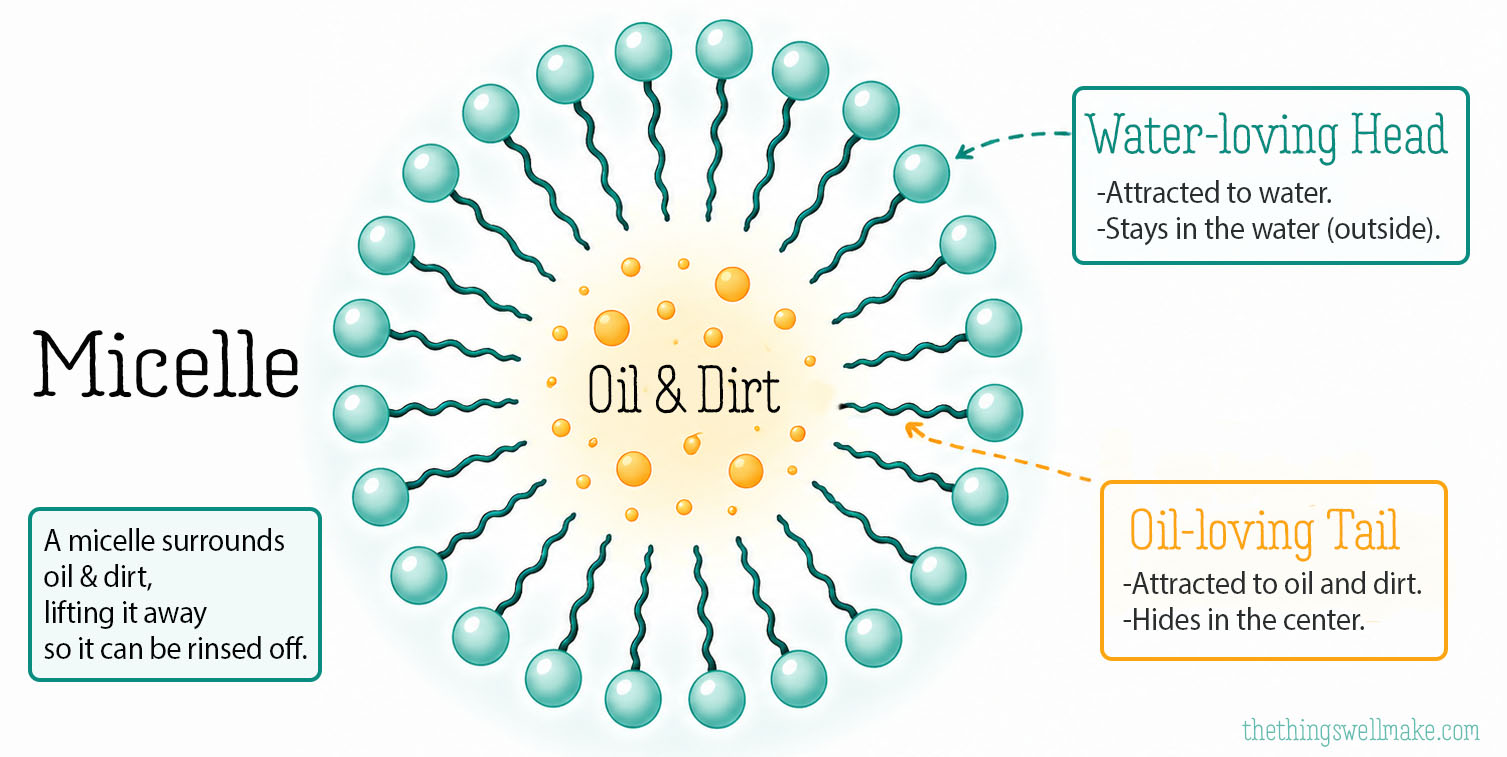
Inside a micelle, the oil-loving tails point inward, trapping oils and dirt, while the water-loving heads stay on the outside, interacting with the water. This allows grease and grime to be lifted away and rinsed off with water.
This is why surfactants can remove oily dirt with water alone. The oil gets trapped inside the micelle, while the outside interacts with the water, so everything can be rinsed away easily.
Hot water can improve cleaning because it helps melt fats and oils, making them easier for the surfactants to trap inside the micelles.
Types of surfactants
There are four main types of surfactants. They’re classified based on the charge of their water-loving (polar) head.
Some have a negative charge (anionic), some have a positive charge (cationic), some have no charge (nonionic), and some can switch depending on the pH (amphoteric).
Each type behaves a bit differently, which is why most formulas use a combination rather than just one surfactant.
Anionic surfactants (cleansing and foam)
Anionic surfactants are the most commonly used in cleansing products because they provide strong cleaning power and plenty of foam.
You’ve probably heard of sodium lauryl sulfate (SLS) or sodium laureth sulfate (SLES), which are common examples. Soap is also an anionic surfactant.
Because they clean so well, they can sometimes feel drying or irritating when used alone. For that reason, they’re often combined with milder surfactants to create a more balanced, gentler product.
I do use SLS in things like my laundry detergent recipe, where stronger cleansing is helpful, but I don’t use it in my skincare or haircare recipes.
Nonionic surfactants (mild and easy to combine)
Nonionic surfactants don’t carry a charge, which means they work well with other types of surfactants.
They’re generally milder than anionic surfactants, but they also tend to have less cleansing power on their own. Instead, they help make formulas gentler and can make a product feel nicer to use.
Many sugar-based surfactants (like glucosides) fall into this category and are popular in more “natural” formulations.
Cationic surfactants (conditioning, not cleansing)
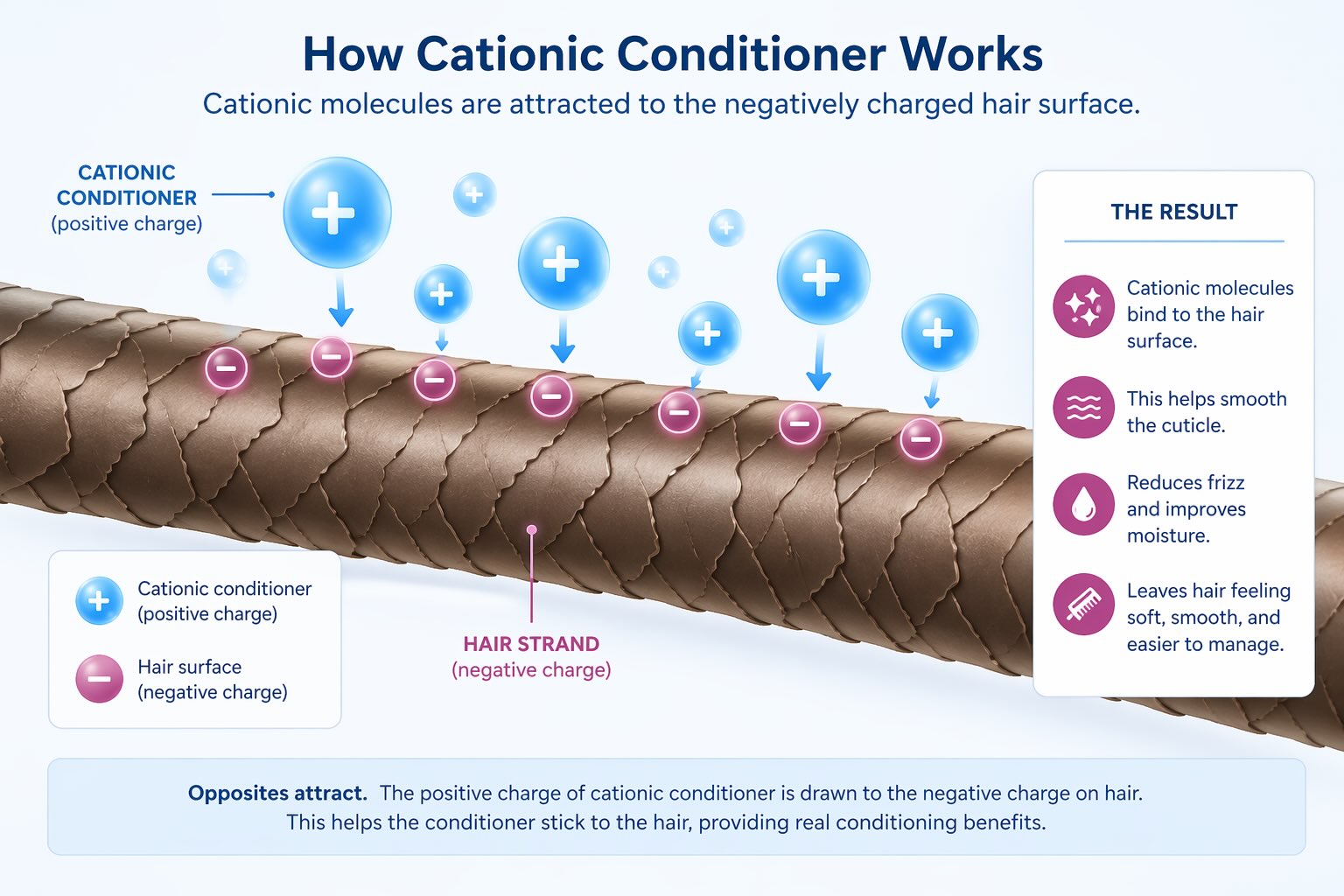
Cationic surfactants carry a positive charge and behave very differently from the others.
They aren’t typically used for cleansing. Instead, they’re used in hair conditioners and anti-static products. Because hair has a slightly negative charge, these surfactants are attracted to it and cling to the surface.
This helps smooth the hair, reduce friction, and make it easier to comb. It’s also why a small amount stays behind after rinsing.
Cationic surfactants are not usually compatible with anionic surfactants, which is why conditioners and shampoos are used separately.
Amphoteric surfactants (very mild and flexible)
Amphoteric surfactants can act as either positively or negatively charged depending on the pH of the product.
They’re very mild and are often used to make formulas gentler. On their own, they don’t usually provide strong cleansing or a lot of foam, but they work really well when combined with other surfactants.
They’re especially useful when paired with anionic surfactants because they can help reduce irritation and make the foam feel nicer and more stable.

Natural surfactants and how to choose them
There are quite a few natural surfactants available today, and new ones seem to appear all the time. I’ve tried many of them, but here I’m focusing on some of my favorites, ones that are gentle, easy to find, and work well in simple formulations.
You can use these in everything from shampoos and body washes to facial cleansers and baby products.
Most cleansers use a combination of surfactants rather than just one. Anionic surfactants are often used when you need stronger cleansing or more foam, while amphoteric surfactants help make formulas feel gentler and improve the lather. Nonionic surfactants help keep everything mild and balanced.
Some formulas use all three, while others skip anionic surfactants entirely for a gentler result. If a cleanser isn’t removing enough oil or buildup, you can increase the total surfactant concentration or add a mild anionic surfactant for a bit more cleansing power.
Surfactants can also vary quite a bit from one supplier to another. The same name doesn’t always mean the exact same composition, and things like pH, concentration, and even the plant source can differ slightly. Because of that, it’s a good idea to check the details from your supplier, especially if you’re trying to avoid certain ingredients or know your skin reacts to specific things.
A quick note on “natural” surfactants
Some surfactants are sold as “natural” or ECOCERT-compatible, but that can vary depending on the manufacturer. If that’s something you care about, it’s worth double-checking with your supplier.
You can also look for surfactants sourced from certified sustainable palm (RSPO) or other plant sources.
Natural surfactants list:
Below are some of the surfactants I use most often. They’re all relatively easy to find and work well in simple formulations.
Coco Glucoside
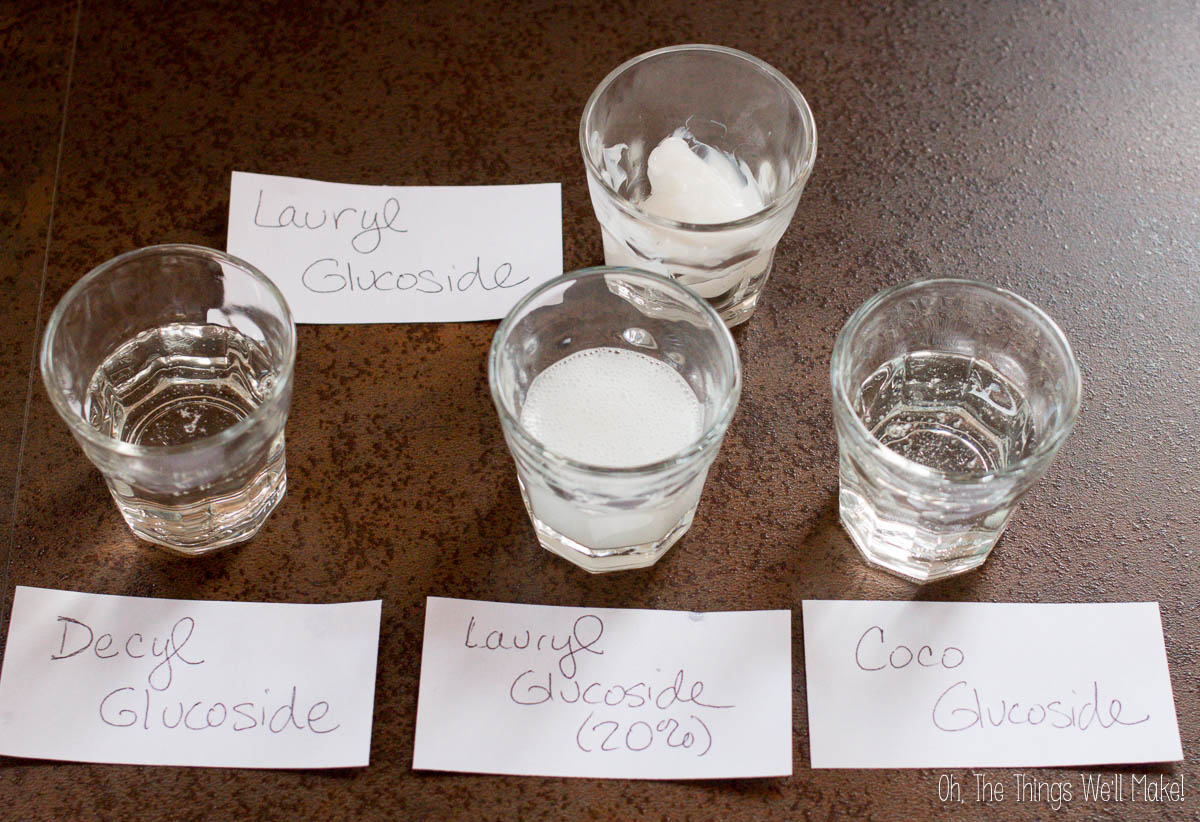
Coco glucoside is a nonionic surfactant derived from coconut oil and sugars (often from corn or fruit). It’s a very gentle cleanser and is completely biodegradable, which makes it popular in more “natural” formulations.
It produces a decent amount of foam and works well in shampoos, body washes, and facial cleansers, especially when you want something mild. On its own, it can feel a bit thin, so it’s often combined with other surfactants to improve the texture and overall feel of a formula.
It has a relatively high pH (around 11–12), so you’ll usually need to lower the final pH of your product to bring it into a better range for your skin or hair. You’ll also need to add a preservative, since the final product won’t be self-preserving once diluted and adjusted.
If you’re new to working with pH, you can read more about how and why to adjust the pH of cosmetics here.
Decyl Glucoside
Decyl glucoside is another nonionic surfactant that’s very similar to coco glucoside, but with a shorter chain length.
It’s also gentle and biodegradable, and works well in shampoos, body washes, and baby products. Compared to coco glucoside, it tends to produce less stable foam, but it can help add a bit more viscosity to a formula.
Like other glucosides, it’s usually used alongside other surfactants to create a more balanced cleanser.
Lauryl Glucoside
Lauryl glucoside is another member of the same family, but with a longer chain length.
It tends to be thicker and produces more stable foam, although it can take longer to foam up. It’s still considered a mild surfactant, but slightly less gentle than the shorter-chain glucosides.
Depending on the supplier, it can be quite thick or even paste-like, so you may need to dilute it before using it in a formula.
Coco Betaine
Coco betaine is an amphoteric surfactant derived from coconut oil. It’s very mild and is often used to make formulas gentler.
On its own, it doesn’t provide strong cleansing, but it works really well when combined with other surfactants. It helps boost and stabilize foam and can make a formula feel less harsh on the skin and hair.
Because of that, it’s commonly added to shampoos and body washes to balance stronger surfactants or to improve the feel of milder ones.
It’s biodegradable, works over a fairly wide pH range (around 5–7 in finished products), and is often used in formulations designed for sensitive skin.
Sodium Cocoyl Glutamate
Sodium cocoyl glutamate is a very mild anionic surfactant derived from coconut oil and amino acids. It’s often used in facial cleansers and toothpaste because it cleans gently without being too harsh.
It doesn’t produce as much foam as stronger surfactants, but it still helps disperse oils and debris so they can be rinsed away.
Because of its mildness, it’s a good choice for products that come into contact with more sensitive areas, like the face or mouth.
Sodium Cocoyl Isethionate (SCI)
Sodium cocoyl isethionate (SCI) is a mild anionic surfactant derived from coconut oil. It’s usually sold as a fine powder, flakes, or small pellets and is commonly used in solid cleansers like shampoo bars and facial cleansing bars.
It produces a creamy, stable foam and feels much milder on the skin than many other anionic surfactants, which is why it’s so popular in “syndet” bars.
Because it’s solid and not very soluble on its own, it usually needs to be melted or worked into a formulation with other ingredients. It’s often combined with other surfactants to create a more balanced final product.
Disodium Laureth Sulfosuccinate
Disodium laureth sulfosuccinate is a mild anionic surfactant that’s often used when you want a bit more cleansing without being overly harsh.
Compared to stronger anionic surfactants like SLS, it has a larger molecular structure, which makes it less likely to penetrate the skin and cause irritation. Because of that, it’s often used in shampoos and body washes designed for sensitive skin.
It provides good cleansing and a nice amount of foam, so it can be helpful in formulas that need a little extra cleaning power or better lather.
That said, it’s not always necessary. In gentler formulas, you can still get good results using nonionic and amphoteric surfactants instead.
Some people have concerns about how this surfactant is produced, since trace amounts of byproducts like 1,4-dioxane can form during manufacturing. The EWG overview of Disodium Laureth Sulfosuccinate goes into more detail if you want to look into it further.
It’s still commonly used in milder formulations, but it’s something to be aware of so you can decide what you’re comfortable using.
Sodium Coco Sulfate
Sodium coco sulfate is an anionic surfactant derived from coconut oil. It’s usually sold in solid form and is commonly used in shampoo bars and other solid cleansers (syndet bars).
It provides strong cleansing and good foam, so it can be helpful when you need something that removes oil or buildup more effectively. Because of that, it’s often used in formulations meant to feel more clarifying.
It has a relatively high pH (around 10–11), so finished products are usually adjusted to bring the pH down to a better range for the skin or hair.
Even though it’s derived from coconut oil, it behaves similarly to other sulfate-based surfactants and can feel more drying than some of the milder options.
Plantapon® SF
Plantapon® SF is a blend of several plant-based surfactants, including sodium cocoamphoacetate, lauryl glucoside, sodium cocoyl glutamate, and sodium lauryl glucose carboxylate.
Because it already combines different types of surfactants, it’s a convenient option if you’re just starting out. You can use it to make gentle shampoos, body washes, and facial cleansers without having to buy and balance multiple individual surfactants.
It has a pH that’s already fairly close to skin-friendly levels (around 6.5–7.5), which can make formulation a bit easier.
Completely natural surfactants
If you’re looking for less processed options, there are also plant-based ingredients that contain natural saponins, which act as mild, nonionic surfactants.
These can be a good option if you want something very simple or closer to traditional methods. That said, they don’t usually clean as effectively or produce as much foam as the more refined surfactants listed above.
Because of that, they’re sometimes used on their own for very gentle cleansing, or combined with other surfactants to improve the final result.
These are quite different from the surfactants above, so it helps to think of them as a separate category.
Soap Nuts (Soap Berries, Aritha)
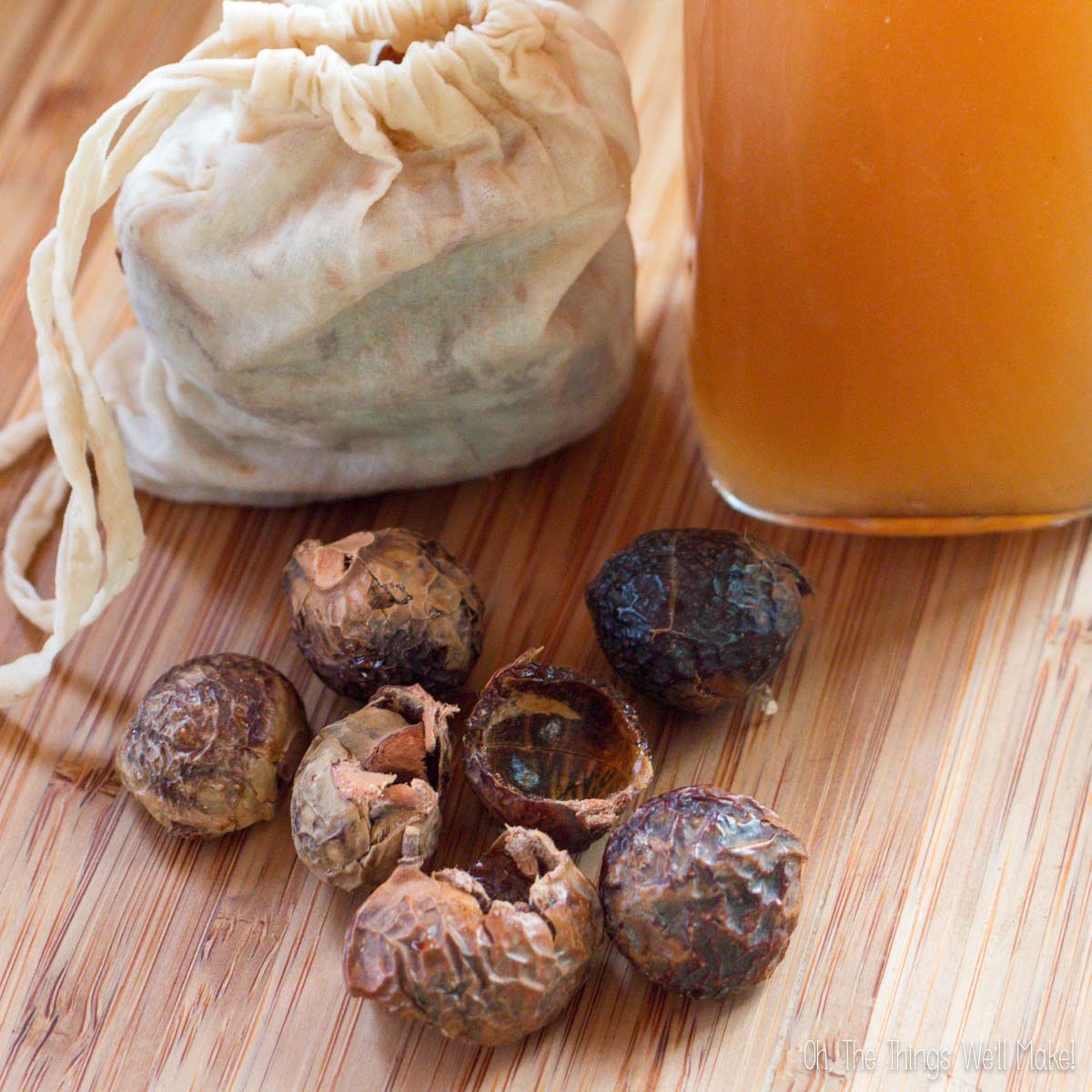
Soap nuts are the dried fruits of trees in the Sapindus family. They naturally contain saponins, which makes them useful as a gentle cleanser.
They don’t produce a lot of foam, but they can still be used for things like laundry or very mild hair and skin cleansing.
You can use them whole in a cloth bag for laundry, or steep them in warm water to make a liquid that can be used right away. The liquid doesn’t keep well, so it’s best to make small batches or freeze what you won’t use.
Liquid Yucca Extract
Liquid yucca extract is another plant-based ingredient that contains natural saponins.
It can be added to gentle cleansing products, but it’s also commonly used in gardening to help water and nutrients spread more evenly through the soil.
Shikakai powder
Shikakai is a plant-based powder traditionally used for hair care. It contains natural saponins and has a naturally low pH, which works well for hair.
It’s usually made into a paste with water and applied to the hair, then left on briefly before rinsing out.
It doesn’t lather much, but it can be a good option if you’re looking for a very gentle, traditional-style cleanser.
Soapwort
Soapwort is another plant that has been used for centuries as a natural cleanser.
It’s typically used as an infusion, which can then be used for washing skin, hair, or even delicate fabrics.
Final thoughts
There isn’t one “right” surfactant or combination to use. It depends on what you’re trying to make and how you want it to feel.
If you’re just starting out, keep things simple. Choose a couple of mild surfactants, try them out, and adjust as needed based on how your skin or hair responds.
Originally published on September 17, 2018. This post has been updated and expanded to reflect what I’ve learned since then.
Please respond,
I would like to make a mild moizturising shampoo for dry curly hair and I have only access to these suffactants: SCI, coco glucoside, cocamidoproply betaine and carpal glucoside.
Because of cost issues I can only pick two out of these, please recommend what two would be great for this hair type and still produce excellent lather.
I also need help with thickening the product and the only gum I am accessible to is Xanthan gum, I heard it can give a tacky feeling to the products, will 1% be enough?
I also have access to glyceryl stearate, poly quat, centrimonium chloride. Which of these products can I add for thickening or moisturising benefits.
Thank you
Hi Ruqayyat,
I don’t know. SCI is an anionic that cleans pretty well and gives good lather. You could combine with either coco glucoside (non-ionic) or cocamidoproply betaine (amphoteric) depending on your water type, etc. Either would be fine, though, for most cases. (I’ve never worked with carpal glucoside, so I don’t know much about it.)
For thickening, you’ll have to experiment. I usually use xanthan. (Take a look at my shampoo recipe for an idea of how much to use- that said, the amount needed can really depend from xanthan gum to xanthan gum. They aren’t all the same.)
SCI can by thickened with salt, I think. Perhaps try that first. (I use salt to thicken my homemade laundry detergent, and I love it!) The feel is better and it’s more stable than xanthan if you can thicken with salt. Not all surfactants can be thickened with salt, though.
Cetrimonium chloride is cationic and, thus, great for conditioning. I’ve never worked with the other two. I’d have to research more about how they are used.
Hello, I want to make a milk shampoo for dey curly hair. Can I use a blend of coco glucoside and cocamidoproply betaine only? And will it produce enough lather?
Also can you please tell me what ASM to use them at.
Thank you.
Hi Ruqayyat,
Yes, you could try using a mix of those two surfactants. (I used those in my baby wash and shampoo recipe.)
You could take a look at that as a starting point for a mild shampoo, and then increase, as needed, for adults. (Adding more will help add slightly more lather, of course.)
Where can I purchase surfactants that are vegetable based and not from coconut?
Hi Melissa,
That’s a great question, but it’s really one that I, unfortunately, don’t have an answer for.
I’ve asked in several places this very same question myself, and can’t really get a straight answer. You’d have to talk with each individual supplier and ask because even the same surfactants may have be derived from different plants depending on the manufacturer.
I haven’t been able to find any surfactants that don’t use either coconut or palm. (And, even if you are OK with palm, I can’t really name any without coconut.)
Luckily I don’t have issues with coconut, but I’ve been hearing from more and more people with severe coconut allergies, so I’d love to be able to recommend something to them as well.
So, if you ever do find something, I’d really appreciate it if you would let me know so that I could help other people!
Hi Tracy,
I made shampoo and conditioner today for the first time and used foaming apple as the surfactant for the shampoo. However, I did a straight replacement in grams of the foaming apple which amounts to around 45% of the recipe and when I double-checked the foaming apple says 1-25% suggested use. (I’m still remembering everything to keep track of. Sigh.)
Is this an issue where I should just try again w/ a new batch of shampoo or does it not matter a ton that I’m over the recipe %?
Hi Carolynn,
The only problem I see with having used too much surfactant is that it will be more cleansing. You’ll really end up with a shampoo that is more cleansing than it needs to be.
There are ways to fix that. You could dilute it with more water. If you do that, though, make sure that you also add more preservative to account for the extra weight of your product.
I hope that makes sense.
In any case, I’d suggest giving it a try. You can apply it to really wet hair and just work it in better. See how it goes.
If you feel it is too concentrated, you can always dilute it afterward.
Hey! I was wondering is there anyway to replace one surfactant with another? I am currently looking for a replacement for “Surfynol 104s”
Yes, you can sub different surfactants, but it’s best to stick with the same type. (Anionic, amphoteric, etc.- and liquid vs. solid.)
I’m not familiar with Surfynol 104s. You’d have to look it up and see what type it is and what the normal format is.
What are the general ph levels of the natural surfactants like soap nuts etc?
Hi Erin,
I’m not sure. They probably all have different values. I’ve seen soap nuts said to have a pH of 4-6, though, which is generally good for hair and skin.
Hi Tracy,
Very useful article. I’m learning on producing naturally derived surfactants and create an impact to the society.
The harsh cleaners and chemicals used currently are distorting the marine life. And young entrepreneurs like you and me have to take charge and prevent this from happening. Can you please connect ? There’s more learning from you and I hope you can guide me and be a part of the clean revolution.
Regards,
Yash
This is a very interesting article.
I am currently experimenting with surfactants blended with oil and lye based liquid soap. I am hoping to get the best of both worlds, a shower gel that I can wash my hair with and not have to use an acid rince.
Have you tried a combination bar or liquid?
Hi Louise,
I’ve considered it at times, but never really actually tried it.
My main issue with the idea is that soap is said to fall apart when brought down to a pH near neutral. It’s normally at a pH of 9 or above.
When I use other surfactants, it’s normally because I want to use a product with a lower pH- like for a shampoo.
So, it hasn’t really made a lot of sense for me to use them together. I use soap for products where the pH isn’t an issue- and otherwise use other surfactants.
I hope that makes sense.
When you have the right pH for a surfactant blend, there is no need for an acid rinse.
Hi
sodium coco sulfate is not natural. Like all sulfates it’s synthetic and very similar in composition to sodium lauryl sulfate
Yes, this can be tricky and controversial, as what one calls “natural” isn’t “natural” to everybody.
In places where there is a certification for “natural” products, this is generally allowed because it is allowed in organic and ECOCERT products.
This isn’t a surfactant that I personally generally use either. I did buy a small amount to test it out, but haven’t really used it much yet.
I tend to stick to others myself, but it is another option.
Hi Tracy. I am allergic or react to every single shampoo natural or not and am getting desperate. There was one single shampoo I used to use which was absolutely amazing and my hair and scalp used to party every time I used it. Then the company discontinued it and I am itching, scabbing and greasy hair with everything I have tried. It’s unbearable.
I have finally managed to source everything from the ingredients of this particular shampoo, but, as a complete beginner, having researched all over the internet as to how best to make it, I still don’t feel confident of measurements of each ingredient. I know I will probably need to replace a couple ingredients: methylparaben and another Cocomide DEA 85%…the rest is natural which I have sourced as far as Australia…I don’t know how much of each ingredient to put in and what alternatives to use. Are you able to help? Do you offer consulting sessions… I am absolutely desperate!
Many thanks! Venetia
Hi Venetia,
Why don’t you send me an email to [email protected] with a link to the particular shampoo you are trying to recreate (or a list of ingredients and other information.)
I can’t make any promises- especially since without trying out the product, I have no idea what I’m aiming for. That said, I can try to help somewhat.
Venetia, I have coconut allergies that turned out to be at the root of my long standing problems with hair fall, breakage, and scalp issues from conventional shampoos. This is because coconut derivatives are in EVERYTHING from toilet paper to makeup, and everything in between. It started with occasional mystery rashes on the backs of my hands that we eventually traced to whenever I used “foreign” hand soap in a public bathroom, but over the years it has accelerated due to continuous and increasing exposure to coconut derivatives as they started showing up in more and more different products, in greater quantities. At one point I had a bad case of seborrheic dermatitis on my scalp from coconut exposure. My hair loved the shampoo but it hated my scalp.
Once I figured out this was a full-blown allergy and not just “sensitivity” or due to bad shampoo that didn’t get my scalp clean, and stopped using all commercial products altogether (that’s only been a couple of months ago), my scalp has healed, I get far fewer rashes (still get them from time to time as the allergy worsens and things that never bothered me in the past now cause anything from uncomfortable rashes to full blown painful hives), and I’m feeling better overall. I’ve been doing herbal hair conditioning rinses for awhile so having to switch to herbal hair WASHES wasn’t as great a leap as it might otherwise have been.
But I have had to go to making my own herbal hair washes as well as the conditioning rinses, and using 100% olive oil bar soap which I can fortunately buy locally. I may yet have to turn to making my own soap, and I’m definitely on the lookout for an effective coconut/palm-free laundry detergent.
I balked at going the herbal route at first because (a) herbalism involves a whole heapin’ lot of woo, (b) most recipes online are pretty dang vague and (c) a lot of the recipes for herbal hair care that got the most play involve packing herbal mud into your hair and then washing it down the drain which is messy, expensive, and can clog up your plumbing.
I have found soapnut based herbal rinses (brewed as “teas”) to be my most effective and efficient alternative to commercial products. There is a learning curve, and there is initial investment required for the herbal powders involved. I use 11 in my version, some people use more. I have found that recipes involving only 3 or 4 different herbs generally to be insufficiently cleansing, overly drying, or otherwise ineffective.
Here is the recipe I based mine off. Note that she uses this as a mud pack for hair. Make a tea instead. Keeping in mind that some of the ingredients are either hard to find here, impossible to get sufficiently fresh, and/or do not work well as a tea (curry leaf, for instance, contains volatile substances that cook right out in no time flat so I don’t use it in my herbal hair rinses that must be brewed/cooked).
https://www.paticheri.com/2019/03/13/how-to-make-your-own-herbal-hair-wash-powder/
I modified her recipe as follows (I use all powders as those were easiest for me to find):
• 8 parts Shikakai
• 1 part soapnut
• 1 part amla
• 4 parts hibiscus
• 1 part fenugreek seed (ground rather than whole)
• 1 part rose petal powder
• 1 part aloe vera powder
• 1 part tulsi
• 1 part brahmi (Bacopa monniera, not to be confused with the gotu kola aka “brahmi”)
• 1 part bhringraj
• 1 part neem
Vetiver is not easily available so I left it out. DItto arappu, which is hard to get sometimes even within India. It’s use in hair care is virtually identical to shikakai which is easy to find (and cheaper by a whole lot) so I just subbed more shikakai in instead.
Curry leaf is too volatile for a brewed hair rinse. Gotu kola is not the “brahmi” typically used for hair care and is harder to find than the more widely used Bacopa monniera. It may work but I already had the Bacopa monniera version. Flour is typically used in a hair mask to absorb oil, it has no use in an herbal wash. If you did want to use this as a mud mask for your hair, almost any type of flour would do, Europeans typically used rye or barley flour for this , sometimes whole wheat or oat flour.
The last 4 ingredients are the most easily dispensed with, although if you are having scalp issues I would still suggest using the neem as it helps to heal that. You may be able to get away without the rose petal powder and/or the aloe vera leaf powder as well if you fiddle the fenugreek/hibiscus (as in increase one or both slightly) but DO KEEP IN MIND, I’ve already significantly departed from the original recipe and balance IS important.
A lot of people try soapnut hair washes and complain it is too drying and that is so, because they are using pure soapnut or a 2:2:1 blend of soapnut/shikakai/amla and nothing else (often they don’t even use the amla). The rest of the ingredients are there for conditioning effect so your hair doesn’t get too dried out by vital cleansing ingredients. Shikakai is conditioning as well as cleansing, amla can be drying as well as conditioning, everything has to work together synergistically.
I buy mostly MB Herbals powders from amazon but an herbal supply shop could provide most or all of these. The powders are much too fine for a tea ball so I take full size coffee filters intended for drip coffee makers to make a packet. I mix the powders well in the indicated proportions using 1 part = 1 tsp. When I settle on a final version I’ll make more but for now I only make a cup or so of the powder at a time. Use ground fenugreek seed because the whole will soak up so much water, the seeds swell up huge and they WILL break the bag. Don’t put more than a 2 or 3 T of your powder mix in a packet, you need to leave room for the powders to absorb water and swell. 2T max if fenugreek is involved. Tie the coffee filters up into little packets using 100% cotton twine (any polyester or other artificial fiber may melt in the pot).
I use a cheap coffee maker used only for this purpose to brew my rinses. I put 2 packets of powder in, fill with warm water. Its a 12c coffee maker which in reality is 7.5 REAL cups (not quite 2 qt) given that a coffee-maker-cup is only 5 oz. Put it on the burner on warm. It has a 2 hour autoshutoff. I usually punch it back on 2 or 3 times. This is probably overkill, online sources seem to converge on a 30 min cook time as the most appropriate but they do actually bring it to a boil. On the coffee maker, it never gets to a boil so a little longer is probably warranted but the 6 to 8 hours I’ve been doing is probably NOT warranted, LOL!
When its “done”, for however long you chose to brew it, just toss the herb packets, let the “tea” cool, then freeze most of it. I use the mini ziploc containers with the screw on lids (4 oz) or the small size (8 oz) and only take one at a time out. It ends up making about a quart to a quart and a half once you account for evaporation and the water that the powder sucks up.
This stuff will mold if left out more than a few days. In winter I can get away with a week or two at 60F room temp but in the summer (no AC here) only 2 or 3 days. So freeze most of it, and keep whatever you are using in the next few days refrigerated.
I have observed that this works better when it is warm (about body temp so around 95-100F) rather than straight out of the fridge. No need to reboil it but warming it slightly before use may increase its efficacy.
Application is easier if you have it in a pour or squeeze bottle (the ziploc containers I use in the freezer were cheap and great for the freezer, but not that great to try to directly pour hair wash out of onto your head in the shower, LOL!). Some people freeze in ice cube trays, then they can pop out however many cubes they want, when they want them.
If insufficiently cleansing, try warming it (as mentioned above); or apply it to dry hair (applying it to wet hair will dilute it); or add a very small amount of white vinegar if your water is alkaline (pH 8 or higher). If your water is hard, try using distilled water instead of tap water. Use a shampoo brush – round thing with soft silicone fingers – to get your scalp clean. Comb through your hair with a wide-space double tooth comb or similar (mine was made by Conair and cost me $5 at Target). Let it sit in your hair for at least 5 mins, up to 15 mins if necessary. Rinse out. You’re done.
You do not need to stand in the shower and scrub your head trying to work up suds. This WILL NOT lather to any significant degree. Its actually way quicker than using conventional shampoo and conditioner, I was shocked at how quickly I was done the first time I used it. Yeah, it will usually work better if you let it sit in your hair while you finish up doing other things in the shower, but so far I’ve found that unless I oil my hair prior to the wash, just the time it takes to apply it and comb it through is enough. I’m still working it out but it ends up being way easier and more effective than I would have thought.
DO NOT GET IT IN YOUR EYES. Soapnut will burn if it gets in your eyes, really really burn. For this reason don’t use it on little kids.
Hi Kalypso,
Thanks for the detailed comment.
I was also going to caution about getting the shikakai in the eyes as it can also burn.
During our lockdown period here in Spain, I only used shikakai and amla powders to wash my hair for around 2 months. It worked out much better than I imagined and I was very happy with how it left my hair.
I have consulted with the tutor in one of the haircare product formulation classes I’m in, and she agreed that it’s very hard to find surfactants without coconut. You’d have to talk to each supplier to make sure that coconut isn’t used in the making of it- as it can depend on the supplier.
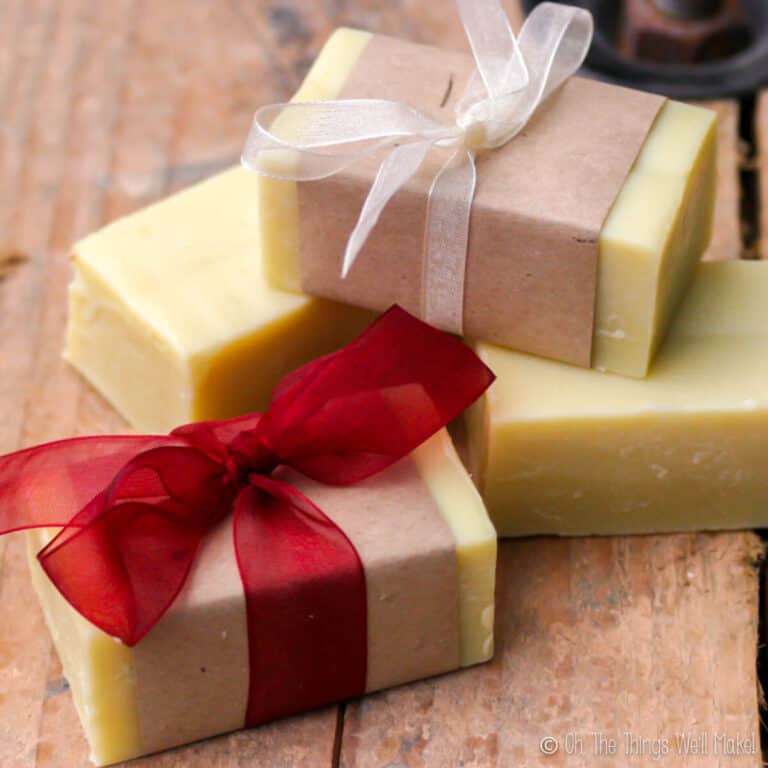
I’m not a fan of using soap on the hair as the high pH can dry hair. That said, if you are looking to make an olive oil-based soap, I have a recipe on the blog for pure Castile soap. The Aleppo style soap would be another non-coconut oil alternative.