

A beginner’s guide to natural surfactants for DIY skincare and haircare
Learn how to use natural surfactants in shampoos, body washes, and facial cleansers. A simple, beginner-friendly guide.
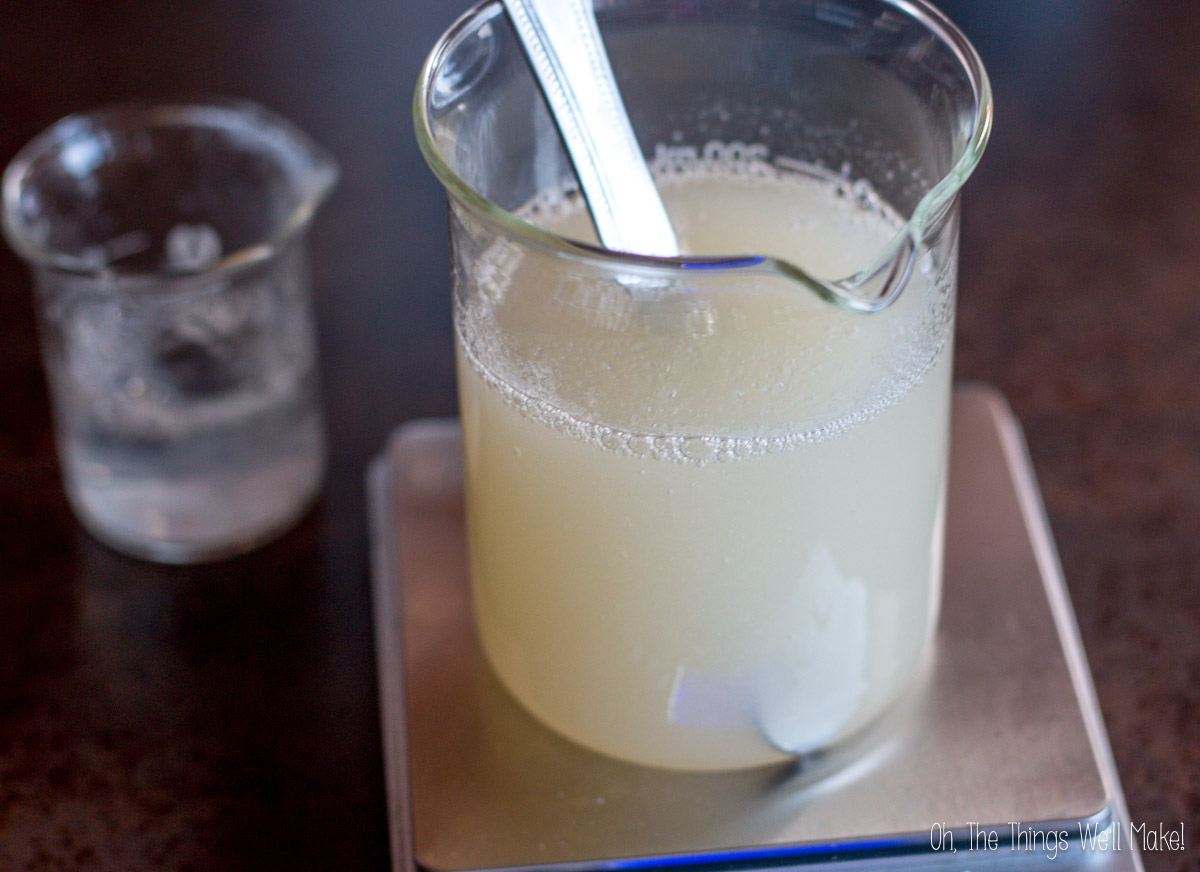
Trying to avoid SLS or other harsh cleansers in your homemade cosmetics? Natural surfactants can be a gentler option for making shampoos, body washes, facial cleansers, and other rinse-off products.
The tricky part is that there are quite a few options, and they don’t all behave the same way. Some are better cleansers, some are milder, and some help improve the feel and foam of your final product.
What is a surfactant?
A surfactant, or surface-active agent, is an ingredient that changes the way liquids behave at a surface. In simple terms, it helps water spread out instead of beading up.
Surfactants also help water interact with things it normally wouldn’t mix with, like oil, grease, and dirt. That’s what makes them so useful in cleansing products.
You’ll find surfactants in all sorts of everyday products, including shampoos, body washes, facial cleansers, toothpaste, and even household cleaners.
If you want a more technical definition:
(A surfactant,) also called surface-active agent, (is a ) substance such as a detergent that, when added to a liquid, reduces its surface tension, thereby increasing its spreading and wetting properties. (Encyclopaedia Britannica)
What do surfactants do (and how do they work)?
Surfactants are used for a variety of purposes, but in most DIY cosmetics, their main role is cleansing.
They help water spread more easily and allow it to interact with oils, grease, and dirt so they can be rinsed away. Depending on the type, surfactants can also help create foam, stabilize mixtures, or improve the texture of a product.
Some surfactants act as emulsifiers, helping oil and water stay mixed. Others act as solubilizers, allowing small amounts of oil (like essential oils or fragrances) to disperse in water-based products. Some increase viscosity, making a product thicker, while others make it thinner.
Why does that matter?
If you’ve ever sprayed water onto a surface like glass, you’ve probably noticed that it beads up instead of spreading out. That’s because of surface tension, which causes water molecules to stick to each other.
For cleaning, though, that’s not very helpful. You want the water to spread out and come into contact with as much of the surface as possible. You also want it to be able to grab onto oils and dirt.
That’s where surfactants come in.
How surfactants clean (micelles)
Surfactants have two parts:
- a water-loving (hydrophilic) head
- an oil-loving (lipophilic) tail
When added to water, they organize themselves into structures called micelles.
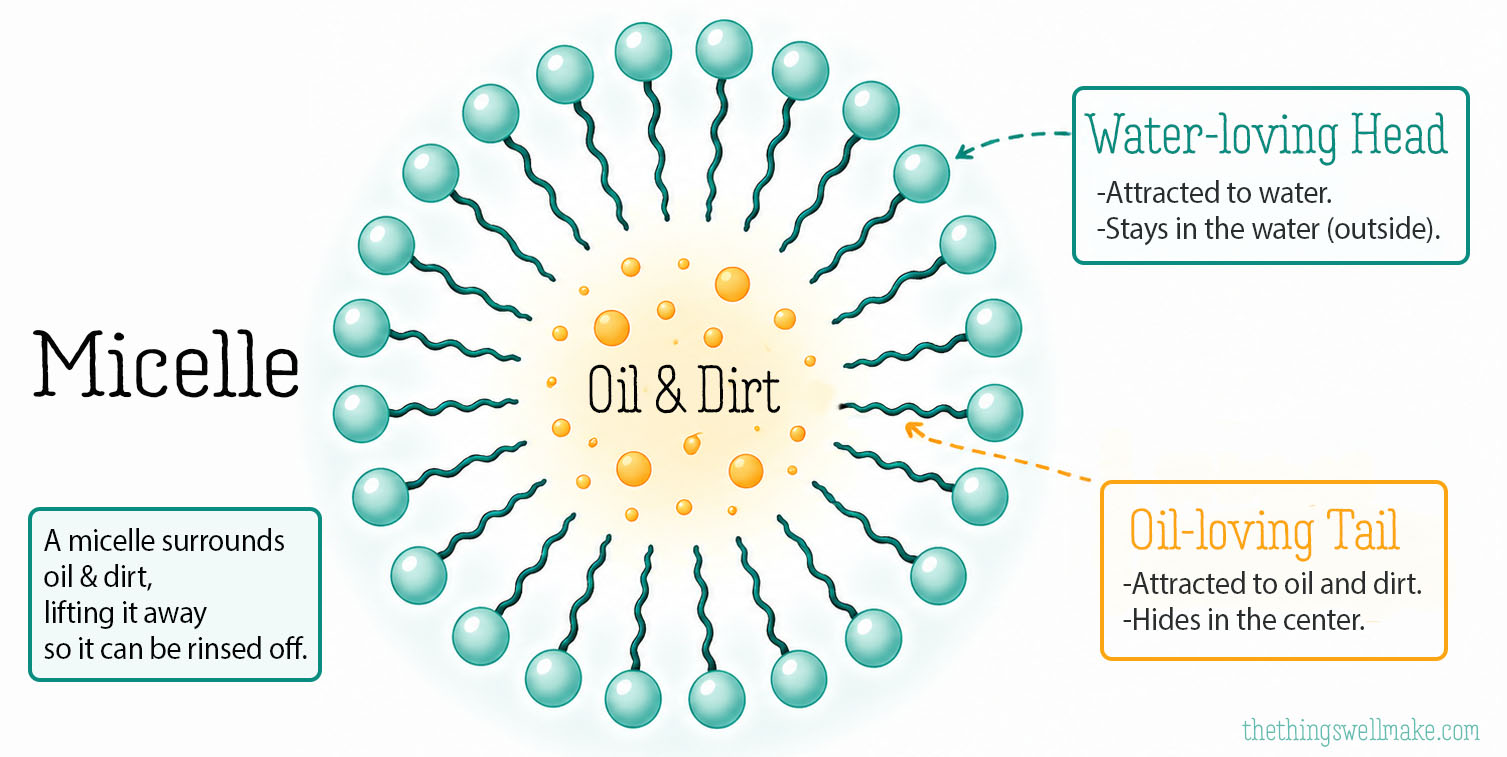
Inside a micelle, the oil-loving tails point inward, trapping oils and dirt, while the water-loving heads stay on the outside, interacting with the water. This allows grease and grime to be lifted away and rinsed off with water.
This is why surfactants can remove oily dirt with water alone. The oil gets trapped inside the micelle, while the outside interacts with the water, so everything can be rinsed away easily.
Hot water can improve cleaning because it helps melt fats and oils, making them easier for the surfactants to trap inside the micelles.
Types of surfactants
There are four main types of surfactants. They’re classified based on the charge of their water-loving (polar) head.
Some have a negative charge (anionic), some have a positive charge (cationic), some have no charge (nonionic), and some can switch depending on the pH (amphoteric).
Each type behaves a bit differently, which is why most formulas use a combination rather than just one surfactant.
Anionic surfactants (cleansing and foam)
Anionic surfactants are the most commonly used in cleansing products because they provide strong cleaning power and plenty of foam.
You’ve probably heard of sodium lauryl sulfate (SLS) or sodium laureth sulfate (SLES), which are common examples. Soap is also an anionic surfactant.
Because they clean so well, they can sometimes feel drying or irritating when used alone. For that reason, they’re often combined with milder surfactants to create a more balanced, gentler product.
I do use SLS in things like my laundry detergent recipe, where stronger cleansing is helpful, but I don’t use it in my skincare or haircare recipes.
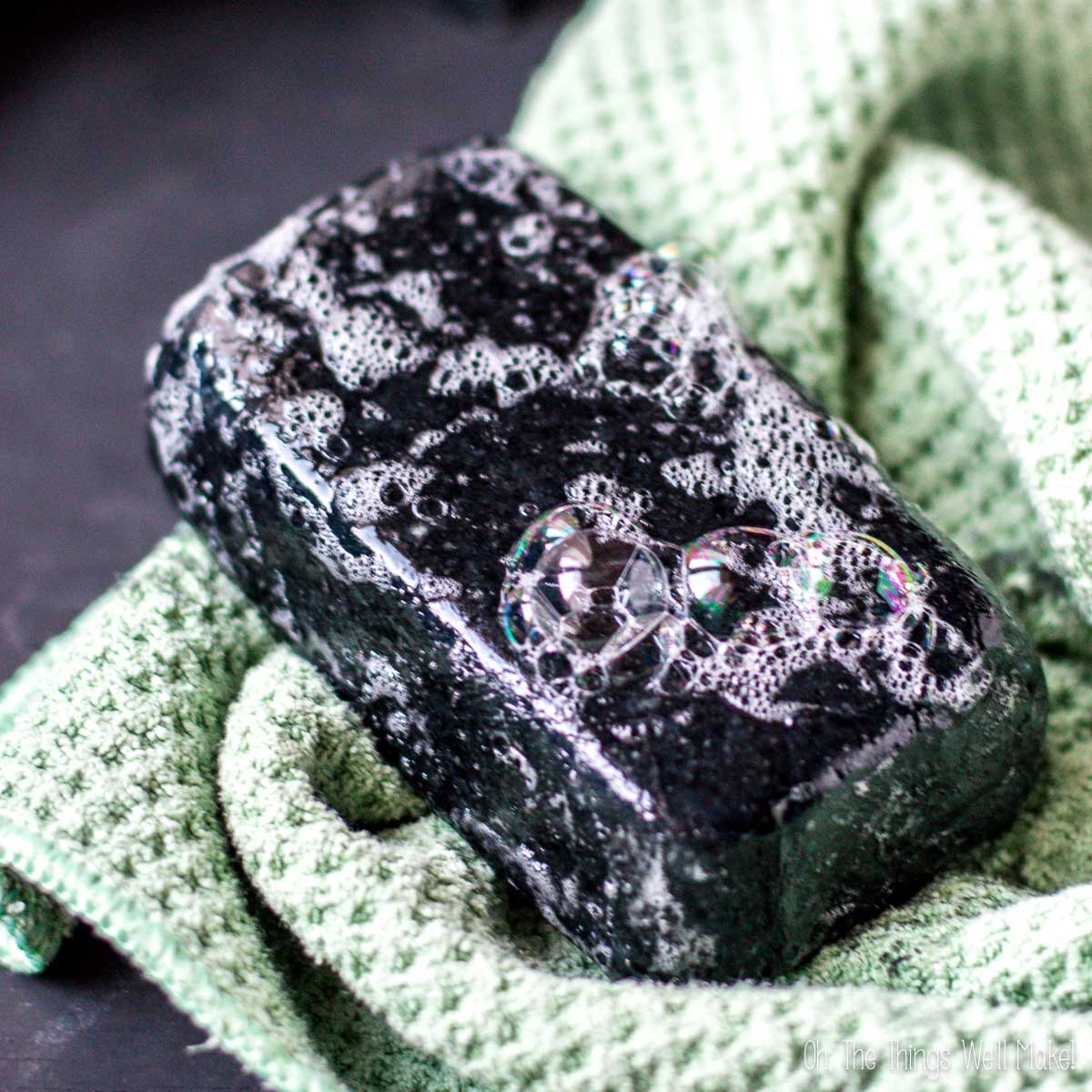
Nonionic surfactants (mild and easy to combine)
Nonionic surfactants don’t carry a charge, which means they work well with other types of surfactants.
They’re generally milder than anionic surfactants, but they also tend to have less cleansing power on their own. Instead, they help make formulas gentler and can make a product feel nicer to use.
Many sugar-based surfactants (like glucosides) fall into this category and are popular in more “natural” formulations.
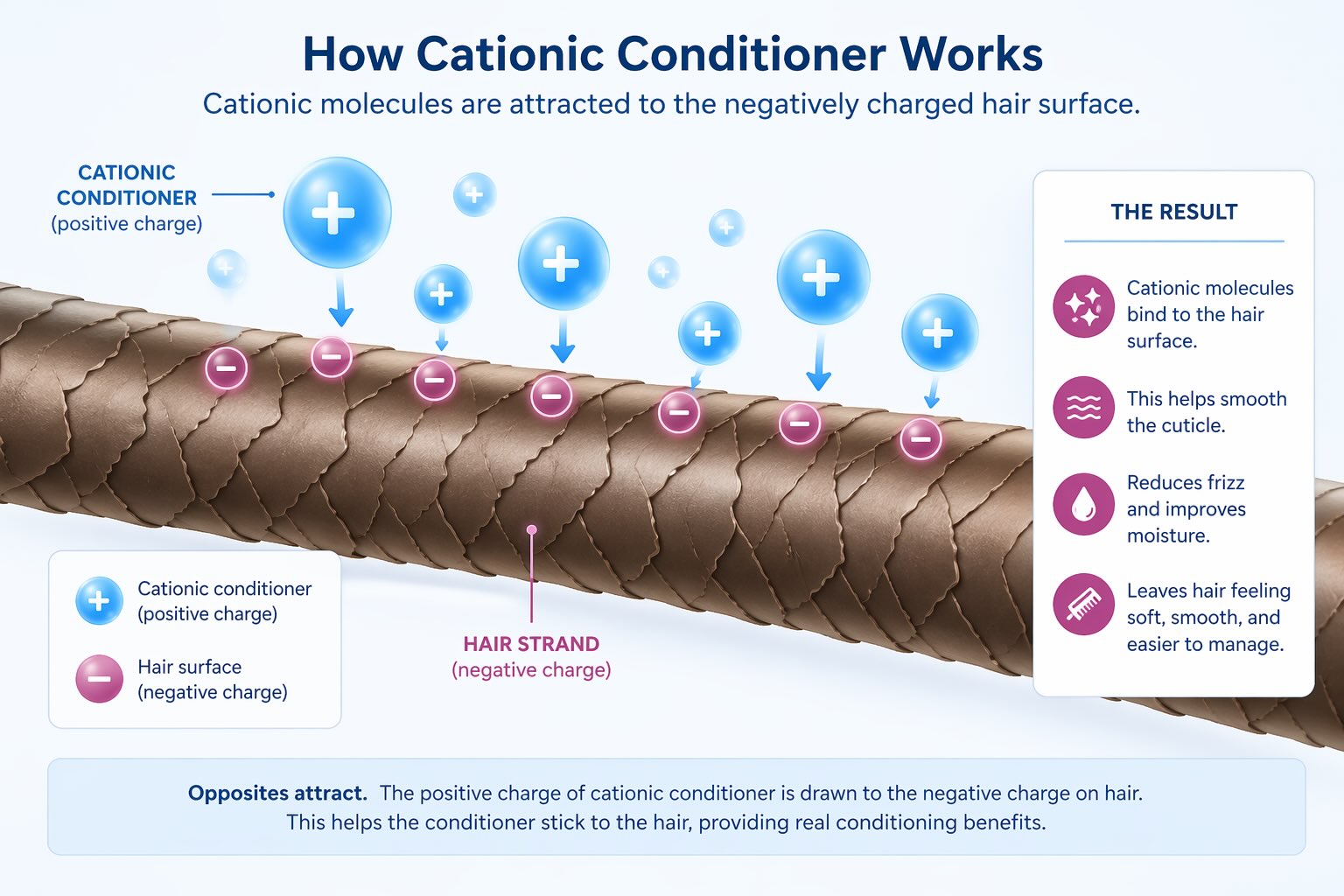
Cationic surfactants (conditioning, not cleansing)
Cationic surfactants carry a positive charge and behave very differently from the others.
They aren’t typically used for cleansing. Instead, they’re used in hair conditioners and anti-static products. Because hair has a slightly negative charge, these surfactants are attracted to it and cling to the surface.
This helps smooth the hair, reduce friction, and make it easier to comb. It’s also why a small amount stays behind after rinsing.
Cationic surfactants are not usually compatible with anionic surfactants, which is why conditioners and shampoos are used separately.
Amphoteric surfactants (very mild and flexible)
Amphoteric surfactants can act as either positively or negatively charged depending on the pH of the product.
They’re very mild and are often used to make formulas gentler. On their own, they don’t usually provide strong cleansing or a lot of foam, but they work really well when combined with other surfactants.
They’re especially useful when paired with anionic surfactants because they can help reduce irritation and make the foam feel nicer and more stable.

Natural surfactants and how to choose them
There are quite a few natural surfactants available today, and new ones seem to appear all the time. I’ve tried many of them, but here I’m focusing on some of my favorites, ones that are gentle, easy to find, and work well in simple formulations.
You can use these in everything from shampoos and body washes to facial cleansers and baby products.
Most cleansers use a combination of surfactants rather than just one. Anionic surfactants are often used when you need stronger cleansing or more foam, while amphoteric surfactants help make formulas feel gentler and improve the lather. Nonionic surfactants help keep everything mild and balanced.
Some formulas use all three, while others skip anionic surfactants entirely for a gentler result. If a cleanser isn’t removing enough oil or buildup, you can increase the total surfactant concentration or add a mild anionic surfactant for a bit more cleansing power.
Surfactants can also vary quite a bit from one supplier to another. The same name doesn’t always mean the exact same composition, and things like pH, concentration, and even the plant source can differ slightly. Because of that, it’s a good idea to check the details from your supplier, especially if you’re trying to avoid certain ingredients or know your skin reacts to specific things.
A quick note on “natural” surfactants
Some surfactants are sold as “natural” or ECOCERT-compatible, but that can vary depending on the manufacturer. If that’s something you care about, it’s worth double-checking with your supplier.
You can also look for surfactants sourced from certified sustainable palm (RSPO) or other plant sources.
Natural surfactants list:
Below are some of the surfactants I use most often. They’re all relatively easy to find and work well in simple formulations.
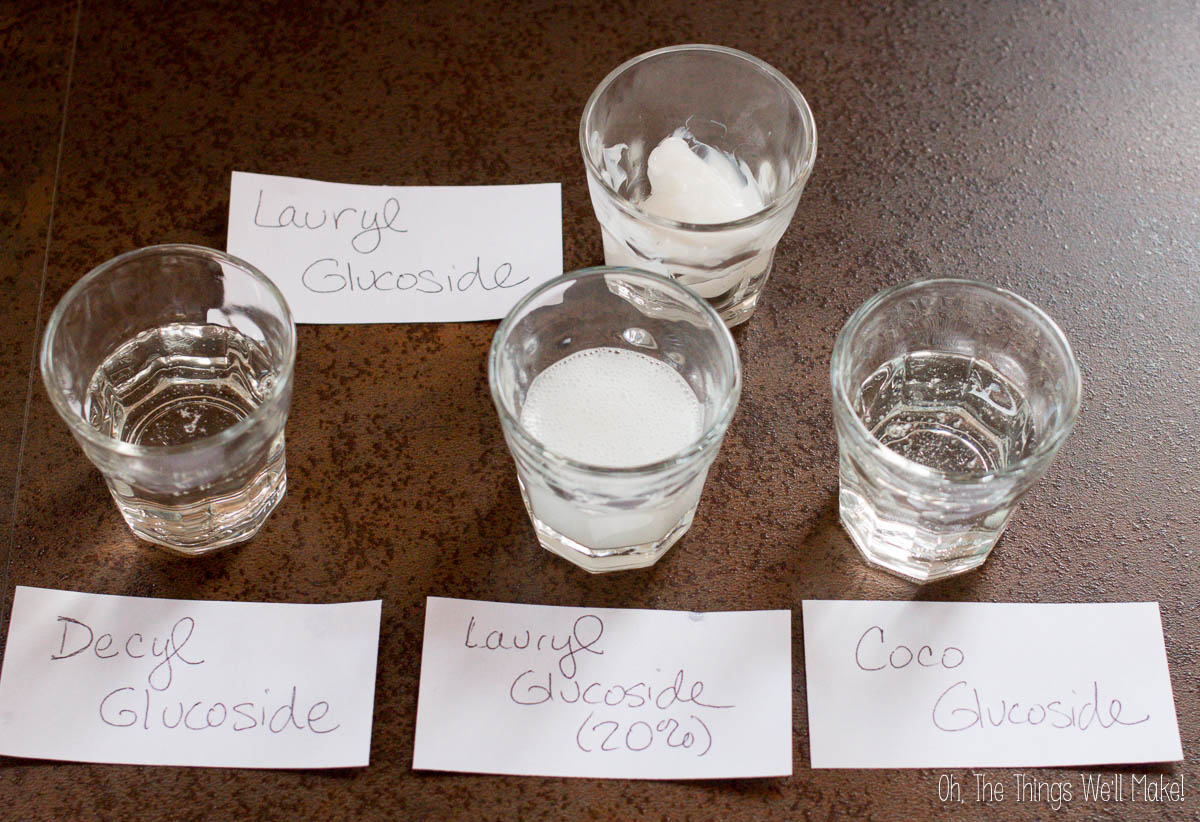
Coco Glucoside
Coco glucoside is a nonionic surfactant derived from coconut oil and sugars (often from corn or fruit). It’s a very gentle cleanser and is completely biodegradable, which makes it popular in more “natural” formulations.
It produces a decent amount of foam and works well in shampoos, body washes, and facial cleansers, especially when you want something mild. On its own, it can feel a bit thin, so it’s often combined with other surfactants to improve the texture and overall feel of a formula.
It has a relatively high pH (around 11–12), so you’ll usually need to lower the final pH of your product to bring it into a better range for your skin or hair. You’ll also need to add a preservative, since the final product won’t be self-preserving once diluted and adjusted.
If you’re new to working with pH, you can read more about how and why to adjust the pH of cosmetics here.
Decyl Glucoside
Decyl glucoside is another nonionic surfactant that’s very similar to coco glucoside, but with a shorter chain length.
It’s also gentle and biodegradable, and works well in shampoos, body washes, and baby products. Compared to coco glucoside, it tends to produce less stable foam, but it can help add a bit more viscosity to a formula.
Like other glucosides, it’s usually used alongside other surfactants to create a more balanced cleanser.
Lauryl Glucoside
Lauryl glucoside is another member of the same family, but with a longer chain length.
It tends to be thicker and produces more stable foam, although it can take longer to foam up. It’s still considered a mild surfactant, but slightly less gentle than the shorter-chain glucosides.
Depending on the supplier, it can be quite thick or even paste-like, so you may need to dilute it before using it in a formula.
Coco Betaine
Coco betaine is an amphoteric surfactant derived from coconut oil. It’s very mild and is often used to make formulas gentler.
On its own, it doesn’t provide strong cleansing, but it works really well when combined with other surfactants. It helps boost and stabilize foam and can make a formula feel less harsh on the skin and hair.
Because of that, it’s commonly added to shampoos and body washes to balance stronger surfactants or to improve the feel of milder ones.
It’s biodegradable, works over a fairly wide pH range (around 5–7 in finished products), and is often used in formulations designed for sensitive skin.
Sodium Cocoyl Glutamate
Sodium cocoyl glutamate is a very mild anionic surfactant derived from coconut oil and amino acids. It’s often used in facial cleansers and toothpaste because it cleans gently without being too harsh.
It doesn’t produce as much foam as stronger surfactants, but it still helps disperse oils and debris so they can be rinsed away.
Because of its mildness, it’s a good choice for products that come into contact with more sensitive areas, like the face or mouth.
Sodium Cocoyl Isethionate (SCI)
Sodium cocoyl isethionate (SCI) is a mild anionic surfactant derived from coconut oil. It’s usually sold as a fine powder, flakes, or small pellets and is commonly used in solid cleansers like shampoo bars and facial cleansing bars.
It produces a creamy, stable foam and feels much milder on the skin than many other anionic surfactants, which is why it’s so popular in “syndet” bars.
Because it’s solid and not very soluble on its own, it usually needs to be melted or worked into a formulation with other ingredients. It’s often combined with other surfactants to create a more balanced final product.
Disodium Laureth Sulfosuccinate
Disodium laureth sulfosuccinate is a mild anionic surfactant that’s often used when you want a bit more cleansing without being overly harsh.
Compared to stronger anionic surfactants like SLS, it has a larger molecular structure, which makes it less likely to penetrate the skin and cause irritation. Because of that, it’s often used in shampoos and body washes designed for sensitive skin.
It provides good cleansing and a nice amount of foam, so it can be helpful in formulas that need a little extra cleaning power or better lather.
That said, it’s not always necessary. In gentler formulas, you can still get good results using nonionic and amphoteric surfactants instead.
Some people have concerns about how this surfactant is produced, since trace amounts of byproducts like 1,4-dioxane can form during manufacturing. The EWG overview of Disodium Laureth Sulfosuccinate goes into more detail if you want to look into it further.
It’s still commonly used in milder formulations, but it’s something to be aware of so you can decide what you’re comfortable using.
Sodium Coco Sulfate
Sodium coco sulfate is an anionic surfactant derived from coconut oil. It’s usually sold in solid form and is commonly used in shampoo bars and other solid cleansers (syndet bars).
It provides strong cleansing and good foam, so it can be helpful when you need something that removes oil or buildup more effectively. Because of that, it’s often used in formulations meant to feel more clarifying.
It has a relatively high pH (around 10–11), so finished products are usually adjusted to bring the pH down to a better range for the skin or hair.
Even though it’s derived from coconut oil, it behaves similarly to other sulfate-based surfactants and can feel more drying than some of the milder options.
Plantapon® SF
Plantapon® SF is a blend of several plant-based surfactants, including sodium cocoamphoacetate, lauryl glucoside, sodium cocoyl glutamate, and sodium lauryl glucose carboxylate.
Because it already combines different types of surfactants, it’s a convenient option if you’re just starting out. You can use it to make gentle shampoos, body washes, and facial cleansers without having to buy and balance multiple individual surfactants.
It has a pH that’s already fairly close to skin-friendly levels (around 6.5–7.5), which can make formulation a bit easier.
Completely natural surfactants
If you’re looking for less processed options, there are also plant-based ingredients that contain natural saponins, which act as mild, nonionic surfactants.
These can be a good option if you want something very simple or closer to traditional methods. That said, they don’t usually clean as effectively or produce as much foam as the more refined surfactants listed above.
Because of that, they’re sometimes used on their own for very gentle cleansing, or combined with other surfactants to improve the final result.
These are quite different from the surfactants above, so it helps to think of them as a separate category.
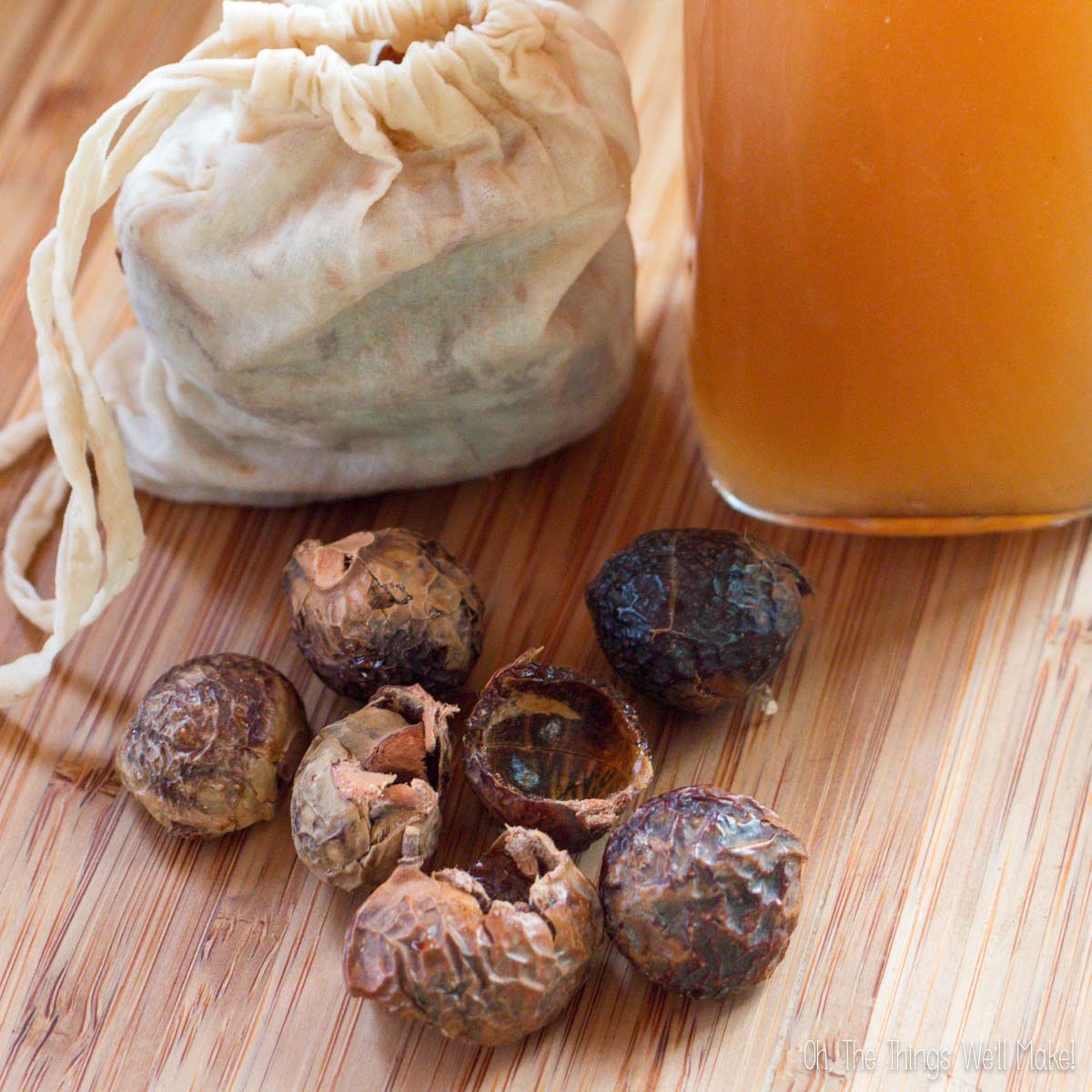
Soap Nuts (Soap Berries, Aritha)
Soap nuts are the dried fruits of trees in the Sapindus family. They naturally contain saponins, which makes them useful as a gentle cleanser.
They don’t produce a lot of foam, but they can still be used for things like laundry or very mild hair and skin cleansing.
You can use them whole in a cloth bag for laundry, or steep them in warm water to make a liquid that can be used right away. The liquid doesn’t keep well, so it’s best to make small batches or freeze what you won’t use.
Liquid Yucca Extract
Liquid yucca extract is another plant-based ingredient that contains natural saponins.
It can be added to gentle cleansing products, but it’s also commonly used in gardening to help water and nutrients spread more evenly through the soil.
Shikakai powder
Shikakai is a plant-based powder traditionally used for hair care. It contains natural saponins and has a naturally low pH, which works well for hair.
It’s usually made into a paste with water and applied to the hair, then left on briefly before rinsing out.
It doesn’t lather much, but it can be a good option if you’re looking for a very gentle, traditional-style cleanser.
Soapwort
Soapwort is another plant that has been used for centuries as a natural cleanser.
It’s typically used as an infusion, which can then be used for washing skin, hair, or even delicate fabrics.
Final thoughts
There isn’t one “right” surfactant or combination to use. It depends on what you’re trying to make and how you want it to feel.
If you’re just starting out, keep things simple. Choose a couple of mild surfactants, try them out, and adjust as needed based on how your skin or hair responds.
Originally published on September 17, 2018. This post has been updated and expanded to reflect what I’ve learned since then.
I just stumbled across your site. You have a very comprehensive knowledge of surfactants. Which is impressive. Wanted to offer my assistance to you if ever you have very technical questions on surfactant chemistry or applications. I have worked my entire career as a surfactant chemist (40+ years) and have multiple patents in this area.
Hi Frank,
Than you so much!
I really appreciate that! I may take you up on that offer someday! If you have anything you’d like to share with my readers, let me know. Feel free to write me at [email protected]
Hi Tracy!! Can you share your supplier? I’d like to purchase some surfactants from credible sources!!
Hi Candas,
I live in Spain, so I buy locally here.
If you tell me where you live, I can give you some ideas of the better places to buy (from what I’ve heard).
Feel free to email me at [email protected] if you feel more comfortable sharing your country there. 😉
Hello Frank!I m preparing a laundry powder detergent with the following ingredients and I would like your opinion. Sodium sulfate,sodium carbonate,sodium chloride,grinded vegetable origin soap, synthetic zeolite,cellulose gum, citric acid and magnesium sulfate.Thank you!
Hi Frank,
I make bath products, I wanted to switch to a more natural foaming agent. I want the maximum foam out of my bubble products but with the most natural agents. Which one or combination should I use?
Thank you.
Hi Frank!! I have many other questions in regards to surfactants! Would you mind answering a few of my questions please!?
Hello, I am looking for a natural emulsifier/surfactant that I could add to facial oil to make a self emulsifying cleansing oil for the ocm. What would you recomend? I just want it to help with the washing away of of the of the oil and not remove any natural sebum or mess with the acid mantle of the skin. Thank you!
Hi Amanda,
If you’re looking for a natural emulsifier for a cleanser, perhaps you could try Olivem. It’s an olive based emulsifier that is one of the more natural ones. One of the complaints with that emulsifier is that it can feel “soapy” to some people, but for cleansers, that’s actually not a bad thing and you can use it to your advantage. 😉
If you’re looking to have an oil cleansing feel, an emulsifier is probably the way to go.
If you do want to go with surfactants, though, you could maybe start out with really gentle ones like the ones I used in my micellar water recipe. You can use it with water as I normally do (but it’s gentle enough to leave on the skin too).
I use it every night lately. (And, yes, I tend to rinse it off.) 😉
hello-
I’m looking to purchase cationic surfactant for use with fabric dyeing –
do you know where I can purchase it?
thx!
Hi Eileen,
I’m sorry, but I’m not at all familiar with which surfactants are used for dyeing fabric.
I mostly use for hair products.
I’m looking to start making an all natural shampoo. I’ve been using the soap nuts + shikakai in my formula. But I find it’s too liquid. I’ve been thinking of adding crothix (to thicken) , guar gum + leucidal liquid SF (natural preservative). So would it be safe to add in coco betaine to make the shampoo lather better rather than the crothix? Or is this all wrong lol
Hi Ashley,
Shikai and soap nuts are normally used on their own to make a super natural shampoo that is mixed right before use without preservatives.
How are you using the shikakai? It’s normally in a powder form, and I’m not sure I’d want to add it into a “normal” shampoo as it is normally used in a different way.
For a shampoo, any extra “organic” ingredients (I’m talking anything food-like or plant-like) can greatly increase the risk of bacterial contamination (even when using a preservative).
You could make an extract of the soap nuts and add that, but I’m not sure how you would add the shikakai safely.
I would probably use the coco betaine as the main surfactant and experiment with adding some soap nut extract as supplemental. I’ve never worked with crothix before, so I don’t know a lot about it. I used xanthan gum to thicken my homemade shampoo.
Yes, you can use Leucidal. I’d recommend using it at 4% of the recipe if it’s a stand-alone preservative.
Hi- what surfactant would you recommend for toothpaste?
Great article btw.
I have a natural toothpaste at home that uses lauryl glucoside and sodium cocoyl glutamate and disodium cocoyl glutamate.
I tried using lauryl glucoside in one (not up on the blog yet) and found it gave off a strong flavor, but I think I added too much because it gave too much foam for me. 😉
Perhaps they are using a mix to avoid that or to use their synergistic properties to get a certain feel. I don’t know as I’ve never worked with the latter two.
Any of those should work, though. (As I’m sure any of the glucosides would be fine.)
Hi Tracy!
Quick question. I’m attempting to make a cleaning solution (and as basic as possible). My surfactant that I’m using is Caprylyl Capryl Glucoside (which is a nonionic). My question is, how many parts surfactant per vinegar is typically needed to make it a practical solution for cleaning?
Thanks!
Hi Evan,
While I haven’t worked with that particular surfactant, usually you would make up a cleaning solution of equal parts of water to vinegar. Then you really don’t need much surfactant.
So, let’s say you have 1/2 liter vinegar, 1/2 liter of water- you would probably add around 1/2 tsp. of surfactant maybe. You can play with adding more or less, depending on what you are cleaning and on the concentration of your particular surfactant.
I’m looking to make bath whip. It calls for sci, coca bet, glycerin, stearin acid, and germall. Can any one of these substitute for any of that?
Hi Starr,
Both Coco Betaine and Sodium Cocoyl Isethionate are mild surfactants that are on the more natural side. There is no need to substitute those out as they are great surfactants to work with.
The Germall is the preservative, the stearic acid is probably there to thicken it, and the glycerin is a humectant.
Hello!
Thank you so much for posting this! Super informative. What surfectant would you recommend for creating your own oil cleanser for your face? Or would you even need a surfectant?
Hi Raquel,
Check out my post for how to make micellar water. It should give you some good ideas. 😉
Hi Tracy
Great article. I was hoping you could recommend a natural surfactant for homemade toothpaste?
Best wishes
Andrew
Hi Andrew,
I’ve seen lauryl glucoside used in a lot of toothpastes so I’d think any of the glucosides would work fine. They probably choose that one because of it’s texture. It’s thicker than the others.
I’ve also seen sodium cocoyl glutamate used a lot, but I have no experience with using that.
Hi Tracy!
Any advice on which of the surfactants (or combo) are best suited for facial cleansers?
Hi Maggie,
I like the glucosides because they are very gentle!
You can see an example in my DIY Micellar water recipe. It’s a very gentle facial cleanser that you can use as a leave on product. I normally use ti and rinse it, though. 😉