

The Best Essential Oils for Cleaning and Disinfecting
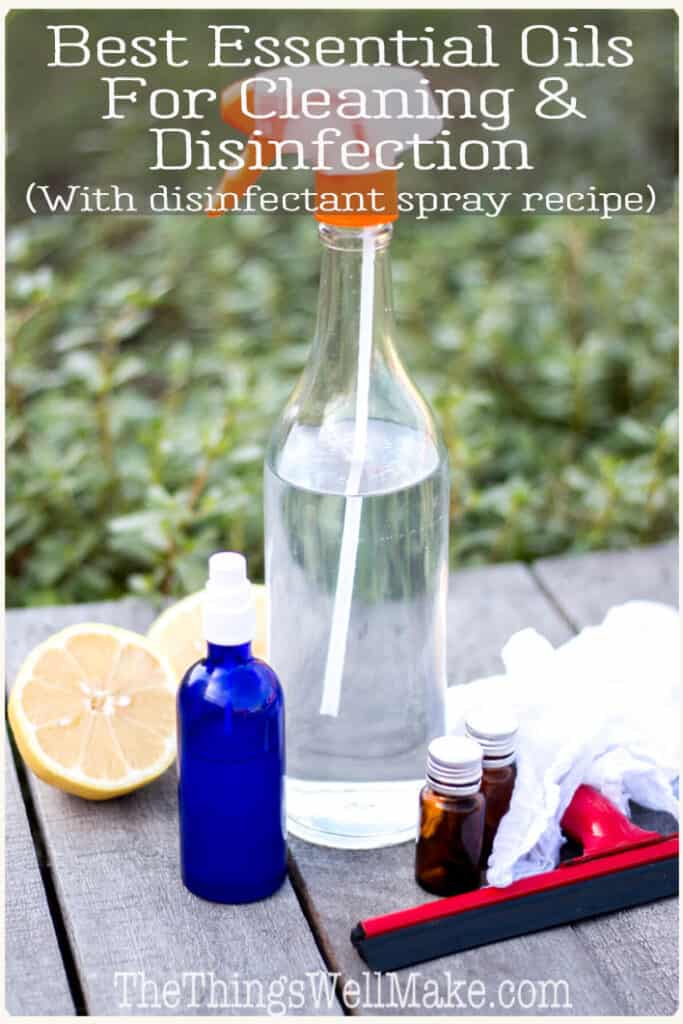
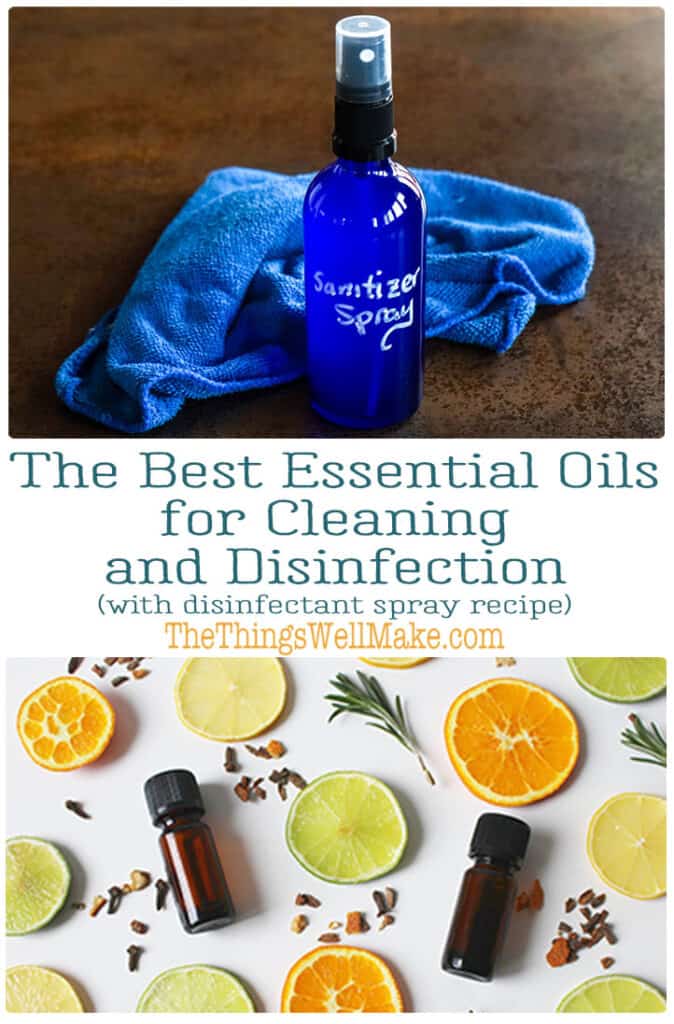
Clean and disinfect surfaces with this DIY disinfectant spray that makes use of some of the best essential oils for cleaning and disinfecting.
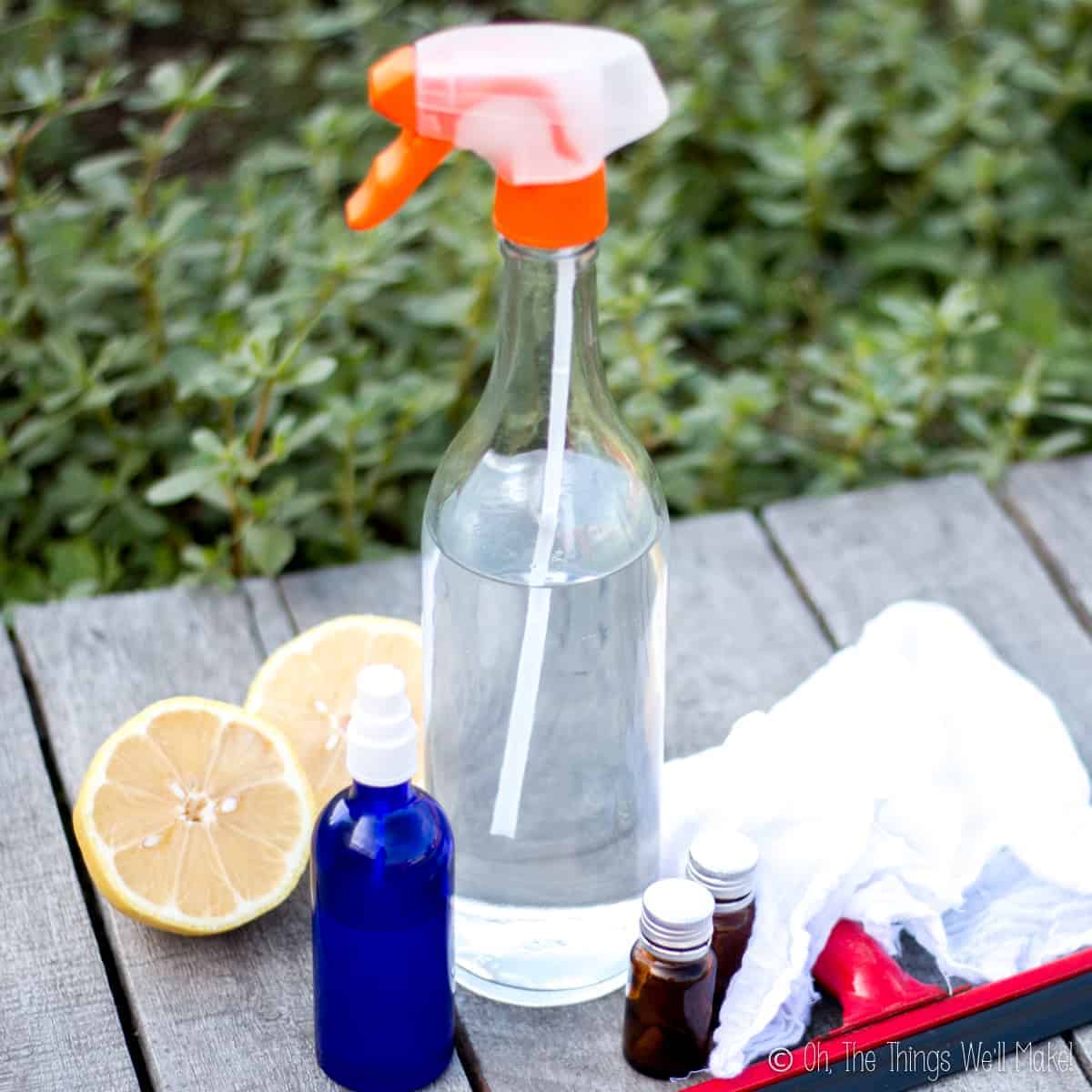
Antimicrobial properties of essential oils
When it comes to making natural cleaning products, essential oils are a great ally. Not only do they add a lovely fragrance, but they also have antimicrobial properties that can help boost the effectiveness of our cleaners and disinfectants.
Essential oils include aldehydes, phenolics, terpenes, and other antimicrobial compounds that make them effective against a variety of pathogens.
Depending on the oil, they can either inhibit bacterial growth or destroy bacterial cells. Some, like sandalwood and vetiver, are more effective against gram-positive bacteria. Others are more effective against gram-negative bacteria. Many (most?) also have antifungal properties.
Pretty much any essential oil has some amount of antimicrobial properties, but some are more popular than others for use in homemade cleaners and disinfectants. Today I’ll concentrate on some of the more popular inexpensive oils that can be used for cleaning and disinfecting.
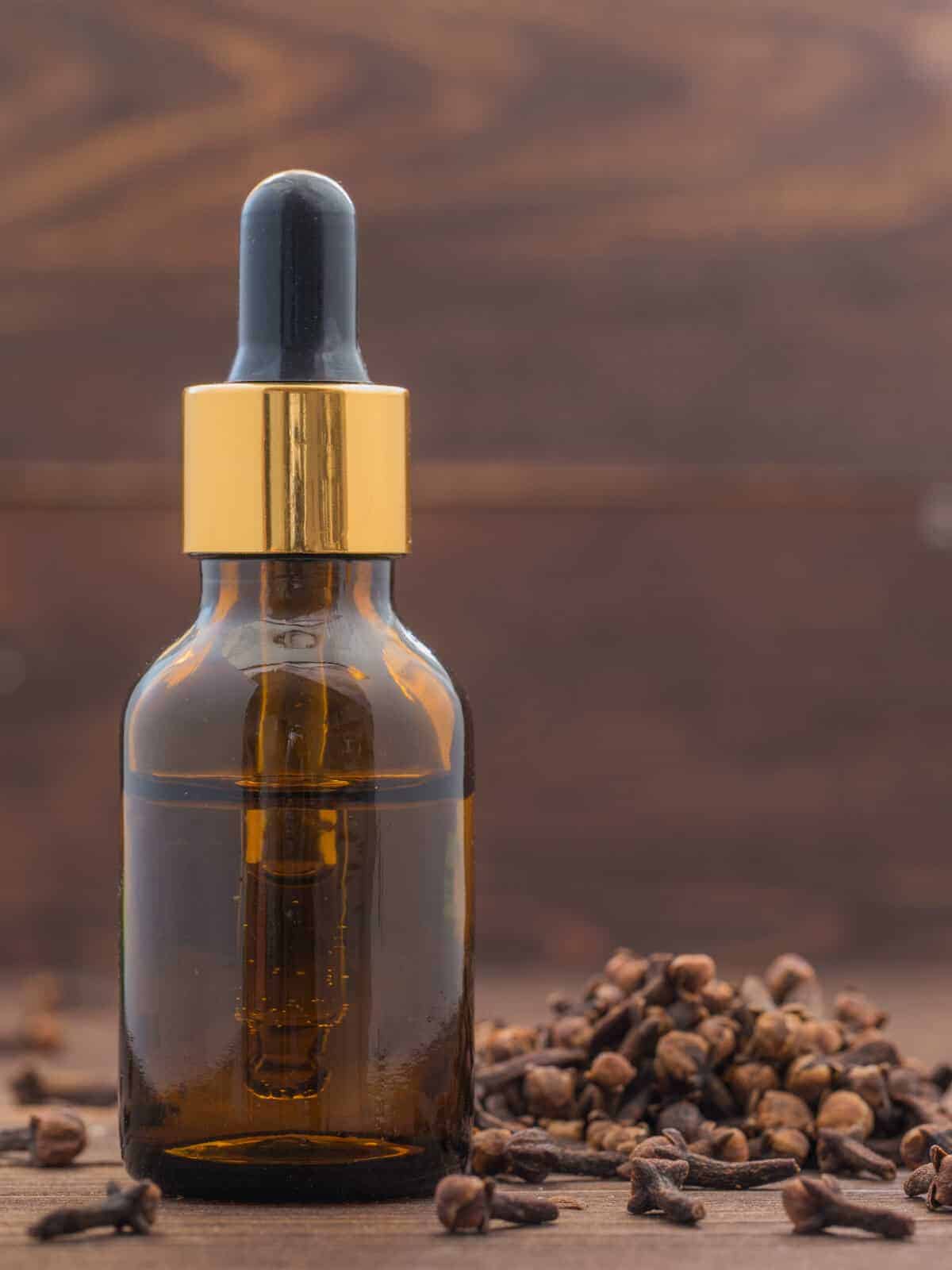
Clove essential oil
Clove essential oil is an effective antibacterial agent. It is between 80 and 95% eugenol, a phenol that interacts with the bacterial cell membrane killing it. Clove essential oil is known to be effective against Salmonella typhi, Staphylococcus aureus, and Pseudomonas aeruginosa.
The eugenol of clove oil is also anti-inflammatory and acts as a mild anesthetic, which is why it is also often used in dental care products. Zinc oxide eugenol is a type of dental cement and temporary filling material.
Clove oil is a great addition to dental care products. You could add it to a homemade toothpaste, homemade tooth powder, and/or a homemade mouthwash.
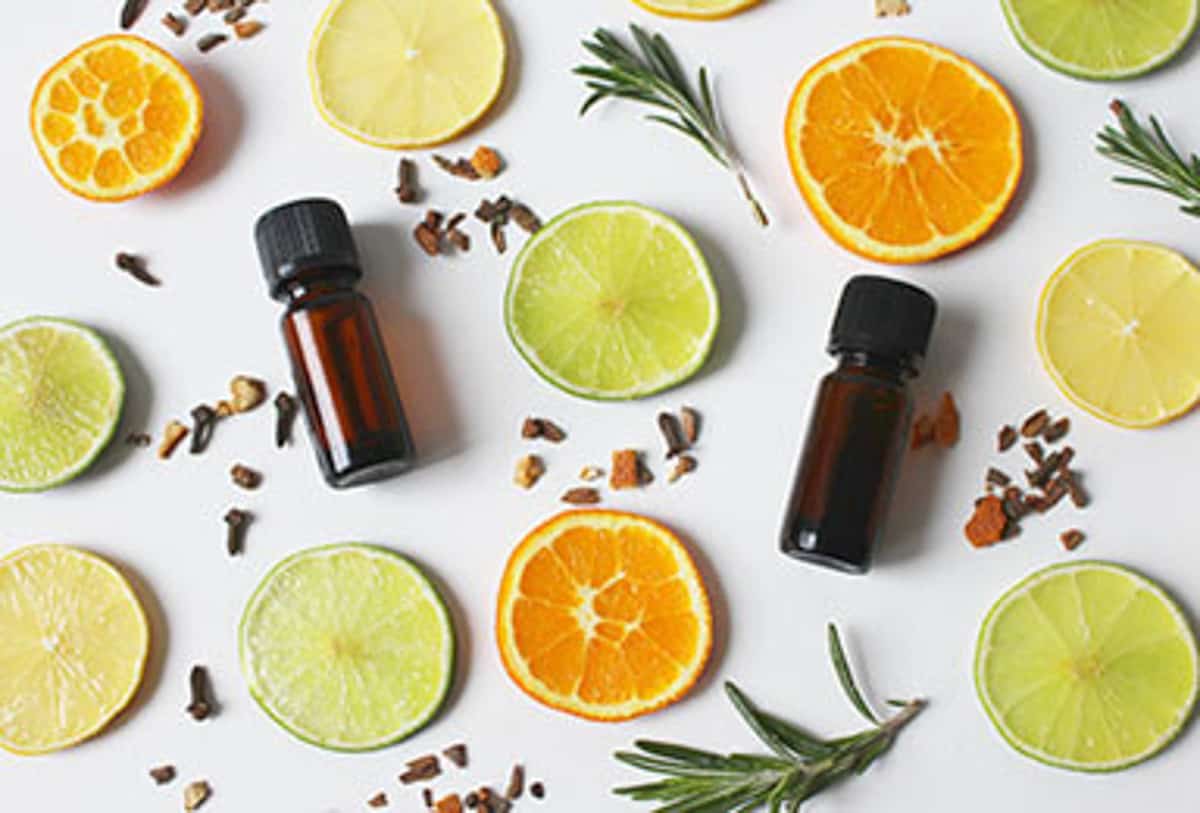
Lemon essential oil
Love the scent of lemons? Lemon essential oil is normally made by cold pressing lemon peels. Other citrus oils like orange oil are made and used in a similar way.
Lemon essential oil is very popular for homemade cosmetics and cleaners, not only because of it’s antibacterial properties. It’s also an inexpensive oil with an uplifting, energizing scent.
- Lemon oil is a great degreaser. I used to use it to help get grease stains out of clothing. (I’ve recently switched to using eucalyptus oil instead, though.)
- It also works wonderfully to remove residual adhesive from stickers and labels.
The scent of lemon essential oil pairs well with many of the other oils, making it a great addition to a homemade cleaner.
Peppermint essential oil
Peppermint essential oil has antibacterial properties against gram-positive and gram-negative bacteria. It’s also antifungal. Plus, it has a lovely and refreshing scent. Because of its refreshing flavor, it’s another oil that is perfect for use in oral care products.
- Use peppermint oil to help disinfect kitchens and bathrooms.
- Peppermint oil is said to deter wasps, spiders, and mice. Add a few drops to cotton balls and place them in areas with pest problems. (Add more oil every few days to renew the scent. (Or add it to a repellent spray.)
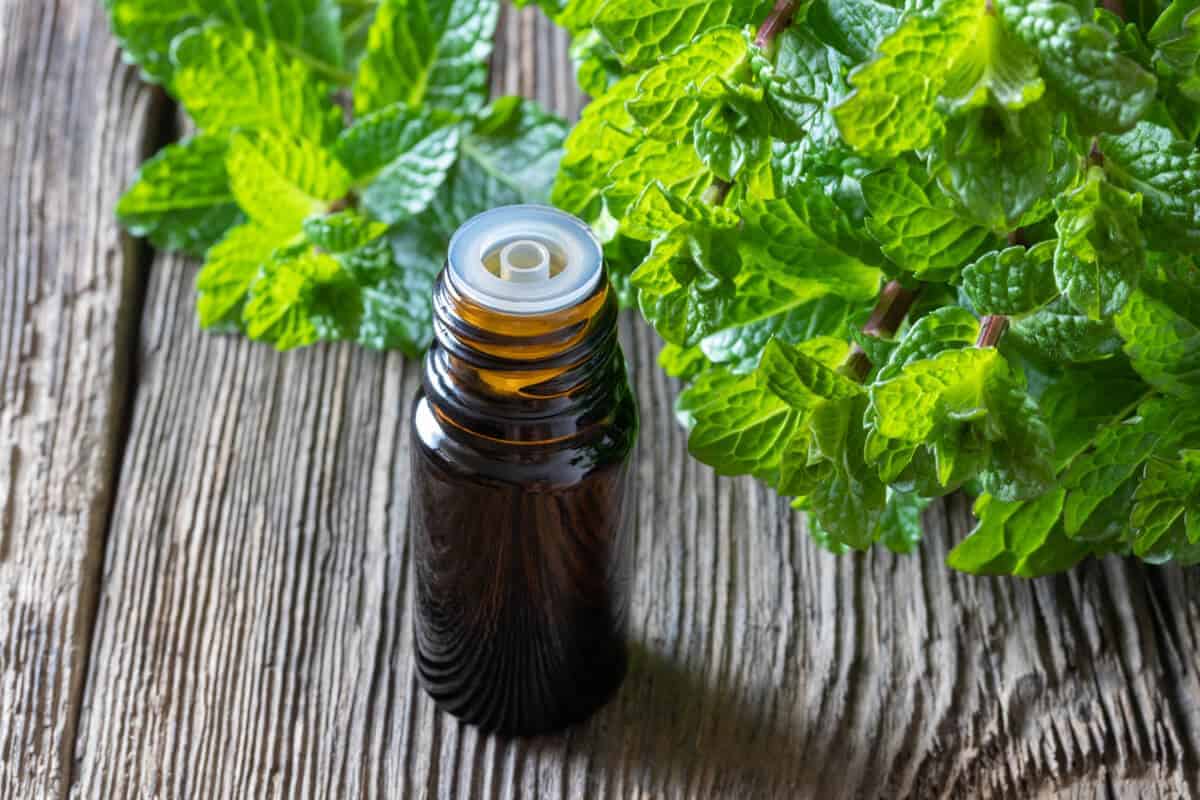
Tea tree essential oil
Because it’s antimicrobial and antiviral, tea-tree oil is an ideal essential oil for your homemade disinfectants.
Tea tree oil comes from the leaves of the Australian Melaleuca tree. Although it is called the “tea tree,” it shouldn’t be confused with the tea leaves we use to make most infusions (or teas). Black, green, and white teas (amongst others) come from the Camellia sinensis plant instead.
A great antifungal, tea tree oil is effective against mold and mildew. It also works well to get rid of musty smells around the home.
Being antiviral, antibacterial, and antifungal, as well as anti-inflammatory, tea tree oil has become one of the most popular essential oils to use in homemade recipes for both home and body.
- Add some tea tree oil and water to a clean spray bottle and spray on mold and mildew around the house (e.g. shower head, faucets). Add vinegar or hydrogen peroxide for a stronger antifungal.
- Remove musty smells from clothes by adding tea tree oil to your laundry detergent.
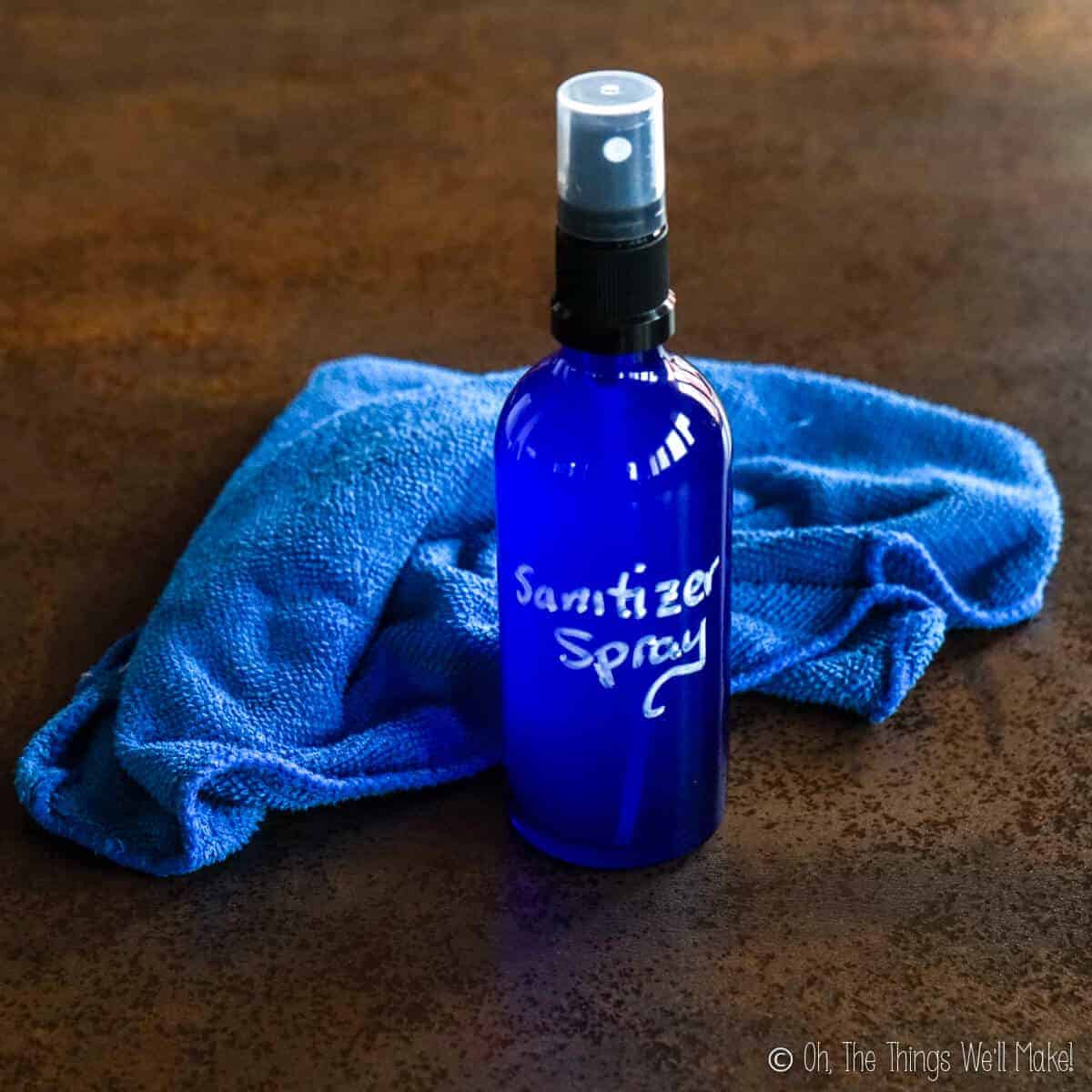
How to make a disinfectant spray with essential oils
While the antimicrobial properties of essential oils are well known, in order to make a disinfectant spray, we’ll also make use of another antimicrobial, alcohol. Just as alcohol was very important in making an effective hand sanitizer, it’s also very effective as a surface disinfectant.
To be an effective disinfectant against most microbes and viruses, we need to use a minimum of 60% alcohol. 70% is even better.
Materials
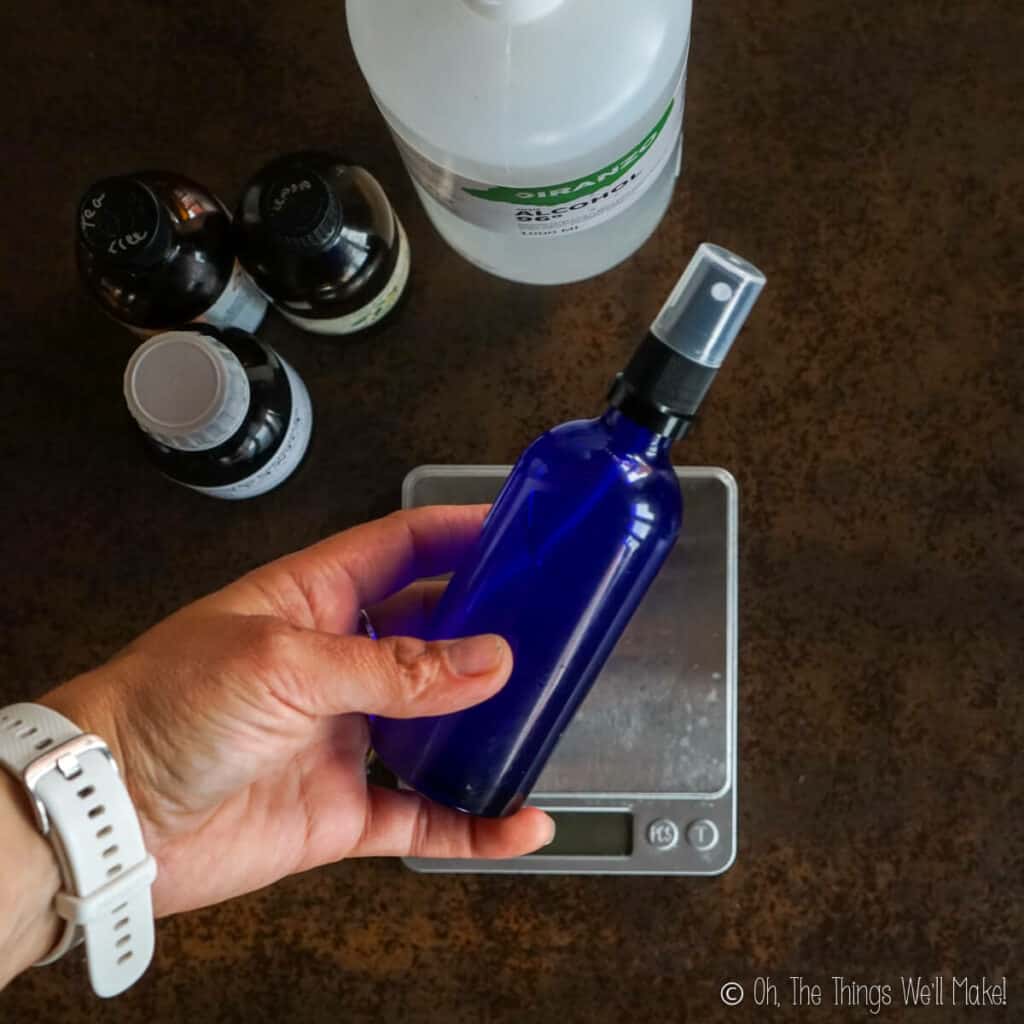
- 100g of high proof alcohol (70% or higher)
- 30 drops of essential oils (10 each of lavender, tea tree and lemon)
- Distilled water can optionally be added to 96% alcohol to bring it down to around 70% concentration (Use around 75g alcohol to 25g water.)
- Clean spray bottle
Preparation
Mix together all of the ingredients in a clean spray bottle. Shake the bottle to completely combine the ingredients.
If using 96% alcohol and water, first dissolve the essential oils in the alcohol. Then add the water. The high strength alcohol works as a solubilizer for the oils so that they won’t separate and float on the water. (This works best for 96% alcohol. Lower strength alcohol may not completely solubilize the oils.)
The alcohol also works as a preservative in this recipe. There is no need to add any other preservatives here. (More information about preservatives in my beginner’s guide to natural preservatives.)
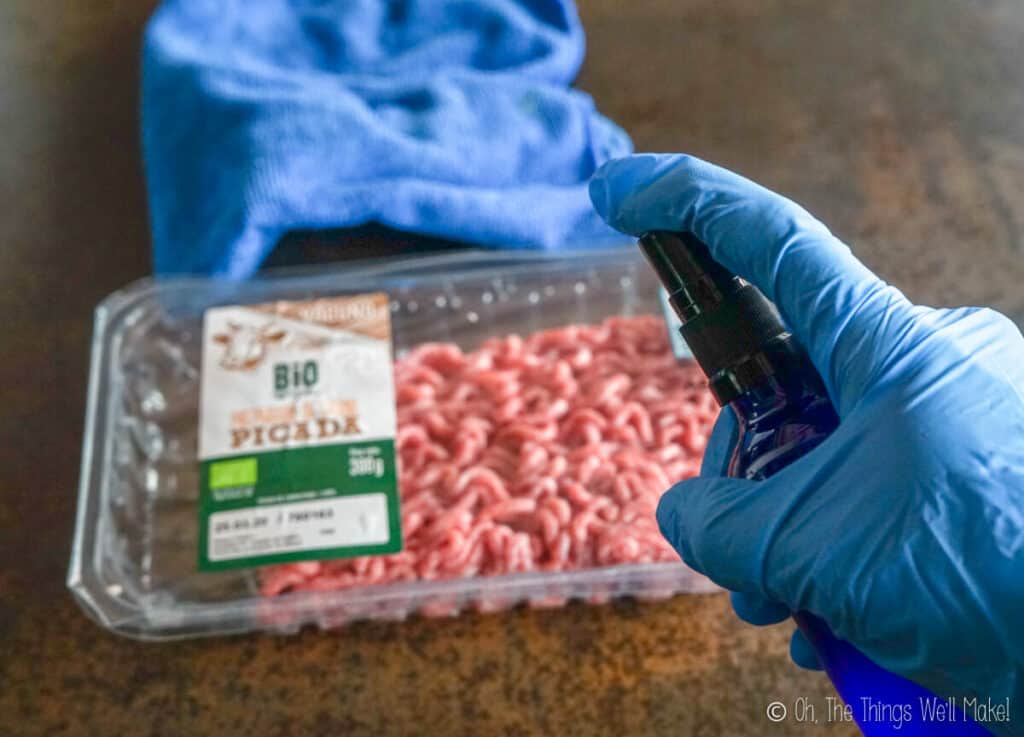
Use this natural homemade disinfectant around the home. For best results, use on hard surfaces. Spray the surfaces and then wipe them down with a clean cloth and allow it to dry.
Remember that it’s also important to wash reusable shopping bags often. Now, more than ever, consider washing them after each use.
This spray can also be used to sanitize bottles and other containers before using them for your homemade cosmetics.
Notes:
You can choose to use one oil or a combination of several oils, depending on what you have on hand. I recommend using less expensive oils like tea tree and lemon for cleaning and saving expensive oils like neroli for skincare or haircare products.
Some metals, like aluminum, can react with certain essential oils (especially strong oils like cinnamon). When it comes to blending or storing essential oils, it’s best to use glass.
Because alcohol is flammable, use this spray in well-ventilated spaces and work on smaller areas at a time. Prolonged and repeated use may cause certain rubbers or plastics to discolor, swell, harden or crack.
Warning for pet owners
Certain essential oils, such as wintergreen, oil of sweet birch, citrus oil (d-limonene), pine oils, Ylang Ylang oil, peppermint oil, cinnamon oil, pennyroyal oil, clove oil, eucalyptus oil, and tea tree oil are said to be toxic to cats.
Some oils are also poisonous for dogs. These include cinnamon, citrus, pennyroyal, peppermint, pine, sweet birch, tea tree (melaleuca), wintergreen, and ylang ylang.
Use extreme caution when using those oils around your pets so that they don’t ingest them.
Video
Disinfectant spray recipe
Natural Homemade Disinfectant Spray
Equipment
Materials
- 75 g 96% alcohol
- 25 g distilled water
- 30 drops essential oils 10 drops each of lavender, tea tree and lemon, for example.
Instructions
- Mix together the alcohol and essential oils, shaking or stirring until the oils have dissolved into the alcohol.
- Add water to bring the percentage of alcohol down to around 70%. Mix again to fully combine all of the ingredients.
- Use this natural homemade disinfectant on hard surfaces around the home. Once you spray, wipe down the surface with a cloth and allow it to dry.
Notes
Warning for pet owners:
Certain essential oils, such as wintergreen, oil of sweet birch, citrus oil (d-limonene), pine oils, Ylang Ylang oil, peppermint oil, cinnamon oil, pennyroyal oil, clove oil, eucalyptus oil, and tea tree oil are said to be toxic to cats.Some oils are also poisonous for dogs. These include cinnamon, citrus, pennyroyal, peppermint, pine, sweet birch, tea tree (melaleuca), wintergreen, and ylang ylang.
Use extreme caution when using those oils around your pets so that they don’t ingest them.
If you enjoy making your own cleaning products, why not also try your hand at making your own soap?
This post was originally published on Sept. 21, 2015. It was rewritten in March of 2020 adding more information about the antimicrobial properties of essential oils, adding photos and video, etc.
Related posts
Hand Sanitizer Spray
Breathable 3d Face Mask
I really love Eucalyptus oil.
Can I mix with Rubbing alcohol for cleaning?
Hi Linda,
Yes, that would probably work quite well. I find that eucalyptus oil is great for removing oil stains in clothing too.
I often make a mix of water and rubbing alcohol with a few drops of essential oils. I also like to add a small amount of a natural surfactant, and it makes a perfect all-purpose cleanser. I’ve been taking several surfactant courses, and I need to start sharing some of what I’ve been learning with you very soon. That part isn’t necessary, but it does help improve the cleaning abilities.
Just adding a note of warning.. I used a combination of about 1 cup rubbing alcohol and about 6 drops of cedar oil spray, all over my apartment to get rid of carpet beetles..i wasn’t able to ventilate/let air flow after finishing the spraying as it was night-time.
I ended up with heart palpitations, chest pain and difficulty breathing. I had to step out of the apartment (for about 30-40 mins) to reduce the symptoms and feel better.
Different people may react differently to various combinations of oils/rubbing alcohol etc, but do it with caution.
Wear a protective mask and ventilate the area.
Hello,
I’m sorry to hear that happened to you. I can imagine that it was a frightening experience. (I’ve had a similar reaction to MSG after eating soup at Chinese restaurants. It took a few scary incidents before I figured out the problem!)
Thanks for the warning!
Why is this site peppered with advertisements? Annoying and distracting
Hi Sharon,
To able to pay for the high costs of maintaining this blog, I need to have a source of income. Plus, I need to earn something for all of my hours of putting together recipes and tutorials, paying for supplies, etc.
I don’t like doing a lot of selling and prefer to use passive ads as a source of income.
I’m sorry if the ads bother you. I work with a company that only uses unobtrusive ads, and I don’t have a bunch of pop-ups configured like most people. I try very hard to maintain a good balance. There are plenty of other sites out there where you can gather your information if mine bothers you this much, but most will probably have the same amount of ads, if not more.
Hello Tracy I am interested in working with essential oils, doing my own blogs, and etc. I am a single mother of four and I really need help. could you please email me or contact me in some way please. I am reaching out to you because I see that you are very active on your blog and I know that my comment will be seen.
Hi Brittney,
I’m not exactly sure how I can help you, but I did send you an email over the weekend.
Is this safe to use on granite, wood, and stainless steel?
Hi Rebecca,
The alcohol should be fine on granite and stainless steel, but may be a problem for certain wood finishes on wooden furniture. (Varnishes, etc.)
Thank you for the recipes and information about Essential oils.
I use Castile soap and peroxide and I use dark bottles
Hi Roz,
You’re very welcome! I’m glad you enjoyed the post.
That’s what I use for getting out stains on clothing, and it works wonderfully for that, so I can imagine it works well as a cleaning agent too.
Thanks for your idea! 🙂
I enjoy using essential oil I am going away to a beach house and I can hardly wait to clean with my disinfectant feom your recipe
Thank you
Have fun on your trip! 🙂
I hope you like it.
I would like to add some essential oils to my carpet cleaner any suggestion?
Hi Susan,
I honestly think it’s more of a personal decision, especially for something like carpeting where the scent can linger for awhile. Choose oils whose scent you can not only tolerate, but that you enjoy.
I know it wasn’t mentioned in the post, but I personally love the scent of lavender for linens and that sort of thing. It gives a very calming scent. You could always combine something like lavender, or something you personally like a lot, with other essential oils to give it a more disinfecting punch.
I do like citrus combinations, too, like lemon with orange oil, etc.
Good luck with the carpets!
Please stay away from chemical disinfectants, simply you can try this out.
For floor cleaning simply take a bucket of water pour 1 tea spoon of hair shampoo , or garment shampoo.
add your choice of Essential Oil, like lavender, Lemon, Citronella, Lime, Orange to it. room will smell nice and incest will keep away as well
Hello,
Yes, that can work well. I like to use castile soap or vinegar with essential oils, especially in the kitchen.
Thanks for the tips.
How much oil should I use to mop with?
Hi Pat,
I’m not really in contact with Patricia lately, but I personally just pour in a few drops with whatever I’m using to mop with. I don’t really count, and shake enough in to give the water a nice scent. I hope that helps!
Is it ok to add essential oils to vinegar? I never knew essential oils like lavender were disinfectants. I’ve always used vinegar and have just gotten use to the way it smells because that is what my great grandmother always used. I would love my house to smell fresh and be clean especially since my youngest daughter is medically fragile.
Hi Tiffanie,
Yes, definitely!
I’ve added essential oils to vinegar before and it does help mask the smell. You can do something similar with citrus fruit peels. You can add lemon or orange peels to white vinegar and allow the oils within the peels to infuse into the vinegar, and that helps impart its scent and cleaning power. Adding lemon or orange essential oil to the vinegar is easy and makes the process go more quickly, but, of course, you can also add other oils like lavender instead. 🙂
I have a terrible smell in my child’s room from using a zero-vic paint. Is it safe to spray the disinfectant on the walls?
Hi Carrie,
I would think that once your paint is dry, you shouldn’t have a problem with it. That said, some paints are more washable than others, so it’s probably a good idea to take a look at what your particular paint says in the way of durability and if it’s washable or not.
Some essential oils can be damaging to paints when used in high concentrations and when left for too long, but I think in the case of these disinfectants, they are diluted enough that you shouldn’t have a problem with most surfaces.
If you are in doubt, I’d suggest you test it out in an inconspicuous area or on a sample surface using the same paint to see how it reacts to whichever oils you choose.
I hope that helps!
Great post! I never used essential oils before to clean my house. I am very curious to try them out. Recently I don’t like any of the chemical cleaners I use.
Thanks, Juanita!
I hope they work out well for you. 🙂
I love tea tree oil! Thanks for the tips!
Me too! 🙂
It’s great for so many things.
Thanks for your comment, Heather!