

How to Make Ketchup (Heinz Copycat Recipe)

Make ketchup at home with this Heinz copycat recipe. Smooth, tangy, and naturally sweetened; no refined sugar or additives needed.

If your family gets through ketchup like mine does, you’ll be glad to hear that making your own at home is surprisingly easy. With just a few simple ingredients, you can whip up that smooth, tangy, perfectly balanced treat that everyone loves, without refined sugar or additives.
I’ve been making homemade condiments for years, but it wasn’t until I tried my friend Hayley Ryczek’s fermented ketchup, from her book Fermented Foods at Every Meal, that I realized you could make probiotic versions that actually keep longer, too. That’s one of the biggest challenges people face with DIY condiments. They worry they’ll have to keep remaking them every week. But by fermenting them, you can extend their shelf life naturally for several months.
This version, though, is my classic Heinz-style ketchup. It’s smooth, familiar, and family-approved. It’s the kind of ketchup that tastes like the one most of us grew up with, but made from real, wholesome ingredients you can feel good about.
Use it immediately for quick meals, or ferment it for a few days for added probiotics, like I did in my fermented ketchup recipe. Either way, you’ll end up with a ketchup that tastes better, lasts longer, and doesn’t need anything artificial to stay fresh.
Why make ketchup at home?
Making your own ketchup isn’t just about avoiding refined sugar or preservatives (though that’s a nice bonus). It’s about creating a condiment that can be customized exactly the way your family likes it.
Here’s why I think it’s worth making at least once:
- You control every ingredient.
No corn syrup, “natural flavors,” or preservatives you can’t pronounce. Just real tomatoes, vinegar, salt, and natural sweeteners like honey, maple syrup, or sugar. - It can keep for months, if you want it to.
Fresh ketchup will easily last several weeks in the fridge, but if you ferment it, you’ll get a naturally preserved, probiotic version that can keep for several months. - It’s easy to make and customize.
Once you’ve done it once, you’ll realize it only takes a few minutes. Want it spicier, sweeter, or more tangy? You can tweak it in seconds. - It’s better for your family (and your wallet).
A single batch makes about three cups and costs a fraction of what you’d pay for organic ketchup at the store. Plus, you can make it taste exactly how your family likes it.
Ingredients you’ll need
You don’t need anything fancy to make this homemade ketchup. With just a few basic ingredients from your pantry, you can whip up that classic sweet and tangy taste that makes Heinz ketchup a favorite worldwide.
While Heinz doesn’t share its exact spice blend, the ingredient list includes tomato concentrate, vinegar, salt, sweetener, and a mix of spices and natural flavorings. In the United States, the recipe usually uses high fructose corn syrup and distilled vinegar. In Europe, including the United Kingdom, they swap the corn syrup for sugar. The final flavor tends to be more acidic, with a stronger tomato taste. Heinz has confirmed that they use garlic, onion, and celery in their flavor mix, which got me inspired to whip up a homemade version using those same ingredients.
Even though there are subtle regional differences, the overall flavor remains classic and well-balanced. This recipe is based loosely on those ingredients. It uses basic pantry ingredients like tomato paste, vinegar, and onion powder to create a familiar taste with wholesome ingredients and no refined sugars or additives..
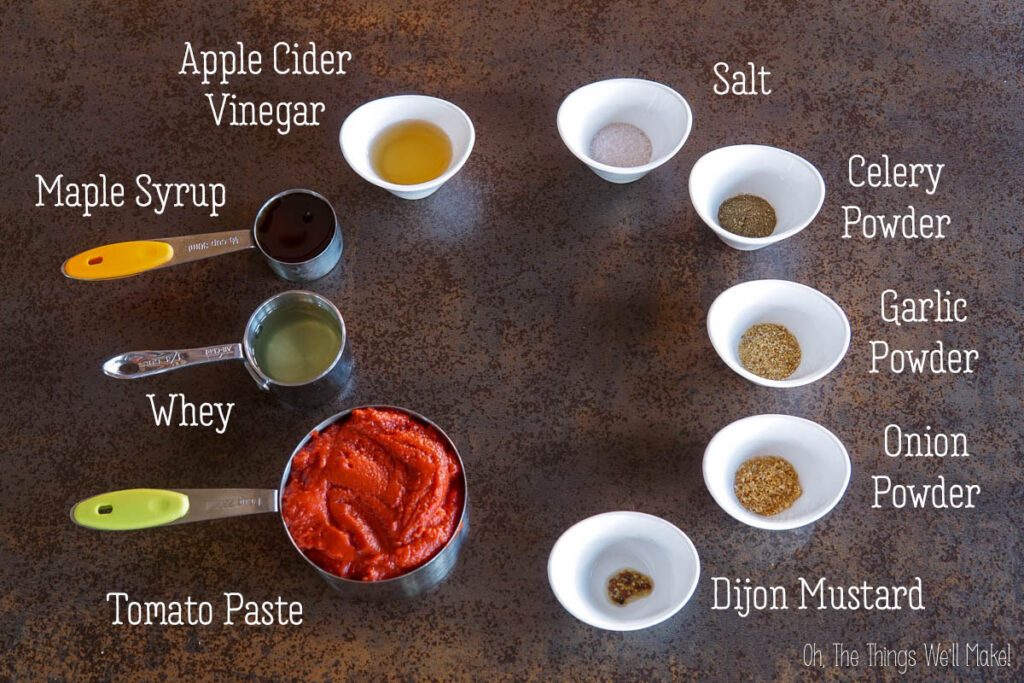
Tomato paste
Tomato paste is the base of your ketchup. Use a thick, good-quality tomato paste for the best flavor. You can use store-bought or make your own homemade tomato paste if you have an abundance of tomatoes.
Natural sweeteners
Honey or maple syrup adds a gentle sweetness that balances the acidity of the tomatoes and vinegar. You can also use plain sugar for a flavor closer to traditional bottled ketchup.
For a deeper color and richer flavor, add a small spoonful of molasses. It gives the ketchup a beautiful dark tone and a sweetness similar to the classic Heinz version.
Sea salt
Salt brings the flavors together and enhances the natural sweetness of the tomatoes. You can adjust the amount slightly to suit your taste.
Apple cider vinegar
Adding vinegar gives the ketchup its characteristic tangy flavor. I use apple cider vinegar for its flavor and acidity, but plain white vinegar also works well.
If you make your own apple cider vinegar, its acidity is usually lower than store-bought vinegar. If you want to use it in this recipe, you probably won’t want to add any extra liquid. The goal is to add enough acid to balance the flavor of the ketchup without thinning it too much.
Spices
This is the most customizable part of the recipe, and you can really make it your own here. When I was working on the spice blend, I used the Heinz ingredient list as inspiration. I wasn’t sure at first which spices to use. I was thinking about using allspice or cloves, like I did in the fermented ketchup recipe, but then I realized the molasses gave me that cozy flavor I was after without adding those strong spices my family just isn’t a fan of.
In this version, I use onion and garlic powder for flavor, a bit of celery powder for that classic ketchup taste. I used my own homemade celery powder, but you can also use a splash of celery juice or a little celery salt if that’s what you have. If you use celery salt, just reduce the amount of added salt in the recipe to keep the balance right. I also add a tiny bit of mustard for a mild tang. Dijon works great if you don’t have mustard powder. This combination gave us a flavor that’s very close to Heinz, and my family loved it.
Adjust to taste
Once blended, you can adjust the seasoning, sweetness, or acidity to suit your preferences. Ketchup recipes are flexible, and this one adapts easily to different palates.
Water or whey
A small amount of liquid helps thin the mixture so it blends smoothly. If you’re whipping up some ketchup to use right away, after you’ve got the taste just how you like it, go ahead and add a splash of water until it’s the thickness you want.
If you plan to ferment it, skip the water and use a few tablespoons of whey (from strained yogurt) or the brine from fermented vegetables instead. This will thin it slightly and add a probiotic boost while helping it keep for several months.
How to make ketchup
Making homemade ketchup is quick and easy! Everything comes together in one bowl, and once you mix it, you can adjust the flavor to suit your taste before blending it smooth.
Unlike many homemade ketchup recipes, this version doesn’t need to be cooked. The ingredients blend together easily, and the natural acidity from the vinegar keeps it fresh without the extra step.
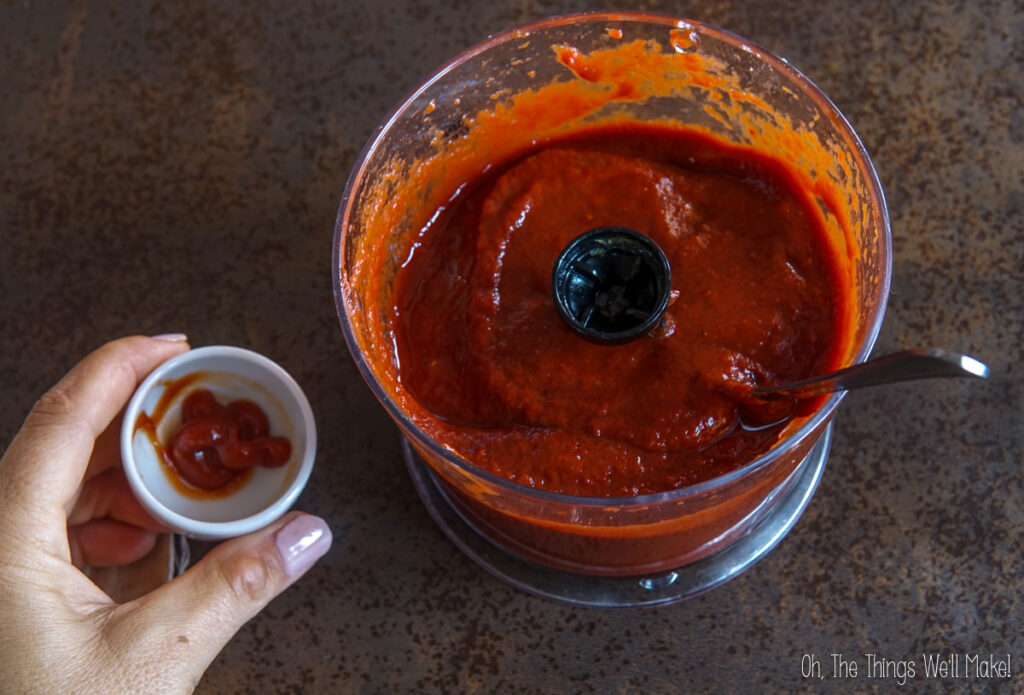
Step 1: Mix the base
In a medium bowl, combine the tomato paste, sweetener, and molasses. Stir until smooth, so the sweetness is evenly mixed into the tomato paste.
You can do this step directly in a mini food processor or the container of your immersion blender. That way, you can blend everything together without switching containers. You can also just hand-mix it in a bowl.
Step 2: Add vinegar, salt, and spices
Add the vinegar, salt, and spices. Mix everything together until fully combined. Taste and adjust if needed. Add more vinegar for tang, more sweetener if you prefer it a bit sweeter, or a pinch more salt to bring the flavors together.
Step 3: Adjust the texture
Add a small amount of water (or whey, if fermenting) and stir until it reaches your desired consistency. It should be thick but pourable. If it feels too thin, add a little more tomato paste.
If you’re fermenting the ketchup, leave it just a little thicker than you think you’ll want it. You’ll be adding a thin layer of whey on top before letting it ferment, and will later blend in that extra liquid.
Step 4: Blend until smooth
For the silkiest texture, blend the mixture in a food processor or with an immersion blender for a few seconds. This helps everything come together like store-bought ketchup.
If your ketchup turns out slightly grainy, that’s usually just from the texture of the tomato paste. You can press it through a fine mesh strainer for a smoother finish if you’d like.
Step 5: Store
Transfer the ketchup to a clean glass jar with a tight-fitting lid. Refrigerate for up to a month, or longer if you ferment it.
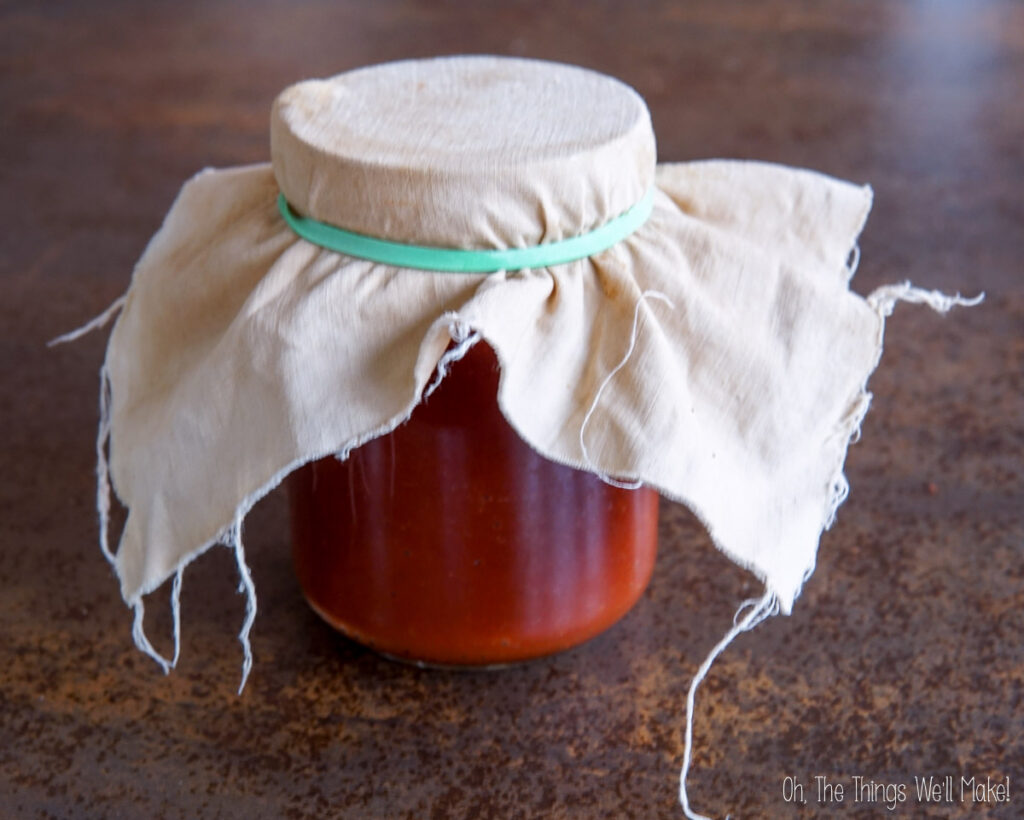
Optional: ferment it
If you’d like to ferment it for extra flavor and longer storage, replace the water with a few tablespoons of whey or brine from fermented vegetables. Cover the jar loosely with a cloth and rubber band, and leave it at room temperature for two to three days.
Once the fermentation time is done, cover it with a lid and refrigerate. Fermentation deepens the flavor and keeps the ketchup naturally preserved for several months.
Pro Tip: For an extra-smooth ketchup, use a fine mesh strainer after blending. It isn’t necessary, but it gives the texture of store-bought ketchup.
Troubleshooting and common questions
Usually two to three days at room temperature is enough, but that depends on the warmth of your kitchen. Warmer temperatures speed up fermentation, while cooler ones slow it down. Taste it after the second day, and if it’s not tangy enough, give it another 12 to 24 hours.
If it’s more tangy than you like, stir in a little more tomato paste or sweetener after fermentation and refrigerate it right away. That will stop the process and balance the flavor. If you want it tangier, add more vinegar, of course.
Healthy fermentation smells pleasantly tangy or slightly yeasty, never rotten or moldy. If it develops fuzzy growths, smells off, or looks separated and slimy, don’t risk it. Start again with clean utensils and fresh ingredients.
Yes. The brine from sauerkraut or other fermented vegetables works beautifully and makes the recipe dairy-free and vegan. You can also skip a starter altogether, but fermentation will take a bit longer to begin.
Even though this ketchup doesn’t use any artificial preservatives, it keeps well because of its natural acidity and salt content. The vinegar lowers the pH to a level where most bacteria can’t grow, while the salt and natural sweeteners help preserve it further by reducing available moisture. Commercial ketchups like Heinz rely on the same principles, along with hot bottling for extra stability. If you ferment your ketchup, the beneficial bacteria lower the pH even more, which helps it last several months in the refrigerator.
A little vinegar won’t stop fermentation, but too much can slow it down. The small amount in this recipe adds flavor and helps keep the ketchup safe from unwanted bacteria while the good bacteria do their work. If you use a live starter such as whey or sauerkraut brine, it will still ferment beautifully. Using more vinegar than the recipe calls for, though, could make the mixture too acidic for fermentation to start. Fermenting it will add some tanginess anyway. If, after fermenting it, you still want it tangier, you can add more vinegar before storing it.
Video


Heinz-Style Fermented Ketchup (Family-Friendly Version)
Ingredients
- 2 cups tomato paste
- ¼ cup maple syrup or sugar or honey, adjust to taste
- 1 teaspoon molasses
- 3 tablespoons apple cider vinegar You can start with 2 and adjust for tang.
- 1¼ teaspoons unrefined sea salt
- ½ teaspoon onion powder
- ¼ teaspoon garlic powder
- ¼ teaspoon celery powder or 1–2 tablespoons celery juice, or celery salt, but reduce added salt if choosing the latter
- ¼ teaspoon paprika
- ⅛ teaspoon Dijon mustard cal also use a pinch of mustard powder
- 4 tablespoons water if fermenting, use whey or brine from fermented vegetables
Instructions
- In a medium bowl, combine the tomato paste, sweetener, and molasses. Stir until smooth so everything is evenly mixed.
- Add the vinegar, salt, and spices. Stir until everything is well blended.
- Taste and adjust the flavor to your liking.
- Add a small amount of water (or whey if fermenting) until the ketchup reaches your desired consistency. It should be thick but spreadable. If fermenting, leave it a little thicker so the extra whey you’ll add later blends in gradually.
- For a smoother texture, blend with an immersion blender or food processor. If it still feels grainy, you can strain it through a fine mesh sieve.
- Transfer the ketchup to a clean glass jar.
If not fermenting
- Seal the jar tightly and refrigerate immediately. It will keep for about a month, or longer if the acidity is high enough.
If fermenting
- Gently tap the jar to remove air bubbles and pour a thin layer of whey over the top.
- Cover loosely with a breathable cloth or coffee filter and secure with a rubber band. Leave it at room temperature, out of direct sunlight, for 2–3 days.
- Stir and refrigerate.
Notes
- Yield: Makes about 3 cups (around 48 tablespoons) of ketchup.
- Tip: You can mix directly in a mini food processor or the container for your immersion blender to save dishes.
- Storage: Keeps well in the refrigerator for 3 to 6 months. Always use a clean spoon or a squeeze bottle to prevent contamination.
- Flavor adjustments: You can taste and adjust the flavor as you go. Add a little more salt or vinegar for a sharper taste, or a bit more sweetener to balance it. If you’re planning to ferment it, you don’t need quite as much vinegar since fermentation will naturally add tanginess.
- Spice flexibility: Feel free to adjust the spice blend to suit your taste. Start with the amounts listed, then tweak as you go.
- Texture tip: For a smoother ketchup, blend it well and strain through a fine mesh sieve if it looks grainy.
- Sweeteners: I like using maple syrup for this recipe, but honey or sugar also work well.
- Dairy-free and vegan version: Replace the whey with brine from sauerkraut or another naturally fermented vegetable (not vinegar-based).
- Fermentation time: Usually 2 to 3 days at room temperature. Cooler kitchens may take up to 4. The ketchup should smell pleasantly tangy and slightly sweet once ready.




Thank you for sharing this recipe! It looks spot on. I’ll update this review after I make it today but didn’t want to forget to rate it.
Hi Kourtney,
Thank you so much! I hope you enjoyed it. 😊
What is the advantage of FERMENTED sauce. Thanks, Brian.
Hi Brian,
The main advantage is that it keeps much longer. A fermented batch can last several months in the fridge, whereas the fresh version is best used within a few weeks.
Fermentation also adds some probiotics and a slightly deeper flavor, but the longer shelf life is the biggest benefit.