

Homemade Fire Starters with Dryer Lint (No Wax)
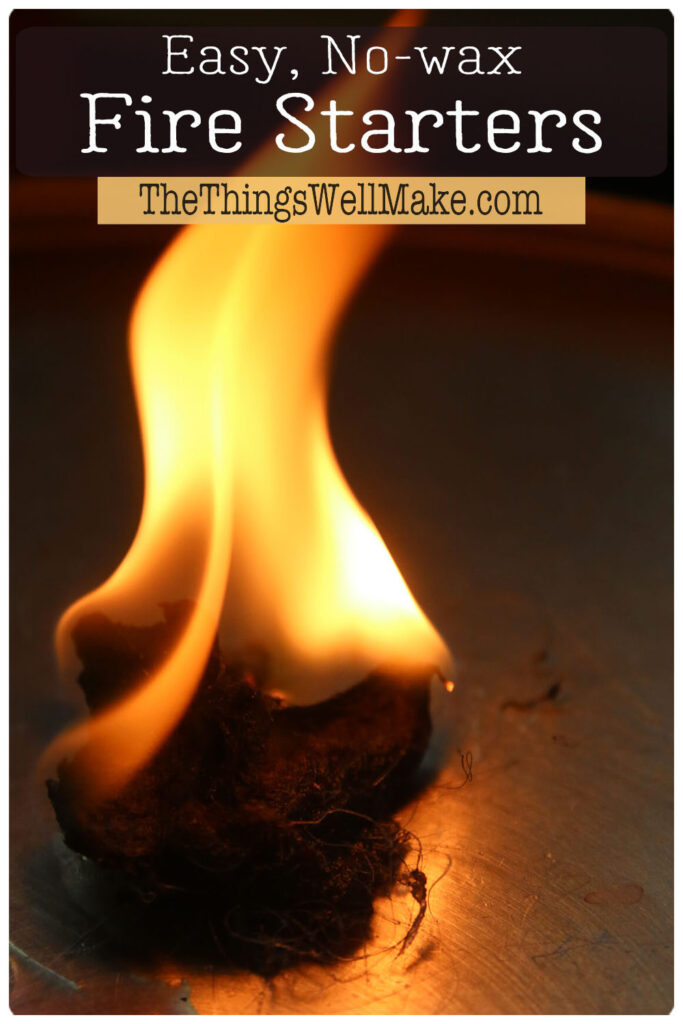
Turn dryer lint and used cooking oil into eco-friendly fire starters! This no-wax method is simple, waste-free, and ideal for quick, effective fires.
The cost of electricity in Spain is ridiculously high. (Over half of our electric bill consists of taxes, which may make electricity appear more expensive.) To make things worse, I live in an area where it never snows, and homes aren’t equipped for the cold. They usually lack central heating or natural gas.
While we have small heater/air conditioning units, they aren’t enough to heat our house. So, we installed an iron fireplace with a fan to help heat our living room in winter.
Why make dryer lint fire starters?
Even experts sometimes need help to start a fire quickly. I use this at home to quickly ignite our fire each morning, especially on rainy days when my wood is damp.
This quick and easy project also allows you to repurpose materials you’d otherwise throw away.
Materials
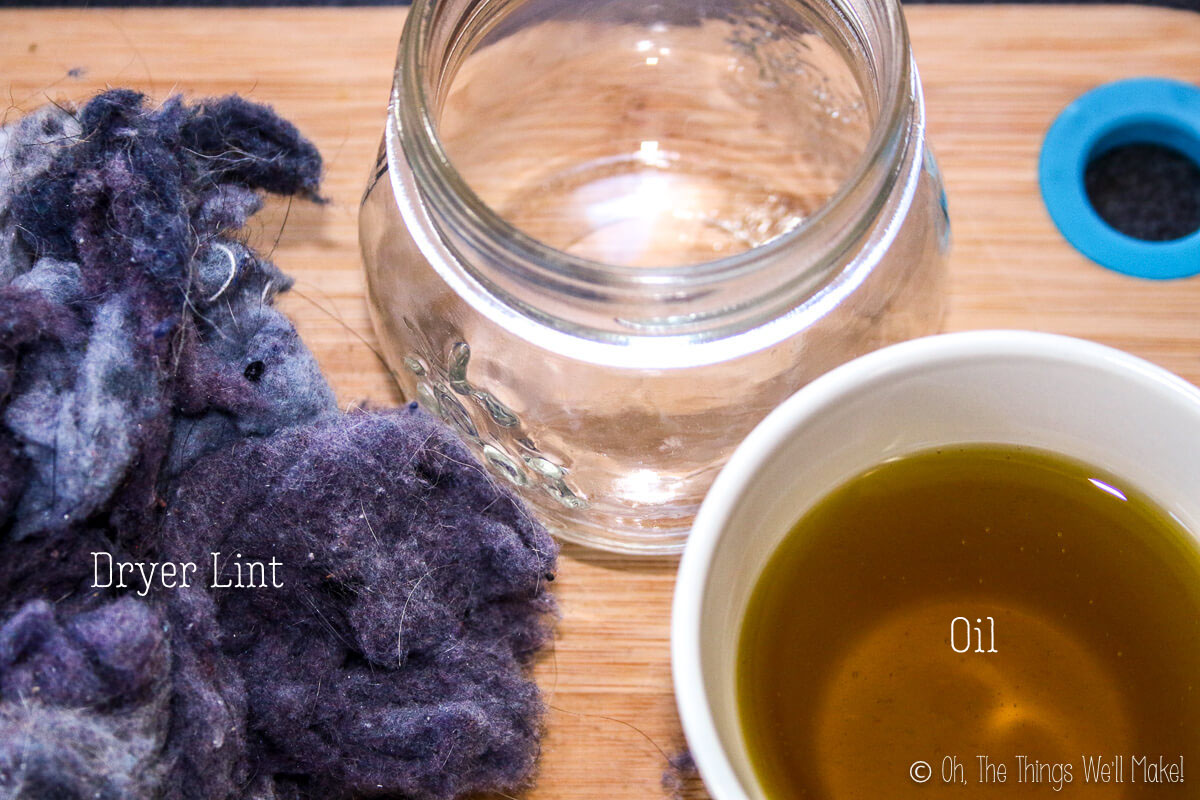
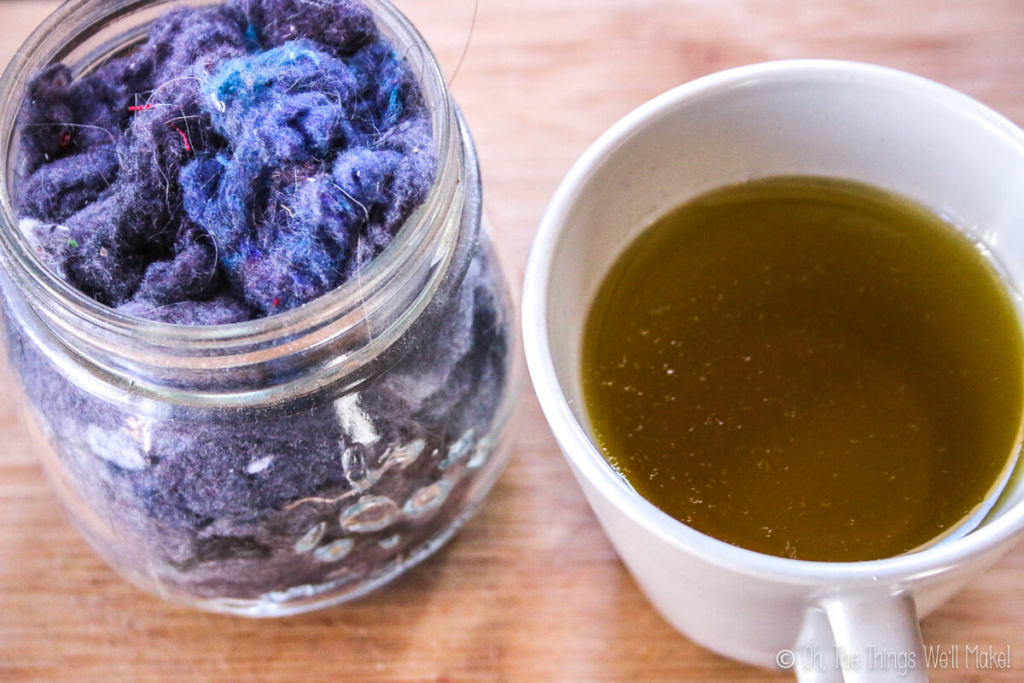
These simple homemade fire starters use two simple materials: dryer lint and oil. The oil serves as the fuel, and the lint as the wick. (You’ll also need a glass jar or another container for storing the finished fire starter.)
To collect dryer lint, clean it off the lint traps of your clothes dryer. (I store mine in a mason jar in a cupboard in my laundry room after each load of laundry. I keep collecting all year so I have enough in the winter.) Dryer lint is great for starting fires because it ignites easily, but it needs oil, or another fuel source, to keep burning.
You can use any inexpensive cooking oil for this project. If you deep-fry foods, you can even recycle the used cooking oil and use that!
How’s that for a no-waste option?
How to make dryer lint fire starters
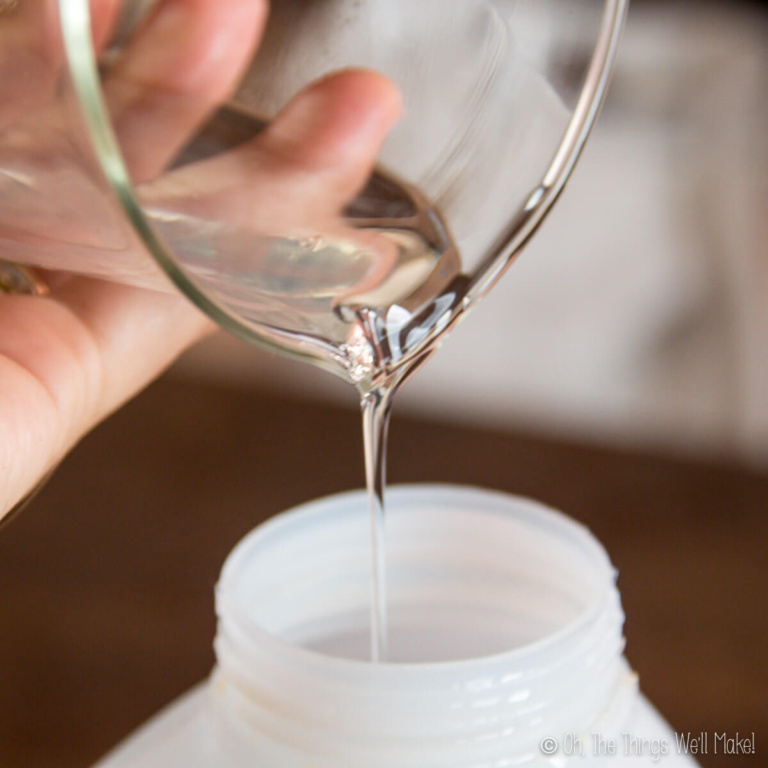
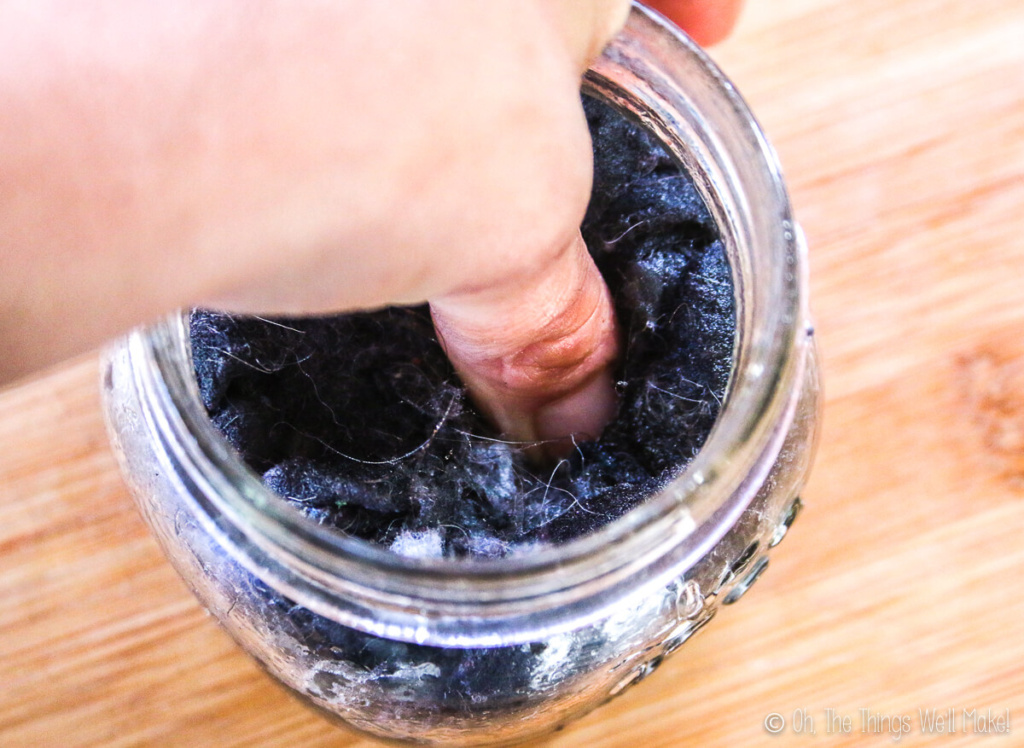
Pack some dryer lint into a small glass jar. After adding some dryer lint, cover it with some oil. Add more dryer lint and press it into the oil below to help absorb it. Continue layering dryer lint and oil in the jar until it’s full or until you run out of materials.
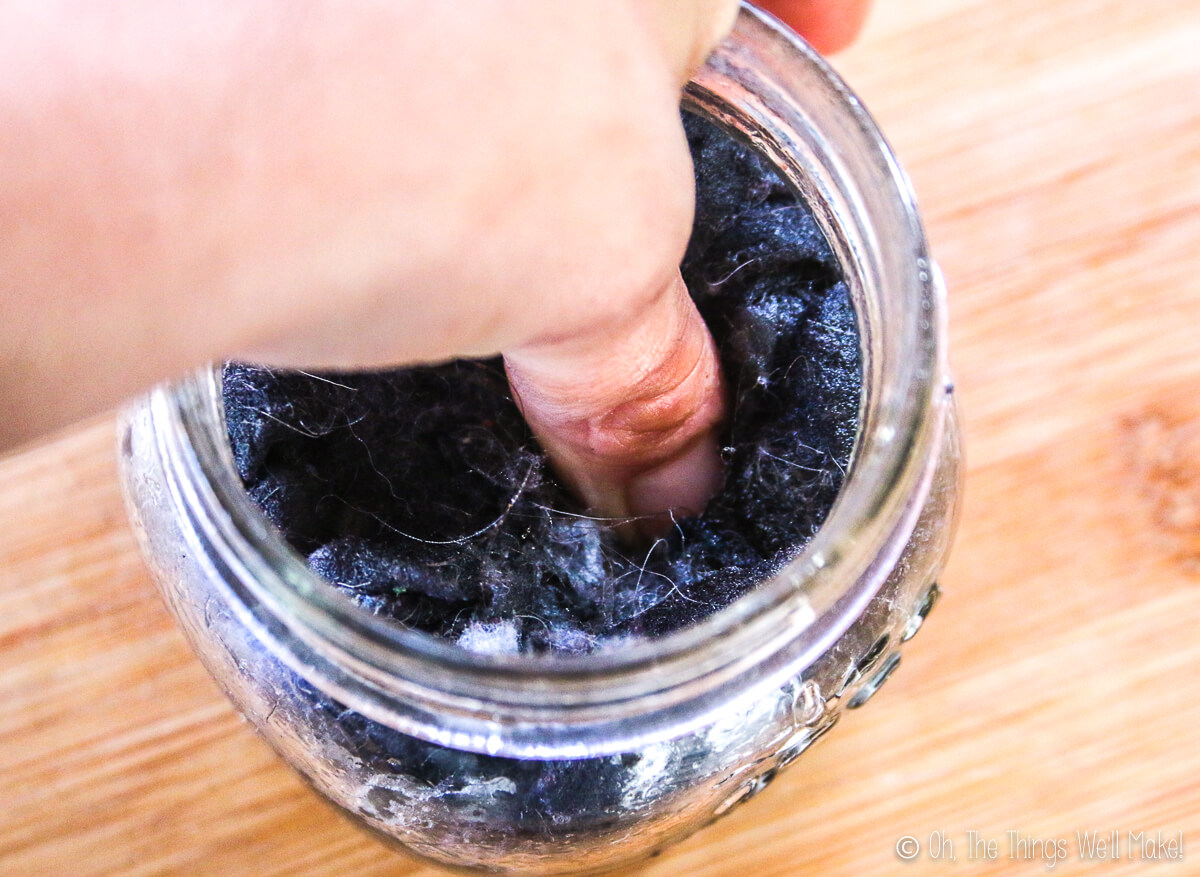
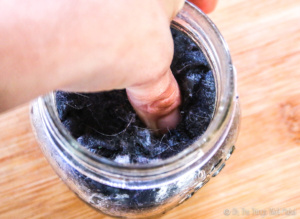
To thoroughly saturate the lint with oil, apply pressure as you add each layer. Continue pressing until the lint is completely immersed in the oil.
Cover the jar with a lid and keep it near the fireplace. Using a cute jar on your mantle is a stylish and space-saving way to store your fire starters without wasting space.
How to use them
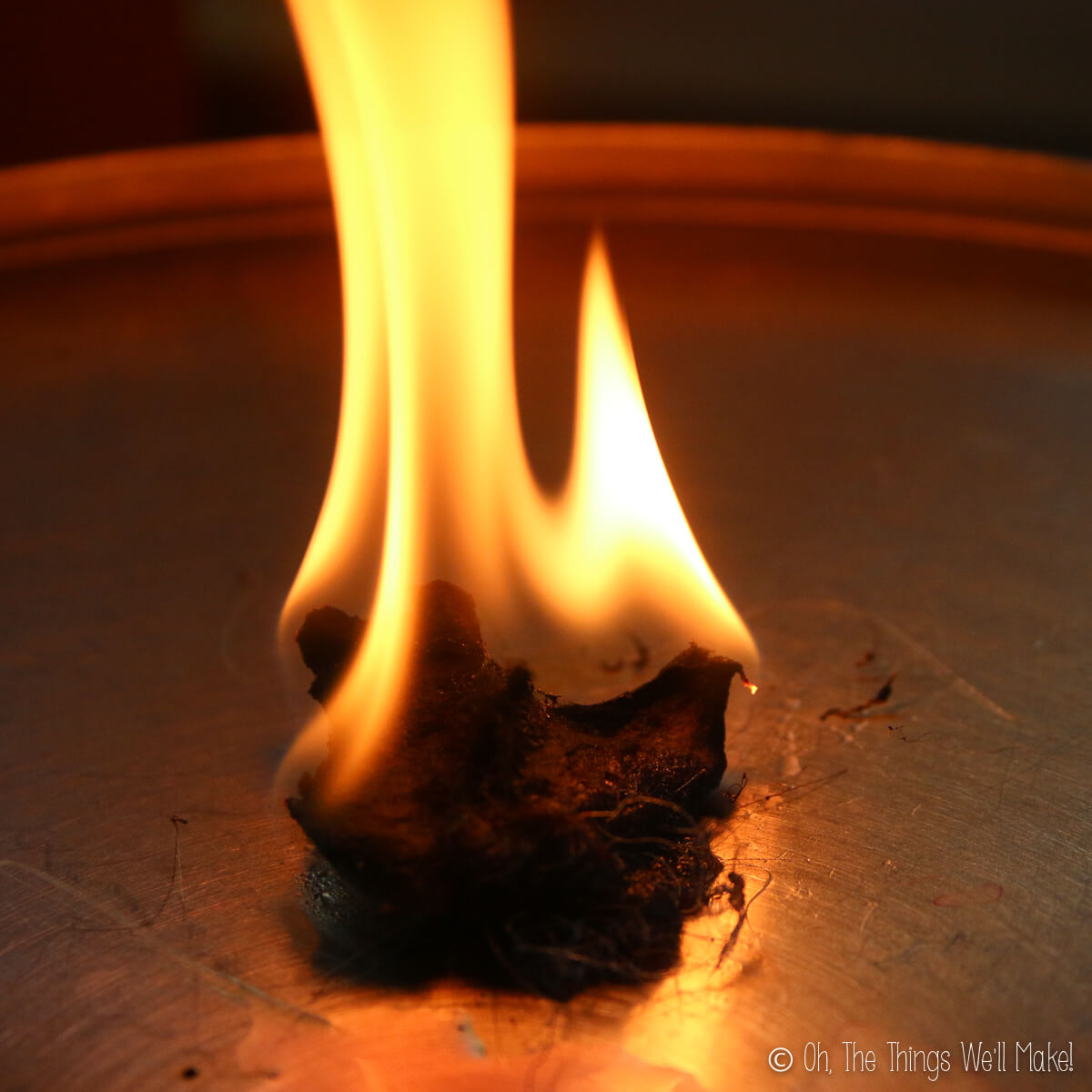
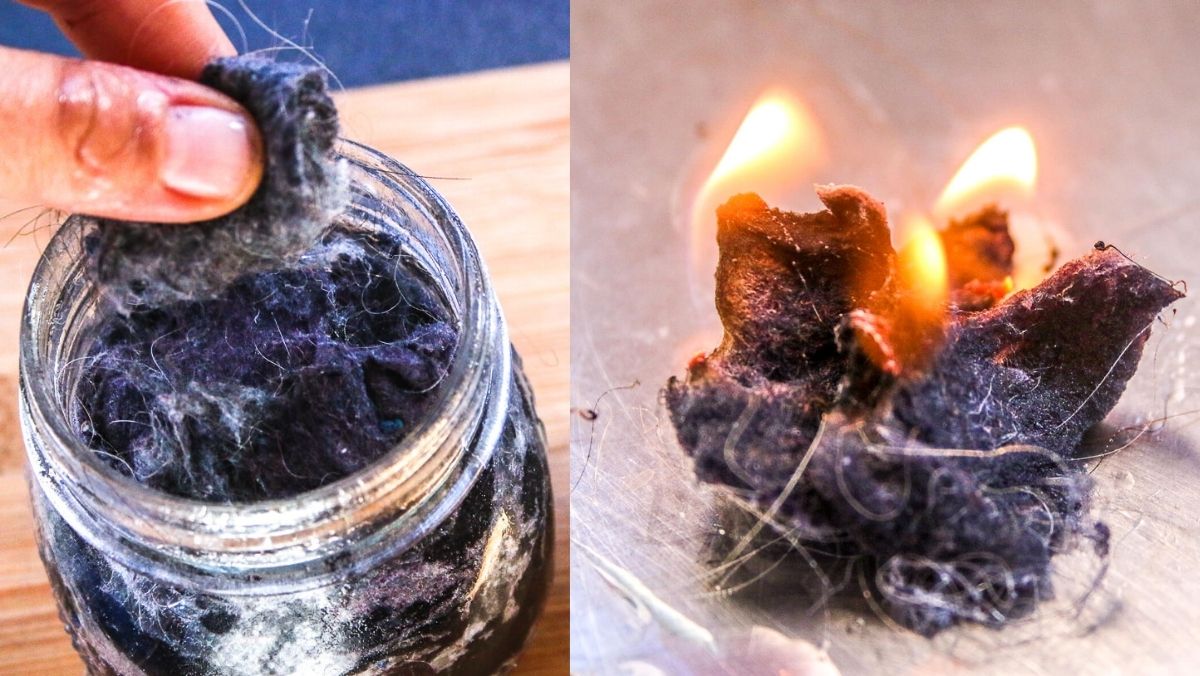
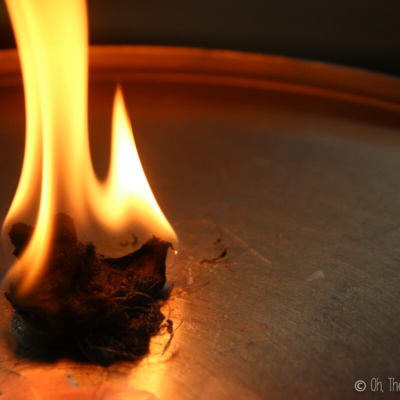
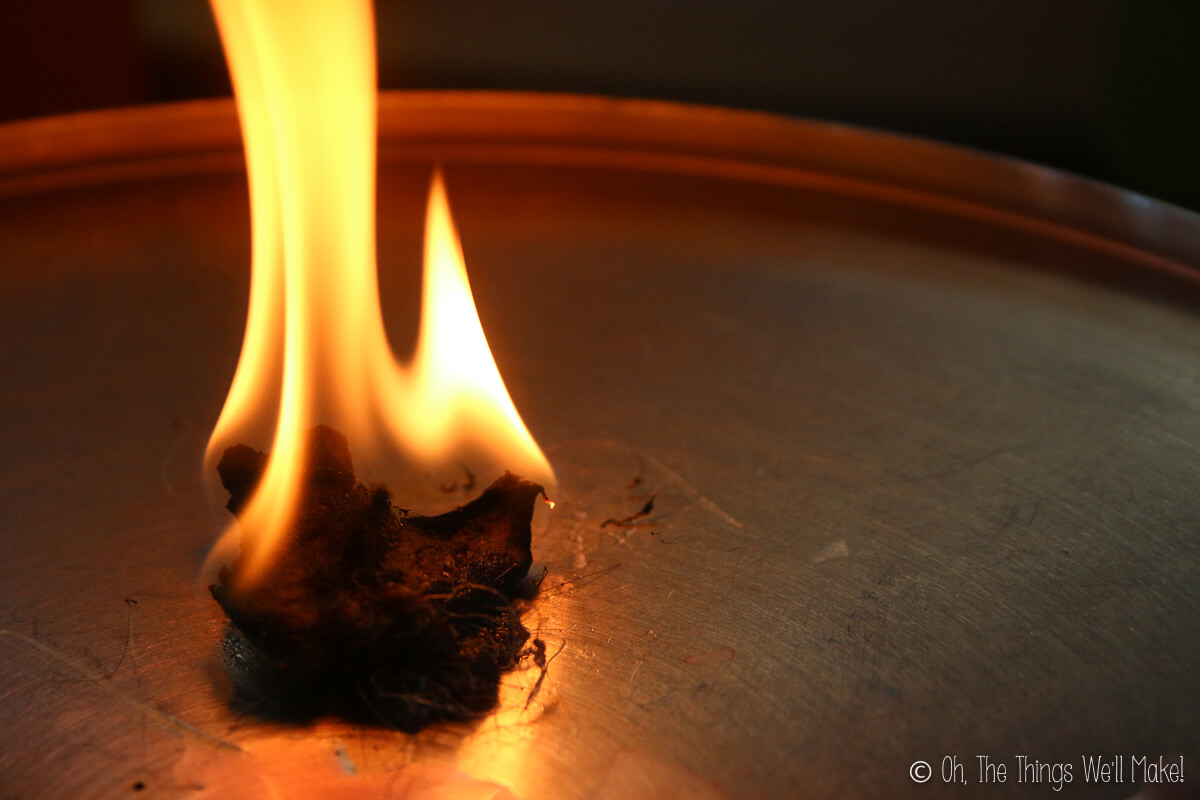
To use your fire starter, pull off a small piece of oily dryer lint and ignite it. It should burn for long enough to help you start your fire! It’s really that simple.
How to get the fire going
As a summer camp counselor, I became skilled at starting campfires. One year, I was even called to help another counselor start a fire after he struggled, much to the disappointment of his boys. 😉 (What? You called a girl?)
The trick is to go slowly and add small twigs first, leaving room for air between them. Once you start the fire, slowly build it up with kindling and progressively larger sticks and logs.
Making portable fire starters for hiking or camping
For a compact fire starter while camping or hiking, wrap small amounts of oily lint in wax paper. The wax paper ignites quickly, providing extra flame while keeping each fire starter clean and easy to handle. Store these packets in a waterproof container, like a plastic bag or food container, to keep them dry for your outdoor adventures.
Alternative fire starter ideas
Over the years, I’ve tried burning various household items that typically go in the trash, such as dryer lint, wine corks, pine cones, and cotton balls.
To help fuel the fire, you also need something flammable, like wax, oil, or alcohol. Many people use wax (from old candles), but Vaseline (petroleum jelly) is much easier to work with and less messy to use. On the downside, it’s another thing you would need to buy to make your DIY fire starters.
Some backpackers use cotton balls or wine corks soaked in alcohol as a lightweight fire-starting option.
(I show how gel fuel is made with alcohol in my post about how to make hand sanitizer.)
Egg carton firestarters
A popular fire starter method involves using cardboard egg cartons filled with dryer lint. Simply place the lint in each compartment, cover it with melted wax, and let it cool. Once set, you can cut out each section for individual fire starters.
Pros
This method creates highly effective, mostly waterproof fire starters.
Cons
- Making egg carton wax fire starters is messy, time-consuming, and space-consuming. I often spilled the wax, and it was difficult to clean up afterward.
- My hands got sore cutting out the compartments.
- Paraffin wax can be costly, and while you can recycle old candle wax, it adds extra effort.
- Once we got our hens, I lost easy access to cardboard or paper egg cartons.
Toilet paper tube firestarters
If you lack egg cartons, use paper towel or toilet paper tubes. Cut the tubes shorter and fold the edges inward to create a bottom. Fill with dryer lint or sawdust, cover with melted wax, and fold the top edges inward to seal.
It’s another option, but it’s still more complicated than my no-wax method.
Safety considerations
- Synthetic fibers in dryer lint can release harmful fumes when burned. If you will be using these in a closed place, consider using lint from natural fibers like cotton or linen.
- Clean your dryer vent regularly to prevent lint buildup, a common cause of house fires.
- Be careful when starting your fire to avoid burning yourself.
Full tutorial video

No-Wax Dryer Lint Fire Starters
Equipment
Materials
- dryer lint
- cooking oil (can be used cooking oil)
Instructions
- Pack dryer lint into a small glass jar and cover it with oil. This is most easily done if you work in layers.
- To help saturate the lint with the oil, press on the lint as you add it over the oil from the previous layer. Keep adding layers of lint and oil until your jar is full, or until you have used up all of your materials.
- Cover the jar with a lid and store it near your fireplace.
- To use your fire starter, pull off a small piece of oiled dryer lint and ignite it. It should burn for long enough to help you start your fire!
Notes
Short video
This post was originally posted on December 15, 2014. It was later republished to add clearer instructions and video.
Would it be safe to use the cooking oil on an outdoor fire in the mountains where there are bears?
Hi Tamara,
I’m definitely not a bear expert, but here are my thoughts. 😉
I keep the jar well sealed when not in use, and I would assume that the oil would be burned up in a matter of minutes once you’ve started the fire. As long as you are starting the fire in a place where you are allowed to start fires, I don’t see why there would be a problem. You’d just need to use common sense and store it away as you would the rest of your food when not using it.
Love this idea! This solves two disposal problems in my house! Dryer lint and used cooking oil!
All my dryer lint seems to crawl out of the laundry room garbage and become giant dust bunnies…now I will start putting the lint in a large mason jar by the dryer. I don’t use a lot of oil, and obviously you can’t put oil down the drain, but if I put it in the garbage the dogs go crazy trying get it. Now when the oil is cool enough, I will just add to the mason jar. I like the idea of adding spices and dried herbs to the mix! I will be using the lint/oil fire starter for our outdoor grill for cooking. We live in hot, sunny Georgia, so not many fires in the fireplace!
Lucky you! It’s a lot warmer here in the winter than it was living in Michigan, but the houses aren’t prepared for the cold and there is a lot of humidity. Long story short, I have my fireplace on almost daily all winter. We don’t have any sort of central heating, so I make do with what I have.
I hope it works well for you. You could always take it camping with you, if you like that sort of thing. 😉
I do this to keep garbage from smelling or leaking an makeing a smelly mess…rinse all cans etc. Before putting in garbage..if u have anything that can smell or leak like oil or grease.or food wrappers that u cannt rinse.i put all that in the freezer till garbage day then just clean out freezer an take garbage to dump
Hello, and thank you so much for this!
I’m curious if we can mix different cooking oils and if there are any you don’t recommend using at all?
Hi Catherine,
I’ve mixed oils with no problems at all. You really just need the fat from the oils, so I don’t really think it matters. I can’t think of any reason that there would be any cooking oils that you should avoid.
What if you added some spice to the mix and upped the pleasure of the resulting fire? It would be similar to adding scented oil, but I think the pieces of spice would burn longer, making the scent last longer. I love that you are thinking of ways to make use of stuff others would throw away to solve problems of life. Keep it up. The more we do now to take care of the earth, the less there will be to do when we are cleaning up and making the whole place a paradise after the end of this system.
Hi Shirley,
I think that’s a great idea if you have an open fire where you can appreciate the scent. It would also help mask any unpleasant odors from used cooking oil from foods like fish or other similar foods with strong scents. In my case, I have an enclosed fireplace insert, so the door is sealed shut when the fire is going, and I can’t really smell anything inside, whether it smells nice or not. I did like trying to add scents to the old, open fireplace, though. 🙂
Thank you very much for your comment/idea. I’m in full agreement with you!
One Christmas somebody gave me chemical fire-starters as a small stocking stuffer type gesture, and you can perhaps imagine how difficult it was for me to humbly accept the gift with a smile and thank you. I think I ended up giving it away to somebody else because I couldn’t bring myself to use them. Ha!
That gives me an idea. For months I have been saving my toilet paper rolls and what I do is fold one of the long ways, then fold it again and insert it into one of the other rolls. You can get app, 5 rolls into one, depending on how tight you want it packed. Then what I was going to do was drizzle some wax down through the openings, but, now I think maybe I will try putting some lint in each of the rolls before folding them and inserting them into the other roll. I don’t think I will add oil. Not sure if you really need it. Lint is already very ignitable, so, not sure if that messy and dangerous oil is needed and you really cant store these in a jar like you can just the lint.. The only thing I can think of that may be a reason for the oil is that possibly it makes it last longer, not sure. I may have to test that. lol. If so, then what you may could do is not add the oil til you get ready to use one. Keep a bottle of the old oil nearby and when you need to use one, drizzle the oil on it then. Just a thought.
Hi Brenda,
Thanks for your comment!
In my experience, lint on its own wasn’t as quick/easy to light, and, as you mentioned, it doesn’t last as long nor does it give as high of a flame. Of course, if you were to combine it with the cardboard of the toilet paper rolls, that might give it extra time/height to the flame. In the winter here I have to light my fireplace almost daily. The houses aren’t really prepared for the cold, and we only have (expensive) electricity for heating other than the fireplace. That’s why I looked for something as simple and compact as I could find. It’s been working out well for me.
I applaud your use of something you would normally throw away/recycle, though. I’m always looking for new ideas.
I once tried using toilet paper tubes with lint and wax. They worked well, but when I realized it was a lot of unnecessary (and messy) work, and they took up so much space, I started with the jar of lint. It takes up so little room, and I really only need a tiny piece each time to get the fire started.
I’d love to hear how your experiments go if you give your idea a try! 🙂
We made fire starters in Girl Scouts 50 years ago. Tuna can with rolled up corrugated cardboard soaked w wax. I assume oil will work too
Hi Susan,
That sounds like a great fire starter for a campground.
I have to assume that usually wax is used for campground settings because it is a lot less messy for traveling, and it is resistant to water. At home, I have my jar of oily lint in a sealed container, but I did get some water in it once, and that batch of lint no longer worked, of course. If you use wax, you can just pour the water off. For me at home, this method is a lot less messy and more frugal, but I get why wax is used a lot of the time.
We don’t have a lot of dryer lint as it’s only me and my husband (& I’m OCD about using the clothes line). However, we do enjoy beer, leaving us with beer boxes.
We cut the boxes in 1×4 inch strips, fold them as small as possible, then dip them in wax for fire starters.
I love the idea of using old cooking oil & will try it next time. Thanks!
Hi Kelley,
Good for you!
I should be better about line drying more, but when we lived in an apartment I had to line dry everything and I was super excited to get a dryer again. My hung clothes were always so crunchy, and I was really lazy about having to hang up socks. haha 🙂
I try to live a green life, but that is definitely an area where I fall short. At least I find a use for the leftover lint, right?
Using the boxes is a great idea. I would imagine that using them with oil would work too. I’d love to hear how it goes.
Great idea! I am going to try this and add a bit of scented oil to the old oil, which invariably smells like, well, old oil. 🙂
Haha, yes.
Great idea.
I have a closed fireplace and can’t smell it at all, so it’s not a problem in my case, but it’s true that the container smells a bit like french fries when I open it. 🙂
I always enjoy reading resourceful solutions like this 🙂 I’ve always made the firestarters with wax in the egg cartons too but if I’m ever out of wax, I’ll remember this money saving alternate method.
Hi, Bev, it’s great to hear from you!
Ha, yes, I still have a few of those left. I saved them for days that my wood is wet and difficult to light up because they are bigger and do last a little bit longer. For most days, though, I really prefer to use the new method, not just because it’s easier to make these, but because I prefer having a pretty jar filled with the lint and oil next to the fireplace than trying to find a place to hide away all of the egg cartons. 😉 They have worked really well for me so far.
LOVE THIS!!! Thanks for sharing, will do!!! 🙂