

Homemade Liquid Coconut Oil Soap
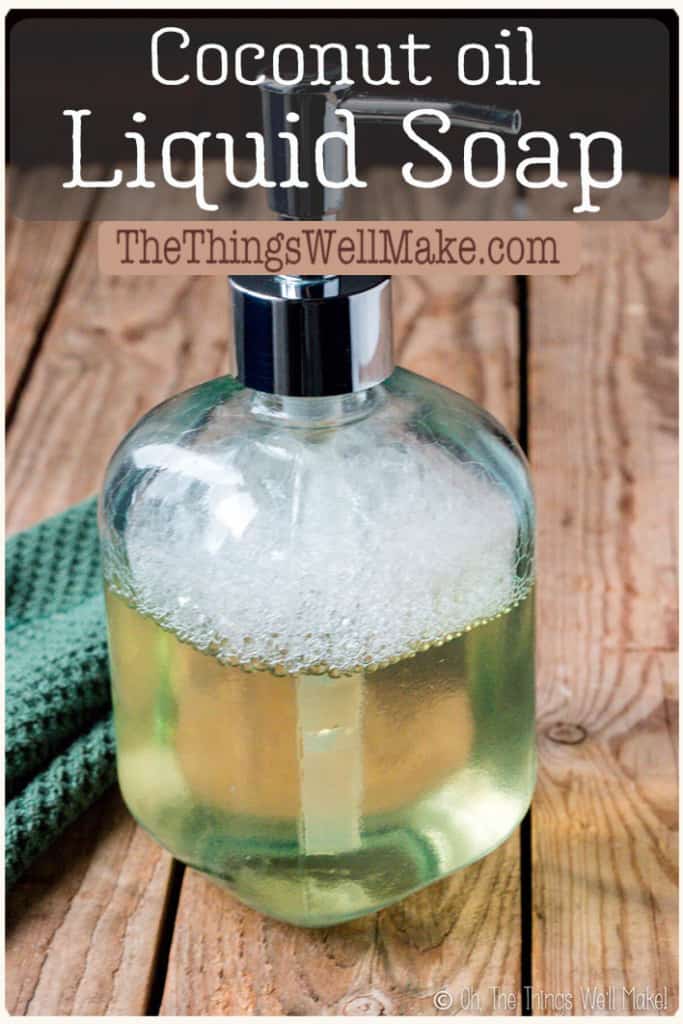
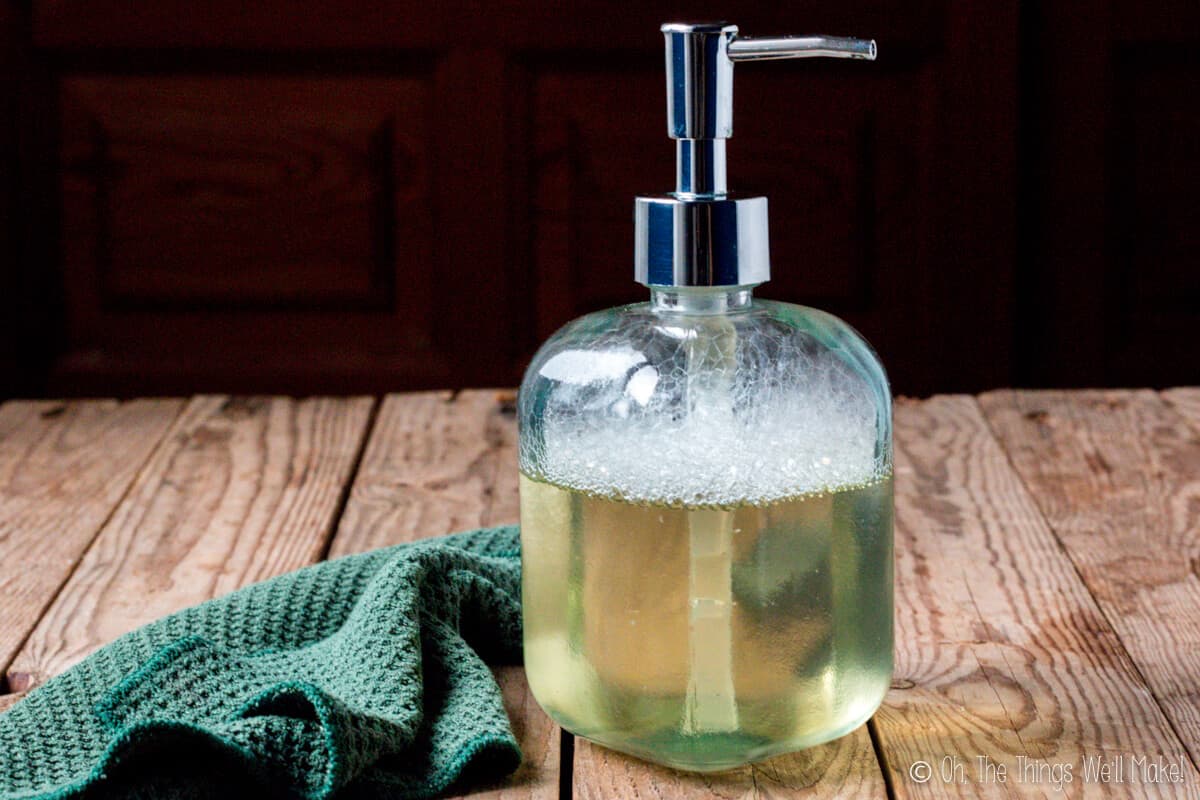
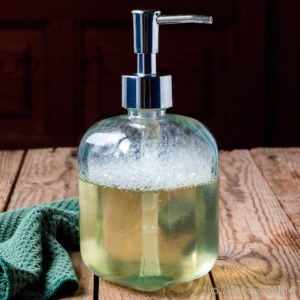
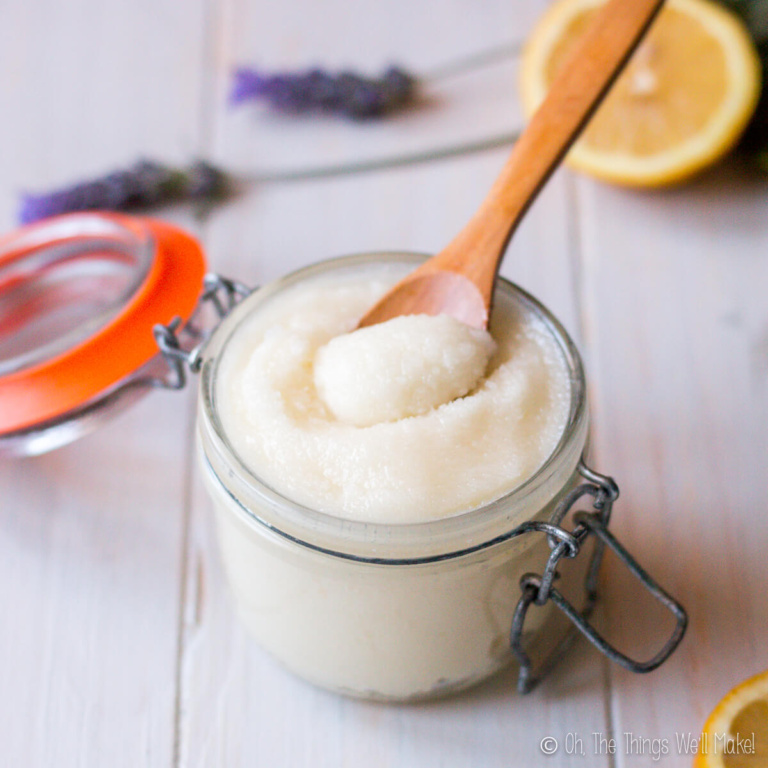
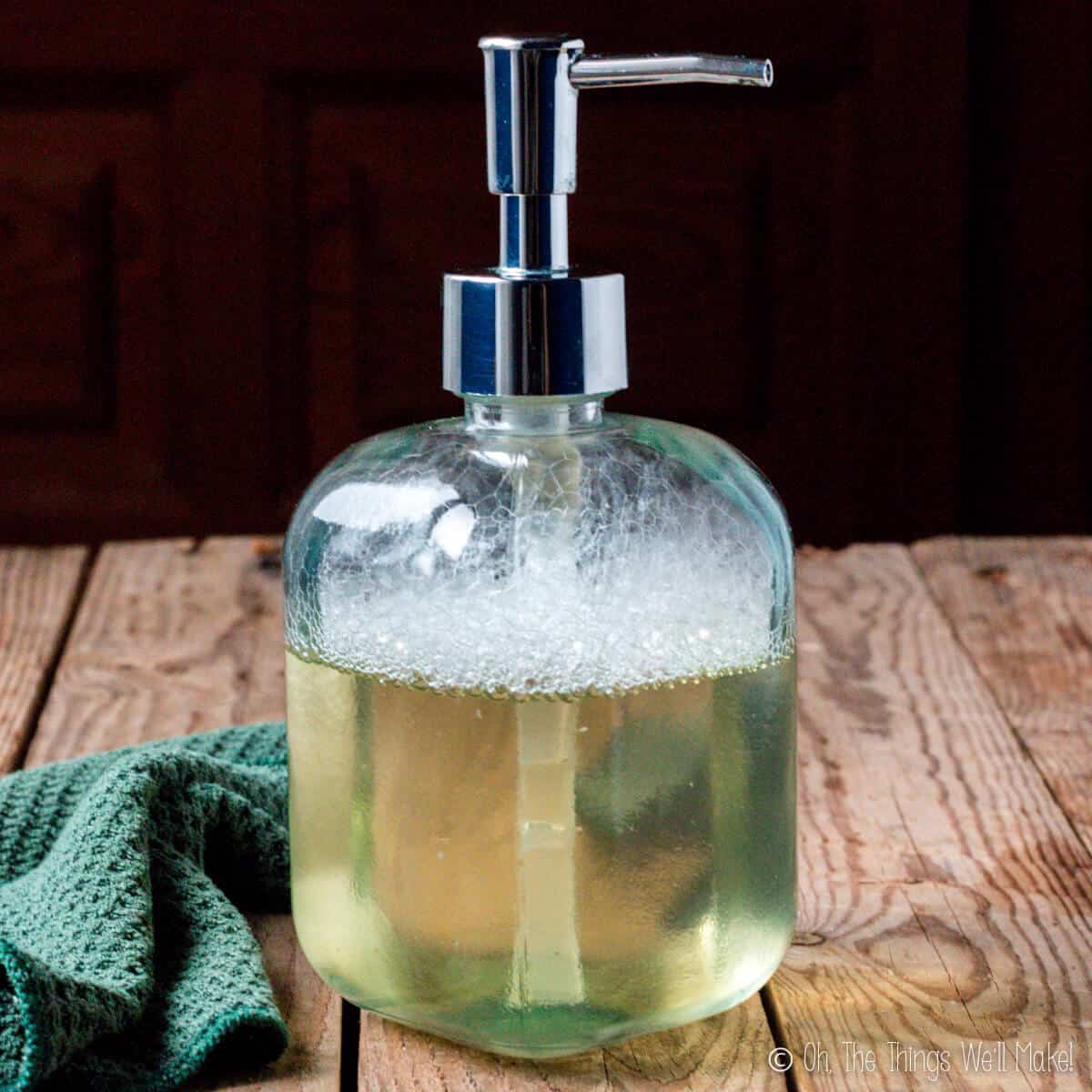
Making your own homemade liquid coconut oil soap is simple, thrifty, and very rewarding. Coconut oil soap provides lots of lather and cleaning power for all-purpose cleaning.
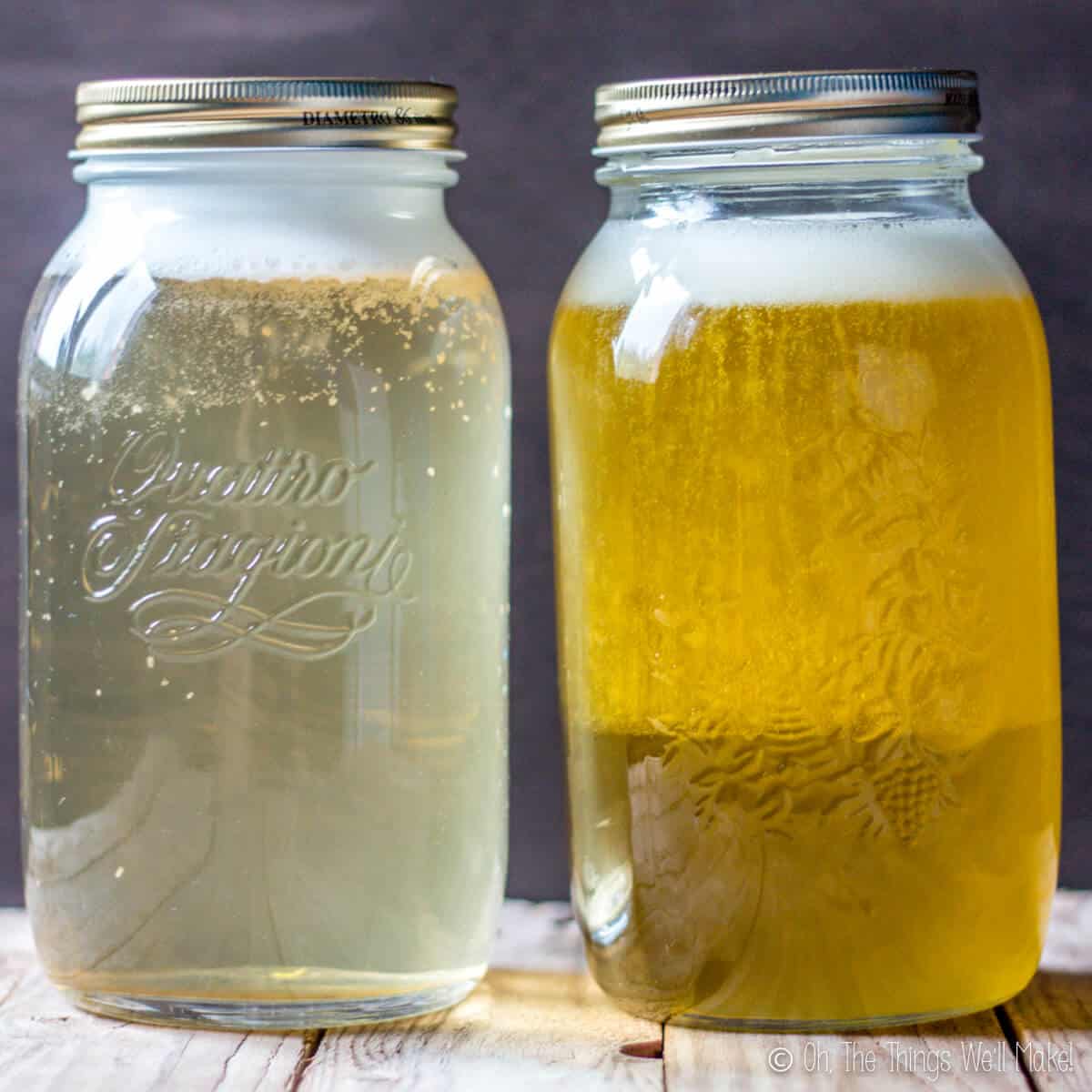
When I first made this soap, I had a great idea. I made a pure liquid Castile soap (made with only olive oil) and this liquid soap made with only coconut oil. My idea was that I would combine them, as needed, for different purposes around the house.
Oils in soapmaking
I had my reasons. Each oil in soap making brings different properties to soap (different from the properties they’d bring to a homemade lotion, for example). In a bar soap, there is a HUGE difference between a pure Castile soap made with only olive oil and soap made with only coconut oil.
Soaps made with olive oil are more conditioning. Olive oil is great for soaps meant for the face and body for that reason. On the other hand, soaps made with only olive oil don’t make much lather and they aren’t as “cleansing” as soaps made with coconut oil. Some people find them “slimy.”
Soaps made with coconut oil are cleansing and they provide a nice bubbly lather, but they can be drying to the skin when used alone.
Most people prefer using a soap with a combination. They want a soap that isn’t too drying, but that has some lather and cleansing ability. That’s why I used a combination of the two oils in my easy beginner soap recipe. I wanted a conditioning soap that provided some lather. If you haven’t tried making soap yet, you may want to begin with that recipe to get your confidence up before moving on to liquid soaps.
Read my post about the best oils in soap making for more information.
Oils in liquid soap making
Now that I’ve made these liquid soaps several times now, I have to admit that I don’t notice as much of a difference between the liquid soap made with olive oil and this liquid soap as I thought I would. In fact, I generally make this soap most often.
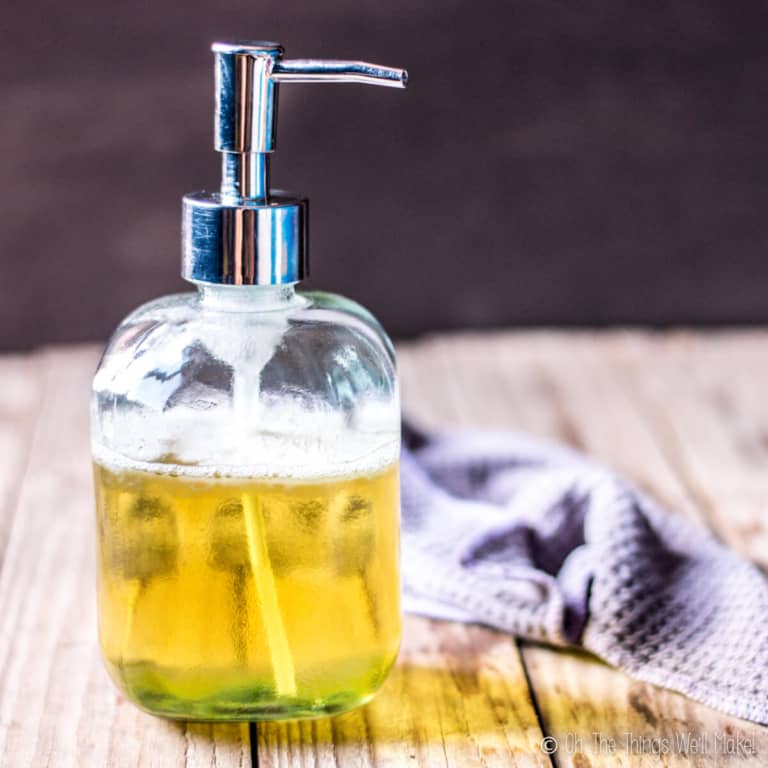
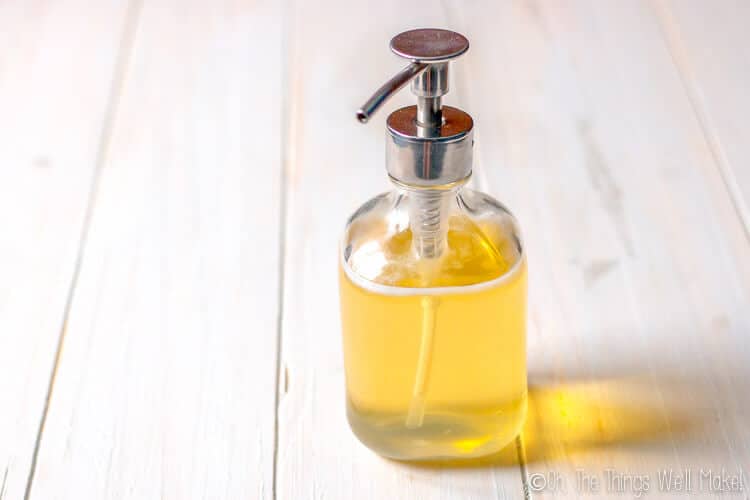
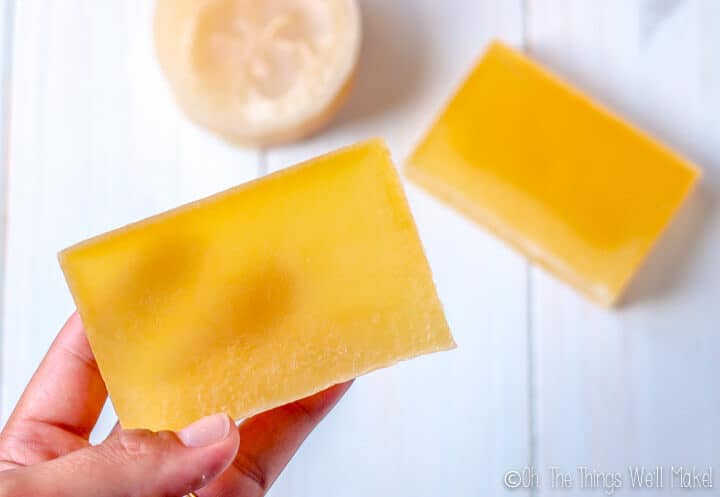
The biggest differences are cosmetic. This soap is much lighter in color while the liquid Castile soap is more golden in color. They also have a different scent. (If you add essential oils or fragrance oils when you dilute your liquid soap, though, you probably won’t notice a difference.)
I’ve found that both of these soaps provide a lot of lather. This one makes a slightly more abundant and bubbly lather. Neither one is excessively drying, although the one made with olive oil is slightly more conditioning.
My husband prefers my homemade liquid soaps for use in the shower to gels made with other surfactants because he likes the amount of lather they provide. (Yes, even the one made with only olive oil provides a lot of lather.)
Refined coconut oil, sold for soap making, generally is very inexpensive, so I like using it to make soap. I haven’t noticed a difference when using refined coconut oil vs. virgin coconut oil (which I used to use before I could find the more inexpensive coconut oil locally). (I used to make soap with olive oil more often because here in Spain it was the least expensive oil.)
Those with coconut allergies will be happy to learn that pure Castile liquid soap is also a great multi-purpose soap.
Why Make this soap?
Making your own liquid soap makes a lot of sense financially. It’s a bit intimidating, but once you’ve successfully made it, you’ll see it’s not that difficult. Liquid Castile soap is surprisingly expensive. Not only can you save a lot of money by making it yourself, but you are able to control which ingredients you use. This is especially helpful for people with allergies and skin sensitivities.
It’s also more sustainable. You can keep using the same containers and dispensers over and over again, meaning much less waste! One big batch of soap will keep for a very long time.
Before making this soap, you may want to read my post about how to make a liquid soap with general information about the process. It may also help you choose which soap you’d like to make.
Ingredients
This recipe uses only a few simple ingredients.
Coconut oil
Obviously, you will need coconut oil. You can use refined coconut oil or virgin coconut oil. It doesn’t really matter which you choose. Avoid using fractionated coconut oils or coconut oils that have been modified to melt at a different temperature. (If you want to use them, you’d have to run the recipe through a lye calculator and adjust the amount of lye used. Read more about using a lye calculator here.)
Lye (KOH)
Apart from the coconut oil, you will also need lye. In the case of liquid soap, you will need a different type of lye than the one used in bar soaps. For liquid soap, we will be using KOH, potassium hydroxide. (Bar soaps use NaOH, sodium hydroxide). All true soaps use lye. (For more information about lye and why it is needed in soap, read my post about why soap needs lye.)
Do not use NaOH, sodium hydroxide, to try to make liquid soap!
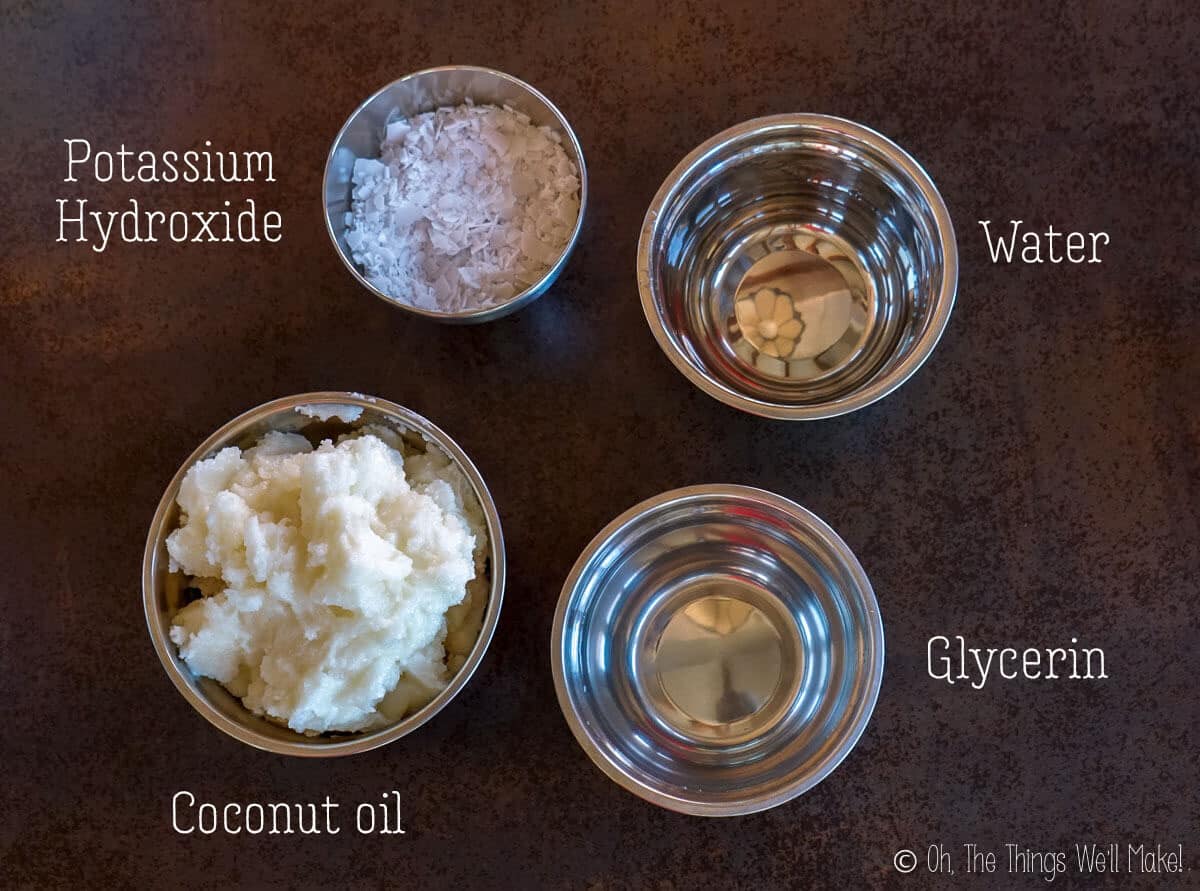
Glycerin
I use glycerin when making liquid soap for several reasons. Glycerin is normally a by-product of the soap making process. Adding more glycerin makes the process of liquid soap making easier and more fool-proof.
Not only is it said to move the process along more quickly, making the process quicker and easier, it also has other advantages. Soap pastes made with glycerin tend to be easier to dilute in water. They also may be more transparent and conditioning to the skin. (Glycerin is a humectant which can draw moisture into your skin.)
If you don’t want to use glycerin, you can just sub it out for more water. Just know that it may take longer to make and your resulting soap may be slightly different from mine.
Water
We’ll also be using water in our lye solution. I recommend using distilled water to avoid adding impurities and minerals that could result in a cloudy soap.
Procedure
Making liquid soap is very similar to making bar soap. Most people hot process their liquid soap, though. That means that they will cook it in some way or another to help finish the process of saponification. (Someday I will write about my experiments in trying to cold process liquid soap.)
In the past, I have recommended making this soap in a slow cooker. Over the years, though, I’ve had many questions about how to make this if you don’t have one. I made my last batch of this soap in the oven, and it worked quite well and was very easy to do too.
So, if you are using a slow cooker, you can add the weighed out coconut oil to the slow cooker and allow it to melt in there. If not, I’d suggest melting the coconut oil in a large bowl.
Making the lye solution
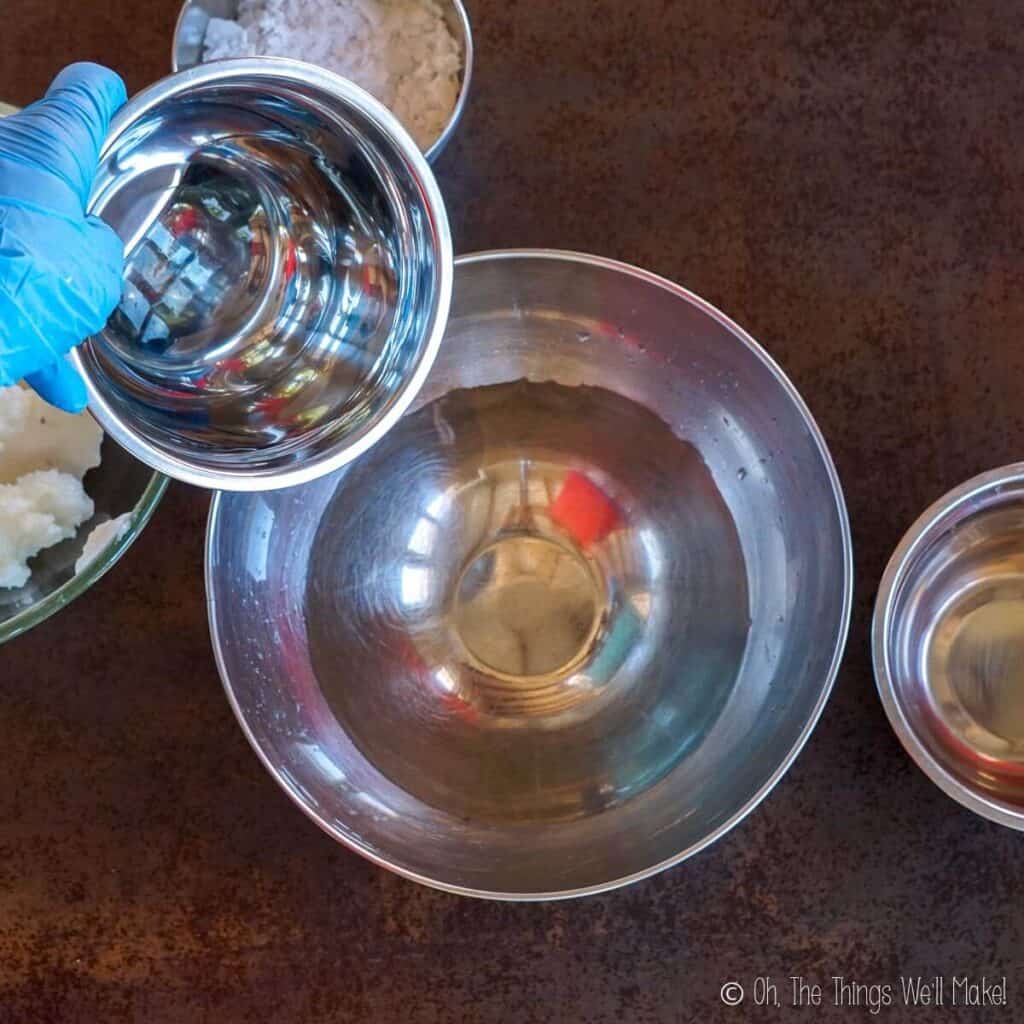
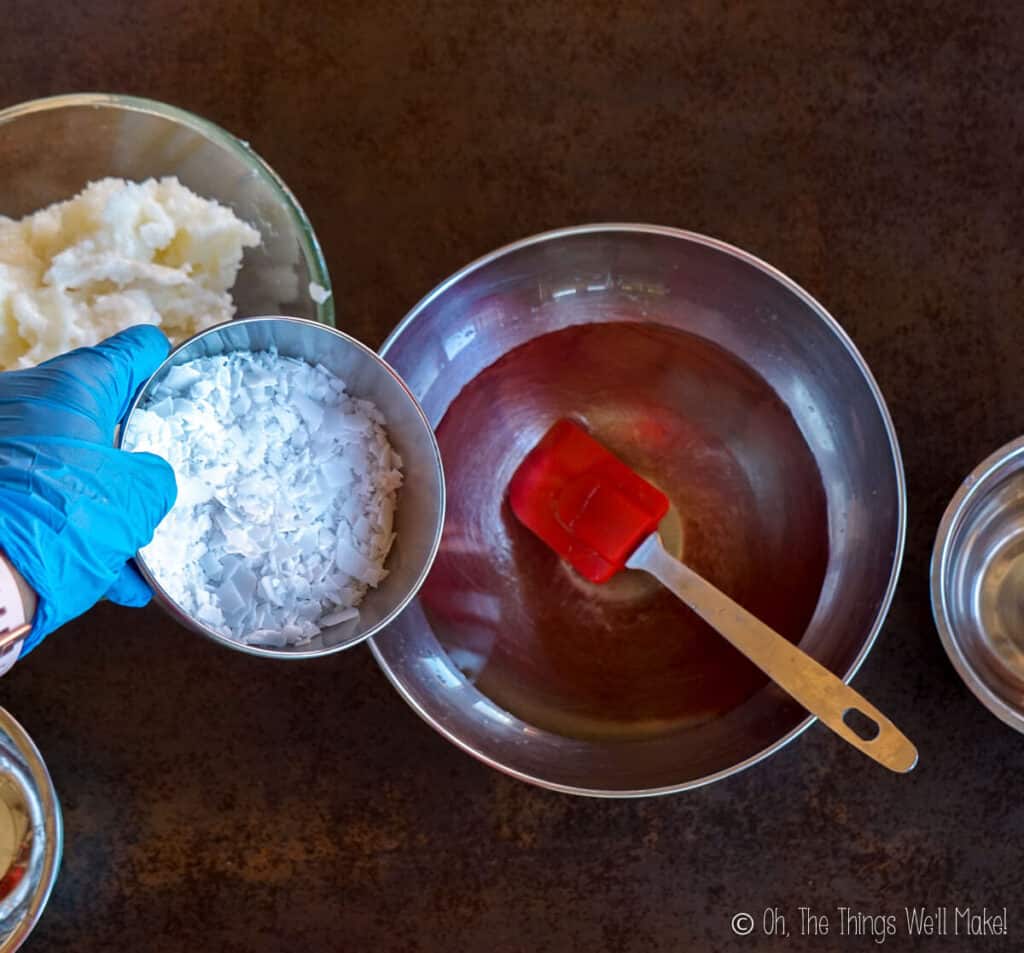
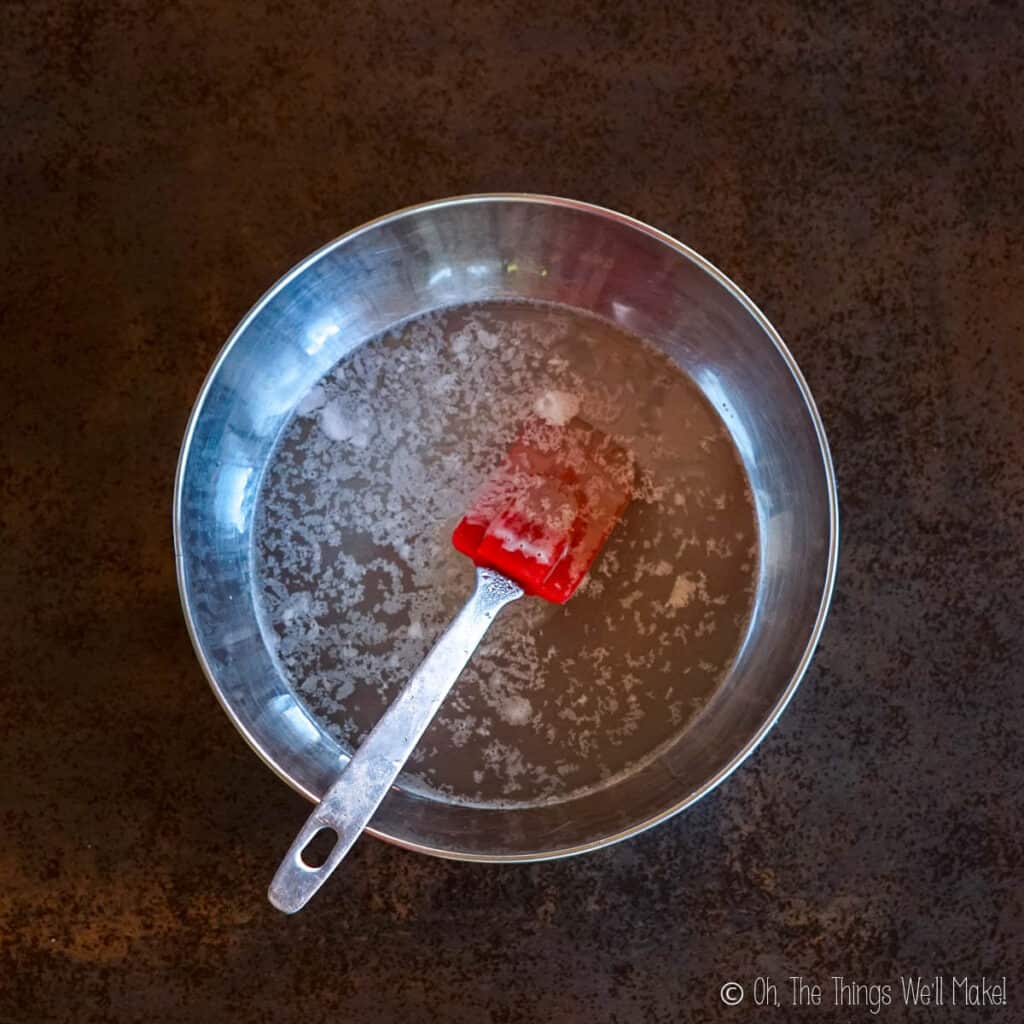
In a separate medium-sized bowl, mix together the water and glycerin. In a separate smaller bowl, weigh out the potassium hydroxide (KOH).
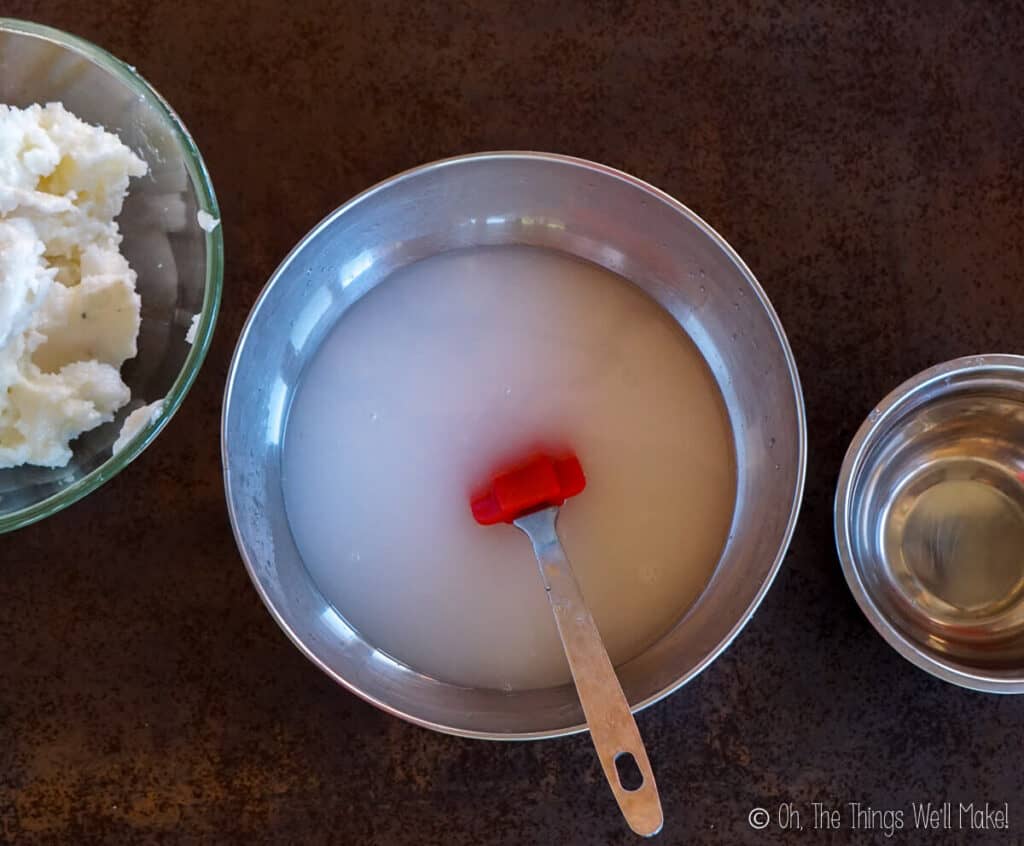
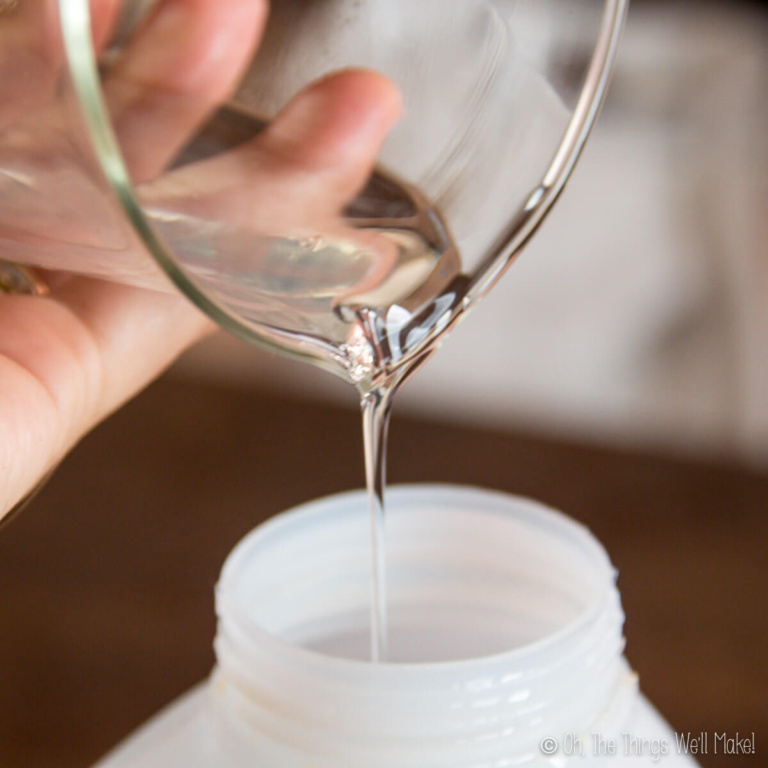
Pour the KOH into the water and glycerine mixture. Mix them together until the KOH is fully dissolved into the water and glycerine mixture. It will be cloudy at first but will clear up. It will also get very warm.
Making the soap paste
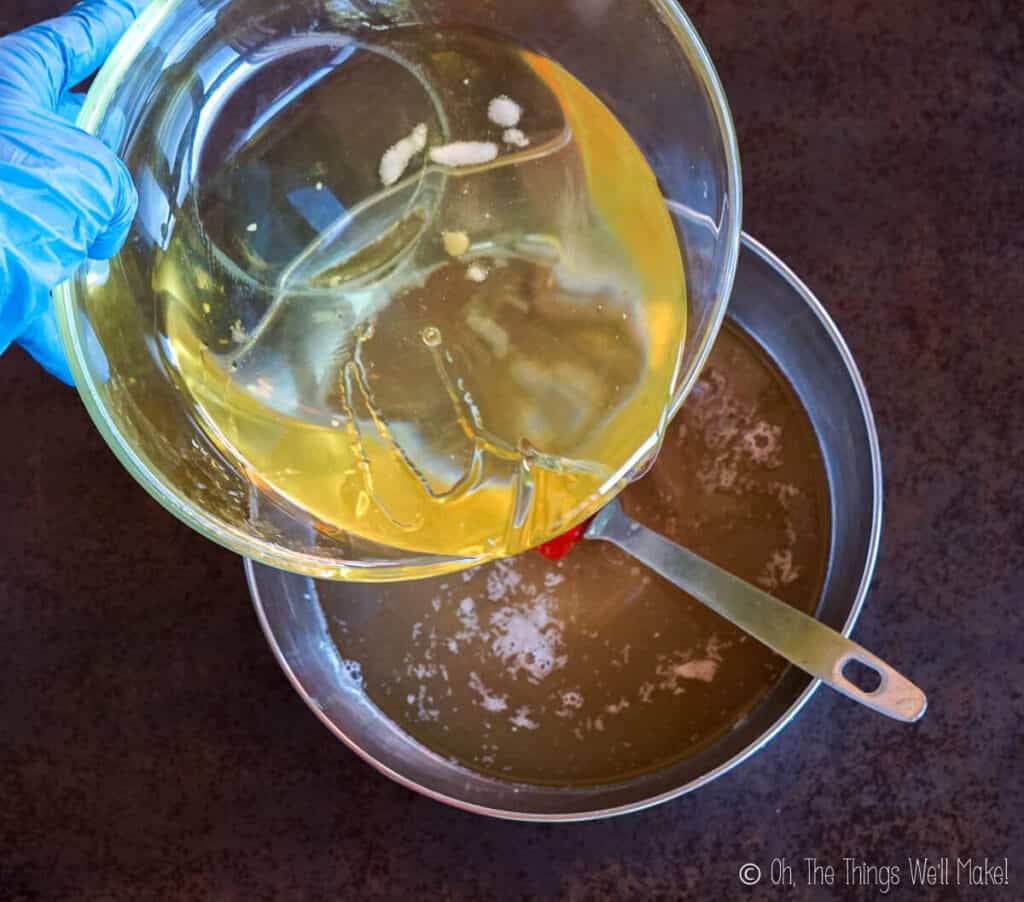
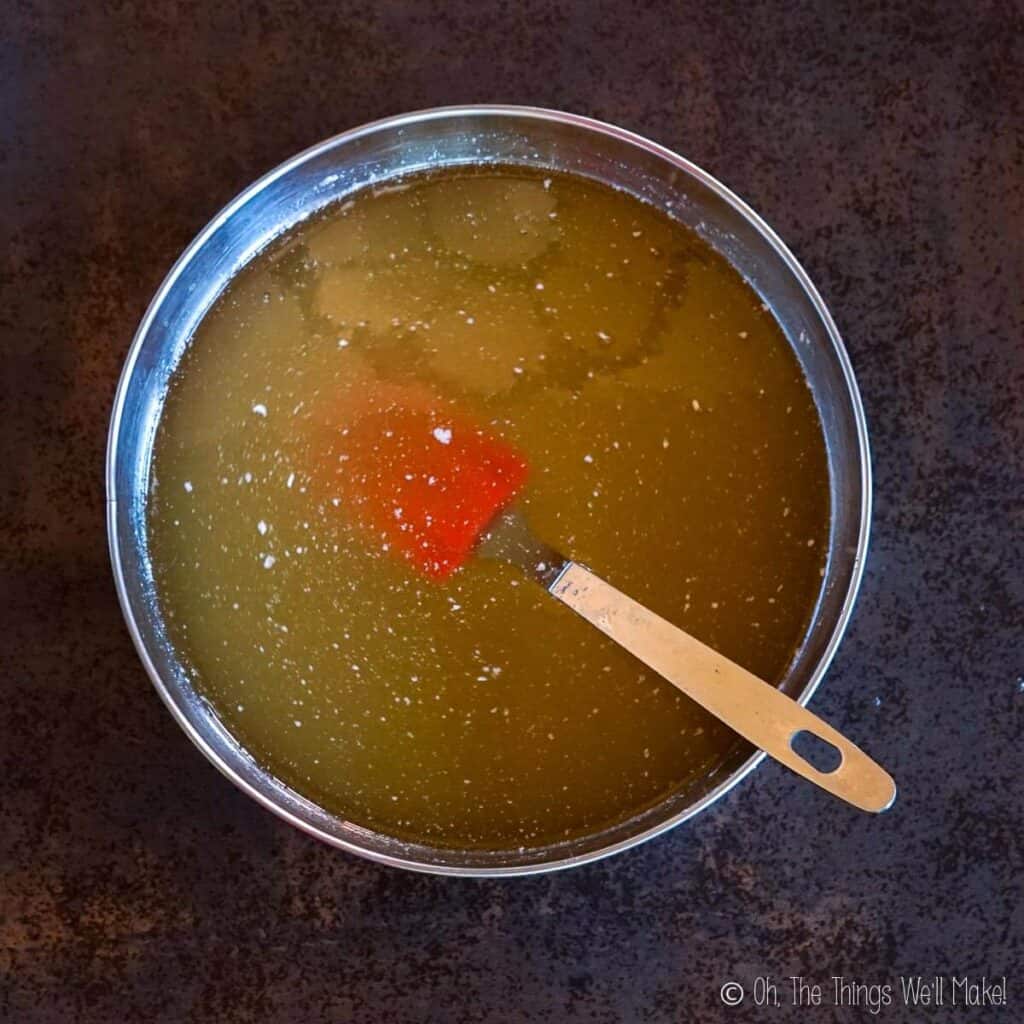
Carefully pour the KOH mixture into the warm coconut oil, and slowly mix them together. This can either be done right in the slow cooker crock or in a large bowl.
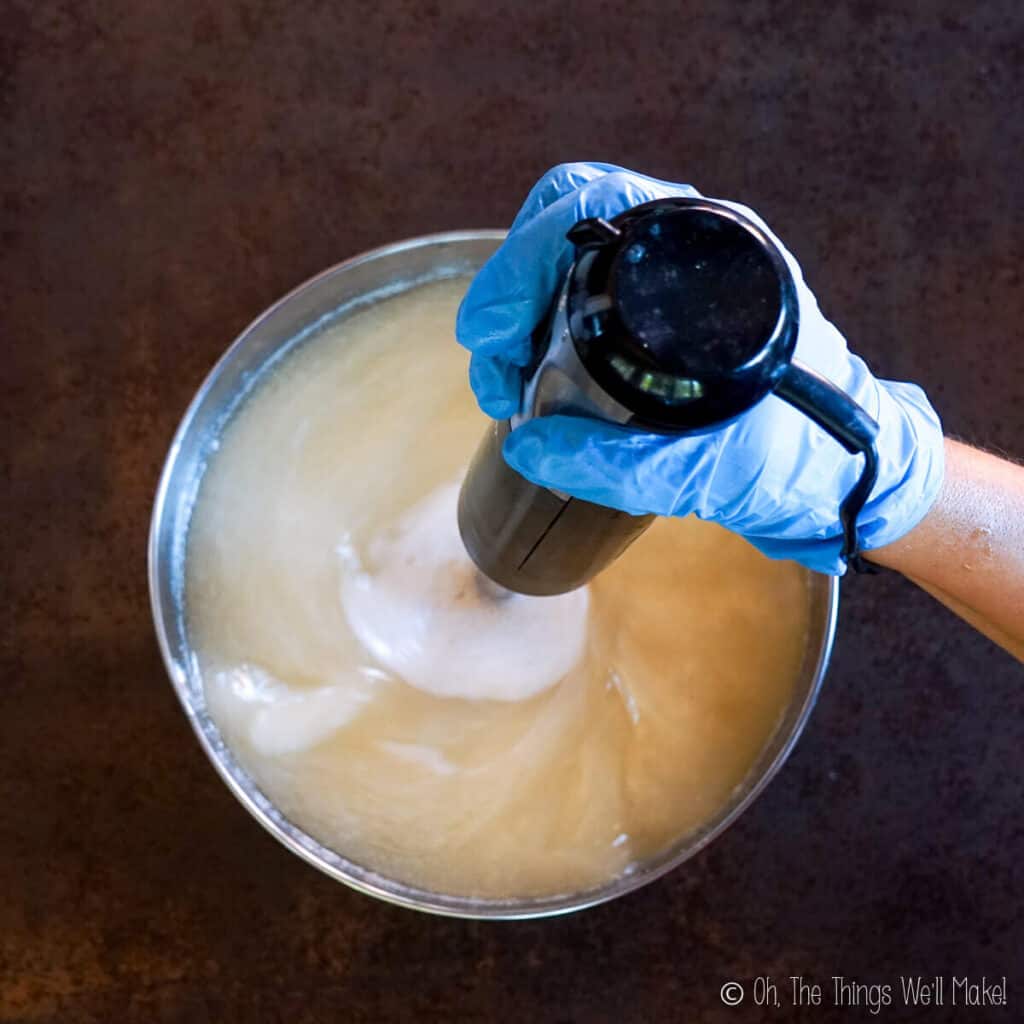
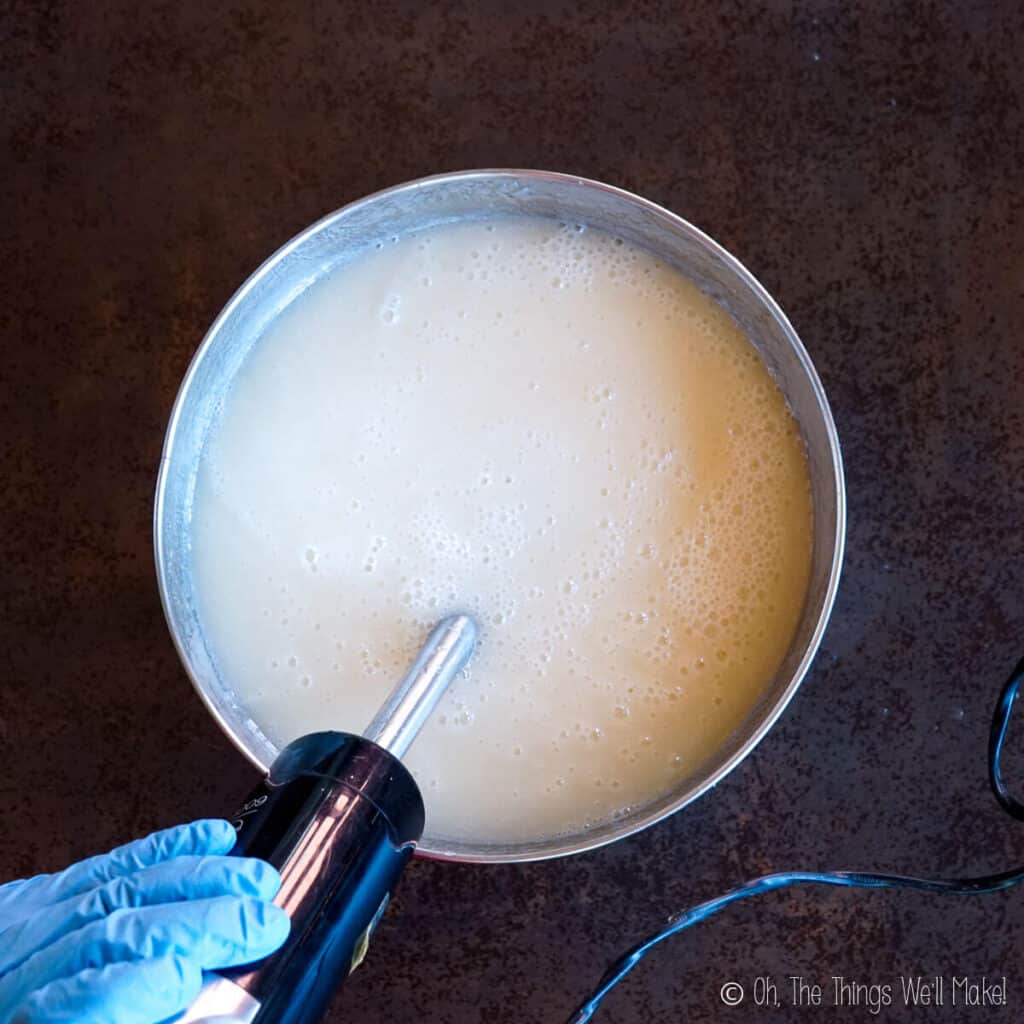
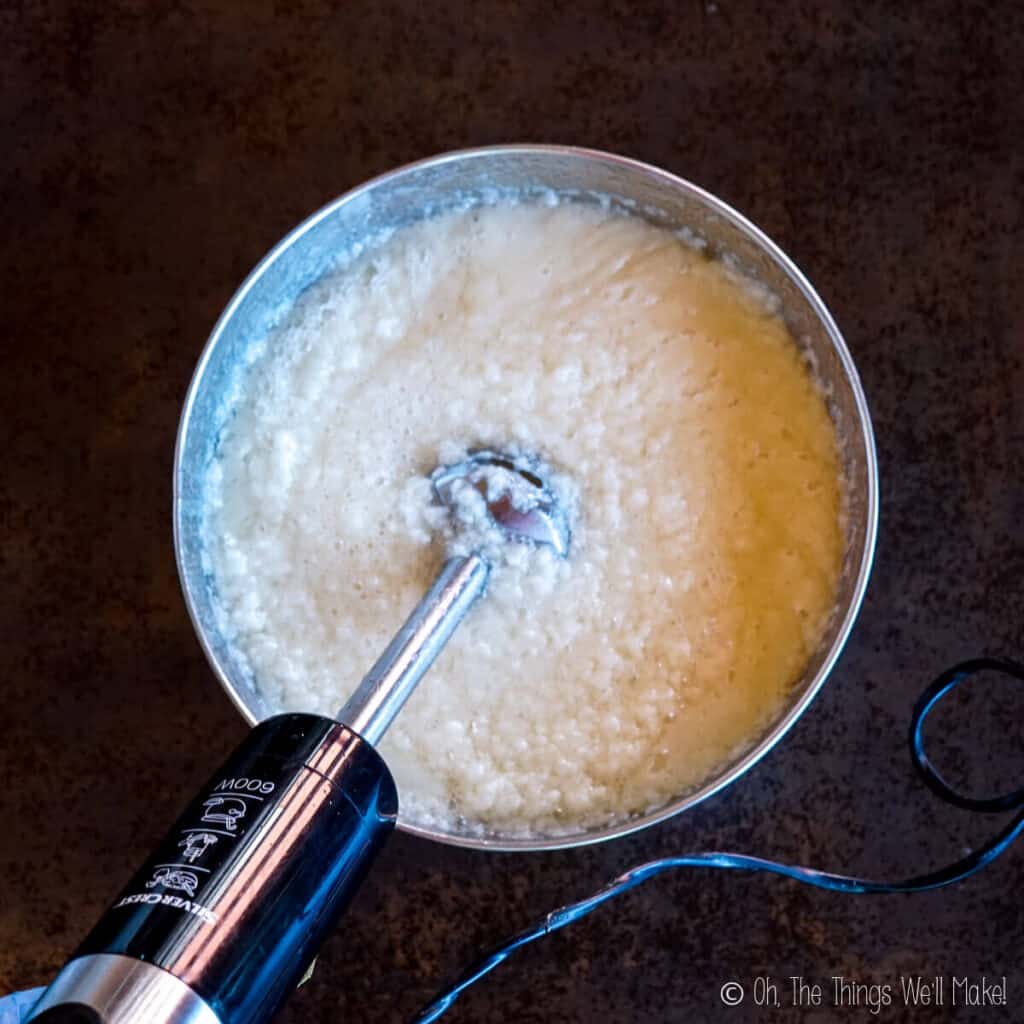
Using an immersions blender, blend the ingredients together. The mixture will begin to thicken after a few minutes. A couple of minutes later, the mixture will probably begin to look grainy. Continue to blend. (You can take breaks to give your blender time to rest. This helps prevent burning out the motor.)
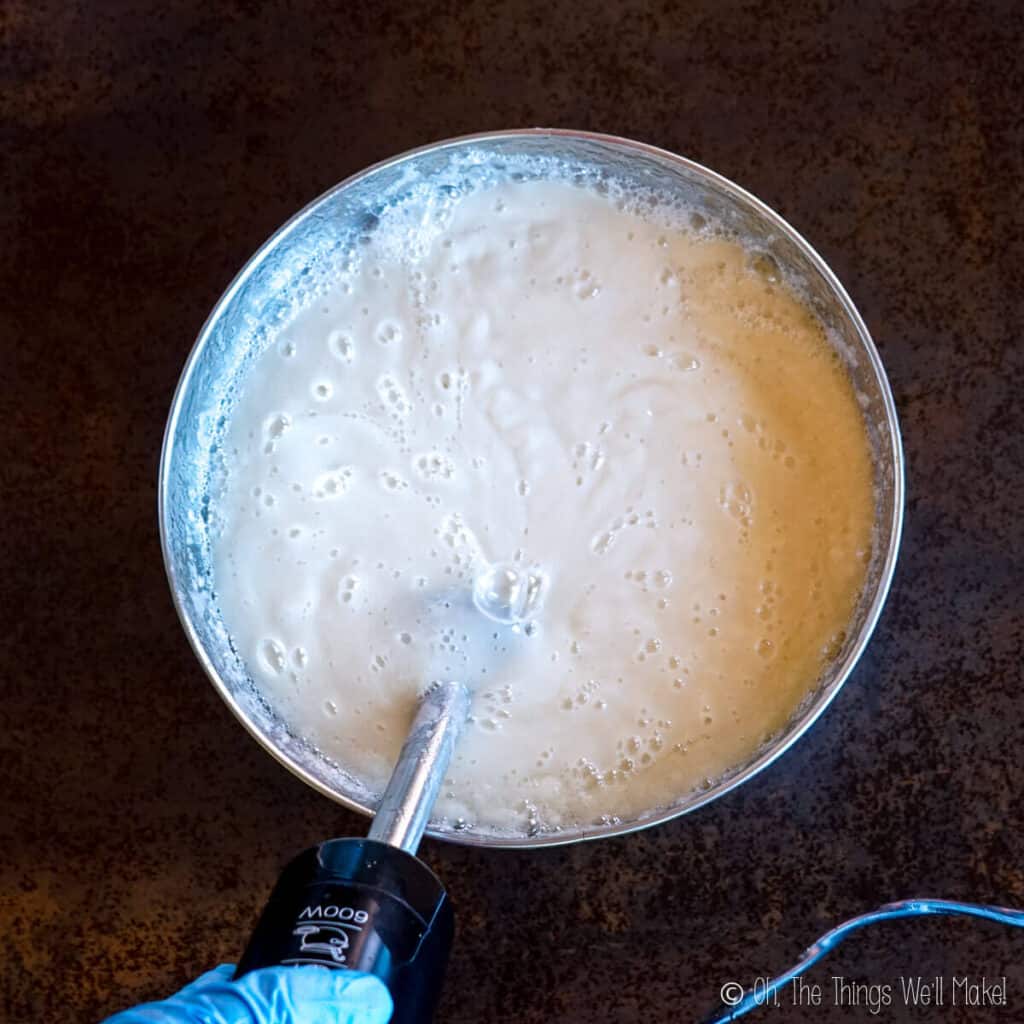
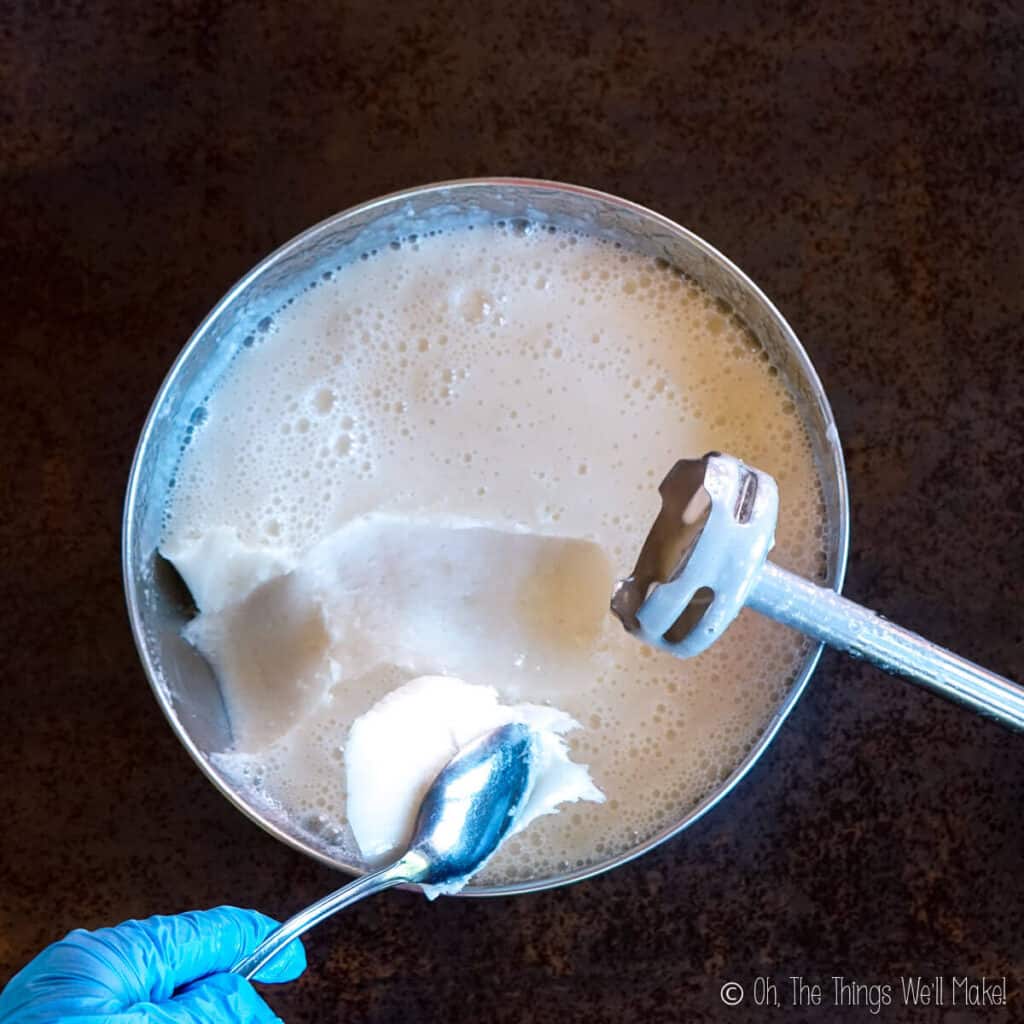
Soon after the mixture gets smooth again, it will start to thicken. At that point, you may want to remove the immersion blender as the mixture turns into a paste pretty suddenly. (You don’t want to burn out the motor of the blender or get it stuck in the soap paste.)
Cooking the soap paste
Once the paste has formed, it should be cooked to help finish the saponification process and make a translucent soap. (I’ve tried skipping this step and the paste stayed opaque and the finish soap was on the cloudy side. Even cooking for a short time, though, was enough to get the paste to the point where it could finish the process on its own, with time.)
Cooking in the slow cooker is the best option, if you have one. If you’re using a slow cooker, cover the soap and cook it on low for several hours.
If you don’t have a slow cooker, the paste can be spread out on a baking sheet and baked in the oven at around 70ºC/160ºF. (Ideally, cover the soap paste so that it doesn’t dry out too much.)
I tried cooking my last batch in the oven and my soap paste didn’t get as translucent as it does in the slow cooker. Perhaps, it would have had I cooked it longer and covered it. It may have also helped to increase the temperature slightly. In any case, the saponification process did complete and the soap is safe to use, but it was slightly cloudier than the soap I make in the slow cooker. (See my video!) I’ve found that soap pastes that haven’t gone fully translucent generally improve with time.
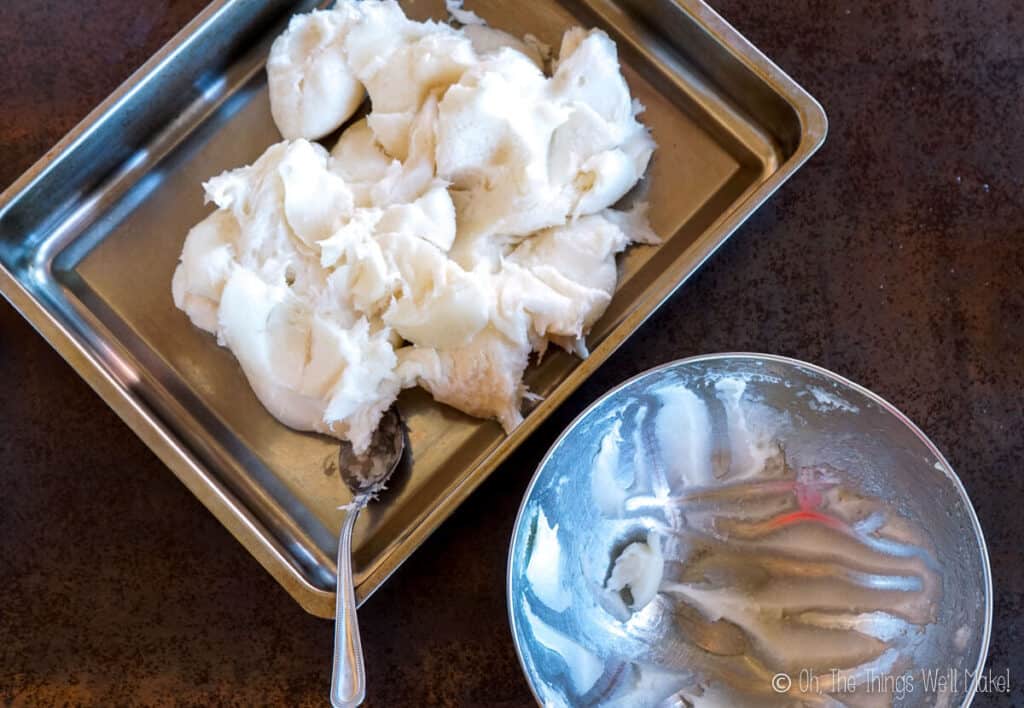
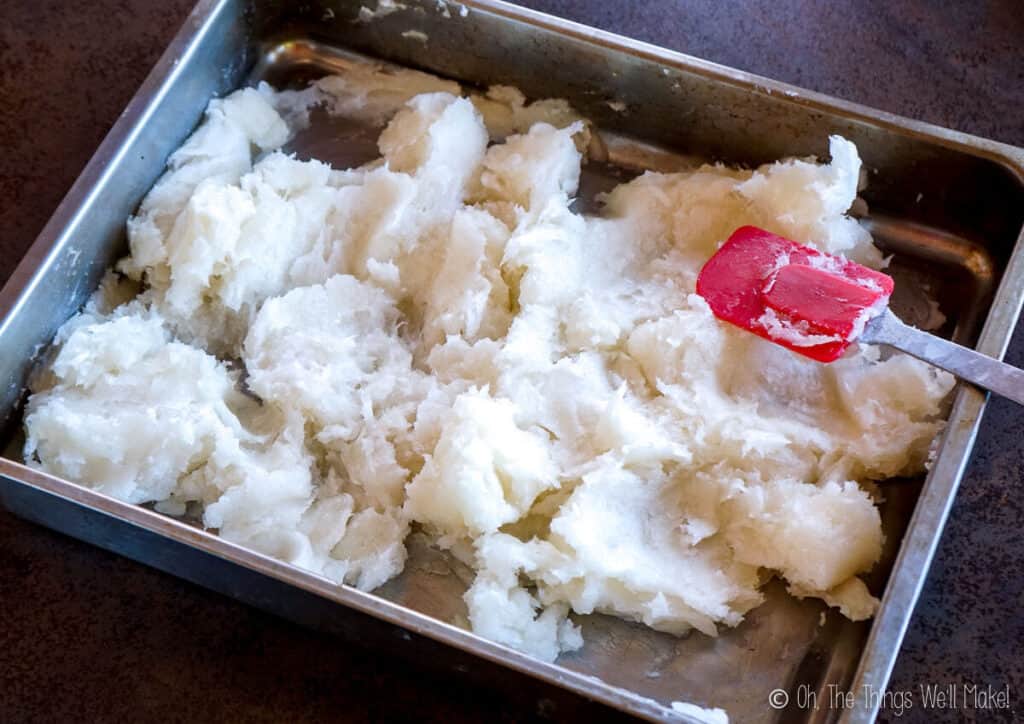
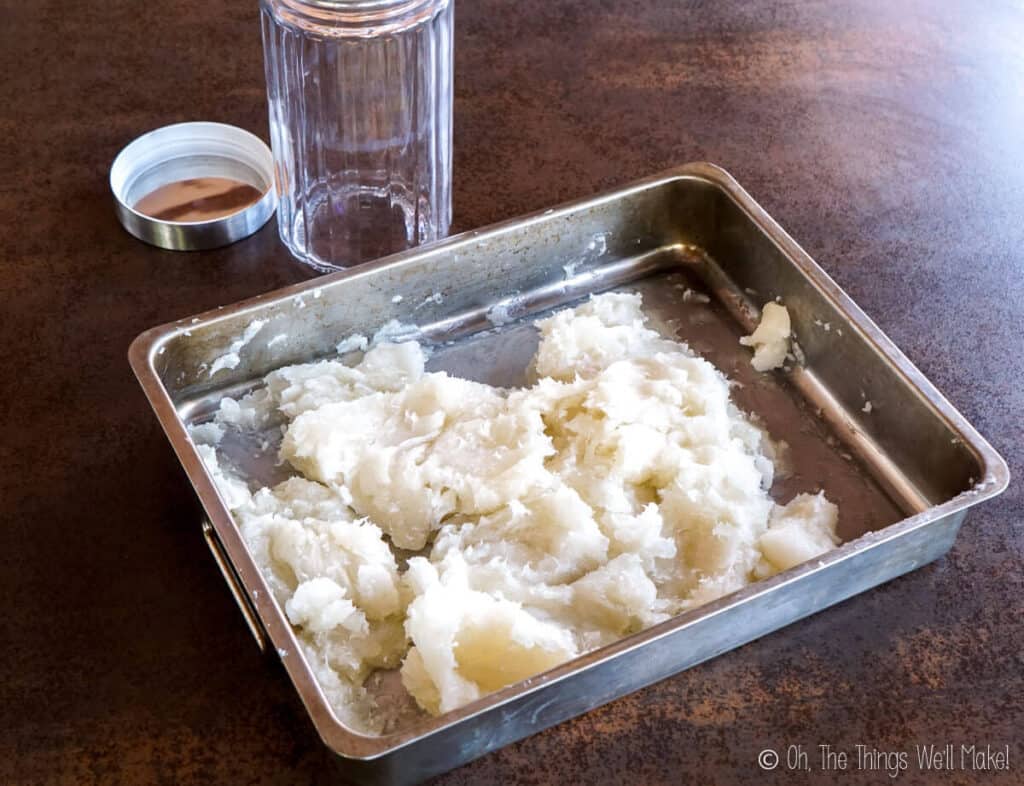
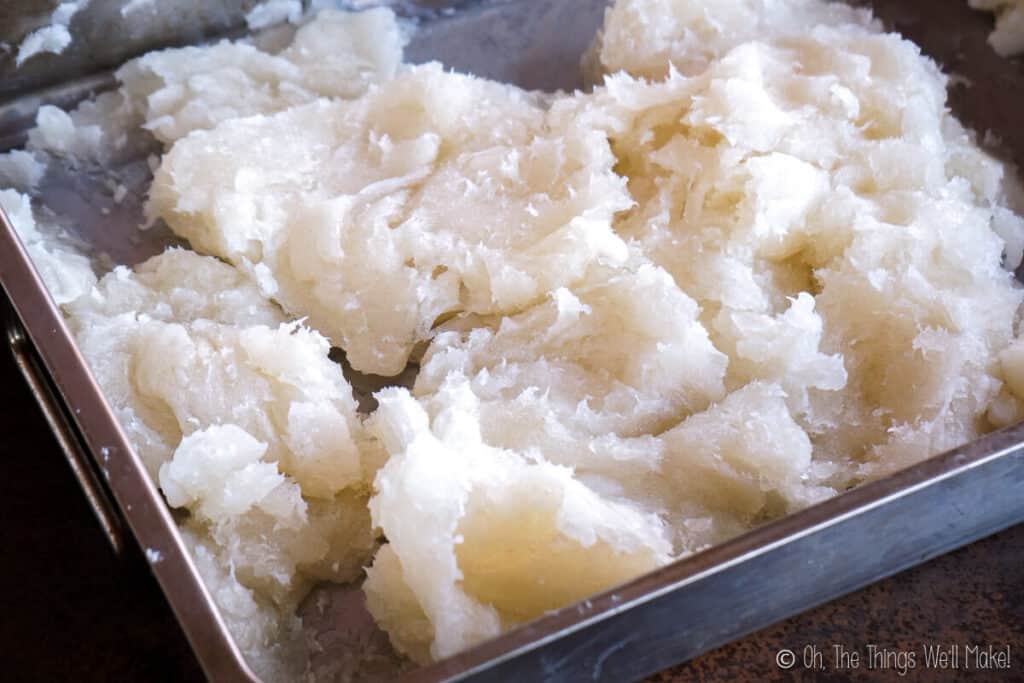
Every half hour or so, try to mix the soap paste as best you can. You can flip it over to expose different parts of the soap paste to cook the paste evenly. As it cooks, the mixture will become more translucent. The process will take 3-4 hours.
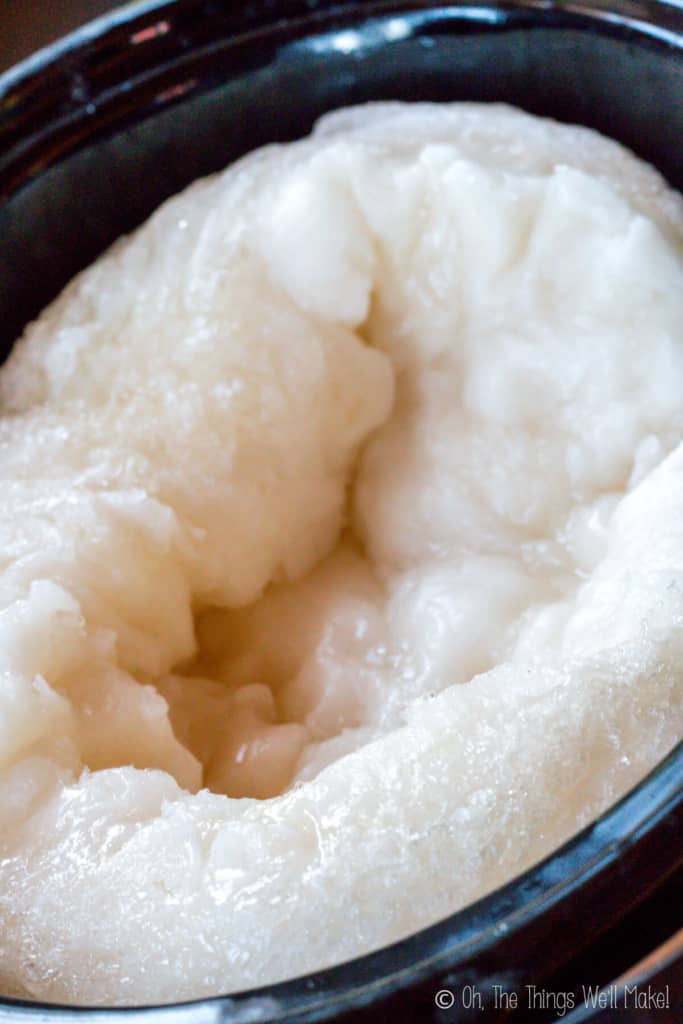
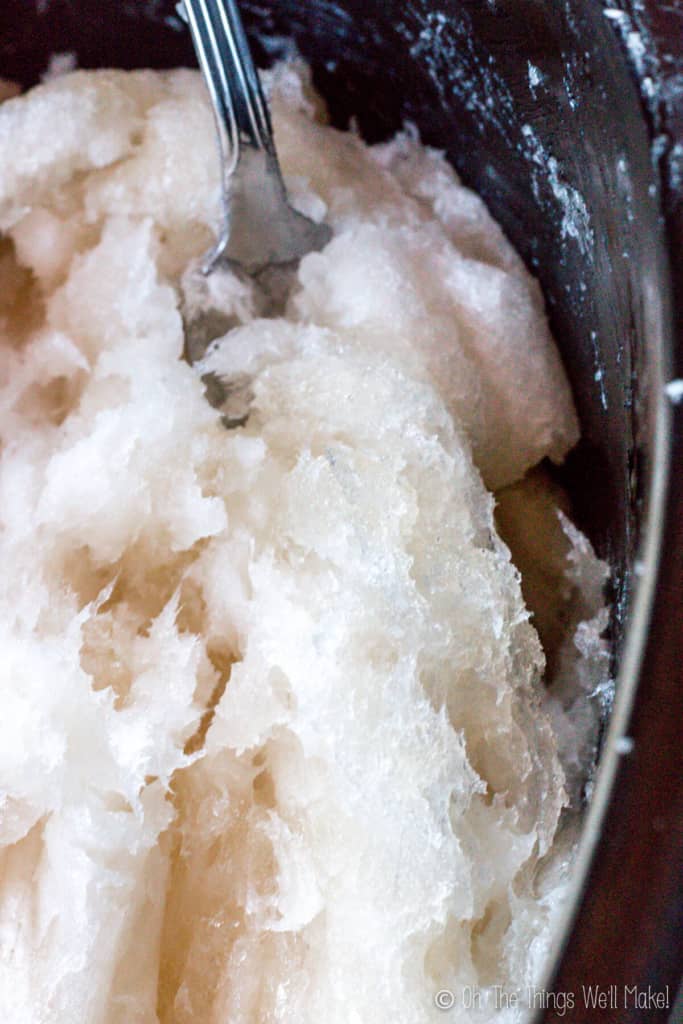
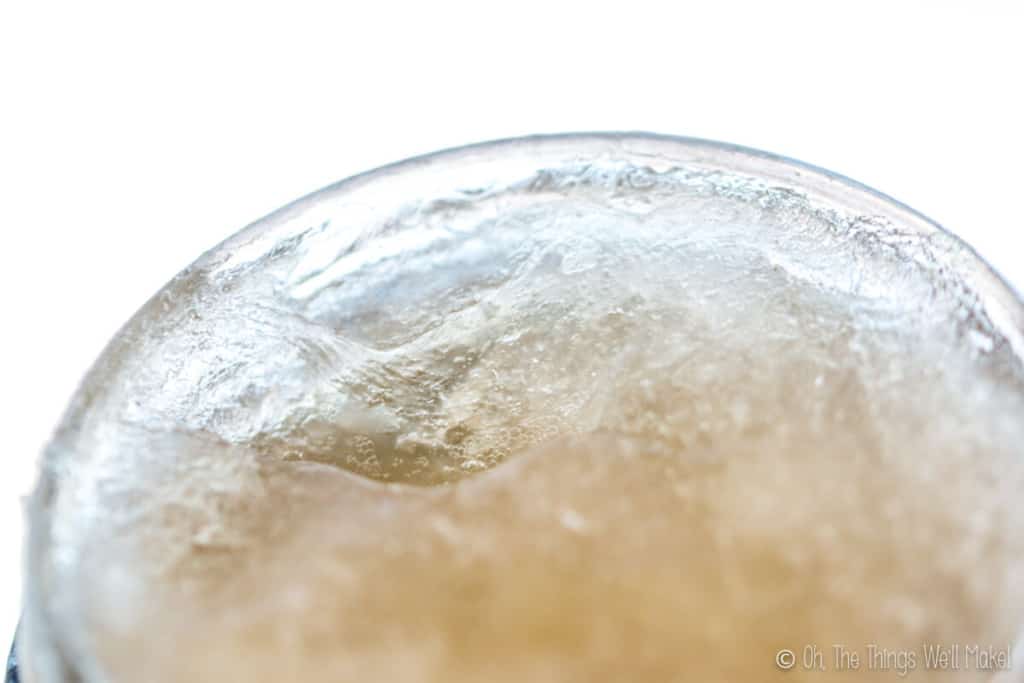
Check for doneness
There are several ways to test for “doneness.”
One method is to dissolve a small amount of the paste into distilled water, checking to see if dissolves into a clear soap. If the liquid is cloudy, you can continue to cook the soap in the slow cooker for another half an hour before checking on it again. If it dissolves clear, you are finished making the soap paste.
Another method is to use the zap test.
The zap test
To check for safety of the soap, many soap makers rely on what is called the zap test. To zap test a liquid soap paste, run your wet finger over the surface of the paste and then touch your soap-covered finger to your tongue. If the soap is caustic, it gives a zapping sensation. (This has nothing to do with flavor.)
If the soap doesn’t zap (if you can’t tell, it doesn’t), then it doesn’t have any more active lye, and should be safe to use.
If the paste passes the zap test, but is still cloudy, it’s your call whether or not to continue cooking. Cloudiness is generally only a cosmetic issue and may be caused by a number of factors (including minerals in your water). Often, soap paste that isn’t translucent after cooking for a while will eventually get more translucent on its own.
(I once removed part of a soap paste before it was fully cooked to see what would happen, and after a few weeks, it looked just like the rest of the batch that had been fully cooked.)
Once ready, the soap paste can be stored or dissolved into liquid soap as needed.
Storage
To store liquid soap paste, scoop it into a covered glass or plastic container or in Ziplock type plastic bags. The soap paste can be kept in a cool, dark place for a very long time. (I’ve had soap pastes stored for years without issues.)
Avoid storing in metal containers and avoid contact with metal as certain metals can react with the soap paste and shorten its lifespan. (Don’t ask how I know that. 😏)
Diluting the soap paste
To use the soap paste, it will need to be diluted in water. I suggest using distilled water to ensure a transparent soap. You can add more or less water, depending on the desired concentration. I generally 1 part soap paste to 1-3 parts water.
For fragrance, I also often add a few drops of essential oils to my liquid soap at the time of dilution.
For more information about diluting the soap paste, read my post on diluting soap pastes.
Troubleshooting
Over the years, I’ve had many people writing me with various problems. One of the most common is that the soap isn’t transparent or that the paste doesn’t get clear no matter how long they cook it. There are several reasons that your soap may not be as transparent as you’d like.
Keep in mind that cloudy soap is generally safe to use, it just isn’t as pretty as clear soap. If your soap paste passes the zap test, it should be completely safe to use.
Temperature
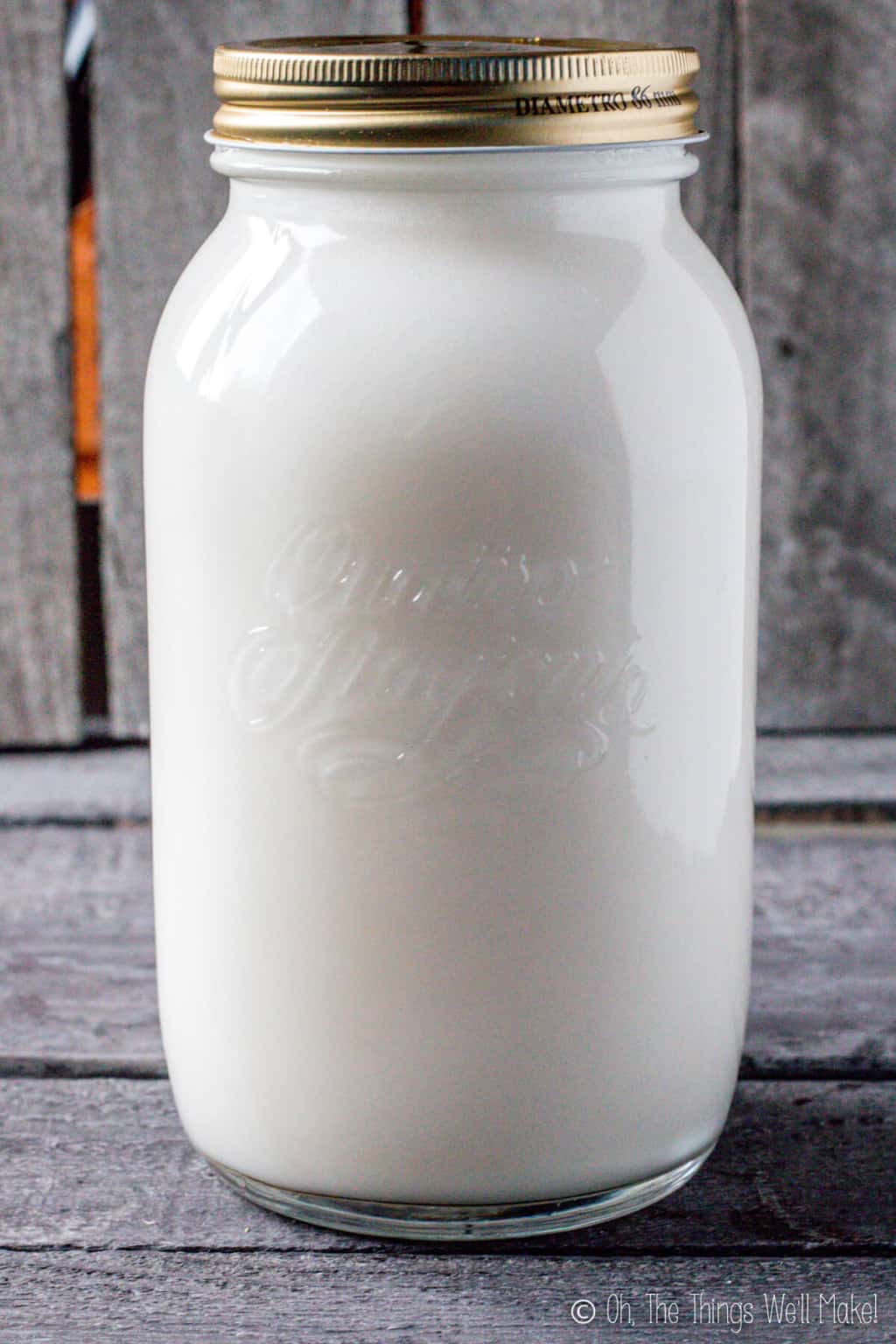
Just as coconut oil turns solid and opaque in cold temperatures, so does this liquid soap, to a certain extent.
My partially diluted liquid coconut oil soap turned an opaque white and thickened up in the winter. When the weather warmed up again, the soap cleared up. This is only a cosmetic issue, but you can dilute it more in the winter than you would in the summer if you want it to be clear.
amzn_assoc_placement = “adunit0”;
amzn_assoc_search_bar = “true”;
amzn_assoc_tracking_id = “nativeads0f-20”;
amzn_assoc_ad_mode = “manual”;
amzn_assoc_ad_type = “smart”;
amzn_assoc_marketplace = “amazon”;
amzn_assoc_region = “US”;
amzn_assoc_title = “My Amazon Picks”;
amzn_assoc_linkid = “79ececd6ba76b6700c7f1df1a7973f22”;
amzn_assoc_asins = “B00H4BZM9M,B001EDK0WK,B00TJTASYG,B004O07LRC”;
Water used
The other most common issue is having used tap water to make the soap. Tap water has minerals and can have impurities that often make the soap look either cloudy or even opalescent.
For other problems, read my post about troubleshooting liquid soap problems.
Video
Homemade liquid coconut oil soap
Materials
- 32 oz. coconut oil
- 8.59 oz. KOH Not the lye (NaOH) used in bar soap.
- 17.77 oz. water
- 8 oz. glycerine
Instructions
Making the soap paste
- Melt the coconut oil. You can do this in a slow cooker or in a large bowl.
- In a large bowl, mix together the water and glycerin. In a separate, smaller bowl, weigh out the potassium hydroxide (KOH).
- Carefully pour the KOH into the water and glycerin mixture (not the other way around). Stir until fully dissolved. It will heat up and go from cloudy to clear.
- Pour the lye solution into the warm coconut oil and begin mixing.
- Use an immersion blender to blend the mixture. It will begin to thicken and may go through a grainy stage. Keep blending until it becomes smooth again and then thickens into a paste.
- Once the mixture reaches a thick, putty-like consistency, stop blending.
Cooking the soap paste
- Cook the soap paste to help finish saponification. If using a slow cooker, cover and cook on low for several hours. If using an oven, spread it on a baking sheet and bake at about 70ºC/160ºF
- Stir or flip the paste every 30 minutes or so to help it cook evenly.
- The paste is ready when a small amount dissolves into clear soap in distilled water.
Dissolving the liquid soap paste
- To make liquid soap, dissolve the paste in water. Start with about 1 part soap paste to 1–3 parts water and adjust as needed.
- Let it sit to dissolve, or use gentle heat and stirring to speed up the process.
Notes
This post was originally published on October 21, 2016. It was rewritten in May of 2021, adding clearer instructions, new photos, and video.
Just finished making my first batch (my first time ever making soap)! It all came together great, and I can’t wait to start using it! I made a little diluted bit, just to try it out, and it works perfectly. Thank you for curing me of my Dr. Bronners addiction! 😉 Seriously, thanks for all the work you put into this, particularly the photos and explicit descriptions of each of the stages. They really helped this beginner out.
Hi Tamar,
You are so welcome! I’m happy to give you a new hobby that will save you lots of money. 😉
Thank you for your comment.
I’m super excited to try this but I have a question I can’t see that was answered yet, what is the slow cooker on? High/ low? Thanks!
Hi Danielle,
I didn’t specify because there appears to be a huge difference in temperatures in slow cookers. I usually use the low setting on mine, but I’ve had people write me in the comments that it was taking a really long time to go through the various stages of the soap, but that the pace quickened up as soon as they turned the temperature up.
I’d probably recommend starting out on the lower setting of your slow cooker to see how it goes and turn it up if it appears to not be moving through the various stages. I think it’s pretty forgiving, and will eventually work out either way. You just want to try to avoid burning the paste. I doubt that most slow cookers will burn the paste on either setting, but if you do use the high heat setting, it’s probably a good idea to keep a closer eye on it and stir it a bit more often just to be on the safe side.
Between stirring every thirty minutes, do you cover your crockpot with its lid?
Hi Laurie,
Yes, I normally keep the lid on, so it doesn’t dry out too much (The coconut oil soap tends to get thick quickly), and to keep the heat in, but it’s probably not a big deal either way.
Hello! I made the olive oil version last weekend and am very happy with it. I’m making the coconut oil version now. It does seem to be doing well, progressing through the various consistencies quicker than the olive oil (though I’ll still plan to cook for a few hours at least). One question, though: is it normal (and ok) for their to be separation of liquid and solid? Every time I return to stir it so far, there is clear liquid at the bottom worth some thickness of white on top. Thanks for your help!
Whoops! I spoke too soon. About an 1 1/2 hours into the process, and at the point when I definitely do need to switch to stirring with a metal fork, it is no longer separating between stirs. ?
Hi Hope,
I’m glad to hear it all came around. 🙂
very nice
Thanks, Raj!
Hi, your article is good I have to clarify one thing some toilet soap says saponified olive oil saponified turmeric what is it means what process it is?
Saponified means it has already been combined with lye to make soap. Perhaps it’s because they buy the soap bases already made, and combine them after the fact. Or, perhaps, they just don’t like using lye as an ingredient, as it really is no longer present in the final soap. All they are saying is that they have soap made with olive oil. The turmeric part doesn’t make sense to me unless it’s a turmeric oil of some sort.
I appreciate what you done in making the liquid soap. and it is my interest to make a liquid soap. I am trying to do my own liquid soap for market. and I hope You will help me providing Ideas and more skills. Thank you. Gracias
Hi Elyas,
I wish I could be of help, but I don’t sell soap, so I don’t know the process of what you need to do to be able to do so. It will also depend a lot on the regulations in whatever country you are in.
All I can offer is my recipes for you to use and try, so you can better learn the process. This is one of my favorite soaps, and I make it often. I also have many bar soaps and other liquid soaps on the blog.
I live in Monterey Mexico and I don’t think I could find KoH here is there anything else I could use and that I can find here.
Hi Gloria,
I’m sorry, but there isn’t anything else that I know of that you can use to make a liquid soap. KOH isn’t really something that you can just go to a store and find anywhere that I know of. You normally have to order it online from a soap/lotion supplies store. I’d be surprised if you couldn’t find one that sends to you there.
The nice thing about KOH is that it has a long shelf life and is fairly inexpensive. So, once you buy it, you can be making soap for a very long time.
Hola Gloria,
Vivo en San Cristóbal de las Casas en Chiapas.
Compré hace poco hidróxido de potasio en línea con Mercado Libre.
Puede ver el enlace abajo. Sale barato también.
https://articulo.mercadolibre.com.mx/MLM-602483640-2-kg-de-hidroxido-de-potasio-potasa-_JM?quantity=1
Saludos y espero que le ayude.
can the coconut soap be used in a foaming dispenser? i really like the foaming dispensers for liquid soap so wondering.
Hi John,
Yes, most definitely. I use them for these soaps a lot! I agree, they’re great, and kids especially love them. (Perhaps we’re just big kids.) 😉
I made a batch of olive oil liquid castile soap and if worked well, first time. But the coconut batch became a thick paste very fast, a little more than an hour. it’s still cooking and I’m folding it but each time I test it….well it’s cloudy. Is there any way I can recuse this batch? Love your web site by the way.
Hi Teresa,
Thanks so much!
I’d just stop and let it be. Sometimes it will stay cloudy, from what I hear from other people, but once you leave it bee it tends to eventually clear up on its own. In any case, it’s still quite usable, even if it never goes clear. All of this is really just to get a more transparent, or at least translucent, soap because that’s what people are used to seeing.
I’ve actually been doing experiments with not even doing any of the cooking, and you end up with an opaque white paste. I was hoping it would eventually go clear, but the paste I made months ago is still an opaque white. It still works just as well at cleaning, so it’s really just a cosmetic issue.
This experiment came about because I had set aside some paste at the beginning of the cooking process because I wanted to take pictures to show the difference between a cooked and non cooked paste. I was busy at the time, so they were set aside in a closet for several weeks. When I got around to wanting to take the pictures, I was never able to because both pastes looked exactly the same. The more opaque cloudy paste had gone clear on its own. It appears to me that even with just a slight bit of cooking, the paste will eventually transform on its own. That’s why I was hoping that the same would happen without any cooking, but for now, I haven’t been successful at getting a clear paste without any cooking. Perhaps it will change when the weather warms up. The houses here are cold! 😉