

Best Homemade Toothpaste Recipe: Dentist Formulated!
Disappointed with the consistency of the homemade toothpaste recipes you’ve tried making at home? This recipe, formulated by a dentist, tastes and feels like the toothpaste you buy at the store.
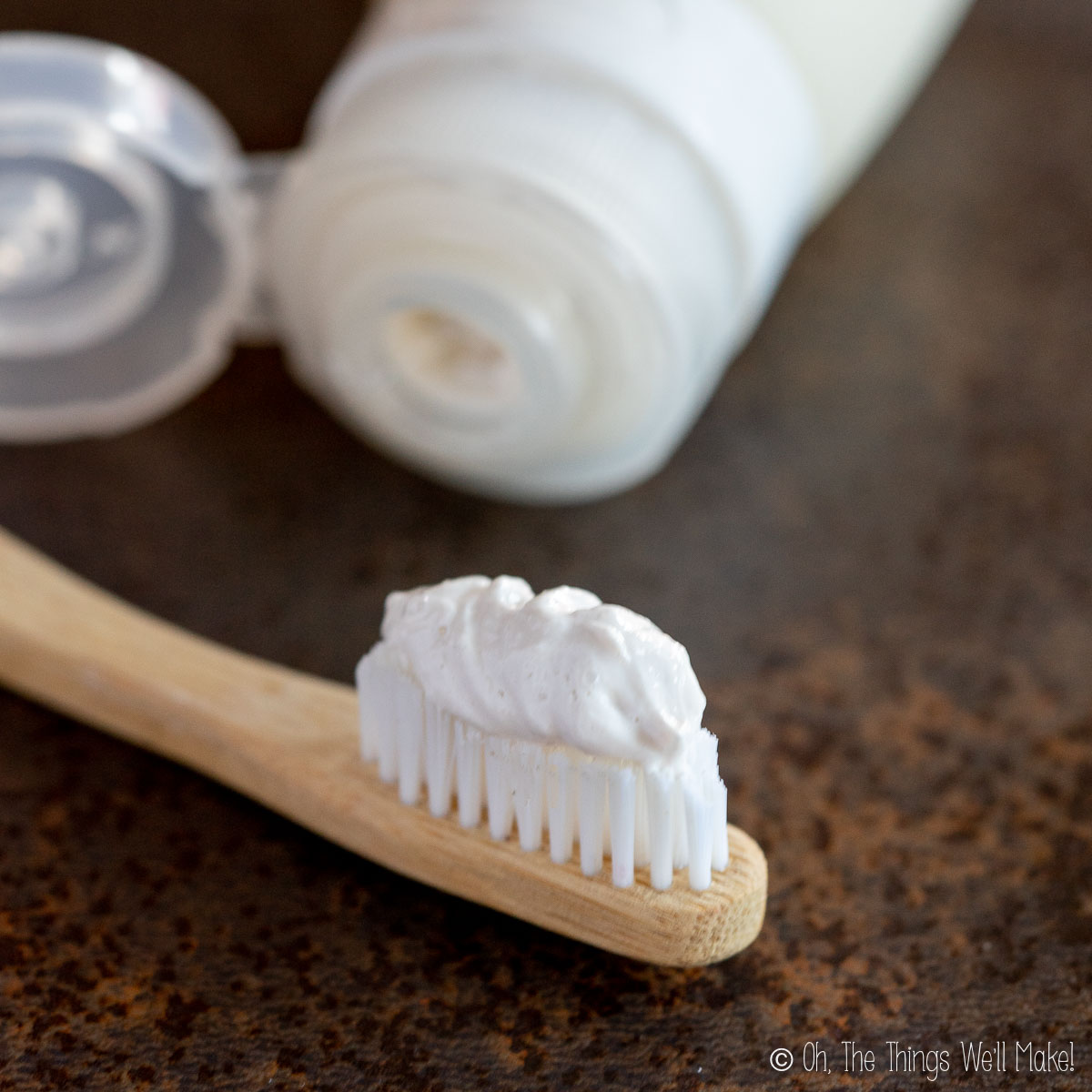
Why waste your money on chemical-laden store-bought toothpaste when you can make a simple, all-natural alternative? If you’ve been struggling to create toothpaste with the perfect texture, don’t give up. After some experimentation, I believe I’ve found the best homemade toothpaste yet!
Why is this the best homemade toothpaste recipe?
After years of making a variety of homemade toothpaste recipes, I have to say that this is my absolute favorite! In the past, I shared a bentonite clay-based DIY toothpaste that was all-natural but had a few downsides:
- The earthy texture of clay-based toothpaste isn’t ideal. Plus, clays can be contaminated with heavy metals and other toxins. While they are generally considered safe to use, there is enough controversy to make me want to consider using something else.
- Oil-based toothpaste also gives a strange mouthfeel. While it’s perfectly safe to use oil in your toothpaste, it doesn’t leave your mouth feeling as “squeaky clean”.
- Making a water-based toothpaste is challenging because, without laboratory testing, it’s impossible to know the true shelf-life of your finished product. You have to rely on using a high pH to prevent unwanted bacterial growth and hope that the final product will be safe for as long as you plan to use it. Although a preservative can be added, it is challenging to find preservatives for home formulaters that are labeled as safe for oral care products.
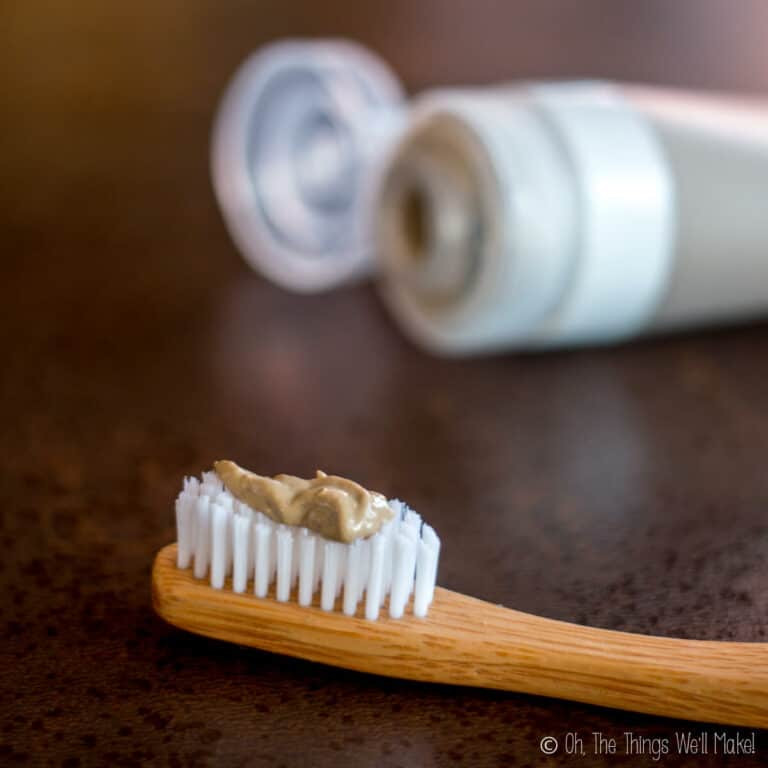
This toothpaste is glycerin-based, giving it a longer shelf-life and great consistency. It looks like toothpaste and has a great texture that leaves your mouth feeling clean! (If you don’t want to use glycerin, there are alternatives…)
Why make it?
Making your own toothpaste isn’t only a great way to save money, but it’s also environmentally friendly. By using reusable food-grade silicone tubes to dispense your homemade toothpaste, you’re reducing plastic waste.
When you make your own natural toothpaste, you can choose exactly what goes into it. That means you can avoid toxic ingredients like triclosan (a pesticide) and other unwanted ingredients like artificial coloring or SLS.
Best of all, though, is that you can tweak the recipe to suit your taste. Want to add a bit of sea salt? No problem! Bored with mint and looking for a certain flavor like citrus orange, cinnamon, or anise? Go for it!
Ingredients
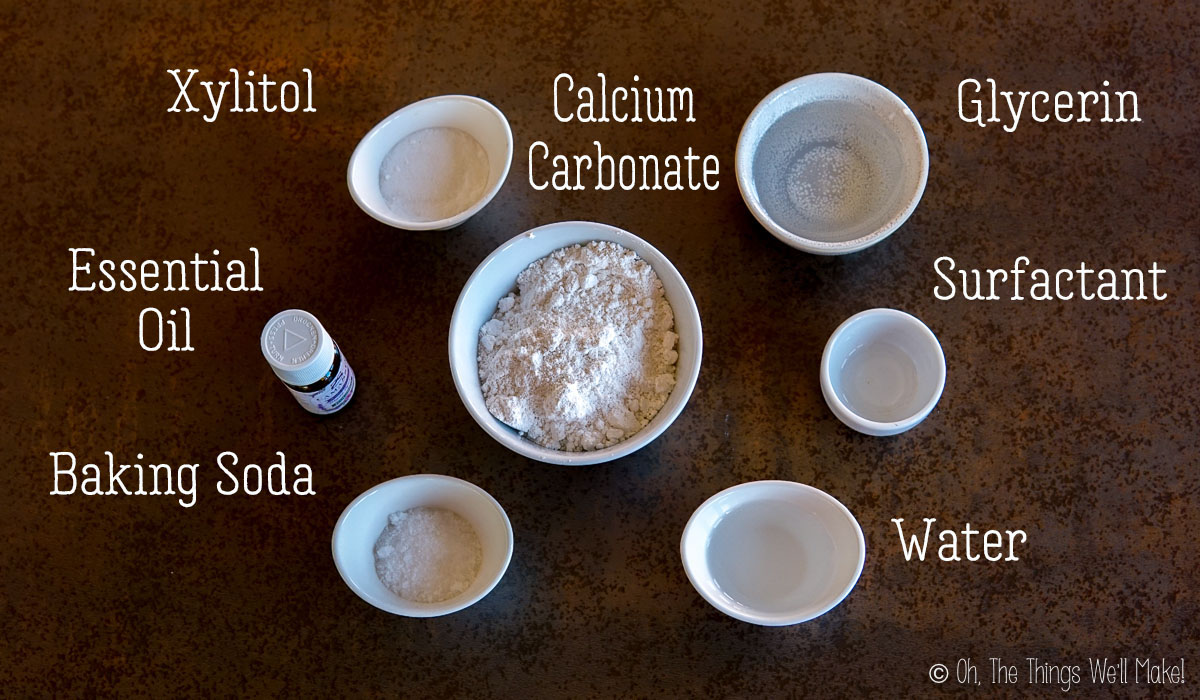
This toothpaste recipe uses calcium carbonate as the main ingredient. It’s mildly abrasive, but gentle on teeth and helps get rid of plaque and stains. Plus, it has a nice texture and taste. Calcium carbonate also has minerals that may help with remineralization.
I also added baking soda to the recipe because it’s a natural polisher that neutralizes acids and fights bad breath.
To bind the dry ingredients together, I used glycerin and distilled water. (You can use filtered water if you like.) Glycerin is a humectant that gives this toothpaste a great texture. Even better, though, is that by using it in a higher percentage than water, we ensure a long-lasting toothpaste without the need for preservatives. (More on that below!)
While you could bind the toothpaste with only glycerin, I chose to use some water to lighten it up and keep it from being “sticky”.
Optional additions:
To make the toothpaste more professional quality, I included a natural surfactant called sodium cocoyl glutamate. It mildly cleanses and adds foaming, but if you don’t want to use it, that’s totally fine! I chose sodium cocoyl glutamate because I saw it included in many commercially sold toothpastes, but you can try another natural surfactant you already have or even some liquid Castile soap!
To make the toothpaste sweet and increase its cavity-fighting properties, I used xylitol, a natural sweetener that prevents cavities.
For a refreshing flavor, I added a few drops of essential oil. Peppermint, anise, and clove oil are popular choices. I generally use food-grade peppermint oil because it leaves your mouth feeling clean and refreshed!
While xylitol is safe for humans to consume, it can be toxic to animals, especially dogs. So, don’t make oral care products for your animals with xylitol, and make sure you keep it out of their reach.
What I don’t use:
Many toothpaste brands use sodium lauryl sulfate as the foaming, cleansing surfactant. While I don’t mind using SLS in my homemade laundry detergent, it’s a harsher surfactant that I never use in my homemade cosmetics. In toothpaste, it can irritate the gums and other mucosa, which can lead to the formation of aphthous ulcers (aka. canker sores).
I’m no longer using clays in my toothpaste because I don’t like the mouthfeel of clay-based toothpaste and have some concerns about the heavy metals in clays.
Instructions
Making this toothpaste couldn’t be simpler!
Weigh out and mix together all the dry ingredients in a small bowl. Add a few drops of an essential oil, if you’re using it, and your surfactant (powder or liquid). Stir until they are well incorporated into the powder.
If you would like to make your own tooth powder instead, you could stop at this point. Use the mixture as you would any tooth powder!
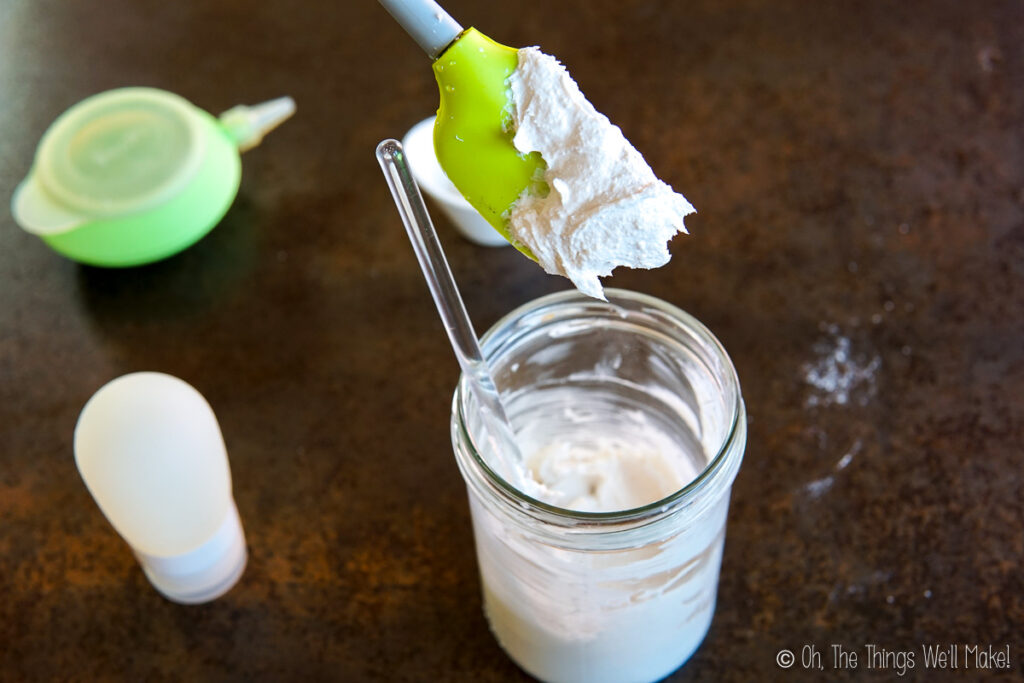
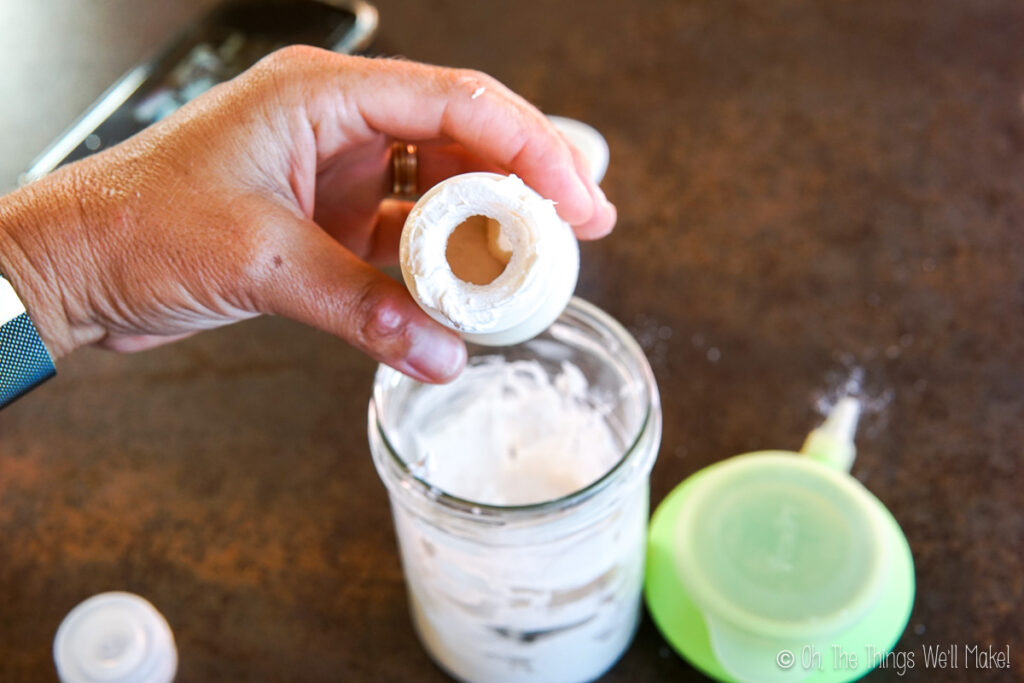
To make the paste, add the glycerin and stir it into the dry ingredients. When combined, slowly add in the water, stirring between additions. Stop when you are happy with the consistency.
For a longer shelf life, make sure to use more glycerin than water.
Is glycerin bad to use in toothpaste?
For many years, a myth about the harms of glycerin in toothpaste has circulated in the natural and healthy living communities. The idea is that glycerin coats your teeth and prevents them from absorbing the minerals they need to stay strong. Is it true?
How did the claim begin?
The idea seems to have originated from Dr. Gerard Judd’s book “Good Teeth, Birth to Death.” You can read some of Dr. Judd’s other interesting ideas here. (He also believes that sugar doesn’t have any bad effects on tooth enamel!) This idea was further perpetuated in the book “Cure Tooth Decay” by Ramiel Nagel.
After years of blogging, I’ve noticed numerous instances where someone proposes an idea and everyone else simply echoes it without investigating themselves. Some go as far as copying recipes without even trying them out! It’s very frustrating. More bothersome, is that some make money off the claim. They use fearmongering about glycerin to convince people to choose products they sell over toothpaste with glycerin.
Does it even make sense?
Even if glycerin were to coat the teeth, the effects would probably be very short-lived. Glycerin is water-soluble, so it does not create a permanent barrier that prevents mineral absorption by enamel. Any glycerin coating on teeth will be cleared away by saliva or water, allowing minerals to support remineralization.
Consider the fact that glycerin is a main ingredient in most types of artificial saliva given to people with xerostomia or dry mouth. The artificial saliva helps them prevent tooth decay that’s otherwise often common in people with dry mouths.
What about the carbamide peroxide/glycerin study?
Although my initial searches did not find anything, I recently stumbled upon a study that potentially supports the glycerin barrier idea in a post about the glycerin myth on the Whole New Mom blog.
The study wasn’t designed to test if glycerin in toothpaste would prevent remineralization of teeth under normal use. In fact, it didn’t involve real people or natural saliva. Instead, they used extracted teeth and artificial saliva, which, incidentally, as mentioned above, generally uses glycerin as a main ingredient. (They didn’t include an ingredient list for their saliva, but did specify that they didn’t use Carbopol.)
The study in question was mainly focused on the effects of tooth whiteners on tooth enamel. Using tooth whiteners containing carbamide peroxide frequently leads to tooth sensitivity. They often contain glycerin, not only as a preservative but also as a means to penetrate deep into the teeth for a more effective whitening process. (It’s not meant to act as a barrier.)
While they do briefly speculate that glycerin could form a barrier on teeth, the study wasn’t about that. It wasn’t designed to show us what we (in this case) really want to know.
The teeth underwent a treatment where they were covered solely in glycerin (or other tooth whitener ingredients) for 8 hours a day. After cleaning each ingredient off, the teeth sat in small, stationary vials containing artificial saliva. After 42 days of that treatment, they were placed in those vials for two more weeks, switching out the artificial saliva every two days.
Nothing in that study mimics the natural processes in our mouths. We don’t coat our teeth in toothpaste for 8 hours each day. (On the other hand, teeth whitening products are often worn overnight.) Our saliva is constantly renewing itself. Our mouths are in constant movement. In our mouths, any film that could form would be cleaned away by the movement and renewal of (real) saliva.
You can read Adrienne’s take on the study in her post. I’ll agree with her conclusion that this study isn’t really enough to make me want to avoid using glycerin in toothpaste.
Glycerin toothpaste anecdote
My son has been using the very same glycerin-based “baby” toothpaste since he started brushing years ago. (Ingredients: Glycerin, Water (Aqua), Silica, Algin, Calendula Officinalis Flower Extract, Prunus Amygdalus Dulcis (Sweet Almond) Oil, Esculin, Flavor (Aroma)*, Limonene*.)
I’ve attempted to find an alternative toothpaste for him, not because I have any objection to the one he’s using, but because I think it’s outrageously overpriced for what it is. Plus, I’d like him to have something with a bit more abrasiveness to help with plaque removal. He, however, is very resistant to change.
So, for over 12 years now, he’s used the same toothpaste with glycerin as its main ingredient. He has never had any cavities or other dental issues. While I try to keep his sugar intake low, he, as a kid, eats more problematic foods than I do. Yet, it is clear that his teeth have no trouble with remineralization. And, no, he doesn’t brush his teeth several times daily. (Nor do I. Sorry ADA.) I just make sure he gets in one good 2-minute brushing session at night before bed. (More on that some other day!)
Glycerin alternative
If you still aren’t convinced, you can skip the glycerin and just use the dry ingredients as a tooth powder. You could also mix the powder with oil for an oil-based toothpaste.
You could also just use water and skip the glycerin with one caveat. While the higher pH of this toothpaste helps keep it from spoiling quickly, it’s still advisable to create smaller batches regularly, when using only water, to ensure it stays fresh and safe to use.
Does this need a preservative?
This toothpaste is self-preserving and should keep for a reasonable amount of time.
The self-preserving nature of this DIY toothpaste relies on two factors. First, when glycerin is used at a high enough concentration, it acts as a preservative of sorts. Harmful microbes will only grow if the water content is high enough. By using glycerin as the main binder, rather than water, we can not only give the paste a great texture but also keep it safe longer.
The high pH of this toothpaste also contributes to its longer shelf life. While there are some microbes that can grow at extreme pH levels, most of the problematic microbes grow at a more neutral pH, between 4 and 9. I tested this toothpaste and found it to be above that range, in the 9-10 range. This alkalinity not only makes it ideal for neutralizing acids in the mouth, but it keeps the toothpaste free of unwanted microbes.
Storage & use tips
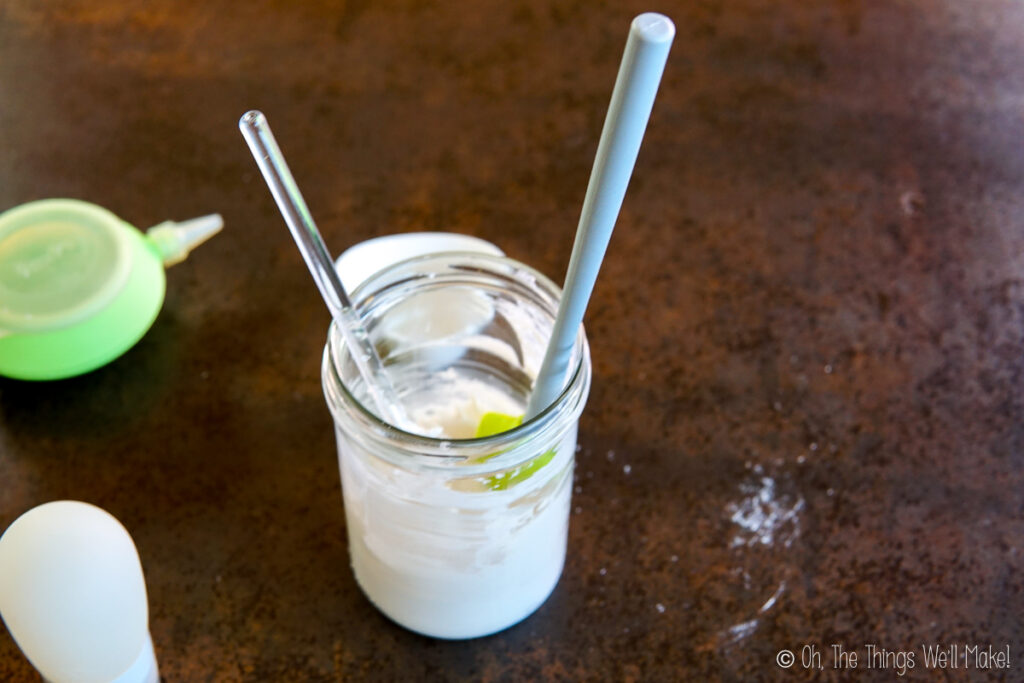
All of that said, there are a few things to keep in mind. To make your homemade toothpaste last longer, avoid putting your toothbrush directly into the paste. Instead, squeeze the toothpaste onto your brush before brushing your teeth. This will keep the toothpaste clean and prevent bacteria from growing, ensuring that your toothpaste stays safe for longer. I recommend using food-safe silicone tubes for storage rather than glass jars.
If you prefer to use a jar, scoop out the toothpaste you need for each use with a fresh utensil each time.
I also recommend not making large batches that can’t be used in a reasonable amount of time.
Video tutorial
Best Homemade Toothpaste
Equipment
Materials
- 50 g calcium carbonate
- 20 g baking soda
- 10 g xylitol
- 3 g surfactant I used sodium cocoyl glutamate.
- 5 drops essential oil options: peppermint, anise, clove, etc.
- 50 g glycerin
- 20 g water estimate
Instructions
- Weigh out all of the dry ingredients and mix them together.
- Add the essential oil and surfactant and stir until well incorporated.
- Stir in the glycerin. Then, little by little, add in filtered or distilled water until you achieve a paste in the desired consistency.
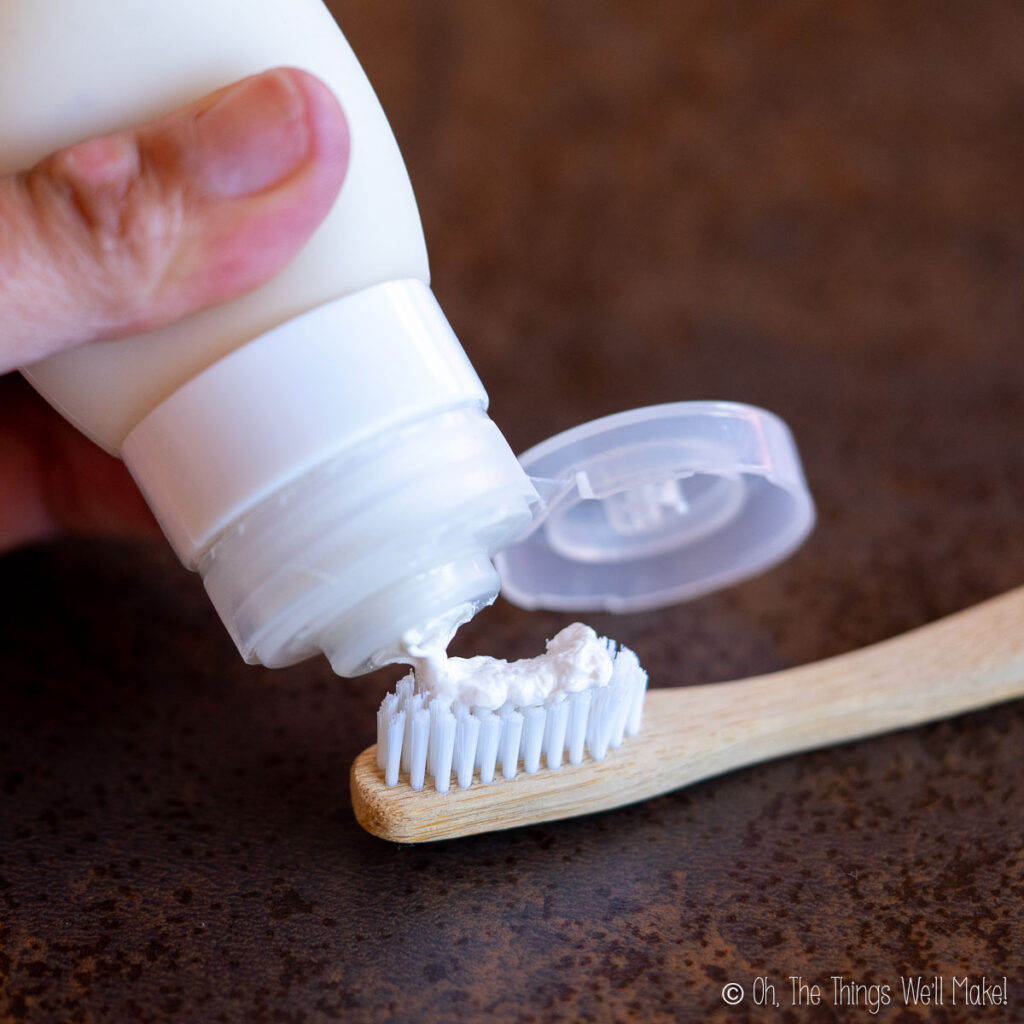
- Fill a silicone travel tube with your toothpaste. Use as you would use any toothpaste.
Notes
Toothpaste FAQs
I purposely chose xylitol because it inhibits the cavity-causing bacteria that lead to tooth decay. Other sweeteners may not have those same beneficial properties and some may even feed the bacteria and help cause cavities.
Stevia itself is a natural product that doesn’t lead to tooth decay. That said, there are a variety of different products on the market like stevia drops and powders. These products have other ingredients that may cause issues.
Both activated charcoal and cocoa powder are generally safe to use in homemade toothpaste. Theobromine, found in cocoa powder, has actually been found to help with the remineralization of tooth enamel. Activated charcoal may help absorb toxins and impurities that can cause discoloration on teeth. That said, both are a dark color and may make a mess of your sink. While they may make your teeth look whiter at first, they may both eventually lead to a darkening of your teeth.
While I’ve seen it included in several online toothpaste recipes, please don’t add it! Diatomaceous earth has a Mohs scale hardness rating of 6 which is higher than that of hydroxyapatite, the main mineral component of tooth enamel (rating of 5). Before using any ingredient, make sure the hardness rating is lower than 5, or you risk abrading away tooth enamel. Also, make sure it won’t lower the pH of your mouth or contribute to the formation of plaque in some way.
I’ve received messages from some concerned readers about using essential oils for fear of disrupting the natural bacteria balance in the mouth. They worry that since essential oils have antibacterial properties, they may harm the good bacteria. I understand the fear, but essential oils, while they do have antibacterial properties, they aren’t as strong as you might think. Consider what happens when you make a homemade cosmetic with an essential oil. Unless you were using an extremely high dose, the essential oil won’t affect the shelf life of the product much. Microbes will quickly grow; that’s why you need a preservative. In the case of homemade toothpaste, only a few drops of essential oil are used to add flavor and freshness to the mouth. This isn’t enough to make any real impact.
Xylitol and baking soda also have antibacterial properties and yet are generally recommended as ideal for oral hygiene.
While xylitol is safe for humans to consume, it can be toxic to animals, especially dogs. So, don’t make toothpaste products for your animals with xylitol, and make sure you keep it out of their reach.

Could you give the recipe in tablespoons instead of grams? Also, is it suitable for toddlers who aren’t good at spitting it out?
Hi Sam,
I recommend weighing the ingredients if possible, since that gives the best texture and consistency. If you prefer to use volume measurements, you can find rough conversions online for each powder. As for toddlers, the recipe is safe since there’s nothing toxic in it, but it’s best for kids who can spit it out rather than swallow it. For younger children, you can make a tiny batch with less salt and essential oil or skip them entirely.
Hi Tracy,
I love your recipe for the DIY Toothpaste. It would have been even better if I’d made it right. Would you humor an old lady (79), and give me the amount in each ingredient in teaspoons and cups. (I never could master the art of Metrics!) Thanks, and I envy you being on the Spanish Riviera!
Joan, from Montana USA
Hi Joan,
Your message made me smile—thank you! 😊
I don’t normally like to measure by volume since some recipes (especially those with preservatives) need to be very precise. But for this toothpaste, it’s not so important the the amounts be precise. This recipe is versatile, so I’ll try to give you a good estimate. Disclaimer: I haven’t personally tested these volume conversions, but they’re based on what I’ve seen online. I’m confident that it should get you very close:
50 g calcium carbonate → about 1/3 cup
20 g baking soda → about 2 tablespoons
10 g xylitol → about 1 tablespoon
3 g surfactant (sodium cocoyl glutamate) → about ½ teaspoon
50 g glycerin → about 2½ tablespoons
20 g water → about 4 teaspoons (or 1 tablespoon + 1 teaspoon)
5 drops essential oil (optional)
Start with a little less water and add more as needed until it forms a smooth paste.
I hope that helps! 💕
Hi, Can I use Sodium Sulfoacetate (SLSa) as my surfactant?
Hi Sharifa,
Yes, you can use Sodium Lauryl Sulfoacetate (SLSa) as your surfactant. Use about the same amount as listed for the original surfactant, and mix it in gently at the end to keep the texture smooth. It should work beautifully.
Hi, I’ve just made your toothpaste and I really do like the feel of my teeth afterwards – just a quick question, everything was going really well and then I added the Glycerin and it went quite runny – I did not use hardly any distilled water as I did not want it to turn into a liquid, so I only used a very small amount – after a few days it has not firmed up and still quite runny – can you please tell what I did wrong ? I followed the recipe to a T and all ingredients where accurate.
I intend to make this as soon as I run out, I just don’t want to make the same mistake again. Many thanks Michele
Hi Michele,
This toothpaste is meant to be on the softer side so it works well in tube-style dispensers. If you prefer a thicker texture, you can definitely adjust it next time by using a little less glycerin and water. Just mix up the dry ingredients first, then add enough liquid to reach the consistency you like. Be sure to keep more glycerin than water so it stays self-preserving. It’s completely fine to tweak it to your preference.
Hi! Would it be a 1:1 substitution if i used castile soap as a surfactant instead of the scg? Thanks!
Hi Julia,
I haven’t tried it, but that’s probably what I’d experiment with. The issues I see with Castile soap is that it has a stronger flavor. So, you might want to err on the side of adding less so it’s not too offputting. You can always add a bit more if you don’t think it lathers enough. Castile soap is pretty good at providing lather, so with small amounts, it should work.
What type of shelf life should be expected with these products roughly?
Hi Natasha,
This toothpaste keeps very well since it only has a small amount of water and a high percentage of glycerin, which helps protect it from spoilage. As long as you store it in a closed container and use a clean utensil or a squeeze tube, it should stay fresh for several months. If it ever changes in smell or texture, it’s time to make a new batch, but that doesn’t usually happen when it’s handled cleanly.
i have clove bud eo from the brand aura cacia. is that food grade or safe to use? and I was also gonna use sweet orange with the clove as I’d like to make some for my kids to use as well (oldest is 5) & want to make sure it’s safe for them in case they accidentally swallow & my youngest (2) knows a little how to spit but it’s a struggle with him. also I read that clove isn’t good for the gums…is that true? and does it have to say food grade or gris/gras can’t remember which one it is for the eo mainly want to use it for my kiddos but if it were just me it wouldn’t be an issue
one more question my oldest is pretty much covered in silver crowns & some silver fillings can I still use this homemade paste?
Hi Idida,
Yes, it should be fine to use, but as with any toothpaste, it’s best not to overbrush or press too hard. 💕
Hi Idida,
Clove oil can be a little too strong for children, especially if they might swallow the toothpaste. It’s very concentrated and can irritate the gums in high amounts. If you decide to use essential oils, keep them extremely low, or skip them entirely for young kids. Sweet orange is gentler and smells lovely, but make sure any essential oil you use is labeled GRAS (Generally Recognized as Safe) or food-grade. For kids, plain or lightly flavored toothpaste is usually the safest and easiest option.
Where can you get food grade calcium carbonate from?
Hi Tim,
You’ll have to do a local search online. I ordered online, but live in Spain so my sources will be different from most of my readers.
You definitely don’t want industrial grade, but cosmetic grade may suffice if you’re careful how you use it. (Spit it out.)
I’m not sure the difference in purity for cosmetic grade vs. Food grade for this product, though, which is why y erred on the side of caution and ordered food grade, even though it was Abit harder to find.
Hello. Where did you get the sodium cocoyl glutamate? I can’t seem to find a food-grade version at all.
Hi Niella,
I’m not sure any of the surfactants used would ever be labeled “food grade” but they are generally considered safe for this use. You could also use SCI in its place if it’s easier for you to find.
Ok. Weird one. What if I substitute Whiskey or Bourbon for the water and leave out the essential oil.
What is your purpose for the alcohol? For flavor or antibacterial purposes?
The problem I have with using alcohol is that it can be drying to the mucosa in your mouth. It’s probably not going to be that big of a deal, but I’d just use water. The essential oils are optional and mostly for flavor.
hey Tracy! we’ve been making this for the past 6 months now for my husband and I + 5 kiddos. The first couple of times I replaced the cocoa powder with hydroxyapatite powder for its remineralization properties. But now I have a couple of questions. All I have for cocoa powder is the Dutch process and I’m wondering if the alkali process affects the ph balance on the mouth? or should I just use regular cocoa powder? My other question is – do you/have you used melaleuca oil? I know it has antifungal properties and that yeast can build up in the mouth. Just wondering your opinion on this, given your expertise. thanks!
Hi Nikki,
That makes me so happy to hear, thank you for sharing. I love that your whole family has been using it. Dutch-processed cocoa works fine here. The alkalized process doesn’t noticeably affect the pH in your mouth when used in small amounts like this, so you can use whichever kind you have.
As for melaleuca oil, or tea tree oil, I personally don’t use it in toothpaste. If you use just a very small amount and are careful to spit it out, it’s probably fine, but I generally prefer to leave it out since it can be irritating to the mouth’s delicate tissues. The recipe already supports a healthy oral balance through gentle cleansing and mineral support, so it really doesn’t need stronger essential oils like that.
Hi Tracy, first off I absolutely cannot get ENOUGH of your blog!! Like you, I am someone who always wants to know the Why behind everything and your incredibly detailed research and information is like a feast for my analytical DIY mind. Thank you so much for all your hard work and the amazing recipes and instructions you provide 🙏🙏🙏
Quick question on this particular recipe, I have calcium citrate powder on hand, which I am assuming should be okay to sub for the carbonate, but just wondered if you have any thoughts on it?
Huge many thanks again from a fellow carnivore who has found much value from your work 🥰♥️♥️♥️
Tam x x
Hi Tam, Thank you so much for your kind words—that really means a lot to me! I wouldn’t recommend using calcium citrate in toothpaste. It’s more acidic (around pH 3–6), while calcium carbonate is alkaline (around pH 9–10). Since the goal is to help neutralize acids and protect enamel, the carbonate version is the ideal choice. The texture of calcium citrate also seems to be a bit coarser so I’m not sure if it would blend as smoothly. I’d stick with calcium carbonate for this one, as it’s gentler and has a more ideal pH.