

Easy DIY Hair Conditioner (That Actually Works)
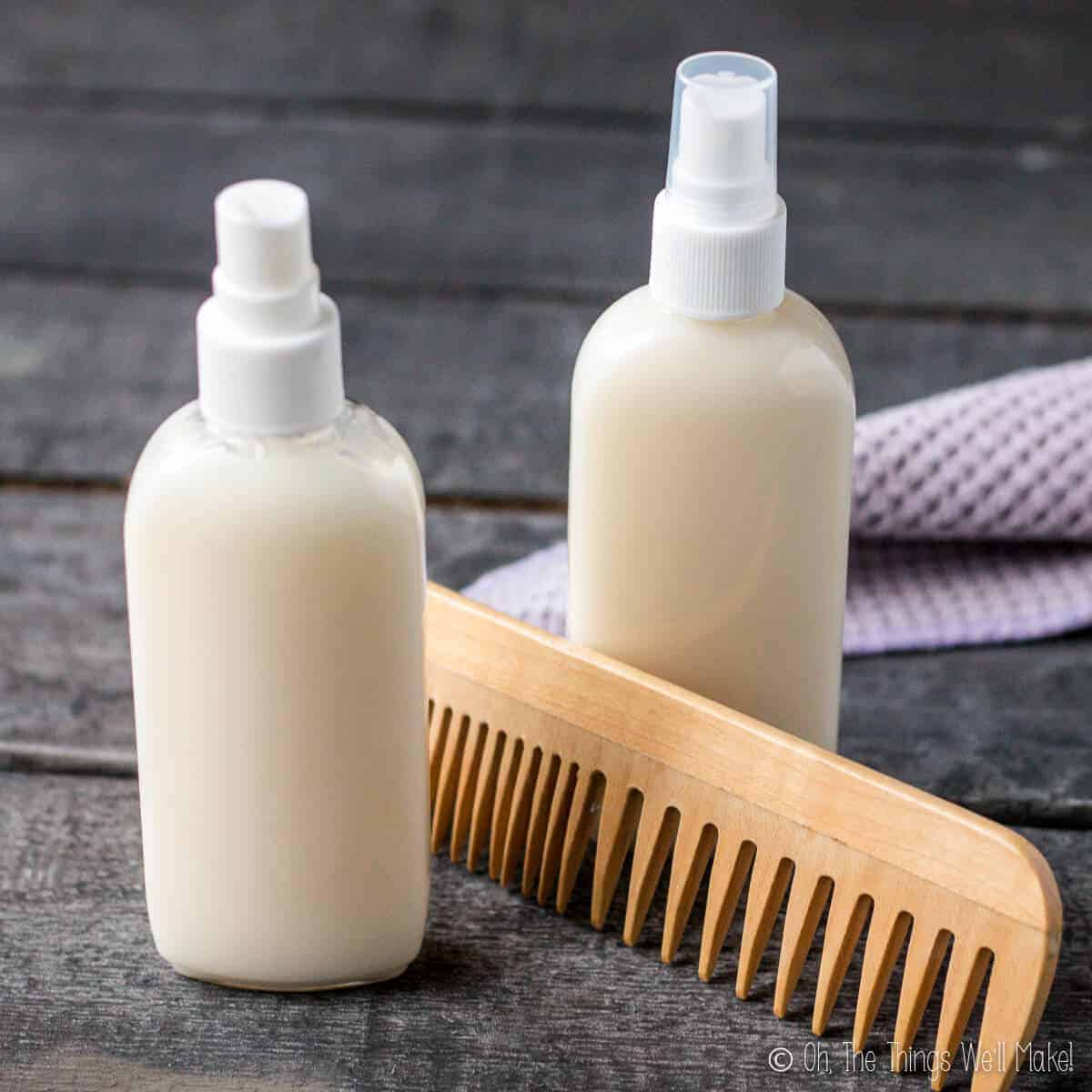
Make your own DIY hair conditioner with simple ingredients you can customize. This real conditioner leaves your hair soft, smooth, and easy to detangle and can even be used as a leave-in.
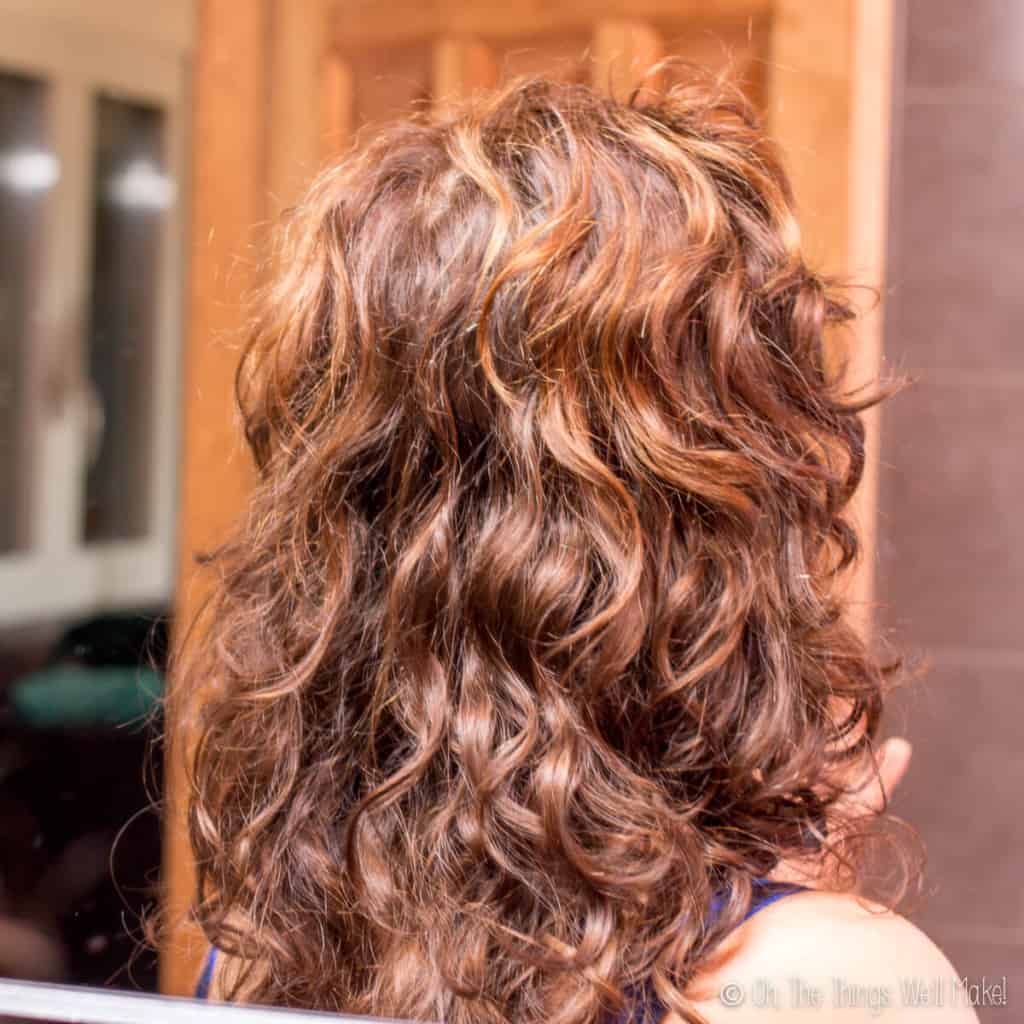
When I first wrote this post, I had just taken the Dressing Your Truth® course, and it changed how I was doing my hair.
Up until then, I had been straightening it all the time. It helped me realize I didn’t need to fight my natural texture, so for the first time in over 20 years, I started letting my hair do its natural curly and wavy thing.
To help support my waves, I started washing my hair less often and using a homemade flaxseed hair gel. I used this conditioner as a co-wash during the week and my homemade clarifying shampoo about once a week. The difference was immediate. I started seeing waves and curls I didn’t even know I had, and now I can just let it do its thing and I love how it looks.
This isn’t just a mix of oils or a quick DIY shortcut. It’s a real conditioner, similar to what you’d buy in a store, but you get to control what goes into it and adjust it to suit your hair.
Watch the full tutorial
Here’s exactly how I make it step by step, along with ingredient tips, troubleshooting, and customization ideas.

Why make a homemade conditioner?
There are a lot of reasons to make your own conditioner.
When you realize that most conditioners are mostly water, it starts to make sense. You can make something very similar at home for much less, even when using high-quality ingredients.
A lot of products highlight a specific oil or “miracle” ingredient, but in reality, those are often only used in small amounts. The rest of the formula may include ingredients you may not love or may prefer to avoid.
When you make your own, you get to decide exactly what goes into it and what to leave out. That’s always been my main reason for making things myself. I like knowing what I’m using and being able to adjust things depending on what my hair needs.
It’s also surprisingly affordable, and you can reuse your containers to cut down on waste. If you’d rather skip bottles altogether, you can also try my homemade conditioner bar.

The ingredients
A basic conditioner only uses a few simple types of ingredients: water, oil, an emulsifier, and a preservative. From there, you can keep it simple or customize it with things like vitamins or essential oils.
To make a conditioner, we’re making a simple emulsion. It’s just like making a simple lotion. The main difference is the type of emulsifier used. In this case, we’re using a cationic emulsifier, BTMS, which is what gives this conditioner its conditioning properties.
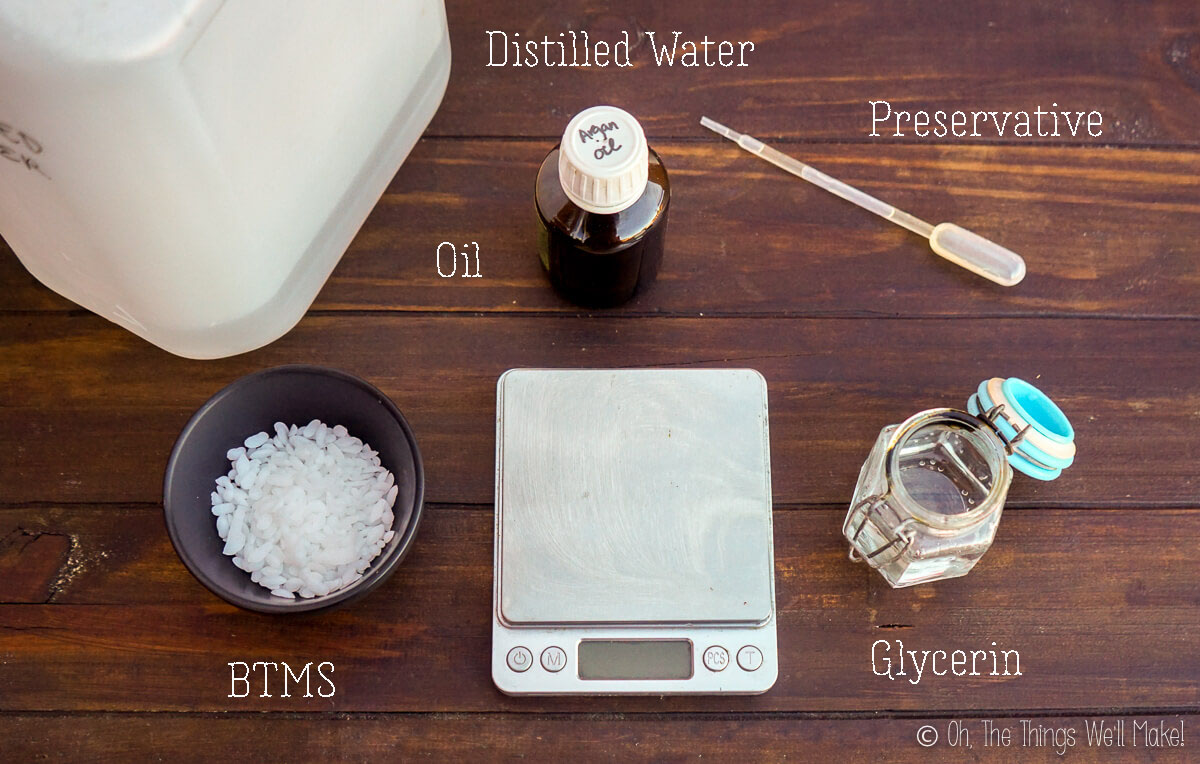
What is BTMS?
The main ingredient that makes this a true conditioner is BTMS (Behentrimonium Methosulfate).
This is what gives the conditioner its slip and makes it easier to detangle your hair. Without it, you’d end up with something more like a lotion, which won’t have the same feel or work nearly as well on hair.
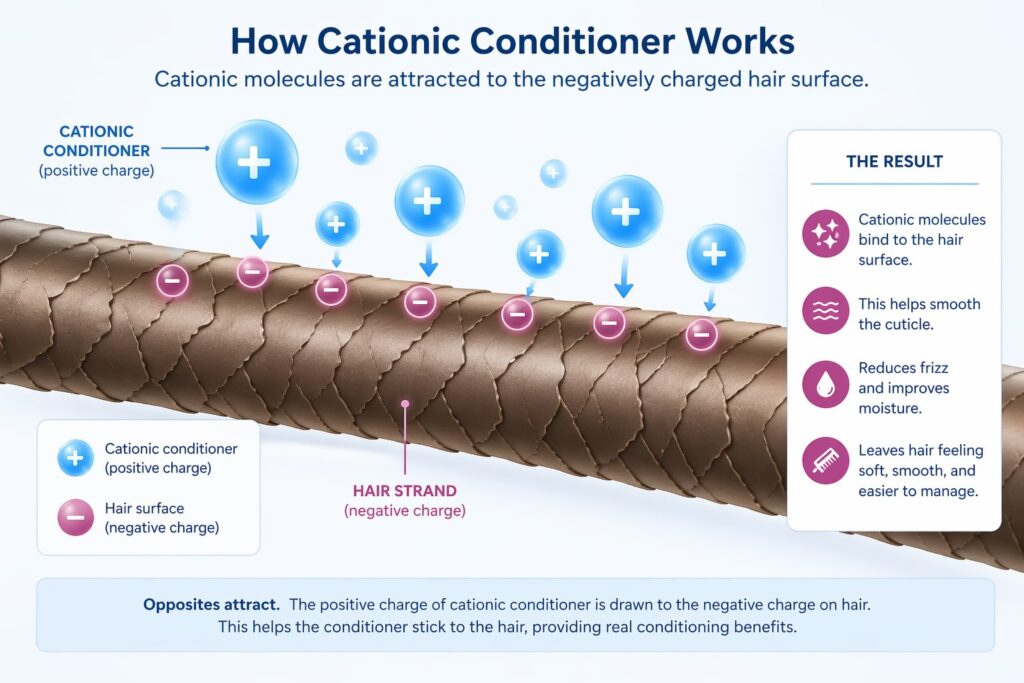
BTMS is what’s called a cationic emulsifier, which just means it has a positive charge. Hair has a slight negative charge, so the BTMS is attracted to it. It lightly coats the hair and helps smooth it so the strands don’t catch on each other as much. That’s what gives you that soft, slippery feel and makes it easier to comb through.
When I first shared this recipe, I described it as a “natural” conditioner because I had taken a course that used BTMS in their formulas. Since then, I’ve learned that not everyone considers BTMS to be natural, especially when it comes to stricter certifications.
That said, this is still the version I reach for most often because it simply works better for my hair. I’ve tried other options, but they just don’t give the same slip or leave my hair feeling as soft.
Substituting BTMS
If you’d rather not use BTMS, there are other cationic emulsifiers that can be used to make a conditioner.
That said, they don’t all give the same results. In my experience, BTMS gives the best slip and leaves the hair feeling the softest.
I’ve experimented with a few alternatives, and I’ll be sharing more details about those options in a separate post.
BTMS-25 vs. BTMS-50
When I first wrote this post, I didn’t even realize that BTMS was sold in different versions. My supplier just called it “BTMS,” but after looking into it more, I realized I had been using BTMS-25.
BTMS-25 is a combination of Behentrimonium Methosulfate and cetearyl alcohol, which acts as a co-emulsifier. The amount of the active conditioning ingredient is lower, but it tends to give a thicker, creamier conditioner.
BTMS-50 has a higher percentage of Behentrimonium Methosulfate, along with cetyl alcohol and butylene glycol. Because of that, it usually makes a slightly lighter conditioner.
Some people prefer BTMS-25 because it has fewer ingredients, while others choose to avoid BTMS-50 due to the butylene glycol. While it’s generally considered safe, some people prefer to avoid glycols or more processed ingredients.
You can use either one in this recipe, just keep in mind that the final texture may be a little different.
The oil phase
In this recipe, I use a small amount of oil to help soften the hair and add a bit of shine. I often use argan oil, but you don’t have to use it.
You can swap it out for another oil or even use a combination of oils, depending on your hair type and what you have on hand. Just try to keep the total amount about the same so the consistency stays similar.
Some oils are lighter, like jojoba or argan oil, while others like coconut, olive oil, or avocado oil can feel heavier. Shea butter can also be used, especially for thicker or curlier hair, but it may be too much for finer hair.
The water phase
The main ingredient in most conditioners is water, and this recipe is no exception.
I like to use distilled water because it doesn’t contain minerals or impurities that can affect the final product. If you don’t have distilled water, you can use filtered water that has been recently boiled and cooled.
You can also replace part of the water with something like a hydrosol or aloe juice if you want to customize it a bit.
If you start adding a lot of things like aloe, hydrosols, or other botanicals, just keep in mind that they can make the conditioner a bit harder to preserve, so it’s best to keep things fairly simple.
About glycerin
Glycerin is a humectant, which means it helps draw moisture into the hair.
That said, it doesn’t work well for everyone. In very dry or very humid climates, it can sometimes make hair feel dry or sticky instead.
If you’d rather not use it, you can simply leave it out and replace it with more water.
Adding a preservative
Because this conditioner contains water, it needs a preservative. There’s really no safe way around this if you plan to store it at room temperature.
Without one, it can grow bacteria or mold, even if you can’t see it right away. So this is one step you don’t want to skip.
The good news is that there are several preservatives available for home use that work well in recipes like this. I’ve used options like Cosgard (Geogard 221), Sharomix, and others over the years.
If you want to learn more about the different preservative options, I have a post about natural preservatives that goes into more detail.
Beginner’s Guide to Natural Preservatives
Just make sure to use a broad-spectrum preservative and follow the recommended usage rate for the one you choose. Most are used at around 1% of the recipe, but always check your specific product.
It’s also important that the pH of your product works with your preservative, since some only work within certain ranges. I go into more detail about that in my post about pH in cosmetics.
Optional ingredients
You can also customize this conditioner with a few optional ingredients.
For scent, I usually add essential oils. I like lavender and rosemary, but you can use whatever you prefer. Keep the total amount low, usually around 0.5–1% of the recipe.
You can also add things like d-panthenol or proteins like rice or wheat protein to help support the hair.
If you’d like to see a full example of how this recipe can be customized, I’ve shared an example of a customized conditioner using aloe juice, different oils, and added ingredients like panthenol and protein.
How to make it
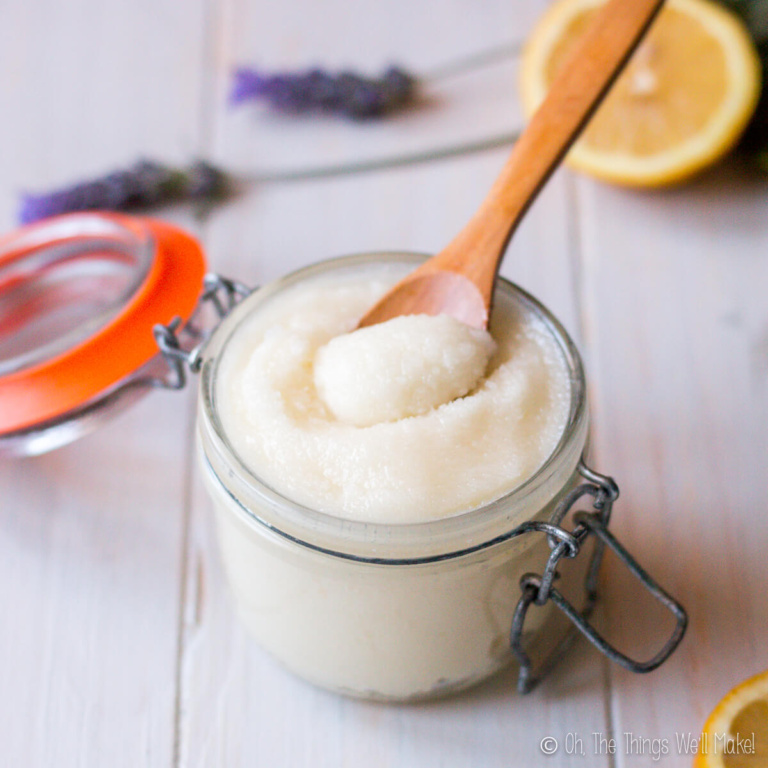
Making this conditioner is very similar to making a simple lotion. You’ll heat the water phase and oil phase separately, combine them, and then blend everything together until it forms a smooth, creamy emulsion.
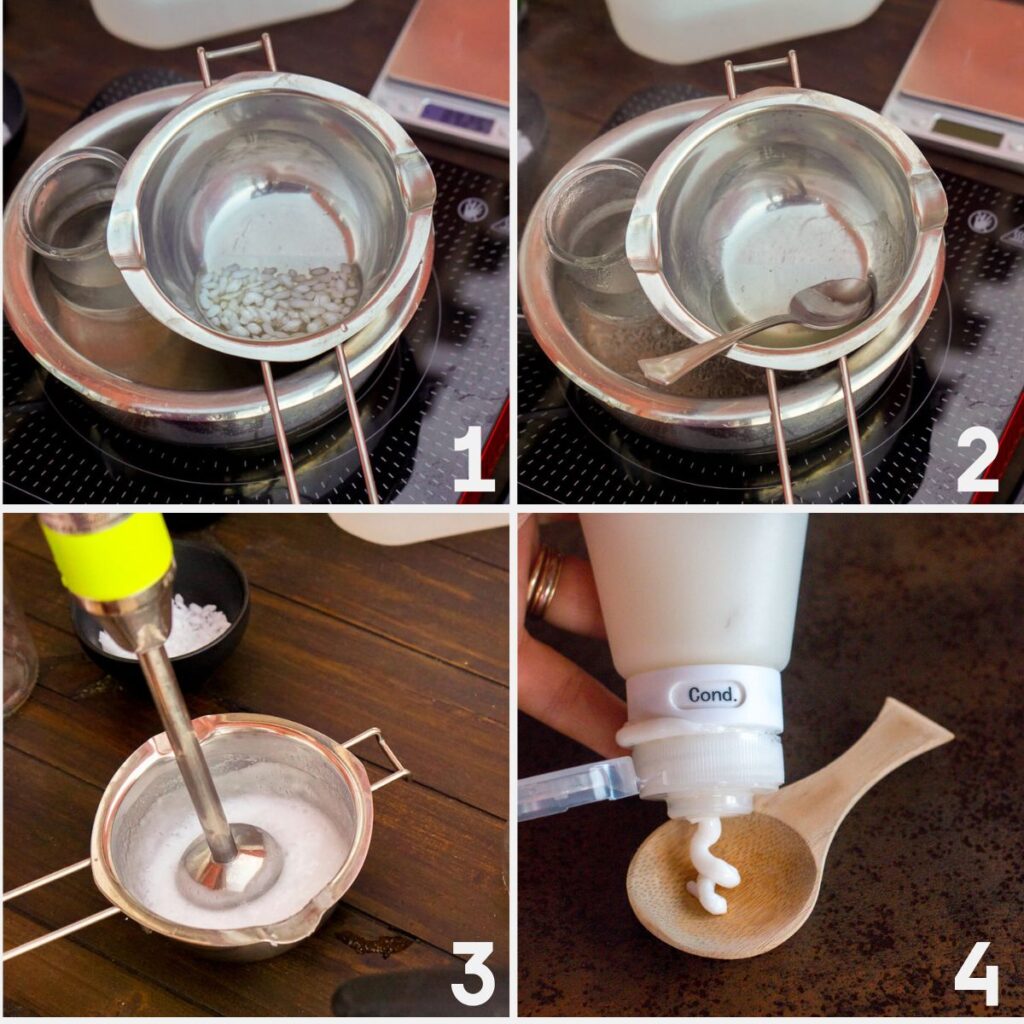
Start by heating the distilled water in a double boiler. (1) At the same time, in a separate heat-safe container, combine the oil and BTMS and heat them until the BTMS has fully melted. (2) Once both phases are hot and roughly the same temperature, slowly pour the water into the oil mixture while blending or stirring.
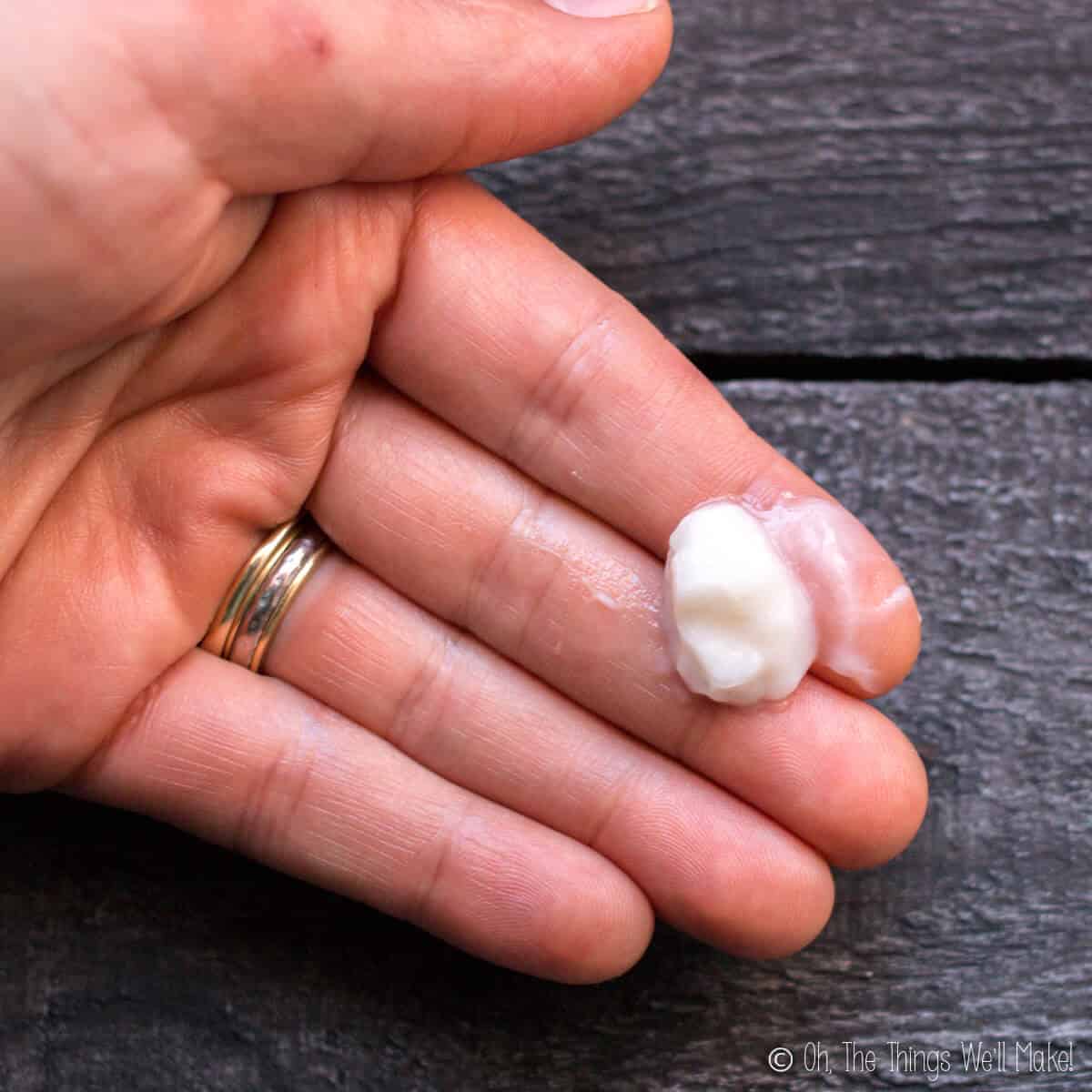
At first, the mixture will look thin, but as you continue blending, it will quickly turn creamy and opaque. It will continue to thicken as it cools. Once it has cooled down to around 30°C/90°F, you can add the preservative, essential oils, and any other heat-sensitive ingredients.
After that, check the pH and adjust if needed. Then transfer the finished conditioner to your container and let it cool completely before closing it.
How long does it keep?
With a preservative, this conditioner should last around 3 months when stored properly. It will probably keep longer than that, but since we’re not doing formal stability testing at home, I like to stay on the safe side.
I still prefer to make smaller batches so it’s always fresh, and I keep an eye on it and remake it if anything seems off.
If you choose not to use a preservative, you’ll need to treat it more like a food. Keep it in the refrigerator and use it within about a week.
How to use it
I usually use this as a rinse-out conditioner after washing my hair.
Apply a small amount to the ends of your hair, work it through, and comb it through to help detangle. Then rinse it out.
You can also use a small amount as a leave-in conditioner, especially on damp hair. Just be careful not to use too much, as a little goes a long way.
You can also use it as a co-wash if you’re trying to wash your hair less often. Just massage it into your scalp and rinse it out well.
I’ve also used it between washes to help refresh my curls. I lightly mist my hair with water, then mix a small amount of conditioner with a bit of homemade hair gel (or flaxseed hair gel) and scrunch it through to bring the curls back.
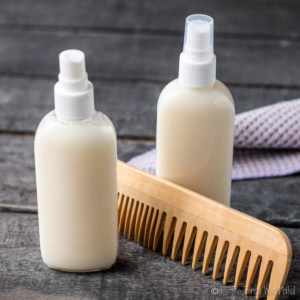
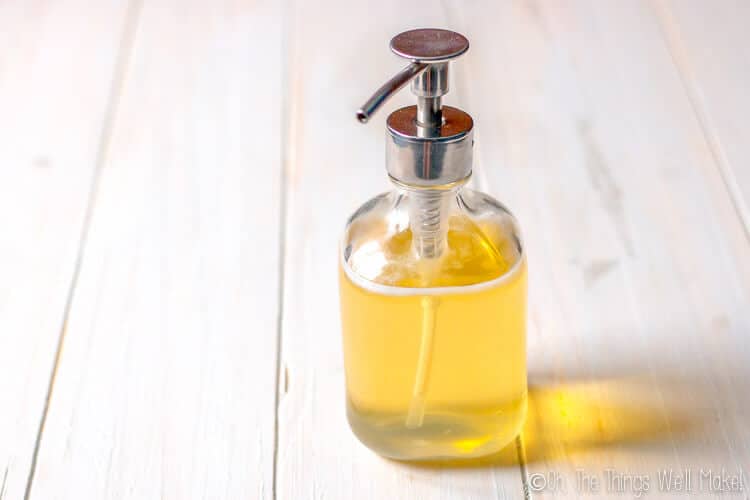
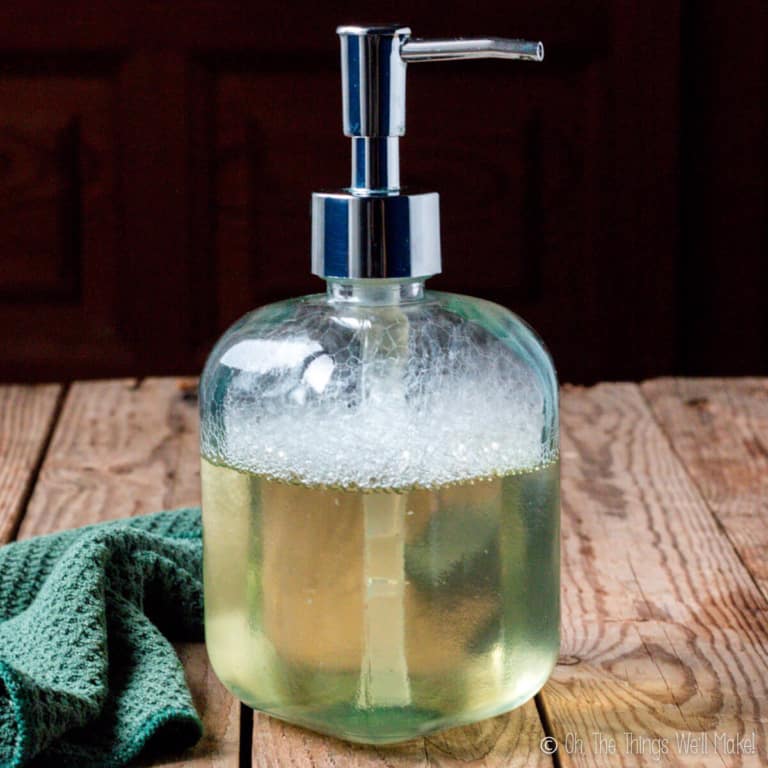
You can store this in a pump bottle or another reusable container. I also like using silicone travel tubes since they’re easy to squeeze and work well if you’re taking it with you.
If your hair is very fine, start with a very small amount and adjust as needed.
FAQs
You can, but it won’t really be the same. BTMS is what gives the conditioner its slip and detangling ability. Without it, you’ll end up with something more like a lotion, which doesn’t work nearly as well on hair.
Yes, but results will vary. Other cationic emulsifiers can work, but in my experience, they don’t give the same softness or slip. BTMS is still the one that consistently works best.
If you’re storing it at room temperature, no. Because this recipe contains water, it needs a preservative to prevent mold and bacteria growth.
If you really want to skip it, you’d need to keep it in the fridge and use it within about a week.
It’s best to use distilled water. Tap water can contain minerals or impurities that may affect the final product or reduce shelf life. If needed, you can use filtered water that’s been recently boiled and cooled.
This usually happens if:
The oil and water phases weren’t at a similar temperature
It wasn’t blended enough
The emulsifier wasn’t fully melted
Try blending a bit longer next time and make sure everything is fully heated before combining.
Small changes can affect the texture:
Too thick: reduce the BTMS slightly or increase the water
Too thin: increase the BTMS a bit
It will also thicken more as it cools, so don’t judge it too early.
Yes, but use a very small amount. A little goes a long way, especially for finer hair.
Absolutely. You can swap the oil for something else or use a blend. Just keep the total amount about the same so the consistency doesn’t change too much.
Yes, but keep it simple at first. Adding more ingredients can make the conditioner harder to preserve, so make sure your preservative can handle the final formula.
With a preservative, about 2–3 months is a safe estimate. Without one, about a week in the fridge.
Prefer a faster overview?
Easy DIY Hair Conditioner
Equipment
- pump bottle
Materials
- 83 g distilled water
- 5 g BTMS
- 5 g glycerin
- 5 g argan oil or other oil(s)
- 1 g preservative (or use your preservative at its recommended rate)
- 1 g lavender essential oil or other essential oils
- lactic acid (for pH adjustment, optional)
Instructions
- Clean your work surfaces, utensils, and packaging. (You can use alcohol to better sanitize surfaces.)
- Weigh out the distilled water.
- Heat the water over a double boiler while you measure out the oil(s) and emulsifier.
- Weigh out the oil (or oils) in a double boiler insert.
- Tare the scale and add the BTMS (or another cationic emulsifier) to the oil(s).
- Heat the oil and BTMS mixture over the double boiler until the BTMS has melted. Fully stir the ingredients together until well combined and remove from the heat.
- Slowly add the hot water to the hot oil mixture while stirring or blending, keeping both phases at a similar temperature (around 70–75°C / 160–170°F).Blend with an immersion blender (or stir vigorously) until the mixture comes together and begins to thicken.
- Allow the mixture to cool, stirring occasionally, until it reaches around 90ºF/30ºC. Then add the preservative, essential oils, and any other heat-sensitive ingredients. Mix well to fully incorporate.
- Test the pH of the conditioner. Ideally, you want the pH to be in a good range for both your hair (around 4.5–5) and for the effectiveness of your preservative. (It’s easiest to choose a preservative that works in that range rather than adjusting the whole recipe.) Adjust the pH down with a couple of drops of lactic acid (or, less likely, up with a solution of NaOH).
- Bottle your conditioner. Wait until fully cooled to cap the bottle to prevent condensation from forming above the conditioner. You can now use it as needed!
Notes
- Make small batches and use within about 3 months.
- You can substitute the argan oil with another oil or a blend of oils.
- Glycerin is optional and can be replaced with more water if preferred.
- If your conditioner feels too thick, you can reduce the BTMS slightly or increase the water a bit in your next batch.
- Use a broad-spectrum preservative suitable for water-based products and follow its recommended usage rate. Most are used at around 0.5–1%, but always check your specific product.
- Make sure your preservative works within the pH range of this recipe (around 4.5–5).
- For a full example of how to customize this recipe, see my example of a customized conditioner.
This post was originally published on March 9, 2017. It has been updated with new photos, clearer instructions, and a step-by-step video.
How do you test the mixture for PH?
You can either use ph testing strips directly in the conditioner or dilute it slightly in distilled water prior to testing with them.
I have been making and using this recipe for some years now and love it. It makes my thick hair so soft. Thanks Tracy. I just reread your recipe and realize it can be used as a leave in conditioner. I can’t believe I never thought of it.
Thanks, Anna!
Yes, I have wavy hair and like to refresh my hair between washes- so I wet the hair and add a tiny amount between my hands and smooth it over the ends, etc. It works really well to freshen things up. (I generally only wash once a week.)
I have been making this hair conditioner for 2 years now and I love it. I have very fine hair so I rinse it out . It works very well and I use just a pinch, I travel with a little container that lasts quite a while. I do not sell a lot of it as my buyers don’t quite understand shampoo bars and concentrated products. I make your solid shampoo bars also and love it too. It makes you really aware that liquid shampoo and conditioners are just water with a bit of ingredients!
I am looking for a dog coat spray, detangler and nice smelling. I already make a solid dog shampoo and paw balm.
Thank you!!!!
Hi Francoise,
Thank you!
I actually meant to make and post several dog care products, but then our dog passed away and we decided to take a break from dogs for a while. (I still have hens.)
I did use this conditioner on my dog when I washed her, though, and it worked really well to help detangle!
Hi! Is this effective for frizzy or very dry hair?
Yes! I add a small amount with some water and smooth it over my hair when it gets frizzy or dry between washings and leave it in!
Can you make this with out a double boiler?
Yes, but I’d suggest heating up the oils and water based ingredients in separate jars in a pot full of water to gently melt the ingredients and get them to the same temperature.
Lovely recipe
Thanks!
Is there any way to make the shelf life longer?
Hi Molly,
In practice, the shelf life will be longer than this. The preservatives should allow for a product that keeps well for at least 6 months as long as you use good hygiene, etc. while making it (and follow the recipe correctly).
That said, the reason I give a shelf life of 3 months is that I like to err on the side of caution. I don’t know what each person is doing with the recipe and know that most are not going to spend the money nor time on doing microbial testing on their homemade products to see how long they really keep before going bad. So, I give it a shelf life of 3 months which is the amount of time my supplier suggests for people who are making products at home without testing.
I was looking for a site to purchase the Sharomix 725 from, but can’t seem to find it. Has it been discontinued and replaced with another preservative? Could you please Share where you purchase it?
Thank you!
Hi Linda,
I live in Spain so my sources will be different and you may need to look for a preservative that can be more easily found in your area.
I buy from cremas-caseras.es and while they do send internationally, I don’t think it’s worth a large expense in shipping and/or customs fees if you can find something else similar locally.
Have you ever used Linatural MBS-1 for your preservative? I know it would need an emulsifier if used with oil. I make oil and water based products so I would prefer to use just one preservative for both
I haven’t tried that one, no. I’m not familiar with it.
Hi Tracy,
The retailer I found to buy Leucidal from recommends using it in conjunction with AMTCide Coconut to provide full spectrum protection against yeast and mold. Do you think this is necessary, or is the Leucidal alone sufficient?
Hi Ashlee,
In the past, I have used Leucidal alone without issues, but had to use it in high amounts, around 3.5-4% of the recipe by weight.
I have since changed my mind about using Leucidal as I’ve heard many say it doesn’t work for them. I wrote More about Leucidal in my post about natural preservatives.
If your supplier is recommending using it in conjunction with something else, it’s probably because they were having issues with it too. I’d suggest listening to them or using a better, broad-spectrum preservative.
Can I use this as a deep conditioner and apply to the scalp?
Hi Rachana,
Yes, of course…
For deeper conditioning, you could also increase the amount of oil and emulsifier for a thicker product.