

DIY Thor Costume
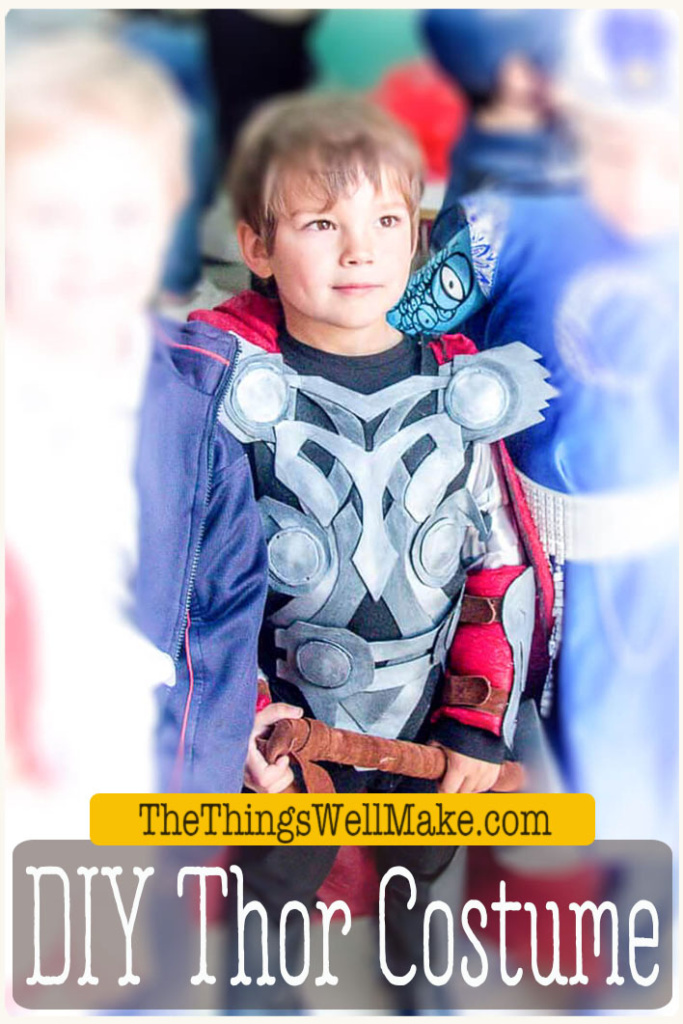
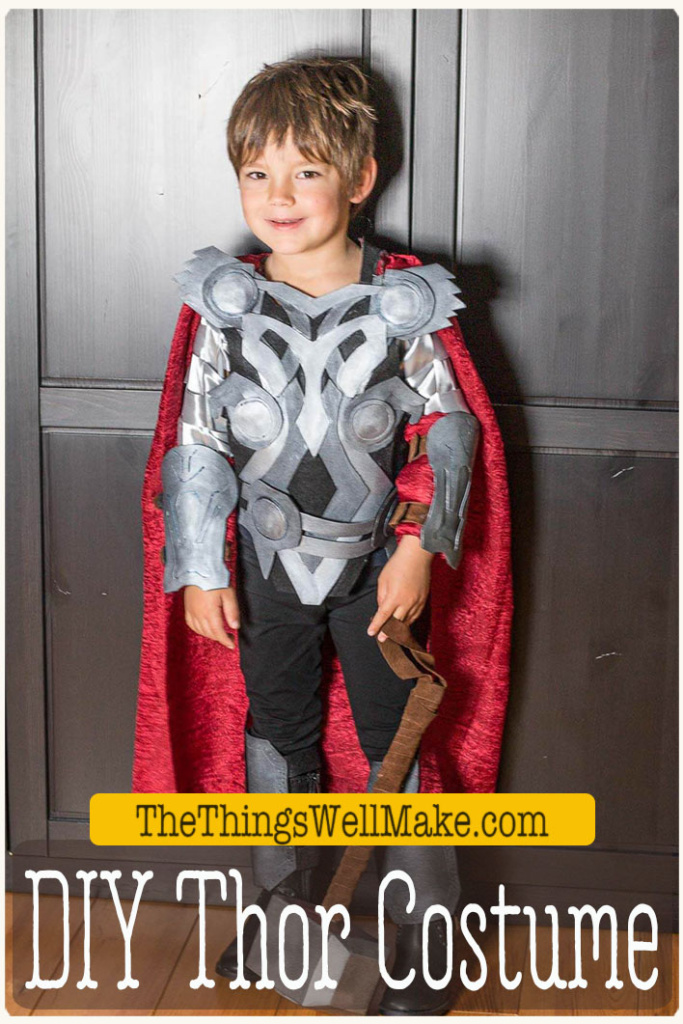
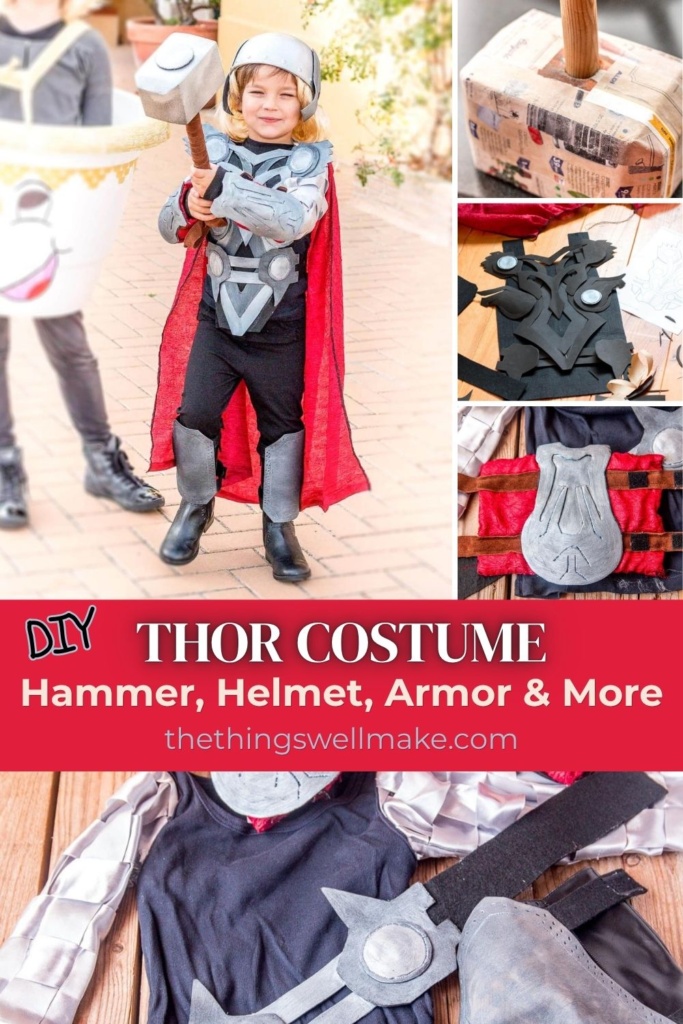
Make your own Thor costume using craft foam, felt, paint, and a few inexpensive materials. This homemade superhero costume includes Thor’s hammer, helmet, armor, cape, and more!
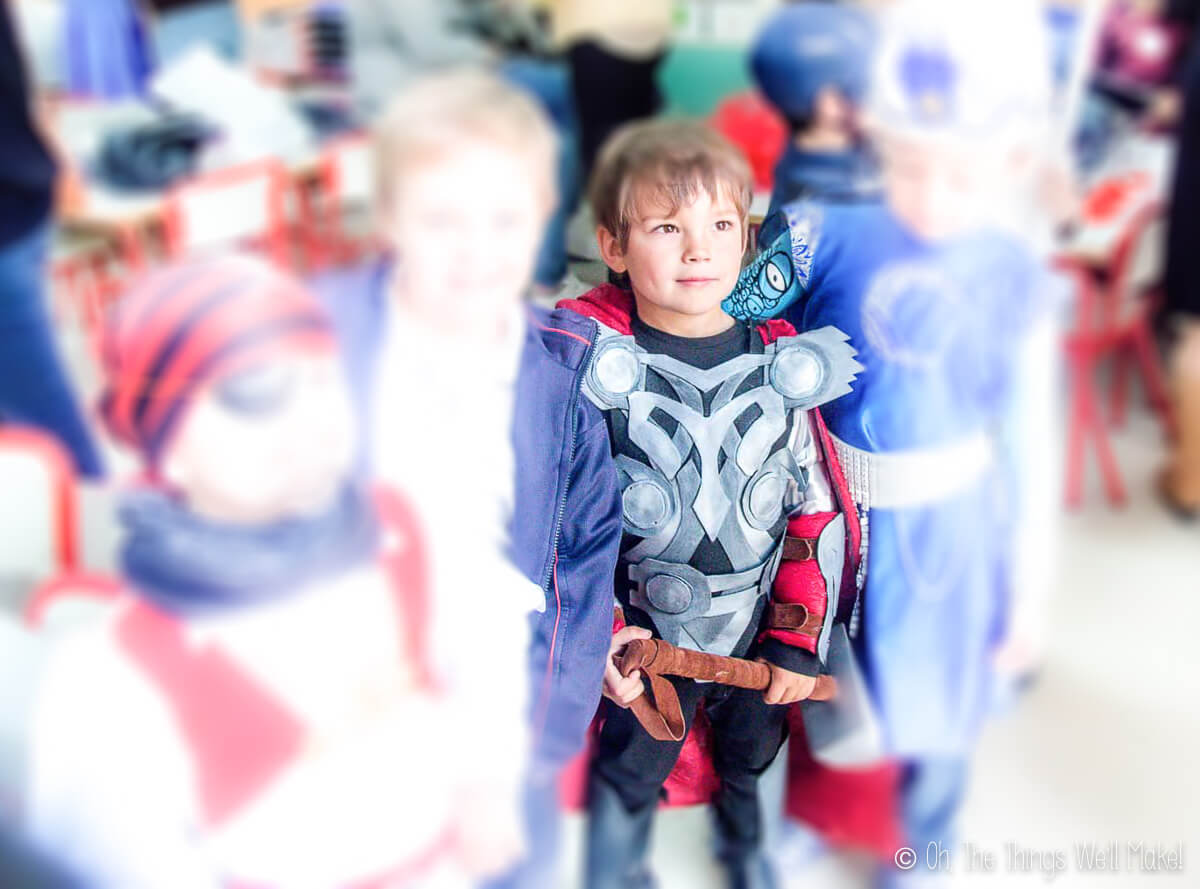
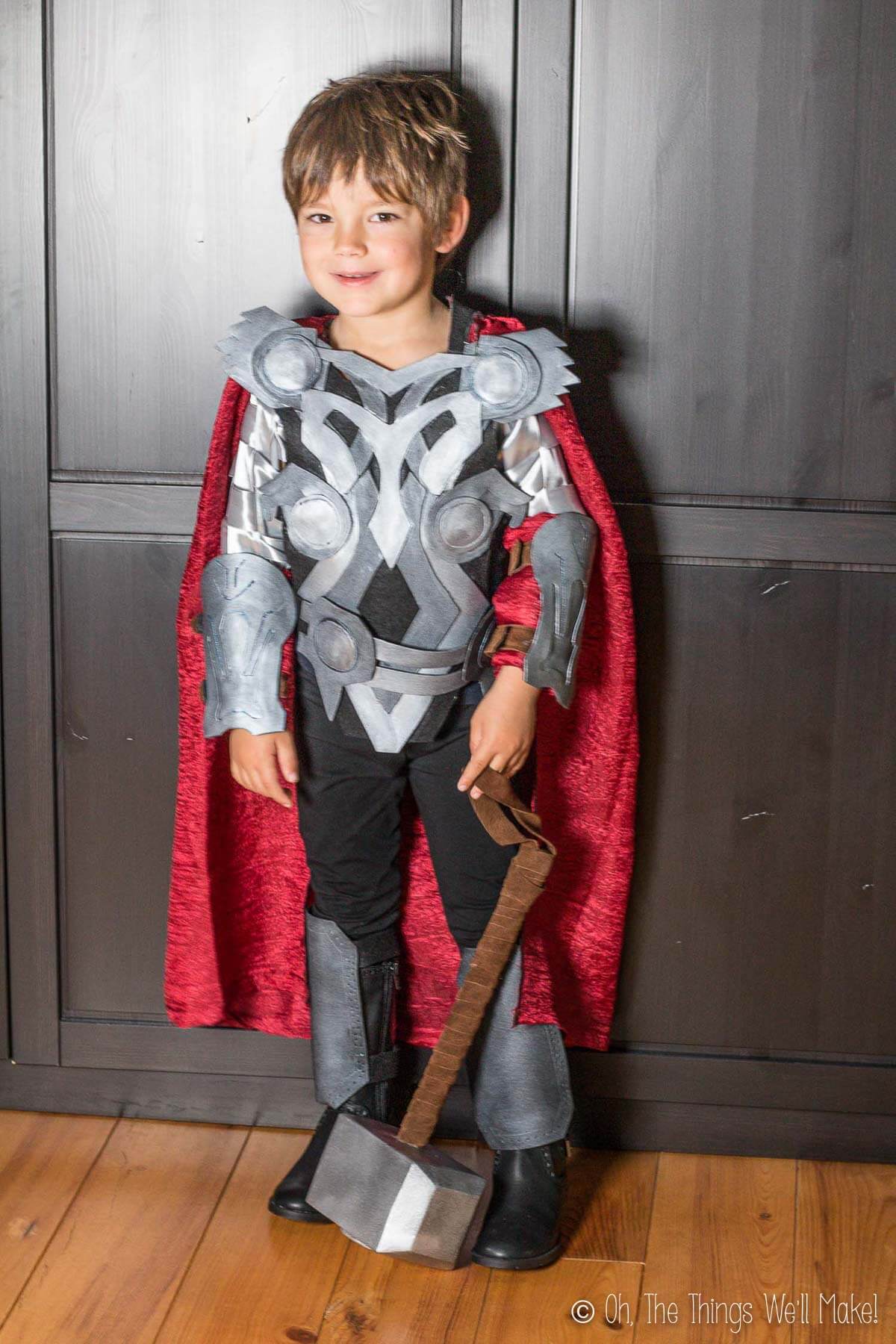
When my son wanted to dress up as one of the Avengers for Halloween, we decided to make a Thor costume. We’d already made a Captain America costume the year before, so Thor seemed like a fun choice for his next superhero adventure.
At the time, I was more focused on making the costume than documenting every step for the blog. I didn’t photograph the process as thoroughly as I would today, but I was really happy with how it turned out!
I’ll walk you through how I made each piece, along with a few things I’d do differently if I were making it again.
If you’re looking for more superhero costume ideas, you might also like my homemade Superman and Batman costumes.
How to make a Thor costume
This homemade Thor costume has several parts, including his hammer, helmet, armor, cape, and accessories. I’ll show you how I made each piece so you can recreate the entire costume or choose the parts you want to make.
How to make Thor’s hammer
No Thor costume would be complete without his iconic hammer, Mjolnir! I made ours using floral foam, papier-mâché, and a wooden dowel for the handle.
Shape the hammer
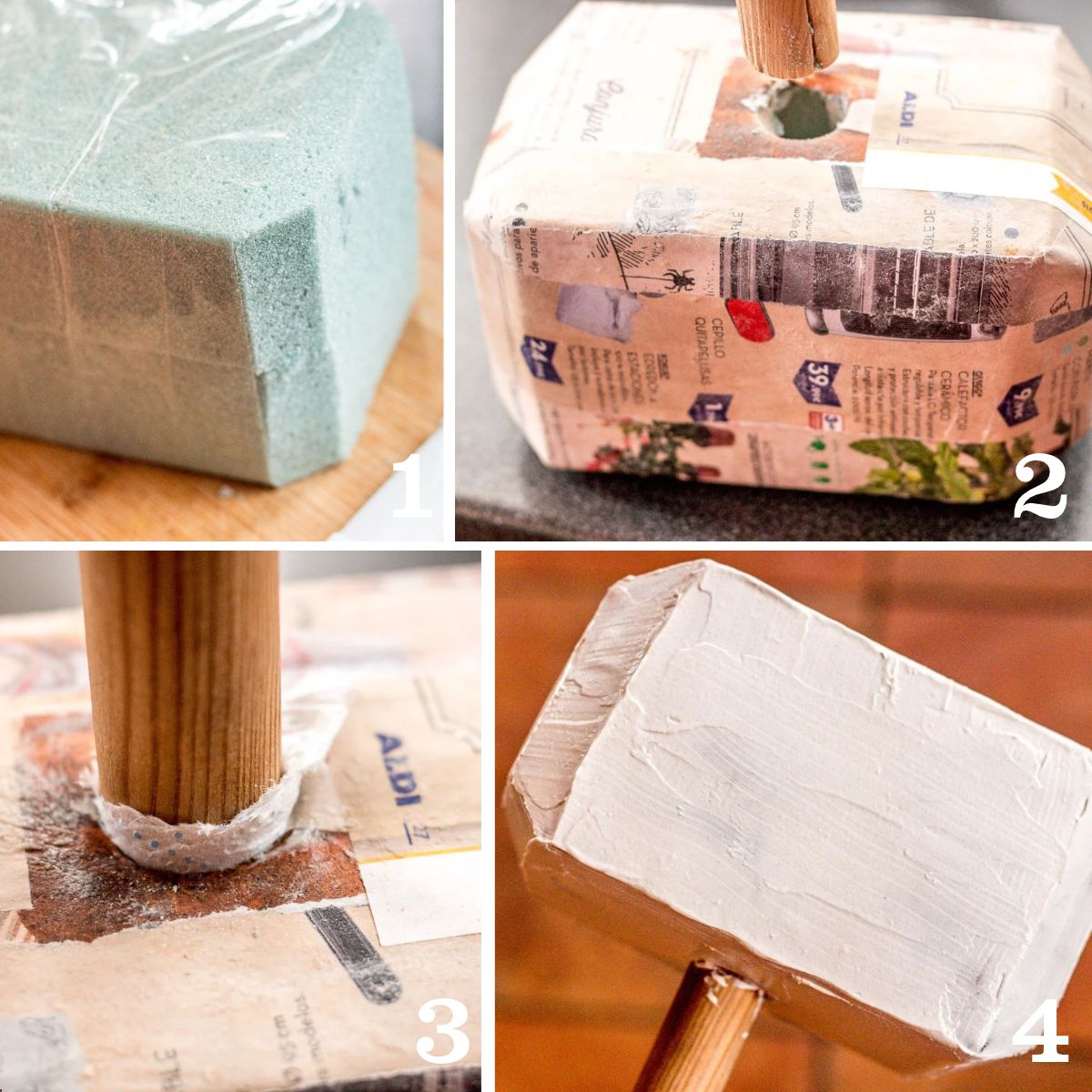
Cut floral foam into the general shape of Thor’s hammer, trimming the corners to give it the characteristic angled edges.
I could only find thin sheets of floral foam, so I layered two pieces together and secured them with packing tape.
You could also use Styrofoam or another lightweight material. Wood would make a sturdier hammer, although it would also be heavier.
Cover the hammer with papier-mâché
Cover the foam with several layers of newspaper strips dipped in a mixture of white glue and water. I used glue instead of flour to help achieve a smoother finish.
Allow the papier-mâché to dry completely.
Add the handle
Make a hole in the center of the bottom of the hammer and insert a wooden dowel to form the handle.
Because floral foam compresses easily, I reinforced the hole with additional papier-mâché before securing the dowel. I used paper towels instead of newspaper because they were easier to push into the hole with the dowel.
Once everything is dry, glue the handle securely in place.
If you’re using a sturdier material for the hammerhead, you may not need the extra reinforcement.
Smooth the surface
Spread a thin layer of wall putty (spackling) over the hammerhead to smooth out the papier-mâché. You could also use fiberglass filler.
Allow it to dry, then sand the surface until smooth.
To recreate the round disk on top of Thor’s hammer, cut a circle from cardboard and cover it with wall putty. Once dry, glue it to the top of the hammer.
Finishing the hammer
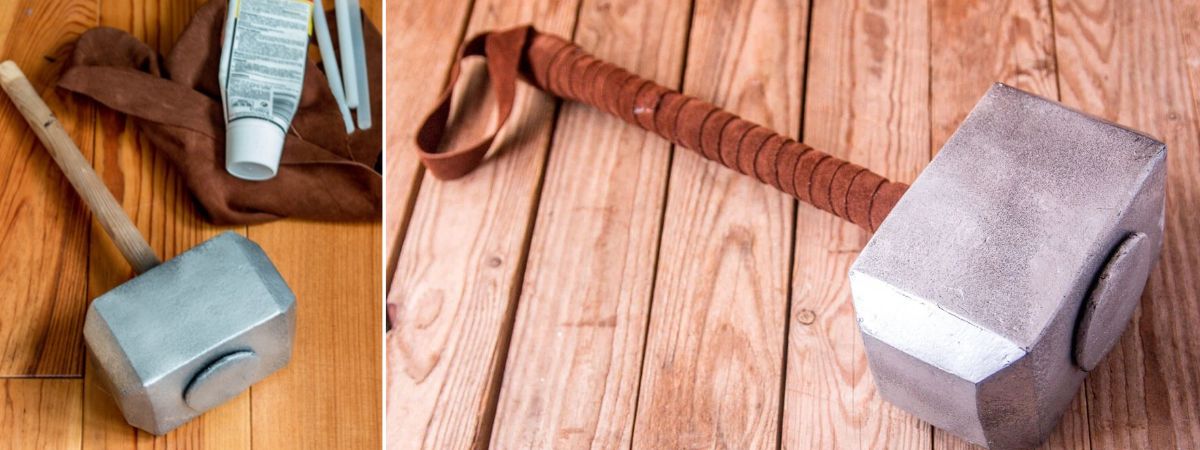
Paint the entire hammerhead black and allow it to dry. Then, apply a light coat of silver spray paint, letting some of the black show through to give the hammer a more realistic metallic appearance.
Cut thin strips of brown suede and wrap them around the wooden handle, securing them with hot glue or another strong adhesive.
I also added a loop of suede to the end of the handle to make a wrist strap.
How to make Thor’s chest armor
I made Thor’s chest armor using felt and craft foam, taking inspiration from several different versions of his costume. Rather than recreating one particular design, I combined the details I liked best.
Serious cosplayers often try to reproduce every detail of a specific costume, but since I was making this for my son’s school Halloween celebration, I had fun creating my own version.
To make the armor, start by choosing a design. I originally came up with my own, but later found this helpful diagram of Thor’s chest armor that you could use as a guide.
If you’re following a template, resize it to fit the person wearing the costume before printing it.
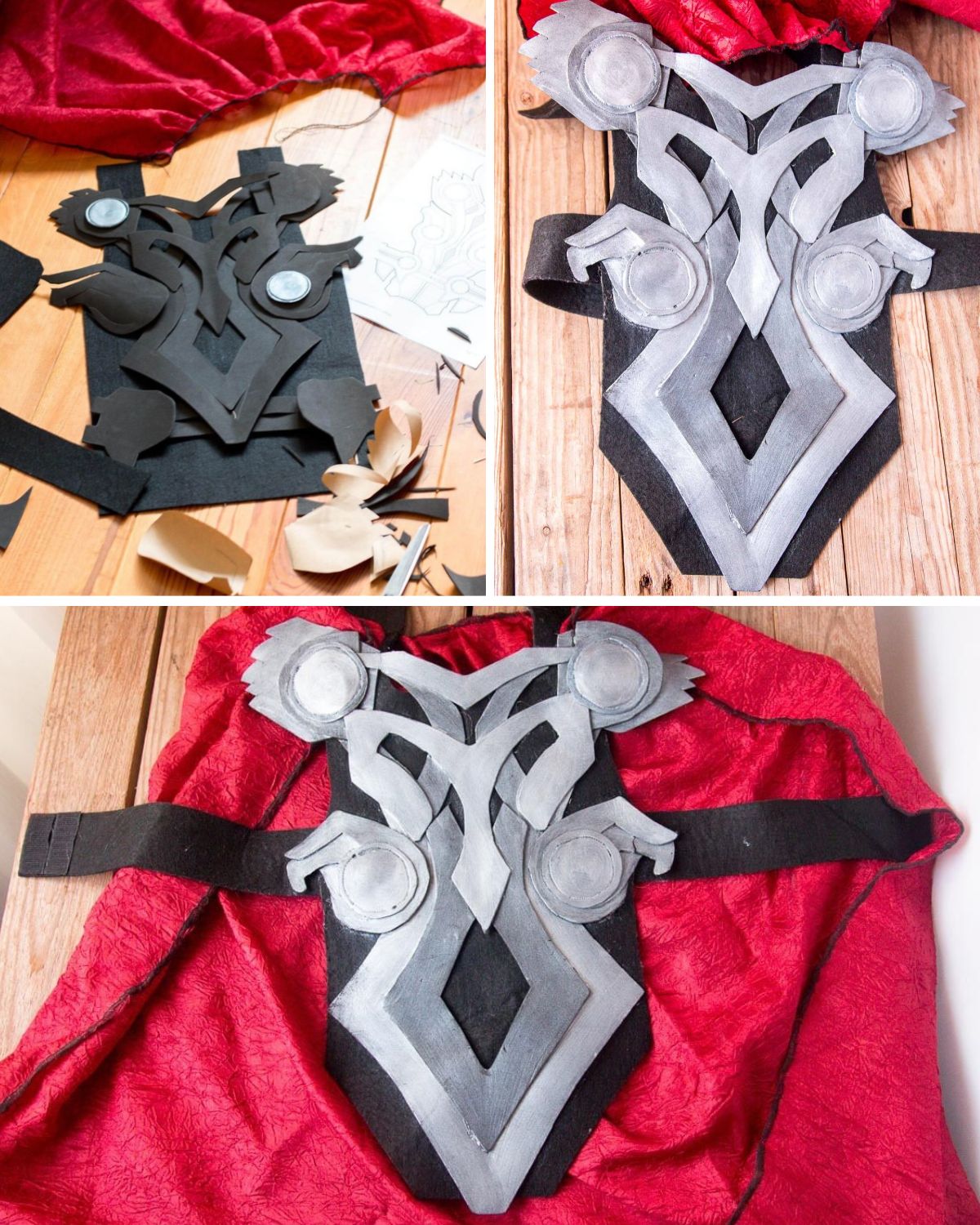
Trace the individual armor pieces onto black craft foam and cut them out. Arrange them on a black felt backing, layering the foam to create raised, three-dimensional details. Once you’re happy with the design, glue the pieces in place.
Paint the foam details with silver acrylic paint to give the armor a metallic appearance, allowing some of the black to show through for contrast.
Add strips of black felt to the sides of the chest plate so they can wrap around the body. Attach Velcro to the ends to make the armor easy to fasten and remove.
How to make Thor’s cape
I made Thor’s cape from a rectangle of bright red curtain fabric. Repurposing old curtains or other fabric from a thrift store is a great way to save money on homemade costumes!
Cut a rectangle of fabric to the desired length and width. Gather the fabric along the top edge by folding it back and forth like a paper fan to create a series of pleats. Sew across the pleats to hold them in place.
I used a serger to trim and finish the top edge in one step, then serged around the remaining edges to prevent fraying.
If you don’t have a serger, you can fold over the raw edges and sew them or use fusible hem tape for a quick, no-sew finish.
You can also use fleece or jersey fabric, which generally doesn’t fray and won’t need finished edges.
Attach the cape to the chest armor
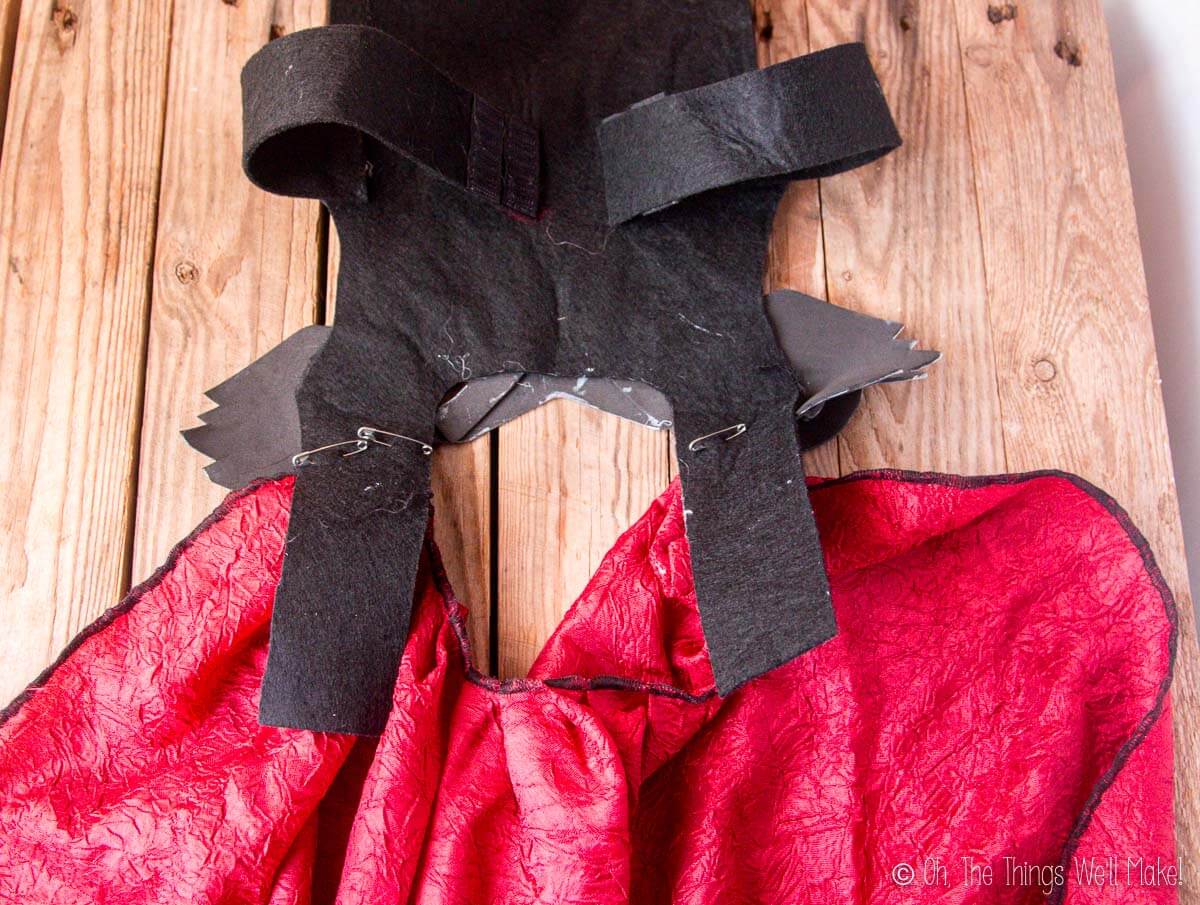
Attach the two upper corners of the cape to the black felt tabs extending above the shoulders of the chest armor, leaving an opening between them for the head.
I used safety pins to attach the cape, which made it easy to adjust or remove if needed. You could also sew the pieces together for a more permanent attachment.
To put on the costume, slip your head through the opening so the cape hangs down your back and the armor rests against your chest. Wrap the side straps around your body and secure them with Velcro.
How to make Thor’s belt
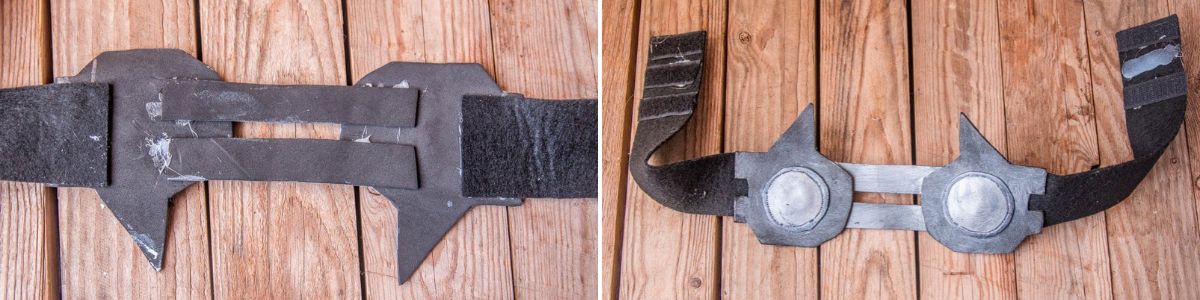
I made Thor’s belt using the same technique as the chest armor, layering pieces of black craft foam onto a felt backing and securing them with hot glue. I added black felt straps with Velcro at the ends so the belt could be fastened and adjusted around the waist.
To add texture to the circular details on both the belt and chest armor, I used the tip of a soldering iron to burn decorative patterns into the craft foam. I then painted the raised details with silver acrylic paint to give them a metallic finish.
I originally considered attaching the belt directly to the bottom of the chest armor, but decided to keep it separate so my son could adjust it for comfort.
The only downside was that the belt occasionally shifted from side to side as he moved around. Still, I think the added flexibility was worth it, and I’d probably make it the same way again!
How to make Thor’s vambraces (forearm guards)
To make Thor’s vambraces, I found this Thor pattern online and resized it to fit my son’s forearms.
I traced the design onto black craft foam, cut out the pieces, and layered them to create a raised, three-dimensional effect. I glued the pieces together and used the tip of a soldering iron to burn decorative lines into the foam, just as I’d done with the belt and chest armor.
Then, I painted the foam silver to give it a metallic appearance.
Make the padded backing
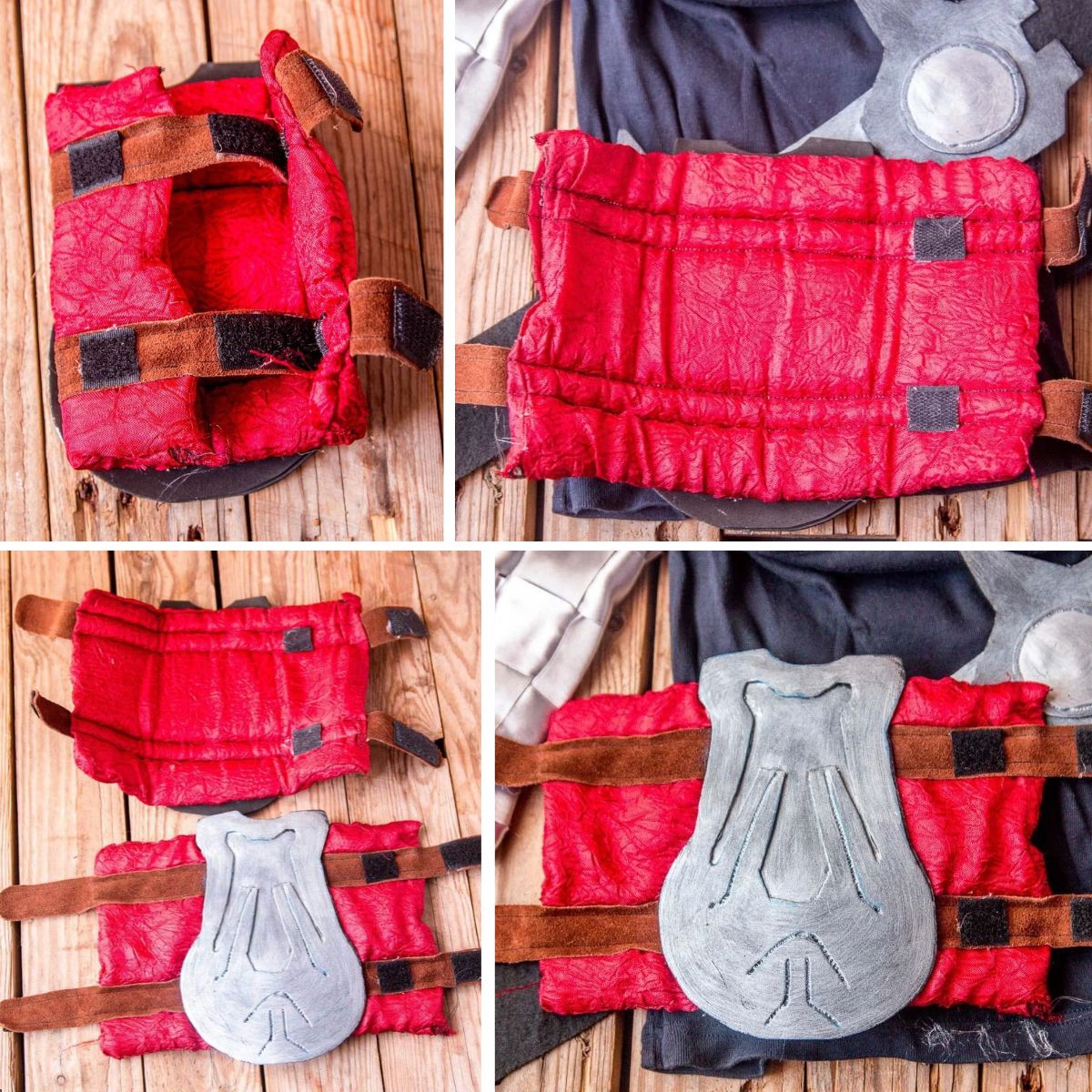
Cut two rectangles of red fabric for each arm, using leftover fabric from the cape. Each rectangle should be wide enough to wrap around the forearm and approximately the same height as the foam vambrace.
Place two rectangles together with the right sides facing inward. Sew around the edges, leaving a small opening for turning.
Turn the fabric right side out, add a layer of quilting batting for padding, and hand-sew the opening closed.
Repeat to make the second padded backing.
Add the straps and assemble the vambraces
Cut strips of suede leather slightly longer than the fabric rectangles so they can wrap around the forearms and fasten securely.
I originally planned to use buckles for a more realistic appearance, but I was short on time and decided to use Velcro instead.
Hot glue the Velcro to the ends of the suede strips, then sew the strips onto the padded fabric. I stitched over the Velcro to reinforce it and continued the stitching along the leather strips for extra strength and a decorative finish.
Finally, hot glue the painted craft foam pieces onto the padded fabric to complete the vambraces.
How to make Thor’s boots
I normally make my own superhero boots, and I’ve shared two different methods for doing so. This time, though, I decided to try something different.
I found a pair of black boots on sale for next to nothing and decided to save myself some time by buying them. (And no, I never told my son they were girls’ boots!)
To make the boots look more like something a powerful superhero would wear, I used the same technique as the vambraces.
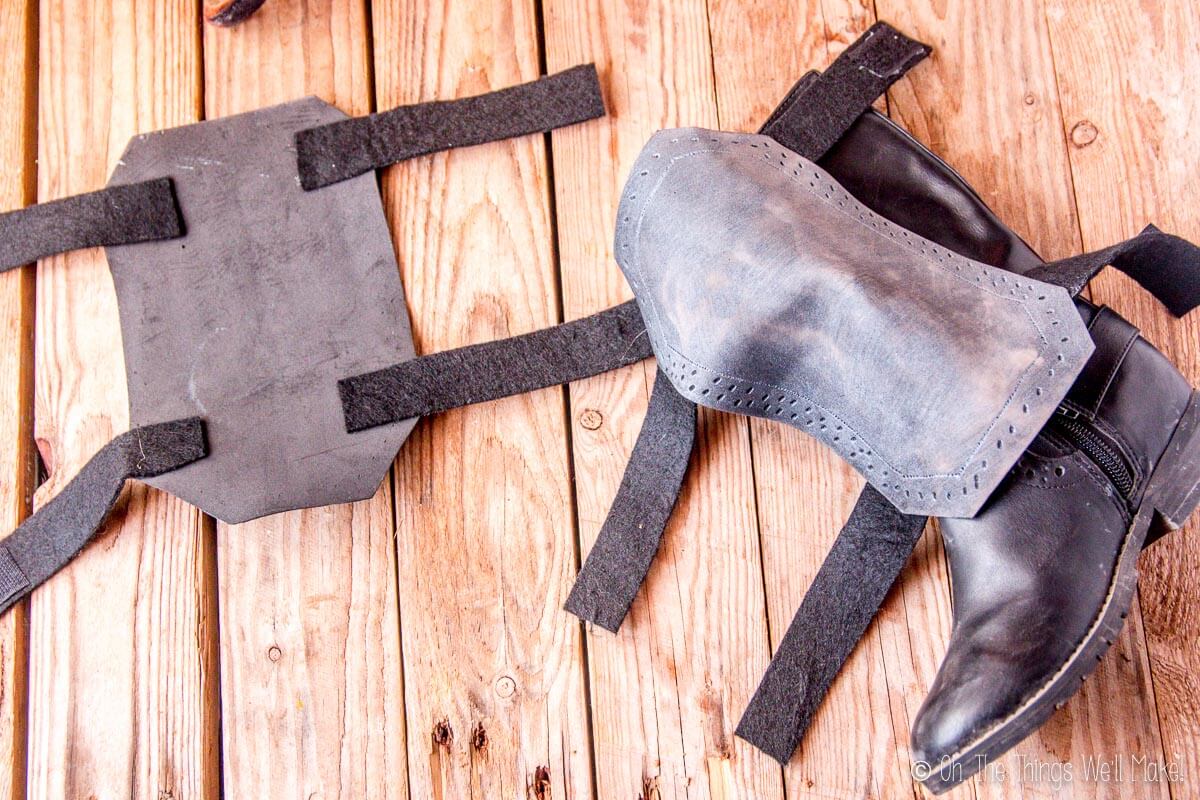
I cut pieces of black craft foam to wrap around the tops of the boots, creating armor-like covers. I didn’t use a pattern, but shaped the foam to fit the boots and burned decorative lines into it with my soldering iron.
After painting the foam silver, I attached black felt straps with Velcro fasteners to hold the covers in place.
This gave the inexpensive boots a superhero makeover without having to alter the boots themselves!
How to make Thor’s sleeves
Thor wears silver, patterned sleeves in some of the movies, and I wanted to recreate that look for my son’s costume. I considered several ways to make them.

My first idea was to make a diamond-shaped stamp from craft foam, similar to the stamps we used to decorate our homemade trick-or-treat bags. I could have stamped a repeating silver pattern onto black sleeves. That would probably have worked well and made a comfortable costume.
I also thought about wrapping the sleeves in large-mesh fishnet stockings and spraying silver paint over them. Removing the stockings would leave a diamond pattern behind, although I wasn’t sure how well it would work, and it sounded rather messy!
In the end, because I’m a bit crazy, I chose a much more time-consuming approach: weaving silver satin ribbons together to create a patterned fabric. I then sewed the woven fabric into sleeves and attached them to a black tank top.
Making the silver “fabric”
To make sleeves like mine, you’ll first have to weave 2 large panels out of silver ribbons.
To make that ribbon “fabric” into sleeves, I traced out the shape of a sleeve of one of my son’s old shirts, leaving extra space for seams and movement. (The sleeve I traced was from a knit shirt which allows for more movement. The ribbon isn’t elastic, so the sleeve needed to be bigger.)
If I were making these again, I’d try using lightweight double-sided fusible webbing to bond the woven ribbons to a thin, soft knit fabric, like T-shirt material. This would help keep the ribbons in place and cover the gaps between them.
I originally held the ribbons together with tape, thinking that sewing them would be enough to keep everything in place. Unfortunately, the ribbons shifted around, and my son’s fingers sometimes got caught between them when he put on the costume!
I’d test a small piece first to make sure the added backing doesn’t make the sleeves too stiff. Since the ribbons don’t stretch, it’s also important to leave plenty of room for movement.
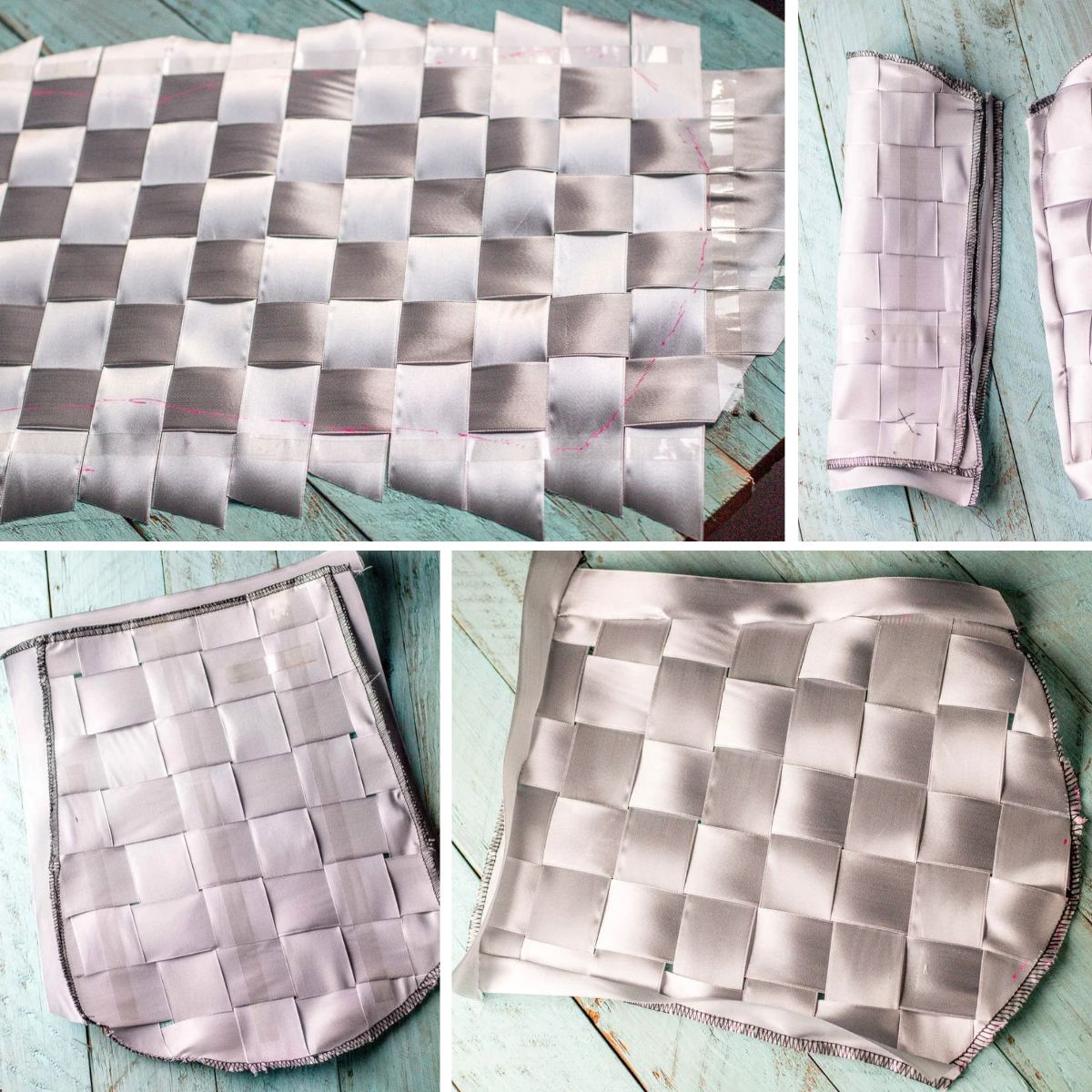
Sewing the sleeves
I finished the edges by sewing a piece of ribbon at the wrist. You can see that I also decided to sew ribbon onto the side edges, but that was really only because I was afraid that I had cut the sleeves too small, not leaving enough room for the seam, and wanted some extra space.
To finish the sleeves, I folded them together, right sides facing each other, down the length of the sleeve, and sewed down the long edge with my serger.
Finally, pin the finished sleeves to the armholes of a black tank top, then sew them in place. I attached mine by hand.
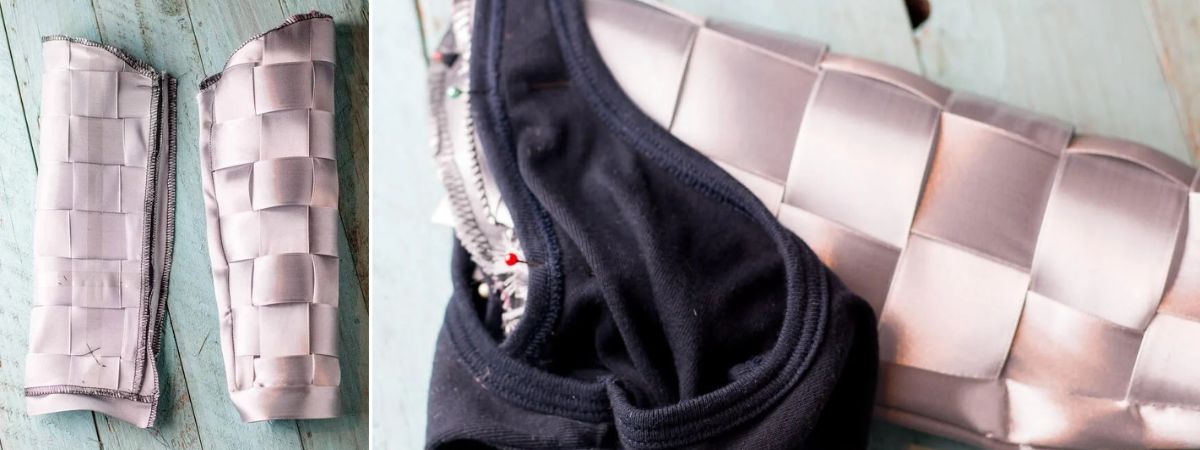
How to make Thor’s helmet
I originally planned to make Thor’s helmet from scratch, but then I found a super cheap Viking helmet with horns at a costume shop and decided to use that instead.
The helmet was gold, so I spray-painted it silver to give it a more Thor-like appearance.
It was also a little too big for my son, so I decided to add some long, blonde hair inside. This helped make the helmet fit more snugly while giving him Thor’s signature hairstyle. A separate wig might have looked better, but I knew my son wasn’t going to go for that!
I bought an inexpensive blonde wig, cut it into strips, and hot-glued the hair along the inside edge of the helmet. Then, I glued a strip of craft foam over the attached hair to cover the glue, make the helmet more comfortable, and improve the fit.
Luckily, the Viking helmet’s horns were removable. I took them off, but that left two large holes on the sides. To cover them and make the helmet look more like Thor’s, I cut two wings from craft foam and hot-glued them into place.
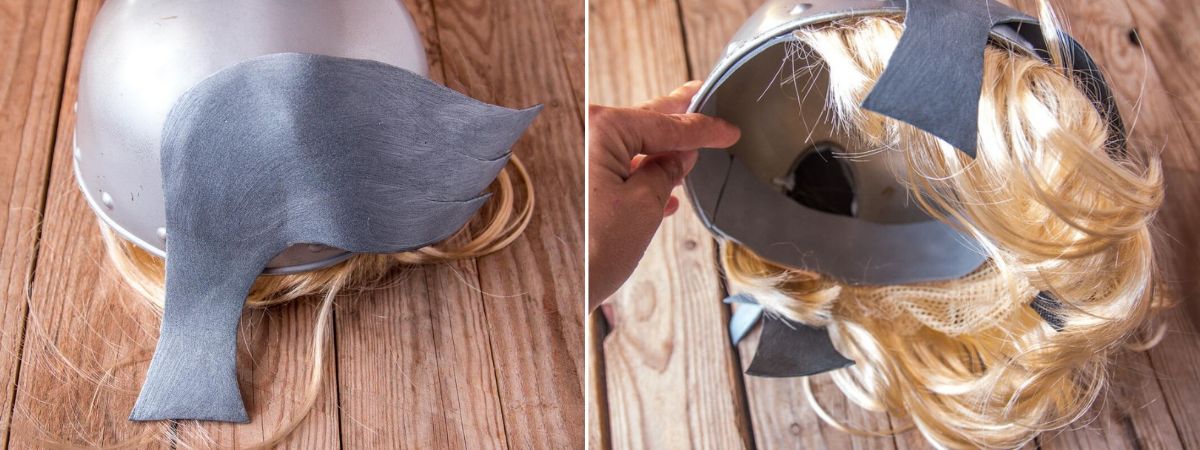
Did I use a pattern for the wings?
Nope, I just “winged” it!
Sorry, this has been a long tutorial, and I’m getting a little silly. 🙂
While Chris Hemsworth made a great-looking Thor, I’m kind of partial to this one. 😉
My son wore the helmet for a while, but he kept taking it off. I actually think he looked just as cute, maybe even cuter, without it!
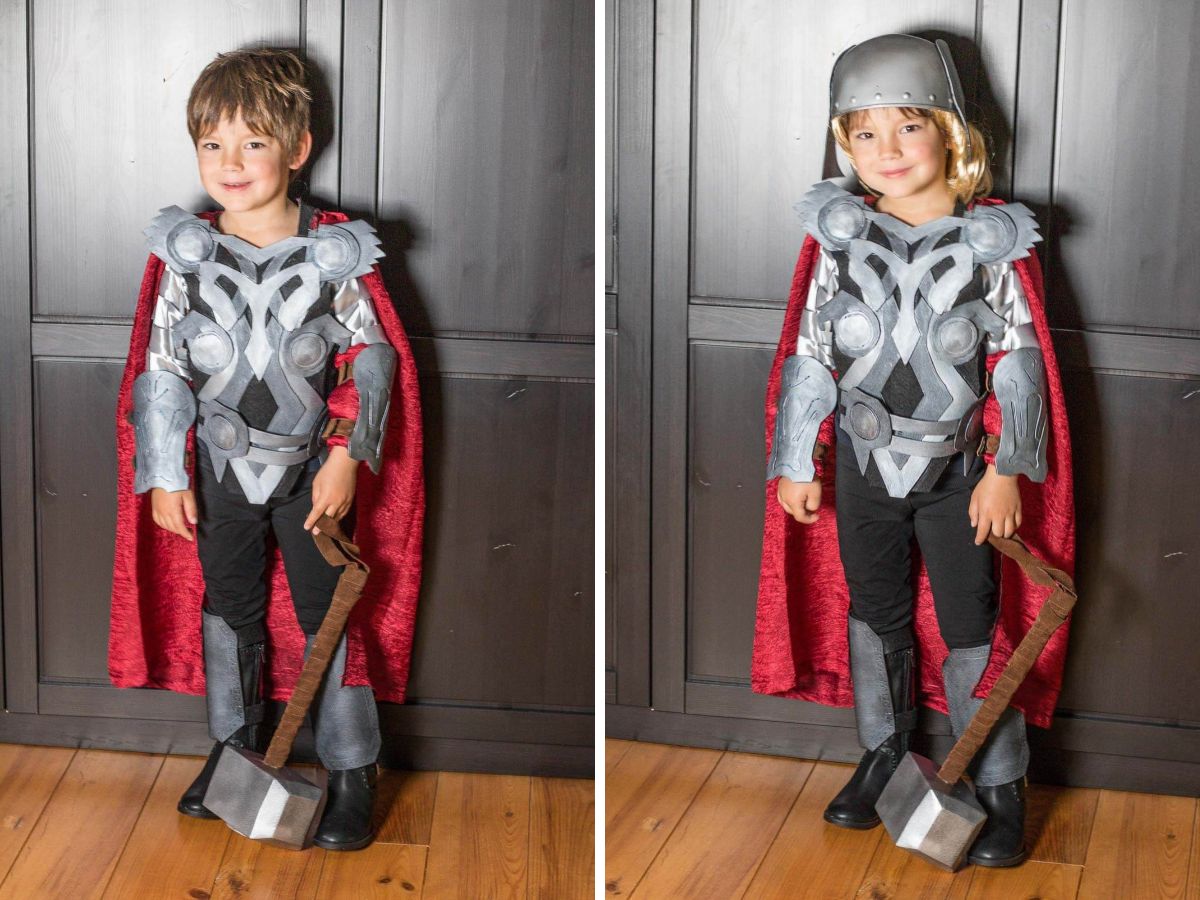
Putting the Thor costume together
Once you’ve made all the pieces, putting the costume together is easy! You’ll just need a pair of black pants or leggings to complete the outfit.
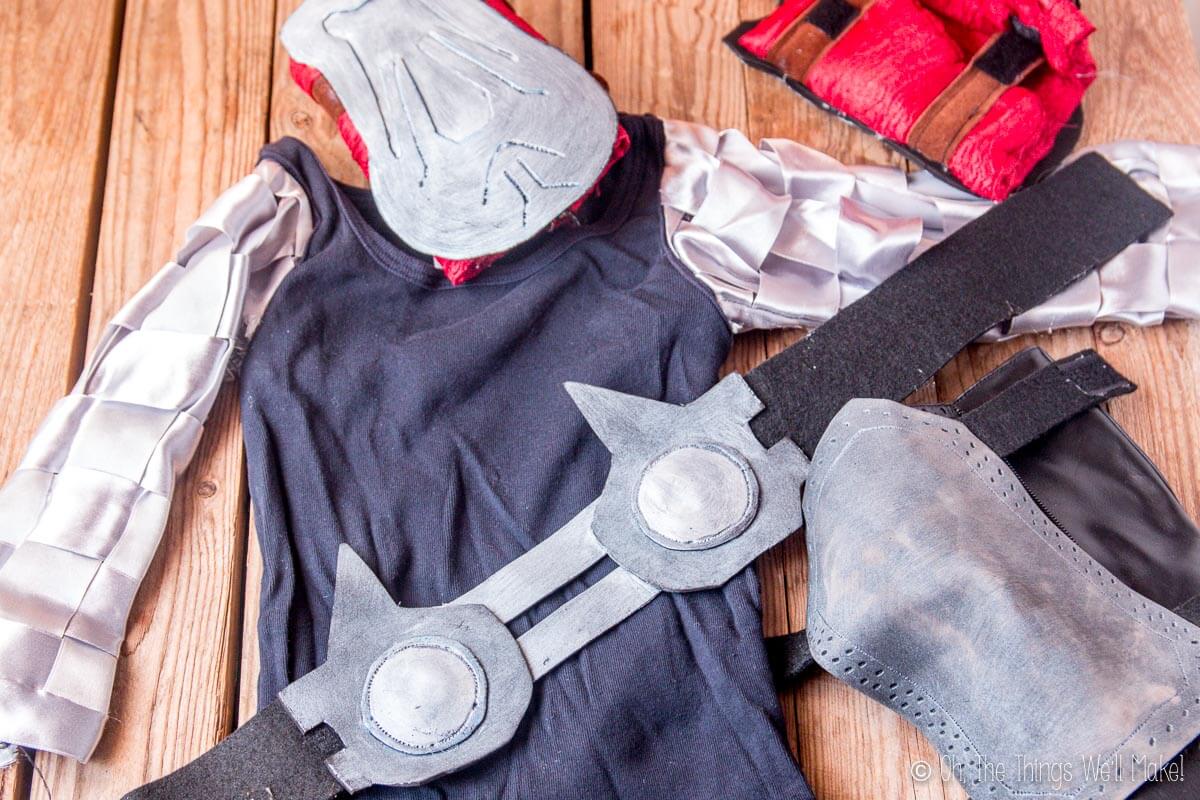
Start by putting on the black pants and the tank top with the silver woven sleeves.
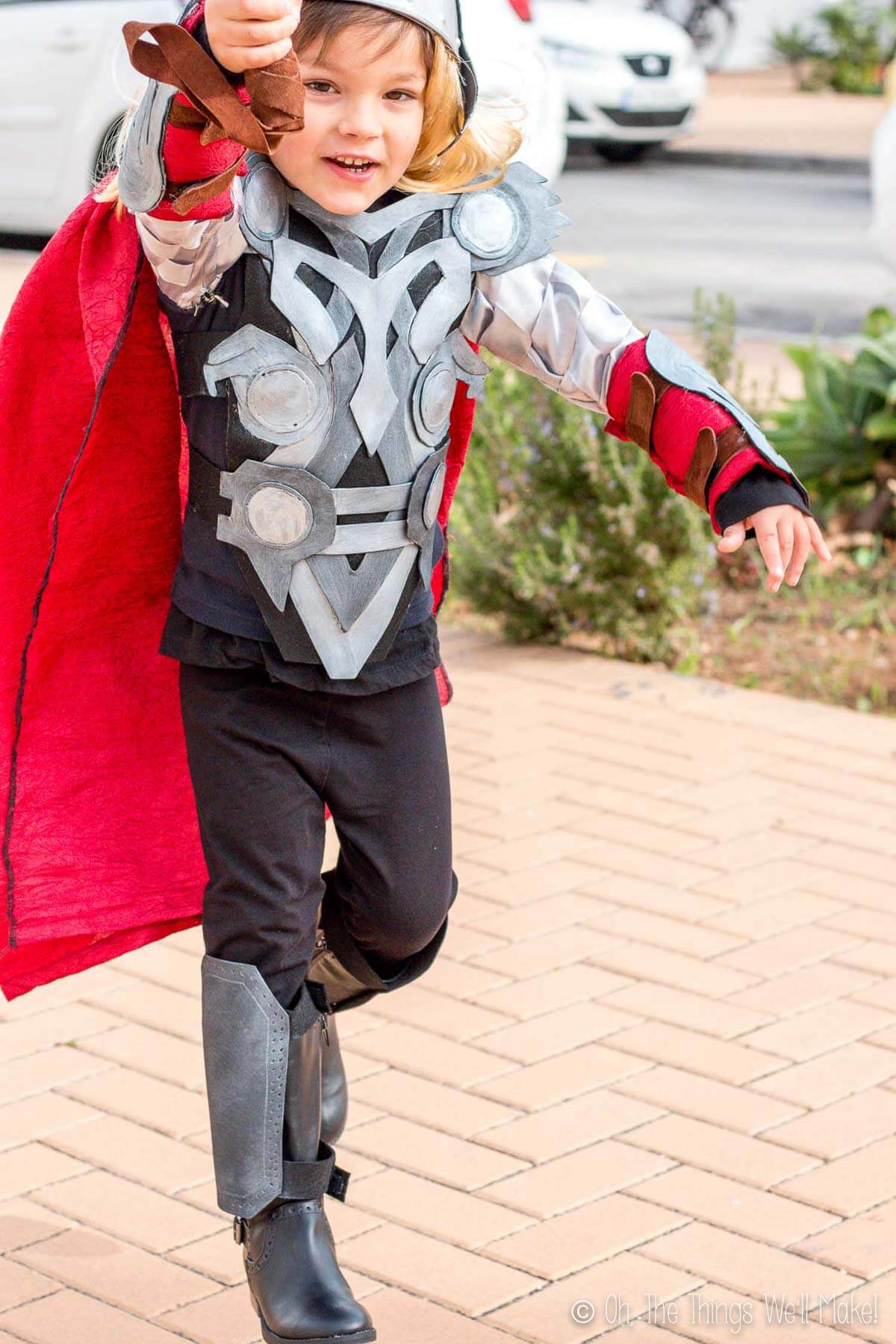
Next, slip the chest armor and attached cape over the head, with the armor in front and the cape hanging down the back. Wrap the felt straps around the body and fasten them with Velcro beneath the cape.
Secure the belt around the waist, over the bottom of the chest armor.
Put on the black boots and fasten the decorative boot covers around them. Then, attach the vambraces over the silver sleeves.
Finally, add Thor’s helmet and hammer, and your homemade superhero costume is complete!
That’s all there is to it! This costume has quite a few pieces, but it’s easier to make than it looks, and the finished result is worth the effort.
Have fun saving the world (or worlds)!
And Happy Halloween!
DIY Thor Costume
Equipment
- hot glue gun
- scissors
- Craft knife
- Sewing machine or serger
- Needle and thread
- Paintbrushes
- Soldering iron (optional, for decorative details)
- iron (optional, for fusible interfacing)
- Sandpaper
Materials
Thor’s Hammer
- Floral foam or Styrofoam
- Packing tape
- Newspaper
- White glue
- Wooden dowel
- Paper towels
- Wall putty spackling
- Black acrylic paint
- Silver spray paint
- Cardboard
- Brown suede or faux suede
- Strong glue
Chest Armor and Belt
- Black craft foam
- Black felt
- Silver acrylic paint
- Hot glue
- Velcro hook-and-loop fastener
Cape
- Bright red fabric curtain fabric, fleece, or jersey
- Thread
Vambraces (Forearm Guards)
- Black craft foam
- Silver acrylic paint
- Red fabric leftover cape fabric
- Quilting batting
- Suede or faux suede strips
- Velcro
- Thread
Boots
- Black boots
- Black craft foam
- Silver acrylic paint
- Black felt
- Velcro
Silver Sleeves
- Silver satin ribbon
- Black tank top
- Thread
- lightweight jersey fabric (optional, for backing the woven ribbons)
- Lightweight double-sided fusible webbing optional, for attaching the jersey backing
Helmet
- Plastic Viking helmet with removable horns
- Silver spray paint
- Inexpensive blonde wig
- Craft foam
- Hot glue
To Complete the Costume
- Black pants or leggings
- Safety pins
Instructions
Make Thor’s Hammer
- Cut floral foam into the shape of Thor’s hammer, trimming the corners to create angled edges. If needed, layer pieces of foam and secure them with packing tape.
- Cover the foam with several layers of papier-mâché made from newspaper strips and a mixture of white glue and water. Allow to dry completely.
- Make a hole in the bottom of the hammerhead for the wooden dowel. Reinforce the hole with glue-soaked paper towels if using soft floral foam.
- Insert the dowel and glue it securely in place.
- Cover the hammerhead with wall putty to smooth the surface. Allow to dry, then sand.
- Cut a cardboard circle for the decorative disk on top of the hammer. Cover it with wall putty and glue it to the hammerhead, opposite the handle.
- Paint the hammerhead black. Once dry, apply silver spray paint, allowing some black to show through for a metallic effect.
- Wrap the wooden handle with strips of brown suede, securing them with glue. Add a suede wrist strap.
Make the Chest Armor
- Choose a design for Thor’s chest armor and resize a template if needed.
- Trace the armor pieces onto black craft foam and cut them out.
- Arrange and layer the foam pieces on a black felt backing, securing them with hot glue.
- Use a soldering iron to burn decorative patterns into the foam, if desired.
- Paint the raised foam details with silver acrylic paint.
- Attach black felt straps with Velcro to the sides of the armor so it can be fastened around the body.
- Leave two felt tabs extending above the shoulders for attaching the cape.
Make Thor’s Cape
- Cut a rectangle of red fabric to the desired length and width.
- Fold the upper edge back and forth to create pleats. Sew across the pleats to hold them in place.
- Finish the raw edges using a serger, sewn hems, or fusible hem tape. Fleece and jersey generally don’t require hemming.
- Attach the upper corners of the cape to the two felt tabs on the chest armor using safety pins, leaving an opening between them for the head.
Make Thor’s Belt
- Cut a felt backing and decorative craft foam pieces to create the belt.
- Glue the foam pieces onto the felt, layering them for a raised effect.
- Burn decorative patterns into the foam with a soldering iron, if desired, and paint the details silver.
- Add felt straps with Velcro fasteners so the belt can be adjusted around the waist.
Make the Vambraces
- Resize a Thor vambrace pattern to fit the wearer’s forearms.
- Trace the design onto black craft foam, cut out the pieces, and glue them together in layers.
- Burn decorative lines into the foam with a soldering iron, if desired, and paint the pieces silver.
- Cut two rectangles of red fabric for each forearm guard. Place each pair right sides together and sew around the edges, leaving a small opening.
- Turn the fabric right side out, add quilting batting for padding, and sew the opening closed.
- Cut suede strips long enough to wrap around the forearms. Attach Velcro to their ends.
- Sew the suede straps onto the padded red fabric, reinforcing the Velcro with stitching.
- Hot glue the decorated foam pieces onto the padded fabric.
Make the Boot Covers
- Cut black craft foam into decorative armor pieces that wrap around the tops of the boots.
- Add decorative lines using a soldering iron, if desired.
- Paint the foam pieces silver.
- Attach black felt straps with Velcro to secure the armor over the boots.
Make the Silver Sleeves
- Weave silver satin ribbons over and under each other to create two large panels of patterned fabric.
- For a more stable fabric, try bonding the woven ribbons to lightweight jersey fabric using double-sided fusible webbing before cutting the sleeve shapes. Test a small section first to make sure the finished fabric remains flexible enough for comfortable sleeves. (Optional improvement.)
- Trace the shape of a shirt sleeve onto each panel, allowing extra room for seams and movement because the woven ribbons won’t stretch.
- Cut out the sleeve shapes and sew ribbon along the wrist edges to finish them.
- Fold each panel lengthwise with right sides together and sew along the long edge to form a sleeve.
- Turn the sleeves right side out and pin them to the armholes of a black tank top.
- Hand-sew the sleeves to the tank top.
Make Thor’s Helmet
- Remove the horns from a plastic Viking helmet and spray-paint the helmet silver.
- Cut an inexpensive blonde wig into strips and hot glue the hair along the inside edge of the helmet.
- Glue a strip of craft foam over the attached hair to cover the glue and improve the fit.
- Cut two wing shapes from craft foam and glue them over the holes left by the removed horns.
Assemble the Costume
- Put on black pants or leggings and the tank top with silver sleeves.
- Slip the connected chest armor and cape over the head, with the cape hanging behind. Fasten the armor straps with Velcro.
- Secure the belt around the waist.
- Put on the black boots and fasten the decorative boot covers over them.
- Attach the vambraces over the sleeves.
- Finish with Thor’s helmet and hammer.
Notes
This post was originally published on October 9, 2016. It was republished on October 28, 2026, with clearer instructions, improved photos, and helpful tips.





Thanks Tracy.
Made one for my son. Though not exactly the way you did it, the final product was a replica and you were so helpful.
It was awesome.
Thank you,
Anush
Hi Anush,
Your costume was awesome! Thanks for sharing it with me on Facebook! Mind if I upload the picture here?
I’ll add the link for now. We’ll see if it’s available for everyone to see that way!
Pls do feel free to upload.
Wow!
Thank u,
Anush
Cool! I thought he ready had blonde long hair haha!
You’re great 🙂
Hahaha!
Thanks, Joie! 🙂
Awesome! Definitely using a few of your ideas to create my sons costume thanks,
Yay! I hope it goes well for you, Lindsey! 🙂
How do you get the pattern for the vest/armor to size correctly? I’m trying to make this for my 6 year old 😊
Hi Angela,
I didn’t use a strict pattern when I made ours. I mostly freehanded it, but I linked to a reference image in the post that can help guide the design.
If you want to print it, you’ll probably need to enlarge it because printing on a single A4 page will likely be too small. One easy option is to print it across multiple pages (poster/tile printing) and tape them together. Another simple trick is to draw the basic shape on paper first using your child’s chest measurements, then adjust the details from the reference image before tracing it onto the craft foam.