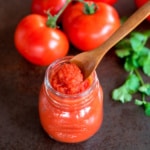
Easy Homemade Tomato Paste Recipe
Conserve excess tomatoes with an easy, homemade tomato paste that can be made on the stovetop, in your oven, or in a slow cooker.
Servings 30 1 Tbsp. servings
Calories 27kcal
Ingredients
- 8 lbs. tomatoes
- 1.5 tbsp extra virgin olive oil (Optional)
Instructions
Prep and Blend
- Rinse the tomatoes well, remove the stems, and cut into chunks.
- If you want to add red peppers or other vegetables, now is the time to do it.
- Blend until smooth.
Strain
- To strain out the seeds and skin, place a mesh strainer or food mill over a large pot on the stove (or over the crock of a slow cooker pot). Pour the tomato sauce into the strainer. Use a spoon or a spatula to press the tomato sauce through the strainer into the pot below.
- Repeat with the remaining tomatoes.
Cook (Choose One Method)
Stovetop
- Simmer over low heat, stirring often as it thickens. Reduce heat near the end to prevent burning.
Slow cooker
- Cook on Low with the lid off, stirring occasionally, until thick and rich.
In the oven
- Spread on a rimmed baking sheet and bake at 200–225°F (90–110°C). Stir every so often until it reaches the desired consistency.
Store or Freeze
- Transfer the paste to clean jars or freeze in ice cube trays. Once frozen, move cubes to freezer bags for long-term storage.
Video
Notes
- Making your own tomato paste takes a bit of time, but it’s totally worth it. You can use it in soups, sauces, or to season ground beef for homemade tacos.
- Yield: about 18 ounces, depending on the tomato variety and how much you reduce it.
- Keep in the fridge for 7–10 days, or longer if it’s very concentrated.
- For longer storage, freeze up to a year or can using proper acidification (add a bit of lemon juice or citric acid if needed).
- For best freezer organization, use square ice cube trays—the cubes fit perfectly in bags and save a ton of space!
- Optional: For extra sweetness, blend in a few chunks of red pepper or onion with the tomatoes before blending. Or, for a deeper flavor, sauté them briefly in olive oil before adding them to the purée.
Nutrition
Serving: 1Tbsp. | Calories: 27kcal | Carbohydrates: 4g | Protein: 1g | Sodium: 6mg | Potassium: 286mg | Fiber: 1g | Sugar: 3g | Vitamin A: 1010IU | Vitamin C: 16.6mg | Calcium: 12mg | Iron: 0.3mg