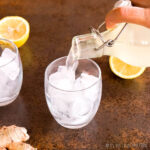
Fermented Ginger Beer
Refreshing, slightly spicy, and naturally carbonated, homemade ginger beer is easy to make with fresh ginger, sugar, water, and a fermentation starter. Enjoy it on its own or use it to make cocktails like a Moscow Mule or Dark 'n' Stormy.
Servings 20 200ml servings
Calories 86kcal
Ingredients
- 2 cups sugar
- 150 grams fresh ginger root
- 1/2 teaspoon active dry yeast OR 1/3 cup active ginger bug OR ginger beer from a previous batch, preferably with some yeast sediment
- 4 liters water filtered or non-chlorinated
- 2 large lemons or 4 small lemons
Instructions
Make the ginger syrup
- Clean and mince the ginger root. Remove any damaged or moldy areas. You can peel the ginger if you prefer, but it isn't necessary. I generally mince it quickly in a food processor.
- Combine 2 cups of the water with the sugar in a saucepan. Heat over medium heat until the mixture begins to simmer, stirring until the sugar has completely dissolved.
- Add the minced ginger and simmer for around 5 minutes. Remove from the heat and allow the mixture to cool completely.
- Once cool, strain out the ginger. Press the ginger against the strainer to extract as much of the ginger syrup as possible.
Ferment the ginger beer
- Divide the ginger syrup between four 1-liter bottles, adding around 1/2 cup to each bottle. You can use a little less for a less sweet ginger beer. Around 1/3–1/2 cup per liter works well.
- Add the juice of half a large lemon or one small lemon to each bottle.
- Add your fermentation starter. If using active dry yeast, add around 1/8 teaspoon to each bottle. Alternatively, add active ginger bug or ginger beer from a previous batch, preferably including some of the yeast sediment from the bottom.
- Fill the rest of each bottle with filtered or non-chlorinated water, leaving some space at the top. Seal the bottles.
- Allow the ginger beer to ferment at room temperature until it develops the amount of carbonation you want. Depending on the starter, temperature, and other conditions, this may take anywhere from around 1–10 days.
- Check the bottles frequently once you begin to see signs of fermentation. Carbon dioxide produced during fermentation can create considerable pressure, especially in warm conditions or with a very active ferment.
Storage
- Once the ginger beer has reached the desired level of carbonation, move it to the refrigerator to greatly slow the fermentation.
- Serve cold. Keep in mind that fermentation can continue slowly in the refrigerator, so check the bottles occasionally if storing the ginger beer for an extended period.
Video
Notes
Yield
This recipe makes around 4 liters of ginger beer when using about 1/2 cup of ginger syrup per liter. If you use less syrup per bottle, you may have some ginger syrup left over.Alternative method
Instead of making a ginger syrup, you can ferment the minced ginger directly with the other ingredients. Add sugar syrup and around 30–40 grams of minced ginger to each 1-liter bottle, followed by the lemon juice, starter, and filtered water. Once you begin to see signs of fermentation, strain the ginger beer into clean bottles to remove the minced ginger. Seal the bottles again and continue fermenting until the ginger beer reaches the desired level of carbonation.Fermentation time
Fermentation time can vary considerably depending on the starter you use, the temperature, the amount of sugar, and how active the ferment is. An active ginger bug or yeast sediment from a previous batch can produce signs of fermentation quite quickly. A first batch made with active dry yeast may take considerably longer, sometimes 7–10 days or more in cooler conditions. Rather than relying only on the number of days, watch the ginger beer for signs of fermentation and carbonation.Bottle safety
Fermentation produces carbon dioxide, which can create considerable pressure inside a sealed bottle. If using glass, use bottles designed to withstand carbonation and check them frequently, especially once the ginger beer becomes active or when fermenting in warm conditions. Once the ginger beer has reached the desired level of carbonation, transfer it to the refrigerator to greatly slow the fermentation.Storage
Store finished ginger beer in the refrigerator. Fermentation can continue slowly even when refrigerated, so pressure may continue to build over time. Check stored bottles occasionally, particularly if keeping them for an extended period. The flavor may also change during storage, becoming less sweet as fermentation continues.Nutrition information
The nutritional information is calculated from the ingredients used to make the recipe and does not account for the changes that occur during fermentation. Yeast consumes some of the sugar during fermentation, and the amount remaining in the finished ginger beer will vary from batch to batch. For that reason, the actual sugar, carbohydrate, and calorie content of the finished ginger beer may differ from the calculated values.Nutrition
Serving: 200ml | Calories: 86kcal | Carbohydrates: 22g | Protein: 0.3g | Fat: 0.2g | Saturated Fat: 0.02g | Polyunsaturated Fat: 0.02g | Monounsaturated Fat: 0.02g | Sodium: 11mg | Potassium: 47mg | Fiber: 0.5g | Sugar: 20g | Vitamin A: 2IU | Vitamin C: 6mg | Calcium: 10mg | Iron: 0.1mg